Quick answers
- Before reading any review, do 1 thing: convert the labelled crude protein, fat and phosphorus to a dry matter basis (nutrient % ÷ (100 − moisture %) × 100), because as-fed percentages include water and cannot be compared directly.
- AAFCO and FEDIAF are both "minimum thresholds": adult maintenance requires at least 26% crude protein (AAFCO, dry matter basis) and at least 9% fat. Meeting them only means it passes, not that it ranks highly in quality.
- Ingredients are listed by weight at the time of addition. Fresh meat is about 70% water, while dehydrated meat meal is usually under 10% moisture, so "fresh meat first" does not necessarily mean higher protein than "meat meal first".
- Palatability cannot be expressed as one score: the industry norm is a two-bowl test or one-bowl acceptance test with 20+ adult cats over 4 to 7 consecutive days.
- Sample size and feeding duration determine a review's value: experiences from 1 to 3 cats over a few days are anecdotes, not brand conclusions.
- When trying a new food, observe for at least 4 weeks (6 to 8 weeks recommended), recording 5 indicators: body weight, daily grams eaten, stool score, coat condition and water intake.
- Ash, phosphorus and sodium cannot be judged in isolation: read them alongside the calcium-to-phosphorus ratio, ingredient sources and your cat's kidney and heart status — at least 2 numbers must be compared together to mean anything.
Nine out of ten people searching for "cat food reviews" really want to know "is this food worth buying?". But online reviews mix three completely different kinds of information: palatability preference (will the cat eat it), individual cats' digestive reactions (soft stool or itching afterwards), and nutritional completeness (is the food itself nutritious enough). Of the three, only the third has public standards you can check item by item; the first two are always a sample problem.
This article is methodology, not a review of individual brands. Whatever review you read or pack you pick up later, you can verify it yourself with the same three-layer process: layer one checks the nutritional standard and label claim, layer two reads the ingredient order and protein sources, and layer three judges whether the review itself has enough sample size, feeding duration and control design. Once you learn this, you won't need anyone else's conclusion.
Why "highly rated" does not mean "suitable for your cat"
The same sentence "my cat loves it" can mean completely different things in different contexts. To avoid being led astray, separate three layers first:
Layer one: palatability. Whether a cat will eat and how fast is a preference issue. Preference is affected by smell, texture, temperature and previous diet, and the same cat can change within weeks. High palatability does not mean good nutrition, and low palatability does not mean a faulty formula.
Layer two: individual tolerance. Reactions like soft stool, vomiting or itchy skin may come from switching food too fast, parasites, environmental stress, or food sensitivity. A single cat's reaction is an anecdote and cannot be generalised to "this brand has a problem". Judging at brand level requires samples of dozens of cats plus controls.
Layer three: nutritional completeness. This is the only layer with objective standards: whether the pack states which nutritional standard and life stage it meets, and the actual numbers in the expected analysis. Layer three is the part you can calculate and verify yourself, so this article focuses here.
Hong Kong cat owners commonly fall into three cognitive traps: survivorship bias (only owners whose cats enjoy the food post; those with problems have already switched away); anchoring effect (seeing "highly rated" first, then interpreting every detail as support); and treating an anecdote as a rate (one cat fine for 3 days is taken as the whole brand being safe). Avoid these three and you are already more accurate than most people who only look at scores.
Layer one: nutritional standards — where AAFCO and FEDIAF differ
The two most cited cat food nutritional standards globally come from the US and Europe, and both are "minimum requirements", not "quality grades".
AAFCO (Association of American Feed Control Officials) Cat Food Nutrient Profiles have two life stages: growth and reproduction (kittens, pregnancy, lactation) and adult maintenance. Each profile has minimums and, for some nutrients, maximums. A common label claim reads "formulated to meet the AAFCO Cat Food Nutrient Profiles for maintenance", meaning the formula is calculated to meet the adult maintenance standard.
FEDIAF (European Pet Food Industry Federation) Nutritional Guidelines cover complete and complementary foods for cats and dogs, listing adult maintenance minimums by energy density. Packs in European and UK markets usually follow the FEDIAF system, listing crude protein, crude fat, crude fibre, crude ash and moisture percentages.
There are several ways a label claim can be supported, and they are not equally credible. According to the US Food and Drug Administration (FDA) guidance on "Complete and Balanced", a product can support a "complete" claim by one of three routes: "formulated to meet the standard", "passed a feeding trial", or "is a member of a verified product family". Of the three, feeding trials (real cats fed according to a set protocol and measured) provide the strongest evidence; formulation alone is the most common and the easiest to just barely meet the minimum.
Complete and complementary are two different things. A complete food can be the sole diet; complementary foods (most treats and some toppers) are not nutritionally adequate and should only be fed alongside a complete food. Checking whether the pack says "complete" is the most basic first step.
Table 1: Adult maintenance minimums compared (dry matter basis)
| Nutrient | AAFCO Cat Food Nutrient Profiles (adult maintenance) | FEDIAF guidelines (adult maintenance) | What to check on the label |
|---|---|---|---|
| Crude protein | min 26% | min approx. 25% (per 100 g dry matter) | Label says "minimum"; actual may be higher |
| Crude fat | min 9% | min 9% (per 100 g dry matter) | Determines calorie density and feeding amount |
| Calcium | min 0.6% | min approx. 0.40% (per 100 g dry matter) | Read together with phosphorus ratio |
| Phosphorus | min 0.5% | min approx. 0.26% (per 100 g dry matter) | Cats with kidney disease need vet guidance; do not choose alone |
| Sodium | min 0.2% | approx. 0.08% to 0.10% (per 100 g dry matter) | Watch for cats with heart or kidney disease |
| Taurine | dry food 0.10%, canned 0.20% | dry food approx. 0.10%, canned approx. 0.20% | Essential amino acid for cats; deficiency affects heart and vision |
| Crude ash | not always listed in expected analysis | generally required on labels | Mineral total indicator, not an impurity |
The figures above are compiled from public versions of the AAFCO Cat Food Nutrient Profiles and FEDIAF Nutritional Guidelines; they are minimums, not recommendations. Standards are revised periodically; refer to the latest version.
Note a common misunderstanding: "meets AAFCO" does not mean "good". It only means the minimum threshold is met; under the same standard there can be completely different ingredient combinations, calorie densities and palatability. Conversely, for a product that does not state a standard, no matter how good the reviews, you have no way to verify nutritional completeness. To learn how protein, phosphorus and calories are converted and matched to your cat's condition, see Pet Nutrition Guide and Complete Cat Nutrition Guide.
Layer two: how to read ingredient order
The ordering rule is simple: ingredients are listed by weight at the time they are added to the formula, from most to least. Remember two key words — "at the time of addition" and "weight". This rule leads to three practical judgements.
1. Fresh meat and meat meal cannot be compared by rank directly. Fresh meat (e.g. chicken) is about 70% water, while dehydrated meat meal is usually under 10% moisture. For the same kilogram, "chicken" is weighed with hundreds of grams of water, while "chicken meal" is concentrated dry matter. So "chicken first" and "chicken meal first" are two different formula structures; you cannot judge which is better from rank alone — read it together with the protein figure in the expected analysis.
2. By-product does not mean poor quality. The term is an ingredient category referring to edible parts other than muscle (e.g. liver, heart), not "waste". What really matters is not whether the word by-product appears, but whether the label states which species and which part. The vaguer the wording (e.g. only "animal by-products" with no species), the less information you have.
3. Split ingredients push ranks down. If the same plant ingredient is split into several items (e.g. part as peas, part as pea protein, part as pea fibre), each item's weight is less than the combined wording, so its rank moves down. This is a common labelling technique; it does not mean the product is faulty, but it affects your judgement of "what the first few ingredients are".
Five steps to read an ingredient list (follow along)
- First find the nutritional standard statement on the pack: does it say AAFCO or FEDIAF, which life stage, and whether it is complete.
- Copy down the expected analysis: crude protein, crude fat, crude fibre, moisture, ash (if present) and calories (kcal ME/kg).
- Convert to dry matter basis with the formula: nutrient % ÷ (100 − moisture %) × 100; convert all numbers to the same basis before comparing.
- Look at the first 3 ingredients: is the species stated (chicken, fish, beef), is it fresh meat or meal, and has the same ingredient been split into several items?
- Match against your cat's condition (age, weight, history of kidney or urinary disease) to decide suitability; ask a veterinarian if unsure.
Table 2: Ingredient list reading example (hypothetical label for demonstration)
| Label text | Surface impression | What actually matters |
|---|---|---|
| Chicken | Ranked first, seems high in protein | Fresh meat is about 70% water; most of the weighed amount is water, so cannot be compared directly with meal |
| Chicken meal | Ranked second, seems secondary | Dehydrated and concentrated, so protein density is high; may actually supply more protein than fresh meat |
| Peas, pea protein, pea fibre listed as 3 items | Each rank is not high | Same ingredient split; if combined, the plant component share would rise noticeably |
| Crude protein 32% (as-fed) + moisture 10% | 32% seems high | Dry matter basis is 32 ÷ 90 × 100 ≈ 35.6%; must convert before comparing |
| Phosphorus 0.8% (as-fed) + moisture 10% | Unclear if high or low | Dry matter basis approx. 0.89%, clearly above the adult minimum 0.5%; cats with kidney disease need extra care |
| Animal fat (species not stated) | No particular impression | Insufficient information; cannot determine source species or fatty acid profile |
Table 2 is a demonstration format for practising conversion and interpretation; it does not represent any actual product's label.

English ingredient names and Chinese translations on packs sometimes do not match; the same English phrase can be translated several ways. To compare term by term, see Pet Food Label English Glossary; if you mainly want a conversion demonstration for dog food labels, the method in Dog Food Label Guide is fully applicable to cat food.
Layer three: ash, phosphorus and sodium — three most misunderstood numbers
Crude ash is not an impurity, nor "rubbish left after burning". It is an indicator of total minerals left after a sample is ashed at high temperature in a lab. Cat food must meet minimum calcium, phosphorus, sodium and magnesium requirements, so it must contain minerals; ash can never be zero. European labels generally require ash to be listed, while US expected analyses do not always include it, so products from the two regions cannot be judged by "whether ash is listed".
Phosphorus is the number most in need of being handled according to the cat's condition. The AAFCO adult maintenance minimum is about 0.5% (dry matter basis), and the corresponding FEDIAF level is about 0.26% to 0.35% (per 100 g dry matter). Healthy adult cats generally do not need deliberate phosphorus restriction; but for cats diagnosed with chronic kidney disease, veterinarians usually prescribe lower phosphorus levels (commonly about 0.3% to 0.5% dry matter) and regular blood tests. This decision must be made by a veterinarian, not by reading labels yourself. For the principles, see How to Choose Low-Phosphorus Low-Protein Cat Food.
Sodium likewise only means something after conversion to dry matter basis. The AAFCO adult maintenance minimum is about 0.2% (dry matter basis), and FEDIAF about 0.08% to 0.10% (per 100 g dry matter). Sodium percentages on labels are as-fed; comparing directly with another product gives wrong conclusions. For cats with a history of heart or kidney disease, sodium levels are a matter for veterinary judgement.
Remember one principle for these three numbers: above the minimum, high or low can only be interpreted alongside the cat's health status, not used as a league table. A higher-phosphorus food may be perfectly fine for a healthy adult cat but unsuitable for a cat in stage 3 kidney disease; the same set of numbers can lead to two conclusions for two cats.
How palatability is measured: sample size and feeding duration are key
"Will the cat eat it" is the most asked and hardest question to answer in one sentence, because palatability is never a fixed product attribute but the result of interaction between a cat and a product. To answer with evidence, understand the measurement methods first.
Two-bowl preference test is the most common design: offer two bowls at the same time and record (1) which bowl the cat chooses first and (2) how many grams of each bowl are eaten over the day. Then calculate the intake ratio (target food intake ÷ total intake of both bowls). A single meal's "which bowl first" is not enough, because first choice is affected by position, aroma diffusion and hunger that day; usually several consecutive days and multiple cats are needed, followed by statistical testing, before you can say "there is a tendency".
One-bowl acceptance test is simpler: offer only one food and record daily grams eaten as a percentage of the recommended feeding amount, plus acceptance speed in the first few days. This design looks at "how much is eaten", not "which of two is preferred".
Sample size is the first watershed. The industry norm is 20+ adult cats per test group, ideally covering different ages and body conditions. Results from 1 to 3 cats are only anecdotes: one cat not eating may be due to noise, bowls, temperature that day, or simply that cat's preference, and cannot be generalised to the whole brand.
Feeding duration is the second watershed. Short-term tests usually run 4 to 7 consecutive days; but to observe "will they get bored long-term" (food fatigue), 4 to 8 weeks of follow-up is needed. Many online reviews are only "ate fast on the first meal after opening", which has no necessary link to long-term acceptance.
So when you see a question like "how palatable is brand X cat food", the correct answer framework is: first ask who measured, how many cats, for how many days, and whether there was a control. Only data with all four conditions is worth considering; a single "my cat loves it" or "my cat won't eat it" is equally just an anecdote.
Review credibility scorecard: 6 questions to check yourself
Next time you see a brand review or a set of online reviews, ask yourself each question:
- How big is the sample? 1 to 3 cats vs 20+, very different strength of conclusion.
- How long was the observation? Under 3 days vs over 14 days (long-term performance needs 4 to 8 weeks).
- Was there a control? Same cat trying two foods in sequence, or just an impression of a single product?
- Are there numbers? Daily grams eaten, weight change, stool score — or only adjectives?
- Can the numbers be checked? Does it cite actual label figures (protein, fat, phosphorus, calories) to support the claims?
- Is commercial relationship disclosed? Sponsorship, free samples or commission — is it stated?
Table 3: Quick review credibility comparison
| Item | Low credibility | High credibility |
|---|---|---|
| Sample size | 1 to 3 cats | 20+, with a spread of ages and body conditions |
| Feeding duration | Under 3 days | Over 14 days; long-term assessment 4 to 8 weeks |
| Control design | No control, single impression | Before-and-after comparison or side-by-side two-bowl test |
| Data recording | Only adjectives (eats / doesn't eat) | Daily grams eaten, weight, stool score |
| Label verification | No label figures cited | Protein, fat, phosphorus, calories listed and converted to dry matter |
| Interest disclosure | No mention of commercial relationship | Sponsorship, free samples or commission stated |
Even if a review ticks all six boxes, you still need to do the final step yourself: match it to your cat's individual condition. A cat with kidney disease and a healthy kitten can have completely opposite needs from the same set of numbers. To see how others write reviews by checking labels item by item, see two existing articles: Natural Signature Cat Food Ingredient Analysis and Brabanconne Cat Food Review. Also, the transition method itself affects your observations; use it with the Cat Food Transition Guide to reduce the chance of digestive reactions being mistaken for product problems.
Complete an assessment in three steps (worked example)
Here is a process you can do tonight, using a product on the market as an example to show how the three layers connect:
Step one: check the standard. Pick up the pack and find whether it states AAFCO or FEDIAF, whether it is complete, and which life stage it meets.
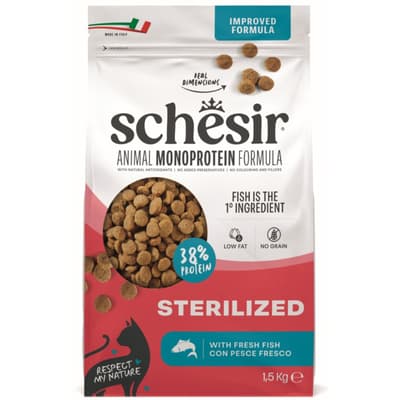
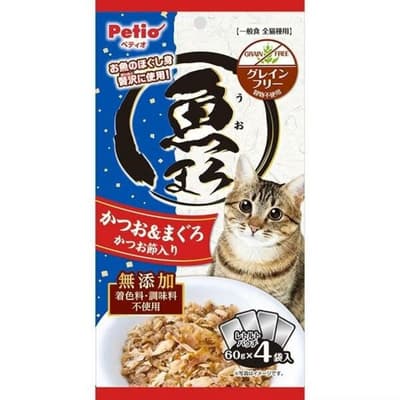
Step two: convert the numbers. Copy the expected analysis, convert everything to the same basis with the dry matter formula, then compare with the minimums in Table 1 and your cat's actual needs (especially phosphorus). Example product: Schesir Cat Food Neutered Weight Control Formula Fish 1.5kg (SCH13806) — HK$179.0. To compare moisture differences in wet food at the same time, see Petio Cat Food Grain-Free Wet Pouch Bonito + Tuna + Bonito Flakes 60g × 4 packs — HK$28.8. Prices and stock are subject to the online store's current listed price.
Step three: design your own observation. Use a 7 to 10 day transition, then record 5 indicators weekly for 4 to 8 consecutive weeks (body weight, daily grams eaten, stool score, coat condition, water intake). This record not only helps you judge this food; next time you switch, you will have your own baseline and won't need to rely on others' reviews.
Further reading
- Pet Nutrition Guide: Ingredients, Calories and Prescription Diets (2026)
- Complete Cat Nutrition Guide
- Dog Food Label Guide: Carbohydrate Calculation + Dry Matter Conversion
- What Is Grain-Free Cat Food Really? The Truth Explained
In an emergency, contact a veterinarian immediately; this article is for reference only and cannot replace veterinary diagnosis.
Information checked as of 2026-10-12 · Source: PetChill editorial team
 K9 Natural full guide →
 Feline Natural full guide →
 Fuji One full guide →