The answer to grey-area ingredients is to distinguish by part and by species: avocado flesh generally will not poison cats and dogs, but the skin, pit and leaves must be completely avoided; high-sugar fruits such as durian and longan can only be given in extremely small amounts; beans, quinoa and Chinese kale must be cooked thoroughly and stripped of seasoning.
Quick answers
- Avocado: The persin content of the flesh is relatively low, and cats and dogs eating a small amount of flesh generally will not show typical poisoning; the real high risk is the skin, pit, leaves and stem. Birds, rabbits and hamsters are clearly more sensitive to avocado and should never be fed it.
- High-sugar fruits: Long-term feeding of durian, longan, persimmon, orange and passion fruit will cause weight gain, blood sugar fluctuations, gastrointestinal discomfort and nutritional imbalance; pets with diabetes, a history of pancreatitis or obesity are at highest risk.
- Beans, quinoa, kale and Chinese kale: Must be fully cooked, thoroughly washed, and free of salt, oil, garlic and spring onion, and can only be given in extremely small amounts; raw beans or undercooked beans must never be fed.
- Peanut butter, sesame, lard and butter: The main risks are salt, sugar, additives (such as xylitol) and high fat; not recommended as regular treats; pets prone to diarrhoea or with a history of pancreatitis should avoid them even more.
- Blueberries: Heating causes some anthocyanins to degrade and leach into water; the higher the temperature and the longer the time, the more is lost; washing, drying and feeding directly is the safest.
- The whole jasmine plant poses a risk to cats, and essential oils and diffuser products pose an even higher risk; indoors, plants that are safer for cats such as spider plants and Boston ferns can be used instead.
Key summary
- "Can be given in small amounts" does not mean "needs to be fed". Cats are primarily carnivorous animals; fruits and vegetables are only extra food and cannot replace the main diet.
- The risk ranking of grey-area ingredients is usually "skin, pit, leaves, seeds, essential oils, processed additives" higher than "plain flesh".
- Heating, refrigeration, freezing and thawing all change the retention of water-soluble nutrients and antioxidant components; the processing method affects actual intake more than "which fruit to choose".
- Kittens, adult cats, senior cats and pets with chronic diseases all have completely different portions and contraindications; if there is a history of kidney disease, diabetes or pancreatitis, ask the vet first.
- Rabbits, hamsters and parrots have far lower sugar tolerance than cats and dogs; fruit can only be given in extremely small amounts, and their diet must not be changed suddenly.
- After accidental ingestion there is only one principle: do not induce vomiting yourself, contact the vet immediately, and prepare the packaging, approximate amount and time of occurrence.
Will cats be poisoned by eating avocado? What about peanut butter, sesame, lard and butter?
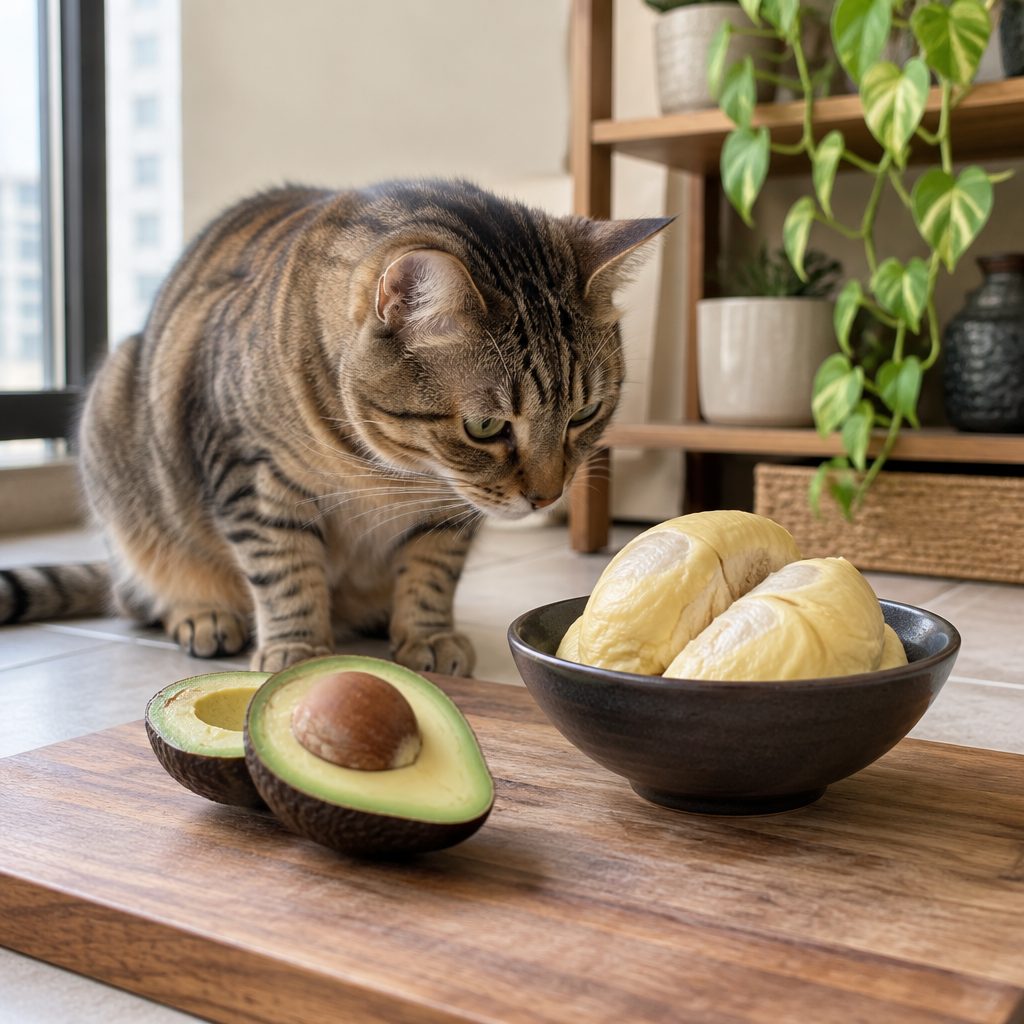
Avocado is the most typical grey-area ingredient, and the answer must be given part by part. Avocado contains persin, a natural fatty acid derivative; the content in the flesh is relatively low, so cats and dogs eating a small amount of ripe flesh generally will not show typical poisoning symptoms. But the skin, pit, leaves and stem have a clearly higher content, and the pit is large and hard, so besides the risk from its own components, there is also a risk of choking and intestinal obstruction. So the principle is: the flesh can be peeled and pitted, cut extremely fine, and given plain in small amounts; the skin, pit, leaves, stem and the avocado plant should never be given to pets.
Cross-species differences are very important. Birds, rabbits and hamsters are clearly more sensitive to avocado, so these small animals should never be fed it; avocado oil, avocado paste and salad dressing mostly contain salt and other additives and should likewise not be fed. If the skin, pit or a large amount of flesh is accidentally eaten, the principle is the same as for other food poisoning: do not induce vomiting yourself, contact the vet immediately, and bring the remaining portion and packaging.
Peanut butter has two layers of problems. The first layer is salt and sugar: human peanut butter generally has added salt and sugar, and both sodium and calories increase the burden on pets, affecting weight and the heart over the long term. The second layer is additives: some versions labelled "sugar-free" or "low-sugar" use sweeteners such as xylitol instead, and xylitol is highly toxic to dogs, and even a small amount can cause hypoglycaemia and liver damage. In addition, peanut butter is a high-fat food, posing a higher risk to pets with a history of pancreatitis. If you really must feed it, only choose a version whose ingredient list contains only peanuts, with no salt and no sugar, give an extremely small amount at a time, and ask the vet first.
Sesame is high in dietary fibre, and a small amount ground up and added to food can help intestinal motility; but fibre is not "the more the better", and excess can cause bloating, soft stool or even diarrhoea. Note that products such as sesame paste, sesame soup and sesame dumplings mostly have large amounts of sugar and oil added and cannot be fed as "sesame". For cats, sesame provides no essential nutrients, so it is a "take it or leave it" ingredient.
Lard and butter share the common point of being almost pure fat. Pets do not need extra added animal fat, and a high-fat diet is in fact one of the common triggers of pancreatitis; butter also contains lactose, and many adult cats and dogs are lactose intolerant, leading to diarrhoea and bloating after eating. So neither is recommended. If a pet steals a large piece of fatty meat or a spoonful of lard, watch for vomiting, abdominal pain, soft stool and lethargy, and especially if there is a history of pancreatitis, seek veterinary care immediately.
On the issue of low-potassium fish and magnesium, the point is not "which fish is low in potassium" but that owners should not formulate diets themselves. The nutritional labelling habits of human foods are completely different from the formulation logic of veterinary prescription diets; pets that need to control potassium, phosphorus and magnesium intake must have this decided by the vet based on medical history, blood test results and prescription diets. Commercially available complete and balanced staple foods are already formulated with minerals according to international nutritional standards, and adding magnesium supplements yourself or relying on specific fish to "supplement magnesium" or "be low in potassium" may instead disrupt the ratios.
| Ingredient | Risk components | Reaction in cats and dogs | Principle |
|---|---|---|---|
| Avocado | Persin; higher content in skin, pit and leaves | A small amount of flesh generally causes no typical poisoning; accidental ingestion of skin or pit may cause gastrointestinal discomfort | Only feed peeled, pitted, extremely fine flesh; always avoid skin, pit and leaves; never feed small animals |
| Peanut butter | Salt, sugar, xylitol, high fat | Sodium and calorie burden, pancreatitis risk, sweetener poisoning | Not recommended as a regular treat; if feeding, only choose salt-free, sugar-free pure peanut |
| Sesame | Dietary fibre; processed products often have added sugar and oil | A small amount helps motility; excess causes bloating and soft stool | Grind and give an extremely small amount; sesame paste and sesame soup must not be fed |
| Lard, butter | Almost pure fat; butter contains lactose | Lactose intolerance, pancreatitis risk | Not recommended; if a large amount of fatty oil is stolen, seek veterinary care immediately |
| Low-potassium fish, magnesium supplements | Mineral ratios | Self-formulated diets can disrupt potassium, phosphorus and magnesium ratios | Must be decided by the vet based on prescription diets; do not formulate diets yourself |
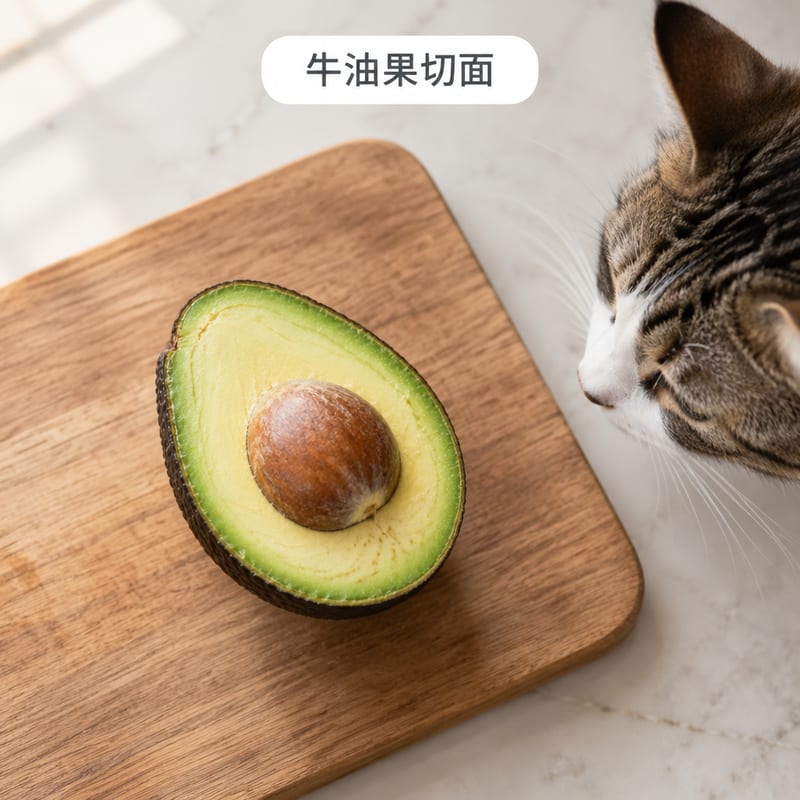
Will long-term feeding of high-sugar fruits such as durian or longan to cats cause health problems?
Yes. Durian and longan are high-sugar fruits, and durian is also relatively high in fat; long-term feeding will cause weight gain, blood sugar fluctuations, diarrhoea and nutritional imbalance, and pets with diabetes, a history of pancreatitis or obesity are at highest risk. The pits of durian and longan must be removed, because they are large and hard and pose a choking and obstruction risk. So the answer is: only extremely small amounts, occasionally as a snack, not as a regular treat, and certainly not as a replacement for the main diet.
Persimmon and orange (citrus) must be discussed separately. The main risk of persimmon is tannic acid (tannin), which is especially high in unripe persimmons; eating a large amount may form a gastric stone, and the pit and calyx must also be removed; in addition, persimmon is not low in sugar, and diabetic pets should avoid it. The peel, leaves, stem and essential oil of citrus such as orange contain irritating components (such as limonene and linalool) that irritate the skin and gastrointestinal tract, and cats have a limited ability to metabolise such components, so essential oils, diffusers and peel pose the highest risk; although a small amount of flesh generally does not cause an emergency, the sugar and acidity easily cause gastrointestinal discomfort, so it is not recommended as a treat.
Passion fruit has highly acidic flesh and hard seeds, and the peel contains more irritating components, so only an extremely small amount of plain flesh may be given, and the peel and seeds must be avoided; cantaloupe must be peeled, deseeded and cut small, watch the sugar content, and the rind must be thoroughly washed before feeding, because when cutting the flesh the knife will carry bacteria from the rind into the flesh. Pear flesh can be fed in small amounts, but must be peeled, cored and cut small; pears contain relatively much sorbitol and fibre, and excess will cause soft stool or even diarrhoea, so the claim that "all senior cats are suitable for eating pears" does not hold: senior cats with diabetes, prone to diarrhoea or with kidney disease should be more conservative, or even avoid it.
Guava contains vitamin C and polyphenol antioxidants, but antioxidants play a supporting role and cannot be treated as "anti-inflammatory treatment"; the seeds are hard and the skin is harder to digest, so the seeds must be removed, the skin peeled, and it cut extremely fine; senior cats with diabetes must also count the sugar and follow the vet's instructions. On watermelon, high-water fruits themselves do not directly "increase the burden on the kidneys"; the real key is that total water and electrolytes must be controlled according to the condition; cats with chronic kidney disease should indeed pay attention to water intake, but fruit cannot replace drinking water or prescription diets. Watermelon rind and seeds must likewise be avoided.
Regarding inflammation, if a pet has chronic inflammation of the skin, joints or gastrointestinal tract, the most effective approach is to control weight, use a complete and balanced staple diet, treat the underlying disease according to the vet's instructions and consider supplements such as Omega-3; the antioxidant components of fruit are only a supporting player. To read more from a dietary perspective, see Key points of an anti-inflammatory diet.
For small animals: Hamsters are not recommended dried fruit, because the sugar is concentrated, some have added sugar or contain sulphur dioxide, and the texture sticks to the teeth; fresh fruit can only be a fingernail-sized piece. When feeding strawberries to rabbits, rinse each one clean with water, remove the calyx, dry and cut in half, and only give an extremely small amount, because the rabbit's main diet is hay, and suddenly adding a large amount of high-sugar fruit will disrupt the gut flora. Parrots can eat banana, but fruit is only a snack for birds, and a small slice is already enough; the peel is not fed, and apple seeds, avocado, chocolate, coffee and alcohol must never be given to birds.
| Fruit | Main risks | Safe parts and handling | Special notes |
|---|---|---|---|
| Durian, longan | High sugar; durian also high fat; large hard seeds | Peel and remove seeds, very small amount of flesh | Avoid for pets with diabetes, pancreatitis or obesity |
| Persimmon | Tannins can form bezoars; high sugar | Ripe, peeled, deseeded and finely cut | Unripe persimmons carry higher risk; avoid for senior cats and diabetic pets |
| Orange (citrus) | Peel, leaves and essential oils contain irritants | Flesh not recommended either; keep essential oils away from pets | Cats have limited metabolic capacity; diffusers carry the same risk |
| Passion fruit | High acidity, hard seeds, irritant peel | Only a very small amount of plain flesh | Remove all peel and seeds |
| Cantaloupe | Sugar; bacteria on the rind | Peel, deseed and cut finely; wash the rind thoroughly first | One or two small pieces at a time is already enough |
| Pear | High sorbitol and fibre; excess causes soft stool | Peel, core and cut finely | Not suitable for all senior cats; avoid if prone to diarrhoea |
| Guava | Hard seeds, indigestible peel, sugar | Peel, deseed and cut very finely | Antioxidants are only supportive and cannot replace treatment |
| Watermelon | High water and sugar content | Deseeded, peeled flesh | Cannot replace drinking water or prescription food; do not feed the rind |
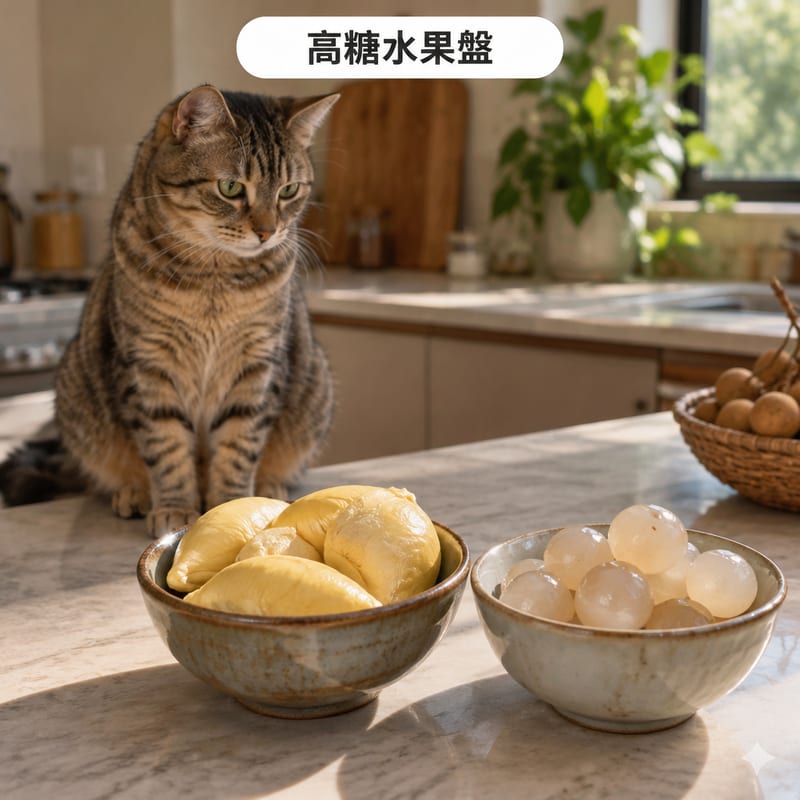
Does heating destroy the antioxidants in blueberries?
Yes. One of the main antioxidant components in blueberries is anthocyanin, which is water-soluble and heat-sensitive. Heating causes some anthocyanins to degrade or bind with other molecules and change structure; if you boil them for a long time in a large amount of water, the pigments and other water-soluble nutrients dissolve directly into the water and losses are more obvious. So the general pattern is: the higher the temperature, the longer the time and the more water used, the greater the loss. But note that there is no single "best temperature and time" that applies to all situations, because actual retention is affected by the heating method, time, pH, whether water is added and the blueberry variety itself, so you should not copy any single number.
Difference between raw and cooked blueberries: Heating breaks down some cell walls, making certain components easier to release, but it also causes water-soluble vitamins and anthocyanins to be lost, so you cannot say in general that "cooked is more nutritious" or "raw always wins". As for calories, if you only heat them without adding sugar or oil, the calories are almost the same; the calorie difference usually comes from sugar, honey or oil added during processing, not from heating itself.
How to store after heating: Antioxidant components decline over time and with exposure to light, oxygen and temperature, so cooked blueberries should be sealed, kept away from light, refrigerated and eaten as soon as possible; do not leave them at room temperature.
Key points for refrigeration and freezing: It is recommended to "wash only before eating", because the natural white bloom on the surface is protective; washing and then putting them in the fridge while still wet speeds up mould growth. If you must wash first, dry them with kitchen paper before refrigerating. To freeze, rinse lightly, pat dry, spread in a single layer and freeze quickly, then transfer to a sealed bag once frozen hard and write down the date. To thaw, place in the lower part of the fridge to thaw slowly; do not leave at room temperature for hours and do not soak in hot water. Refreezing after thawing is not recommended, because ice crystals have already damaged the cell structure; freezing again causes water loss and softening, water-soluble nutrients are lost with the juice, and repeated freezing also increases the risk of bacterial growth, so feed within the same day after thawing. If you see mould, watery mush, a sour smell or severe softening and leaking juice, do not feed.
Preventing cut fruit from oxidising and browning: Cut surfaces exposed to air discolour and lose vitamins through oxidation. The approach is to put them in a sealed box in the fridge immediately after cutting, reduce the exposed area, eat as soon as possible and avoid leaving them at room temperature for long periods. Using citrus juice to "prevent oxidation" is not recommended, because citrus components carry risks for cats themselves.
On portions: Blueberries are a relatively safe fruit; wash, remove stems, cut open, and serve without sugar or processing. Small pets and cats should be more conservative than dogs; for the first trial, start with one or two small berries, then observe for one to two days for vomiting, soft stool or itching. Dried blueberries and blueberry jam are mostly sweetened, and some contain sweeteners harmful to dogs, so they must never be fed.
| Handling method | Effect on antioxidants | Recommended practice |
|---|---|---|
| Raw (washed and dried) | More anthocyanins retained | Wash only before eating, dry and feed directly, cut open and remove stems |
| Brief light heating | Partly degraded, relatively small loss | Process only briefly, no oil and no sugar |
| Boiling in a large amount of water for a long time | Pigments and water-soluble nutrients dissolve into the water, greatest loss | Not recommended for pets; the cooking water should not be given to pets either |
| Refrigeration | Small short-term effect, can slow oxidation | Sealed, away from light, dried, eat within a few days |
| Freezing | Can slow oxidation, but thawing causes water loss | Freeze in a single layer then transfer to a sealed bag, write down the date |
| Thawing | Cell structure already damaged, nutrients lost with juice | Thaw in the lower part of the fridge, feed within the same day, do not refreeze |
Are all beans suitable for cats? How about quinoa, kale and Chinese kale?
Not all beans are suitable. The ones to avoid most are raw beans and beans that are not thoroughly cooked, such as raw red kidney beans, because they contain lectins and saponins, and if not thoroughly cooked at high heat they can cause severe gastrointestinal reactions; in addition, bean products with garlic, spring onion, salt, oil or braising sauce added (braised dried tofu, bean paste, fermented black bean sauce, fried beans) must never be fed to cats or dogs, because garlic and spring onion destroy red blood cells. Canned beans are mostly high in sodium and also unsuitable. Sweetened products such as sweet peas and honey beans should likewise not be given to pets. If a pet is sensitive to beans and shows bloating, soft stool or itching, stop feeding and keep a record.
Fully cooked, salt-free and oil-free small amounts of beans (such as peas and green peas) are generally not a problem, but remember: cats are primarily carnivorous animals, and beans cannot provide essential nutrients, so "can be given in small amounts" does not mean "needs to be fed". Soy milk cannot replace milk or staple food, and unpasteurised soy milk is itself harmful, so it must be brought to a full boil; okara and tofu products carry the same risks from seasoning and processing methods.
Quinoa is a seed (often treated as a grain); rinse thoroughly before cooking to remove surface saponins, then cook fully with no seasoning, and only add a very small amount. As for "whether quinoa is suitable as a choice for a low-potassium diet", the answer is owners should not decide this themselves: quinoa itself contains potassium and phosphorus, and a low-potassium, low-phosphorus diet must be designed by a vet based on blood test results and prescription food. To understand the relevant principles, see Kidney diet and phosphorus control and Chronic kidney disease care.
Kale and Chinese kale belong to the cruciferous family and contain components such as oxalates and glucosinolates. Kale is not a "safe vegetable" for senior cats: if there is a history of thyroid problems, urinary stones or kidney disease, it is a situation to avoid, because cruciferous components and oxalates may add burden; it must be cooked until soft, cut very finely, with absolutely no seasoning, and only fed in very small amounts occasionally. Chinese kale requires the same strict preparation: wash thoroughly (leaf by leaf to remove grit), blanch, cut very finely, with absolutely no salt, oil, garlic or spring onion, and the water used to blanch the vegetables must not be given either, because water-soluble components and pesticide residues dissolve into the water. Overall, cats do not need cruciferous vegetables for nutrition; these two are merely "optional".
Eggs should be discussed separately by life stage. Kittens and puppies are in a rapid growth period and have high protein needs, but must eat fully cooked eggs, because raw egg white contains avidin, which affects biotin absorption, and raw eggs may also carry salmonella and E. coli risks. Adult cats and dogs can occasionally eat a small amount of fully cooked egg, but it must be counted in daily calories and cannot replace staple food. Senior cats require consideration of kidney disease, pancreatitis and weight issues at the same time; the fat and cholesterol in egg yolk mean portions should be more conservative, and the vet should be asked first. The common principles are: fully cooked, no salt and no oil, chopped, about one small teaspoon each time, no more than once or twice a week, and it must not be used as a meal.
For pumpkin, choose fresh pumpkin steamed and mashed or plain pumpkin purée from a can with a clean ingredient list, avoiding added sugar, added spices or pumpkin pie filling. For senior cats, a reference portion is less than one small teaspoon once a day, which is already enough; excess causes soft stool or diarrhoea. If you have to rely on pumpkin purée for bowel movements for several days in a row, first have a vet check the cause rather than adding it yourself long term; you can read this together with Constipation management and daily prevention.
| Ingredient | Preparation method | Reference portion | Absolutely must not |
|---|---|---|---|
| Legumes (peas, green peas) | Fully cooked, no salt or oil | Small amount, as a treat only | Raw beans, undercooked legumes, braised or products with garlic and spring onion, canned beans |
| Quinoa | Rinse to remove saponins, fully cooked, unseasoned | Very small amount mixed into food | Use as a low-potassium diet plan, replace prescription food on your own |
| Kale | Cook until soft, chop very finely, unseasoned | Occasional very small amount | Avoid if history of thyroid, stones or kidney disease |
| Chinese kale | Wash leaf by leaf, blanch, chop very finely | Occasional very small amount | Blanching water, added salt oil garlic spring onion, use as regular vegetable |
| Egg | Fully cooked, no salt or oil, chopped | One small teaspoon, once or twice a week | Raw egg, soft-boiled egg, fried egg with salt and butter |
| Pumpkin | Steamed and mashed or plain canned pumpkin | Senior cats one small teaspoon or less, once a day | Pumpkin pie filling, products with sugar and spices, long-term self-administered laxative |
What are the harms of jasmine to cats, and which plants are safe alternatives?
The whole jasmine plant carries risk: flowers, leaves and stems contain essential oils and irritant components (such as benzyl acetate, linalool, etc.). Ingestion can cause gastrointestinal irritation, drooling, vomiting, diarrhoea, lethargy; jasmine essential oil, diffuser products and aromatherapy sprays carry even higher risk, because cats' livers have limited ability to metabolise these components, and even inhalation and skin contact can cause problems. Comparing toxicity alone, jasmine is not as severe as lilies or dieffenbachia, but it still should not be placed where cats can reach it, and jasmine aromatherapy should not be used to "improve" household odour. To learn more about plant risks, you can refer to the common toxic plants list and household poisoning risks.
Plants that can be safe alternatives: spider plant, Boston fern, cat grass (wheatgrass, oat grass) and areca palm etc. are generally listed as safer choices for cats; however "safe for cats" only means ingestion generally will not cause poisoning, it does not mean cats should be allowed to chew and eat them in large amounts as food, because large amounts of fibre can also cause gastrointestinal discomfort. When choosing, you should check against authoritative plant toxicity lists, such as the ASPCA toxic and non-toxic plants list (https://www.aspca.org/pet-care/animal-poison-control/toxic-and-non-toxic-plants).
To prevent cats from jumping onto plant stands or potted plants, physical methods are the most effective, not scent repellents:
- Change location: place potted plants on high shelves cats cannot jump to or switch to hanging pots, away from cat trees, bookshelves and windowsills these "stepping stones".
- Add barriers: cover potted plants with protective covers or mesh, or keep plants concentrated in a room cats cannot enter.
- Stable base: use heavy flower pots or fix the base of stands, to avoid cats knocking them over when jumping up, and scattered soil will also attract cats to play.
- Provide legal alternatives: place cat trees, scratching posts and cat grass in prominent positions, which is more effective than relying on deterrence alone.
- Regular pruning: cut off drooping or easily bitten branches and leaves.
- Do not use essential oils to repel cats: many aromatherapy essential oils are toxic to cats, using scent repellents instead creates new risks.
| Plant | Risk to cats | Recommended action |
|---|---|---|
| Jasmine | Flowers, leaves, stems contain essential oils and irritant components | Do not place where cats can reach; do not use jasmine aromatherapy |
| Jasmine essential oil, diffuser | Higher risk, can occur via inhalation and skin contact | Move away from pet activity areas, use physical ventilation instead |
| Spider plant, Boston fern | Generally listed as safer for cats | Can be placed indoors, but cats should still not be allowed to chew in large amounts |
| Cat grass (wheatgrass, oat grass) | Generally safe, a choice cats can chew | Provide as alternative, ensure fresh and pesticide-free |
| Areca palm and other palms | Generally listed as safer for cats | Watch the potting soil and fertiliser, do not let cats dig in the soil |
| Lilies, dieffenbachia etc. | High risk, do not place indoors | Always avoid in households with cats |
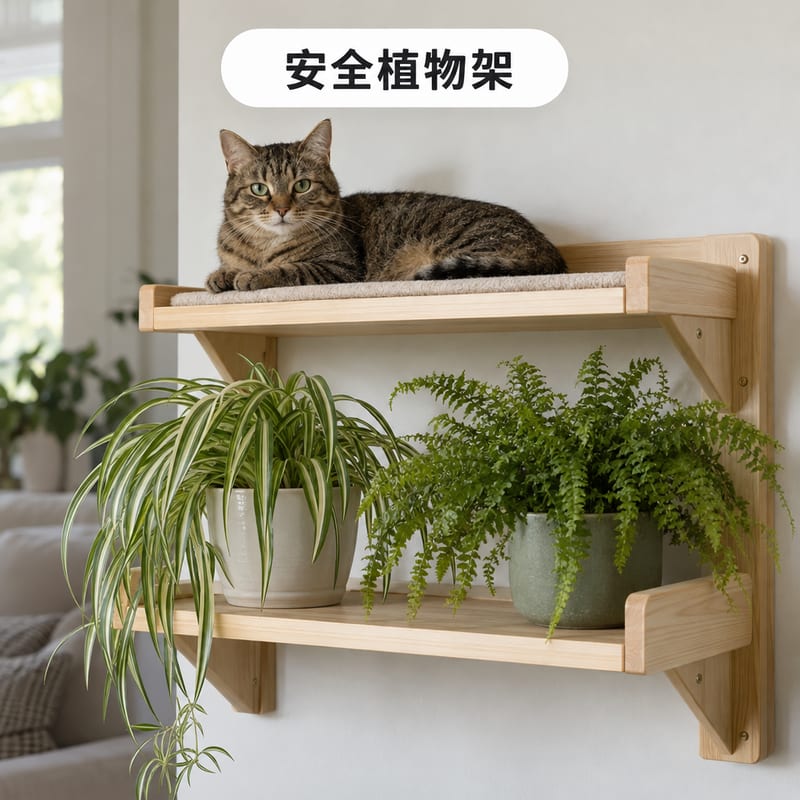
When to see a vet immediately
In the following situations do not wait, take your pet to a veterinary clinic or a 24-hour emergency clinic immediately:
- Ingestion of avocado skin, pit, leaves or stems, or eating avocado processed products or avocado oil.
- After eating xylitol-containing sugar-free peanut butter, sugar-free chewing gum or large amounts of high-fat food, showing vomiting, abdominal pain, soft stool, lethargy.
- After eating legumes, quinoa, kale, Chinese kale or egg, showing bloating, persistent vomiting, diarrhoea, refusing to eat.
- After eating durian, longan, persimmon or orange, showing pale gums, weakness, unsteady walking, or swallowing fruit pits or seeds.
- After chewing jasmine or other indoor plants, showing drooling, vomiting, rapid breathing, skin redness and swelling.
- Rabbits, hamsters or parrots showing diarrhoea, stopped defecation, bloating, weakness in legs or wings, complete refusal to eat.
- Any pet showing convulsions, difficulty breathing, loss of consciousness, abnormal body temperature or complete unresponsiveness.
This article has been reviewed by the PetChill Veterinary Editorial Team; the content is for reference only and cannot replace veterinary diagnosis, prescription or treatment.
To reward your pet, the safest approach is to use pet-specific treats and staple food, rather than human fruit or processed sauces. Below are examples you can consider; prices and stock are subject to the live prices marked on the online store:
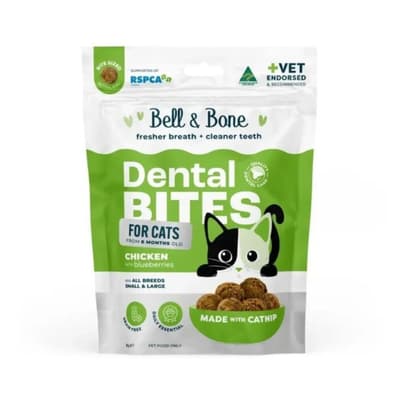
- Bell & Bone Cat Treats Chicken+Blueberry Natural Dental Chews 80g — HK$62.0.
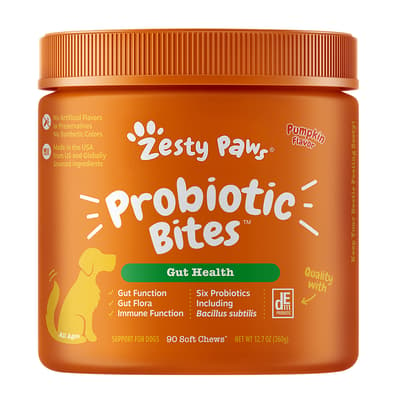
- Zesty Paws Probiotic Chewable Soft Chews Pumpkin Flavour 90 count — HK$263.
- Kakato Cat Treats Functional Health Meat Puree Kidney Daily Care Free-Range Chicken Flavour 15g×4 sticks — HK$20.0.
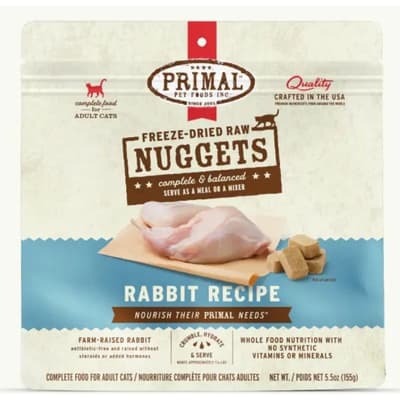
- Primal Cat Food Dehydrated Freeze-Dried Raw Meat Staple Food Rabbit Recipe 5.5oz — HK$198.0.
Health supplements and prescription food are for medical use, and must be decided by a vet based on medical history; they should not be fed long-term on your own.
International guidelines also support the principles in this article: the WSAVA Global Nutrition Guidelines recommend that treats should not exceed ten percent of daily calories, and that regular nutritional assessment should be done for each pet (https://wsava.org/global-guidelines/global-nutrition-guidelines/). ISFM/iCatCare points out that cats are obligate carnivores and plant-based foods should not replace staple food (https://icatcare.org/articles/feeding-your-cat-or-kitten); the AVMA reminds that when handling pet food and treats, attention should be paid to shelf life and cross-contamination (https://www.avma.org/resources-tools/pet-owners/petcare/safe-handling-pet-food-and-pet-treats). The Hong Kong Agriculture, Fisheries and Conservation Department's animal management information also reminds owners to have sufficient time, space and resources to care for animals (https://www.pets.gov.hk/english/having_pets/having_pets.html).
Further Reading
- Complete Guide to Cat and Dog Nutrition|Staple Food, Snacks and Weight Management
- Cat Safe Fruit Portion Chart
- Complete List of Toxic Foods for Cats and Dogs
- Guide to Handling Poisoning After a Cat Eats Something by Mistake
- Daily Care for Cats with Chronic Kidney Disease
- Complete Guide to Cat and Dog Digestive Health
In an emergency, contact a vet immediately; this article is for reference only and cannot replace veterinary diagnosis. Information checked as of 2026-10-14Source: Compiled by the PetChill editorial team
⚠️ Some products mentioned in this article have been discontinued (marked "discontinued" in the text); the relevant prices are records from before discontinuation. For the prices of other products, please refer to the current display on the online store.
 Fuji One full guide →


 Kakato full guide →
 Almo Nature full guide →