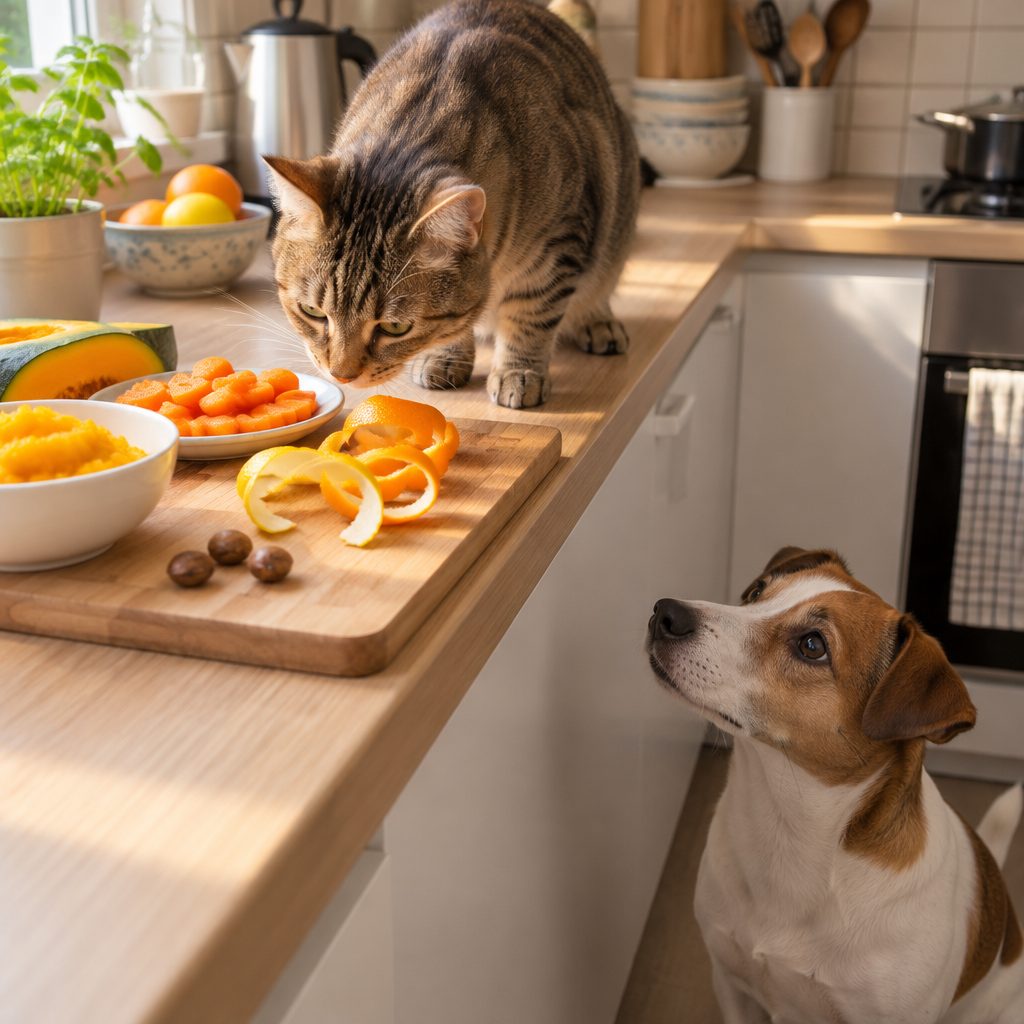
The core of fruit and vegetable safety for cats and dogs is 'peel, deseed, plain, small amounts': citrus peel and essential oils, the stones of peaches, plums and cherries, and seasonings such as garlic, ginger and soy sauce should never be fed; pumpkin, carrots and pea shoots should be steamed and mashed, with no salt or sugar, and only given in small amounts as treats.
Quick answers
- Never feed: citrus peel, leaves, stems and essential oils (lemon, orange, mandarin, grapefruit, pomelo), garlic and onion and their powders, the stones of cherries, peaches, plums and apricots, raw pumpkin, raw aubergine, soy sauce and all kinds of seasoning powder.
- Must be cooked and plain: pumpkin, carrots, aubergine and peas must be steamed or baked, peeled and deseeded, mashed or chopped very finely, with no salt, oil or sugar, and only given in small amounts as treats.
- No herb counts as a 'safe cat food': mint, rosemary, ginger, cinnamon, clove, nutmeg, Sichuan pepper and star anise should all be avoided, with essential oils and concentrated powders carrying the highest risk.
- If a fruit stone, seed or sharp object is swallowed: do not induce vomiting yourself; contact a veterinarian immediately. Vomiting should only be induced by a veterinarian based on time, amount, species and the animal's condition.
- Senior diabetic cats, injured cats, hamsters and rabbits need even more conservative portions, and any high-sugar fruit should be discussed with a veterinarian first.
Key points
- The irritant components of citrus are concentrated in the peel, leaves and essential oil; a small amount of flesh is not an emergency, but it is still not recommended as a treat.
- Fruit stones are not just a cyanide issue: peach, plum and cherry stones also carry obstruction and choking risks, so 'remove the stone' is a mandatory step, not a choice.
- Raw pumpkin, raw aubergine and raw potato contain harder-to-digest or irritant components, and can only be fed in very small amounts after cooking.
- Garlic, garlic powder, garlic oil and some soup bases, braising liquids and Chinese herbal medicines are hidden sources; cooking does not remove the risk, and there is no recognised safe amount.
- Inducing vomiting is not home first aid: incorrect induction can cause secondary harm, and the timing must always be judged by a veterinarian.
- Hamsters and rabbits have more fragile intestines, and high-sugar fruit and 'natural pigments changing droppings colour' should be treated as two separate matters.
What components in oranges and lemons can be harmful to cats? What poisoning symptoms can citrus peel cause if a cat eats it?
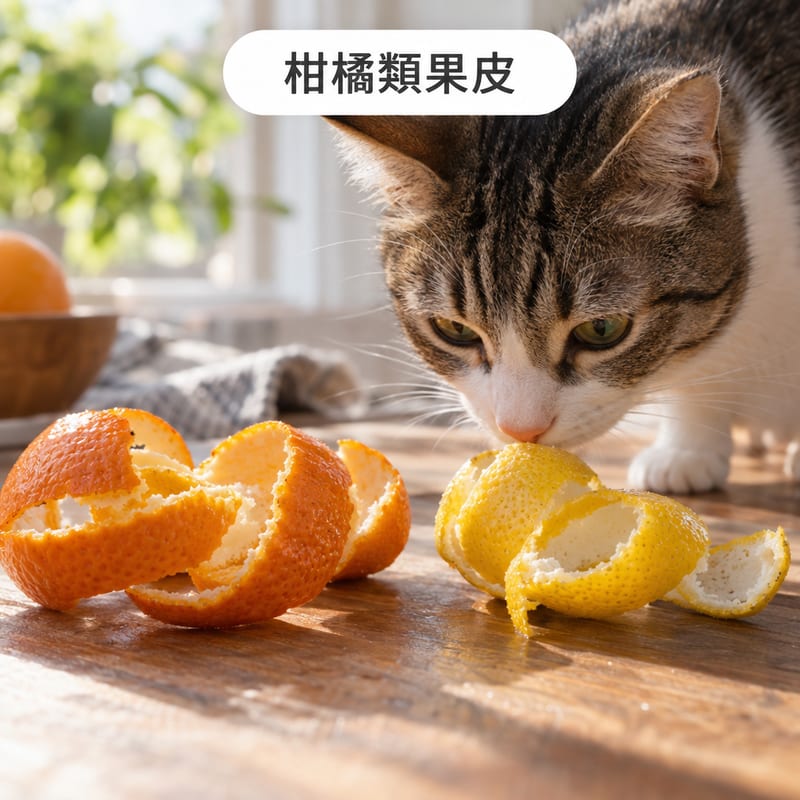
The risk of citrus fruit is not in the flesh but concentrated in the peel, leaves, stems and essential oil. These parts contain volatile oils such as limonene and linalool in concentrations many times higher than the flesh; cats' livers lack sufficient metabolic pathways to handle these compounds, so the same amount places a clearly greater burden on cats than on dogs.
Poisoning or irritation symptoms usually include: drooling, vomiting, diarrhoea, loss of appetite, lethargy; redness, itching and hair loss on skin or around the mouth after contact with peel or oil; in severe cases, unsteady walking, muscle tremors and rapid breathing. Diffusers, aromatherapy sprays, citrus essential oil cleaning products and pet wipes are easily overlooked sources, and cats ingest the oil on their fur when grooming.
The action is simple: always cut peel off into the bin (with a lid), and do not leave it at the edge of the kitchen counter; flesh is also not recommended as a treat because the sweet-sour taste and fibre can cause digestive upset; for a safe fruit portion chart for cats, see the cat safe fruit chart. If the cat only smelled it or licked a little, first wash the contacted area, remove the source, then phone the veterinarian to ask whether observation is needed; if peel was eaten or essential oil licked, treat it as an emergency.
| Part/product | Main components | Risk to cats and dogs | What to do |
|---|---|---|---|
| Peel, leaves, stems | Volatile oils such as limonene and linalool | Irritate skin and digestion; drooling, vomiting, diarrhoea | Always cut off and do not feed; cover food waste |
| Flesh | Citric acid, sugar, fibre | A small amount is not an emergency, but can upset digestion | Not recommended as a treat |
| Essential oil, diffusers, aromatherapy sprays | Highly concentrated volatile oils | Cats have limited metabolism; can cause skin and nerve symptoms | Avoid completely in pet areas |
| Jam, zest, lemon tea | Sugar plus concentrated peel | Sugar and irritants enter together | Never feed; keep drinks out of reach |
Besides cherry stones, are other common fruit stones (like peach and plum) equally dangerous to cats?
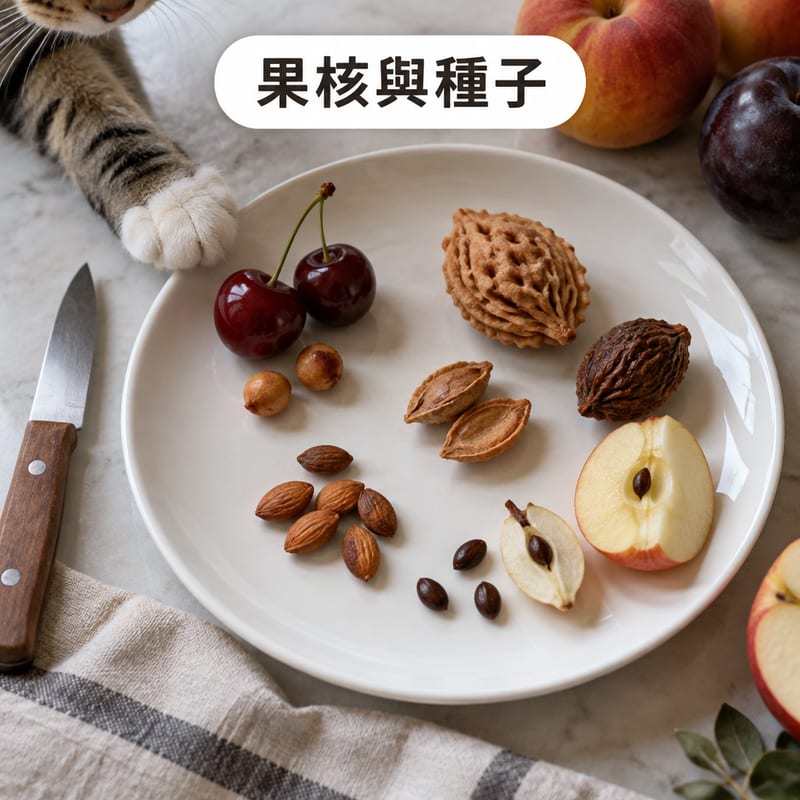
Yes, and the risk is just as high. Cherries, peaches, plums, apricots and damsons all belong to the rose family, and their stones, leaves and branches contain cyanogenic glycosides; when a stone is chewed it releases cyanide. But for household pets, the more common accident is obstruction and choking—stones are large, hard and rough-surfaced, and can lodge in the oesophagus, stomach or intestine, requiring surgery.
Cats have small mouths, and a stone can sometimes lodge directly in the roof of the mouth or oesophagus, causing drooling, pawing at the mouth, retching and refusal to eat. Even if swallowed whole, signs of obstruction such as repeated vomiting, loss of appetite, abdominal pain and no bowel movement may only appear days later. So the key judgement is not 'was it chewed' but always remove the stone and put it straight into a lidded bin.
The same applies to: apple seeds and pear seeds (contain cyanogenic glycosides, see apple seed safety), papaya seeds, mango stones and avocado stones (large and hard, high obstruction risk), watermelon seeds and melon seeds (large amounts may accumulate). To learn about the cyanide risk of cherries and other stone fruits, see the cyanide risk of dogs eating cherries and the general toxic food list for cats and dogs.
| Stone/seed | Main risk | Handling principle |
|---|---|---|
| Cherry, peach, plum, apricot stones | Cyanogenic glycosides (release cyanide when chewed) plus obstruction and choking | Always remove; put straight into a lidded bin |
| Apple seeds, pear seeds, papaya seeds | Cyanogenic glycosides; small amounts but should not be eaten | Cut out seeds and core before cutting flesh |
| Mango stone, avocado stone | Large and hard, high obstruction risk | Do not let pets chew on them |
| Watermelon seeds, melon seeds | Hard to digest; large amounts may accumulate | Deseed before feeding a small amount of flesh |
Why is raw pumpkin unsuitable for cats to eat directly? When should pumpkin puree not be used to treat constipation in cats?
Raw pumpkin is hard and coarse in fibre, and cats have short intestines that are not good at handling plant fibre, so eating it can cause gas, vomiting and loose stool; cut pumpkin left at room temperature can also grow bacteria. In addition, without heating, starch and cell walls are not broken down, so nutrient absorption is poor. The correct method is therefore peel, deseed, steam or bake, mash, no sugar or spices, no more than one to two teaspoons at a time, as a treat rather than a meal.
Pumpkin puree is indeed often used to help bowel movements because it contains soluble fibre and water, but not all constipation is suitable. In the following situations you should not use pumpkin puree yourself and should go straight to a veterinarian:
- No bowel movement for over 24 to 48 hours, or obvious pain or crying when passing stool.
- Vomiting, a hard abdomen you cannot touch, lethargy or refusal to eat.
- Suspected swallowing of linear foreign objects, hairballs, bones or fruit stones—so-called obstructive constipation.
- Diabetes or unstable blood sugar control: pumpkin contains carbohydrates and affects blood sugar.
- Chronic kidney disease or other conditions requiring potassium or phosphorus restriction; any extra food should be discussed with a veterinarian first.
- No improvement after 1 to 2 days of feeding, or worsening after eating.
In these situations, increasing the amount only delays diagnosis. To learn about daily prevention and dietary adjustment, see cat constipation management and daily prevention.
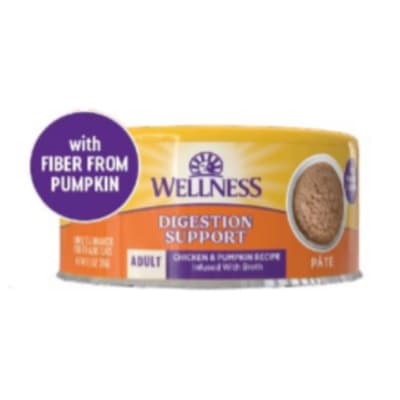
Commercial pumpkin-formula complete wet foods and treats have ingredient ratios calculated by the manufacturer and are far more consistent than feeding pumpkin puree yourself. Examples to consider:
- WELLNESS Cat Can Functional Complete Wet Food Digestive Ease Chicken + Pumpkin 2.5oz 70g — HK$16.
- AIME Kitchen Cat Can Grain-Free Mousse Nutritional Cat Can Palace Complete Food Series Tuna Pumpkin Mousse 75g — HK$14.
Prices and stock are subject to the online store's current listed price.
Are there any side effects or contraindications to carrot intake for cats? How should aubergine and pea shoots be fed?
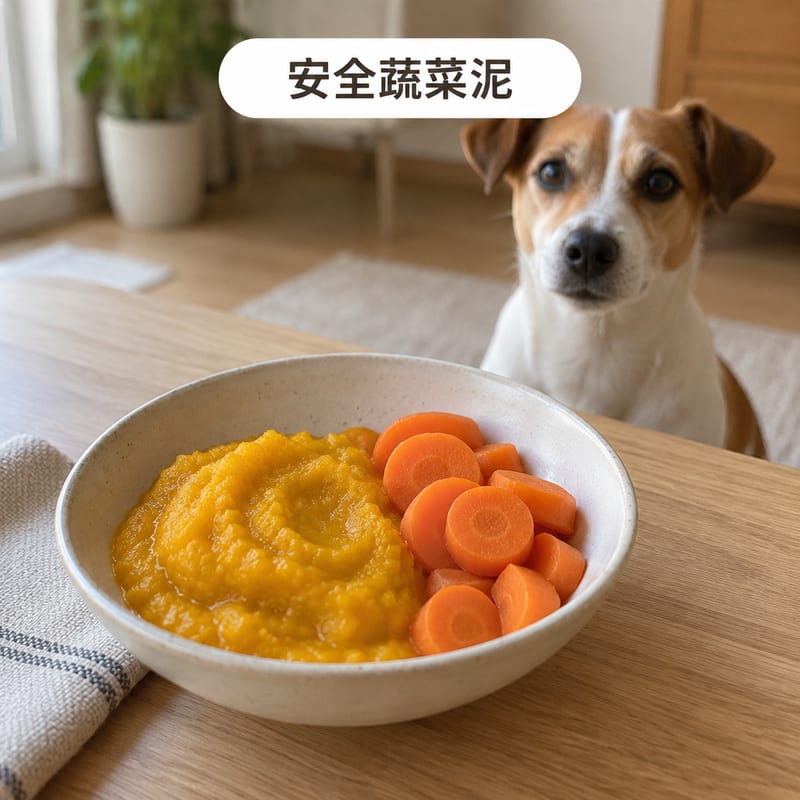
Carrots: steam or bake, and chop very finely or mash. Raw carrot sticks are hard and slippery and carry choking and obstruction risks for small animals, so should not be fed whole. Cooked carrots contain beta-carotene and soluble fibre, but cats have very low requirements for plant nutrients, and excess can cause loose stool and gas; diabetic cats may also have blood sugar fluctuations; if there is digestive sensitivity or ongoing diarrhoea, pause them. For a 10 kg dog, cooked carrot as a treat is about one to two tablespoons of small pieces; for cats reduce to less than one teaspoon, and treats in total should generally not exceed 10% of daily calories.
Aubergine: belongs to the nightshade family. Raw aubergine contains solanine and the flesh is hard to digest, so it must be peeled, deseeded, thoroughly cooked and given only in very small amounts. Note common Hong Kong preparations: fish-fragrant aubergine, braised aubergine and oil-blanched aubergine all contain garlic, soy sauce and a lot of oil, and these versions must never be fed.
Pea shoots: not toxic in themselves, but cats are obligate carnivores and pea shoots provide no essential nutrients. Pea shoots, stir-fried peas and pea soup usually contain garlic, onion and salt, so the home-table versions cannot be fed; if you really want to try, only a small amount boiled plain with no seasoning at all, and not as a daily vegetable 'supplement'.
Fish bones and scales: many people think they should leave bones in for 'calcium', but fish bones and scales are sharp objects that can pierce the mouth, oesophagus and digestive tract, and can cause obstruction or even perforation. Always debone and descale fish thoroughly, and do not add salt, soy sauce or wine.
Are herbs such as mint or rosemary safe for cats? What effects do common seasonings (like soy sauce or seasoning powder) have on cat health?
Mint, rosemary, ginger, cinnamon, clove, nutmeg, Sichuan pepper, star anise and their essential oils are not safe foods for cats or dogs. Essential oils are the highest-risk form because they are concentrated, can be absorbed through the skin, and are ingested when cats groom; even diffusing alone can, in a small space, cause drooling, sneezing and lethargy.
As for the most common seasonings in Hong Kong kitchens: soy sauce, oyster sauce, chicken powder, MSG and various seasoned salts are high in sodium and burden the heart and kidneys; XO sauce, garlic sauce, satay sauce and braising liquid also contain garlic, onion and chilli, a double risk. The harm of allium foods is not just digestive upset: garlic and onion destroy red blood cells and cause haemolytic anaemia, with cats generally considered at higher risk; symptoms may be delayed by one to several days, including lethargy, weakness, pale gums, rapid breathing and dark urine. Powders and concentrated products (garlic powder, onion powder, garlic oil) are concentrated and hardest to estimate, so the risk is usually higher than fresh chopped. To learn how onion powder hides in everyday snacks, see the hidden risk of potato chips and onion powder.
If a cat has been eating food containing ginger or garlic long-term, the approach is: stop feeding immediately, do not give any medication or 'detox' food yourself, and bring the food packaging and ingredient list to the veterinary clinic, where the veterinarian will decide whether blood tests and observation are needed. Long-term consumption can also cause chronic digestive irritation, with repeated loose stool, reduced appetite and weight loss.
| Herb/seasoning | Risk components | Judgement |
|---|---|---|
| Garlic, garlic powder, garlic oil | Sulphur compounds that destroy red blood cells | Never feed; not safe even cooked |
| Onion, shallot, Chinese chives, spring onion | Also allium; also destroy red blood cells | Never feed; no recognised safe amount |
| Ginger, ginger powder | Gingerols that irritate the digestive tract | Should not be fed long-term or in large amounts |
| Mint, rosemary, cinnamon, clove, nutmeg | Volatile oils, camphor-like compounds | Not safe foods; essential oils highest risk |
| Soy sauce, oyster sauce, chicken powder, XO sauce | High sodium, hidden garlic and onion, additives | Never add to pet food |
| Salt, sugar, honey, maple syrup | Sodium burden, blood sugar swings | Do not add; do not let pets taste |
What immediate steps should be taken if a pet eats a fruit stone or seed? After a cat has just swallowed a foreign object, within what time frame is inducing vomiting safe and effective?
There is only one order of steps:
- Separate immediately: remove the remaining stone, flesh, packaging and vomit from the pet, and do not force water, milk or oil down to 'flush it out'.
- Do not induce vomiting yourself: this is the most important point. Fruit stones, fish bones, needles and thread, glass and chemicals should not be vomited at home by the owner; sharp objects can scratch the oesophagus during vomiting, and corrosive substances cause a second burn.
- Record the details: what was eaten, roughly how much, when it happened, the pet's weight and any chronic disease.
- Phone the veterinarian or a 24-hour emergency clinic immediately, stating the four points above; if there is no bowel movement, repeated vomiting or a hard abdomen, do not wait—go directly.
- Bring everything: stone fragments, food packaging, ingredient list, vomit sample, medical history and medication records.
Inducing vomiting is not a home first-aid technique. In general, only within a short time after ingestion (most guidelines use about one to two hours as the limit, up to four hours in some cases), with the animal fully conscious, not convulsing and not in respiratory distress, and after veterinary assessment, can vomiting be considered by a veterinarian. The longer the delay, the more the toxin is absorbed, the lower the benefit and the higher the risk.
| Situation | Can vomiting be induced? | Reason |
|---|---|---|
| Shortly after ingestion, animal fully conscious, assessed and performed by a veterinarian | Yes | The earlier, the less absorption |
| Swallowed stones, bones, fish bones, needles and thread or other sharp objects | No | Vomiting may pierce the oesophagus or intestine |
| Swallowed bleach, drain cleaner or other corrosive substances | No | Causes a second burn |
| Already vomiting, convulsing, in respiratory distress or lethargic | No | Vomit may be inhaled into the airway |
| Heart disease, epilepsy history or old and frail | No self-treatment | Emetics themselves carry risk |
| Uncertain how much or when it was eaten | No | A veterinarian must assess first |
Cases of ingesting grapes/raisins, alcohol or allium foods follow the same principles; see emergency steps for cats eating grapes/raisins and the complete cat emergency first aid guide.
How much guava can a senior diabetic cat eat per day? What foods should injured cats, hamsters and rabbits avoid?
Guava: relatively moderate in sugar and high in fibre, but for a senior diabetic cat the key is not 'how many grams of fruit' but blood sugar control and insulin dose. Any fruit can cause blood sugar swings, so the correct approach is to ask the veterinarian first, count the fruit in the daily total calories, peel, deseed and chop very finely, no more than one to two small pieces at a time, and observe demeanour, water intake and bowel movements afterwards. If blood sugar is unstable, the insulin dose is about to be adjusted, or the cat is losing weight, new foods should not be tried. The same principle applies to banana, apple and blueberry: you can ask about diabetes dietary management in cats, but the amount should always be set by the veterinarian.
Injured or post-surgery cats: avoid high salt (soy sauce, seasoning powder, canned soup), high fat and fried foods, processed meats (sausages, luncheon meat, braised items), dairy, allium foods, alcohol and spicy seasonings. These burden hydration and digestion and may affect wound healing and drug metabolism. During recovery, base the diet on veterinarian-recommended complete food or prescription diets, and do not add new ingredients in the name of 'building strength'.
Can hamsters eat grapes: no. Hamsters are very light, so the sugar burden is relatively large, and grapes/raisins are nephrotoxic to cats and dogs by a mechanism that is still not fully understood, with no recognised safe amount, so the same principle applies to hamsters. Hamster treats should be species-specific food plus very small amounts of safe fruit and vegetables, such as a small piece of apple or one or two blueberries, at most once or twice a week.
Strawberry pigments: the natural pigments in strawberries (anthocyanins) generally do not noticeably change hamster or rabbit droppings; but after large amounts of beetroot, dragon fruit and blueberry, urine or faeces may be reddish, and this must be distinguished from blood in stool or urine. If droppings are bright red, black or mucousy, with loose stool, lethargy or refusal to eat, see a veterinarian immediately. As for rabbits: rabbits with diarrhoea or loose stool, during a food change, with dental problems or overweight should avoid strawberries; notes on feeding pears to senior cats likewise states that fruit should always follow the principle of 'very small amount, plain, finely chopped'.
When to see a veterinarian immediately
Do not wait in the following situations; take the pet to a veterinary clinic or 24-hour emergency clinic immediately:
- Ingestion of citrus peel, essential oil, garlic, onion or their powdered products, or pale gums, weakness, dark urine or rapid breathing.
- Ingestion of fruit stones, seeds, fish bones, fish scales or other sharp objects, or drooling, pawing at the mouth or retching.
- No bowel movement for over 24 hours, a hard abdomen you cannot touch, repeated vomiting or vomiting of foreign object fragments.
- Persistent vomiting, bloody diarrhoea, lethargy, convulsions or unsteady walking after eating a new food.
- A diabetic cat with sudden appetite change, abnormally increased water intake or obvious weakness.
- A hamster or rabbit with diarrhoea, stopped bowel movements, abdominal bloating, refusal to eat or abnormal body temperature.
This article was reviewed by the PetChill Veterinary Editorial Team; the content is for reference only and cannot replace veterinary diagnosis, prescription or treatment.
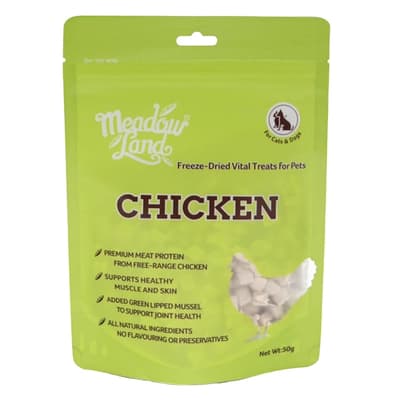
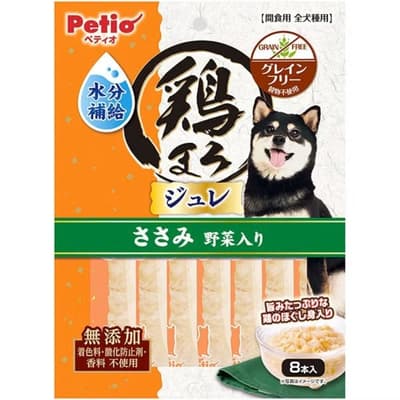
The safest way to reward pets is with pet-specific treats and complete wet food, not leftovers from the human table. Examples to consider:
- Meadowland Cat & Dog Treats Freeze-Dried Chicken 50g — HK$55.
- Petio Dog Treats Additive-Free Chicken + Carrot + Pumpkin Hydrating Squeeze Stick 8-pack — HK$25.
Prices and stock are subject to the online store's current listed price. The International Society of Feline Medicine (iCatCare/ISFM) feeding guidelines state that cats are obligate carnivores and plant foods should not replace a balanced complete diet (https://icatcare.org/articles/feeding-your-cat-or-kitten); WSAVA's global nutrition guidelines also emphasise that a pet's dietary plan should be assessed by the veterinary team according to the individual animal's age, weight and health status, not by generic portion charts found online (https://wsava.org/global-guidelines/global-nutrition-guidelines/). The Hong Kong Agriculture, Fisheries and Conservation Department (AFCD) pet information platform also reminds owners to take proper care of their pets and pay attention to food and environmental safety (https://www.pets.gov.hk/).
Further reading
- Complete pet nutrition guide: complete food, treats and weight management
- General toxic food list for cats and dogs
- List of forbidden foods for dogs
- Household toxins and pet safety
- Complete guide to digestive health in cats and dogs
Veterinary warning: In an emergency, contact a veterinarian immediately; this article is for reference only and cannot replace veterinary diagnosis. Information checked as of 2026-10-14; source: PetChill editorial team.
 Feline Natural full guide →