Quick answers
- USDA data: per 100 g raw chicken liver, about 119 kcal, vitamin A 3,296 µg RAE (about 11,078 IU), calcium 8 mg, phosphorus 297 mg, calcium-phosphorus ratio about 1:37.
- Calorie comparison: chicken liver provides about 9,309 IU vitamin A per 100 kcal, lower than beef liver (about 12,517 IU) and pork liver (about 16,157 IU), but still a concentrated food.
- A 4 kg indoor adult cat needs about 200 kcal per day; using the "treats no more than 10% of daily calories" rule, the limit is 20 kcal, or about 17 g raw chicken liver, providing about 1,862 IU vitamin A.
- The AAFCO minimum for adult cat maintenance is 5,000 IU vitamin A per kg dry matter (about 250 IU/day for a 4 kg cat); 17 g chicken liver is already about 7.4 times this minimum.
- A liver-only meal (about 168 g/day, i.e. 200 kcal) provides only about 13 mg calcium, equal to 4.5% of the daily minimum calcium requirement (about 300 mg), but about 499 mg phosphorus, roughly double the requirement.
- The NRC 2006 safe upper limit for vitamin A in cats is 333,333 IU per kg diet, which translates to about 23,000 to 27,000 IU per day for a 4 kg cat; research shows that long-term intake near this level for 18 months already produces bone and liver changes.
- In one sentence: chicken liver is safest as a "1 to 2 times per week topper"; the main food should always be a complete balanced food, not liver as the staple.
Owners searching "how to feed chicken liver to cats to avoid nutritional imbalance" have usually heard both "liver is good for cats" and "liver poisons cats" and want to know which is true. The truth includes both: chicken liver is a good source of the vitamin A cats require (cats cannot efficiently convert β-carotene and must get preformed vitamin A), but the calcium-phosphorus ratio and vitamin A concentration of the same liver make it suitable only as a "topper", not as a staple. The question is not whether to feed it, but how much and on what base.
Below we use actual USDA, AAFCO and NRC figures to calculate exactly how much vitamin A a 4 kg cat needs per day and how many grams of chicken liver the 10% calorie limit equals; then break down the three problems caused by long-term excess—vitamin A toxic bone disease, calcium-deficiency bone softening, and vitamin D insufficiency; then give specific portions for three situations, raw/cooked handling and storage practices, and finally list which cats should not be given liver and when to see a veterinarian immediately. To build the overall framework first, see our Pet Nutrition Hub, then come back with the numbers here to calculate your own cat's limit.
Chicken liver nutrition: how much vitamin A does a 4 kg cat need per day?
Whether chicken liver is "a lot" should not be judged by feeling but by scales and labels. Below are measured values from USDA FoodData Central, using the same weight basis for raw and cooked for direct comparison.
| Item (per 100 g) | Raw chicken liver | Cooked chicken liver (boiled) |
|---|---|---|
| Calories | 119 kcal | 167 kcal |
| Vitamin A | 3,296 µg RAE (about 11,078 IU) | 3,980 µg RAE (about 13,253 IU) |
| Protein | 16.9 g | 24.5 g |
| Fat | 4.8 g | 6.5 g |
| Calcium | 8 mg | 11 mg |
| Phosphorus | 297 mg | 405 mg |
| Iron | 8.99 mg | 11.6 mg |
| Vitamin D | 0 µg | 0 µg |
Three things stand out at first glance. First, vitamin A concentration is extremely high: 100 g raw chicken liver is already many times the daily recommended amount for a 4 kg adult cat. Second, low calcium and high phosphorus: 8 mg calcium to 297 mg phosphorus, about 1:37, while cats need a ratio of about 1:1 to 1:2. Third, vitamin D is listed as 0: meaning chicken liver cannot supply vitamin D, and homemade diets without supplementation will have another gap.
So what are the "requirements" and "upper limits"? The table below converts each standard into actual figures for a 4 kg cat (about 200 kcal, about 50 g dry matter per day):
| Standard | Original requirement | Converted for 4 kg cat per day |
|---|---|---|
| AAFCO adult maintenance minimum | 5,000 IU/kg dry matter | about 250 IU |
| AAFCO adult maintenance maximum | 750,000 IU/kg dry matter | upper limit, not a target |
| NRC 2006 adult cat recommendation | 250 µg RAE/1,000 kcal (about 833 IU) | about 167 IU |
| NRC 2006 safe upper limit | 333,333 IU/kg diet | about 23,000 to 27,000 IU |
| 17 g raw chicken liver (10% calories) | — | about 1,862 IU |
| 168 g raw chicken liver (full meal, 200 kcal) | — | about 18,618 IU |
This table explains the main point of the article: chicken liver is not "nutritious so feed it daily", but "so concentrated that grams must be controlled". 17 g raw chicken liver is already about 7.4 times the AAFCO minimum and about 11 times the NRC recommendation; eating a full meal of 168 g approaches 70-80% of the converted NRC safe upper limit. Note that the AAFCO maximum (750,000 IU/kg dry matter) is a regulatory ceiling, not a safety target—the NRC's 333,333 IU/kg is the reference boundary commonly used in research.
The three costs of long-term excess: bone spurs, bone softening, liver burden
1. Chronic vitamin A toxicity: cervical spine and large joints first
Cats are particularly sensitive to chronic vitamin A toxicity, and natural cases are almost all related to "long-term large amounts of raw liver". Typical lesions in veterinary literature are bone spurs and fusion in the cervical spine and large joints; animals show neck stiffness, reluctance to jump, reduced forelimb mobility, and altered gait, with X-rays revealing deformed bones. Severe cases can also show liver damage—a case report from the University of São Paulo, Brazil, described an 8-year-old cat fed only raw beef liver and organs long-term; X-rays showed bone spur fusion from C1 to T7, liver vitamin A concentration of 894.6 µg/g, and severe liver fibrosis.
How many years does it take? Most cases in the literature involve continuous liver consumption for 2 to 5 years, but research also shows "subclinical" changes appear earlier than symptoms. A 2014 study published in The Veterinary Journal fed adult cats to the NRC safe upper limit level (equivalent to about 26,700 IU per day for a 4 kg cat) for 18 months: the cats showed no obvious abnormalities in demeanour, gait or liver function indices, but had mild bone changes and pathological liver changes; the authors concluded that "the current safe upper limit may be set too high". This is why this article consistently recommends portions as a "topper" rather than "up to the limit"—the limit is a research boundary, not a daily target.
A survey of 100 cats in Brisbane, Australia, is also worth noting: 25 cats had liver vitamin A concentrations above 5,000 µg/g, and 9 already had cervical bone lesions; the report attributed this mainly to cheap raw liver being fed in large amounts as cat food. This case shows that "liver causing problems" is usually not a one-day event but the accumulation of daily portion and frequency.
As an aside: cats need preformed vitamin A (they cannot efficiently convert β-carotene), so liver itself is not a "harmful food". The problem is that the requirement is only on the order of a hundred-plus IU per day, which a balanced staple food already provides; there is no need to supply vitamin A with large amounts of liver.
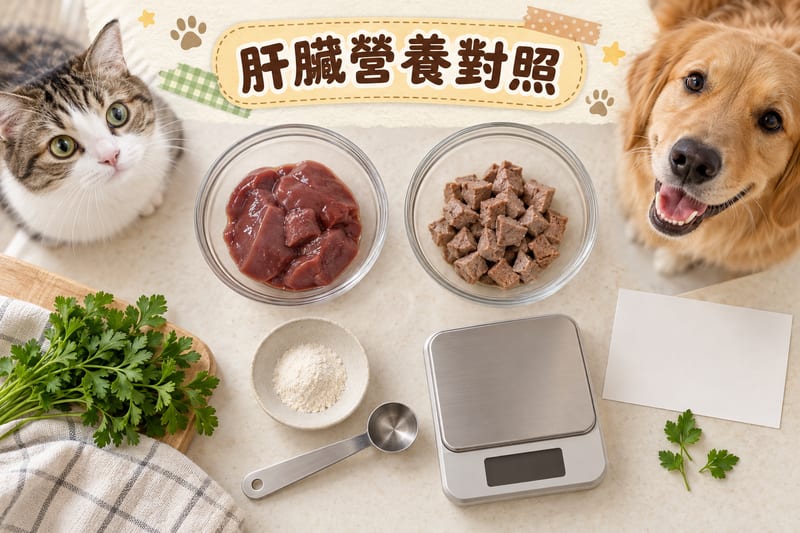
2. Calcium-deficiency bone softening: appears earlier than vitamin A problems
If a cat is fed liver or lean meat as a staple, the second problem emerges faster: severe calcium deficiency and phosphorus excess.
For a 4 kg cat eating 200 kcal per day, a full 168 g raw chicken liver provides only about 13 mg calcium and about 499 mg phosphorus. The AAFCO adult maintenance minimum calcium requirement is 0.6% per kg dry matter, which translates to about 300 mg calcium and 250 mg phosphorus per day for this cat. That is: calcium is only 4.5% of the requirement, while phosphorus is about double.
The consequence is chronically elevated parathyroid hormone, the body draws calcium from bones to maintain blood calcium, and bone tissue is replaced by fibrous tissue. Veterinary literature calls this fibrous osteodystrophy (commonly known as rubber jaw); the jawbone becomes soft, teeth loosen, and fractures occur easily. Adult cats fed all-meat diets long-term can also develop osteomalacia, with signs including brittle bones, spinal curvature, poor coat quality, and easy fracturing. Growing kittens have higher calcium requirements and are most at risk; literature describes kittens refusing to walk, hindlimb lameness, bent leg bones, and even "folded fractures".
The third gap is vitamin D. USDA lists vitamin D as 0 µg in chicken liver (raw and cooked), while the AAFCO adult minimum is 500 IU per kg dry matter. Homemade diets of pure meat plus organs without supplementation leave indoor cats short of a vitamin D source, and calcium absorption is also affected. Veterinary manuals clearly recommend: homemade cat food should have a formula designed by a veterinary nutritionist, or be based on a complete balanced commercial food, because research shows many homemade cat diets are deficient in minerals and fail to meet the calcium-phosphorus ratio.
| Problem | Main cause | Common signs | Typical onset |
|---|---|---|---|
| Chronic vitamin A toxicity | Long-term large amounts of liver/supplements | Cervical bone spur fusion, neck and forelimb stiffness, reluctance to jump, severe cases liver fibrosis | 2 to 5 years in literature cases |
| Calcium deficiency/calcium-phosphorus imbalance | All-liver or all-meat meals, Ca:P about 1:37 | Bone replaced by fibrous tissue, soft jaw, loose teeth, easy fractures | Weeks in kittens, months in adults |
| Vitamin D insufficiency, osteomalacia | Homemade diet without supplements, liver vitamin D is 0 | Brittle bones, spinal curvature, poor coat, reluctance to move | Long-term all-meat diet in indoor cats |
Portion recommendations: three situations, three numbers
There is no single answer for portions; it depends on your base food. The following three situations are ordered from most common to least common.
Situation 1: Staple is a complete balanced commercial food (most common). Chicken liver is only a topper: 5 to 10 g each time (about 1 to 2 teaspoons diced), 1 to 2 times per week, mixed into wet food or on top of the meal. This amount is about 3% to 7% of daily calories, equivalent to about 550 to 1,110 IU vitamin A per day, within the safe range.
Situation 2: Want to use the upper limit (not recommended daily long-term). The treat limit commonly used in veterinary nutrition is 10% of total daily calories. The table below shows actual grams by body weight:
| Cat weight | Estimated daily calories | 10% calorie limit | Equivalent raw chicken liver (per day) | Weekly total reference |
|---|---|---|---|---|
| 3 kg | about 150 kcal | 15 kcal | about 13 g | about 88 g |
| 4 kg | about 200 kcal | 20 kcal | about 17 g | about 118 g |
| 5 kg | about 250 kcal | 25 kcal | about 21 g | about 147 g |
| 6 kg | about 300 kcal | 30 kcal | about 25 g | about 176 g |
Seeing weekly totals in the hundreds of grams explains why it should not be fed daily: 118 g per week for a 4 kg cat should be divided into 2 to 3 meals, not given all at once.
Situation 3: Raw homemade diet. Raw feeding conventions use "percentage of food weight", not calories: 80% muscle meat, 10% edible bone, 5% liver, 5% other secreting organs. For a 4 kg cat eating about 120 g raw food per day, liver is about 6 g (daily), providing about 665 IU vitamin A. It must be emphasised: this 5% is a ratio convention, not a guarantee of nutritional completeness—homemade diets still need calcium, taurine, vitamin D and E supplemented according to a veterinary nutritionist's formula; you cannot just follow the ratio.
Four steps to calculate portions:
- Weigh ideal body weight (not current weight).
- Ideal weight × about 50 kcal/kg gives estimated daily calories (a common value for indoor adult cats).
- Daily calories × 0.1 gives the calorie limit for toppers.
- Limit calories ÷ chicken liver calorie density (raw chicken liver about 1.19 kcal/g) gives grams, then round down.
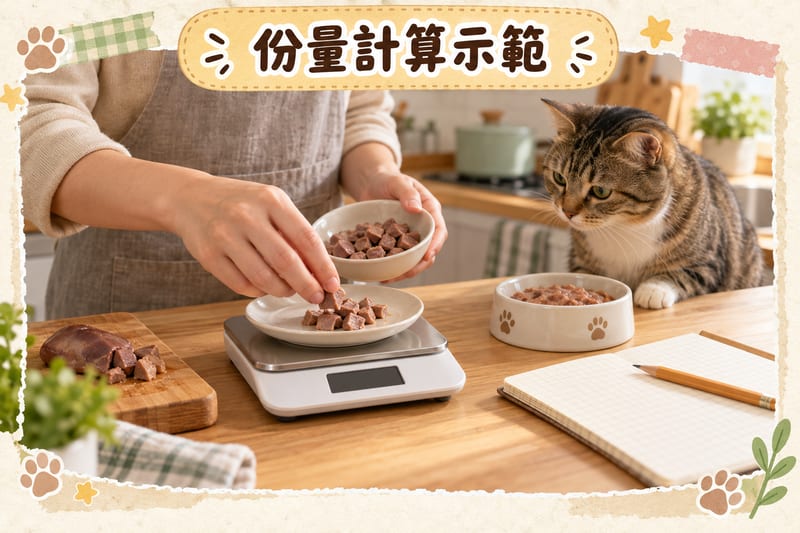
One easy mistake: weigh raw and cooked in the same state. After boiling, moisture loss increases the vitamin A concentration by weight by about 20% (from 3,296 to 3,980 µg RAE/100 g); if you use cooked liver but calculate by raw weight, actual intake will be lower; the reverse also applies. Decide whether you are using raw or cooked before weighing.
Raw or cooked? Handling and storage practices
Cooking is recommended. Chicken liver is an organ meat; raw feeding involves risks of Salmonella, Campylobacter, Listeria and Toxoplasma; refrigeration or freezing cannot guarantee killing all parasites. The cooking standard is a centre temperature of at least 74°C. Steam or briefly boil with little water, and keep the juices to mix into meals to reduce loss of water-soluble nutrients (such as taurine and B vitamins). Vitamin A is fat-soluble and heat-stable, so cooking does not destroy it.
If you still choose raw feeding, at minimum do all of the following:
- Buy human-grade liver from a known source, process it the same day, and do not buy loose liver that has been sitting for days.
- Use a dedicated cutting board and knife, wash immediately after handling with hot water and detergent; wash hands after handling raw liver.
- Pregnant women, young children and immunocompromised family members should not handle raw liver (Toxoplasma risk).
- Portion and freeze; thaw only one meal's portion at a time, and do not refreeze after thawing.
Storage and portion control:
- Cooked liver keeps in the refrigerator for 1 to 2 days; to extend, portion and freeze for about 1 to 2 months.
- Raw liver should not be refrigerated for more than 1 to 2 days; freeze the rest immediately in portions.
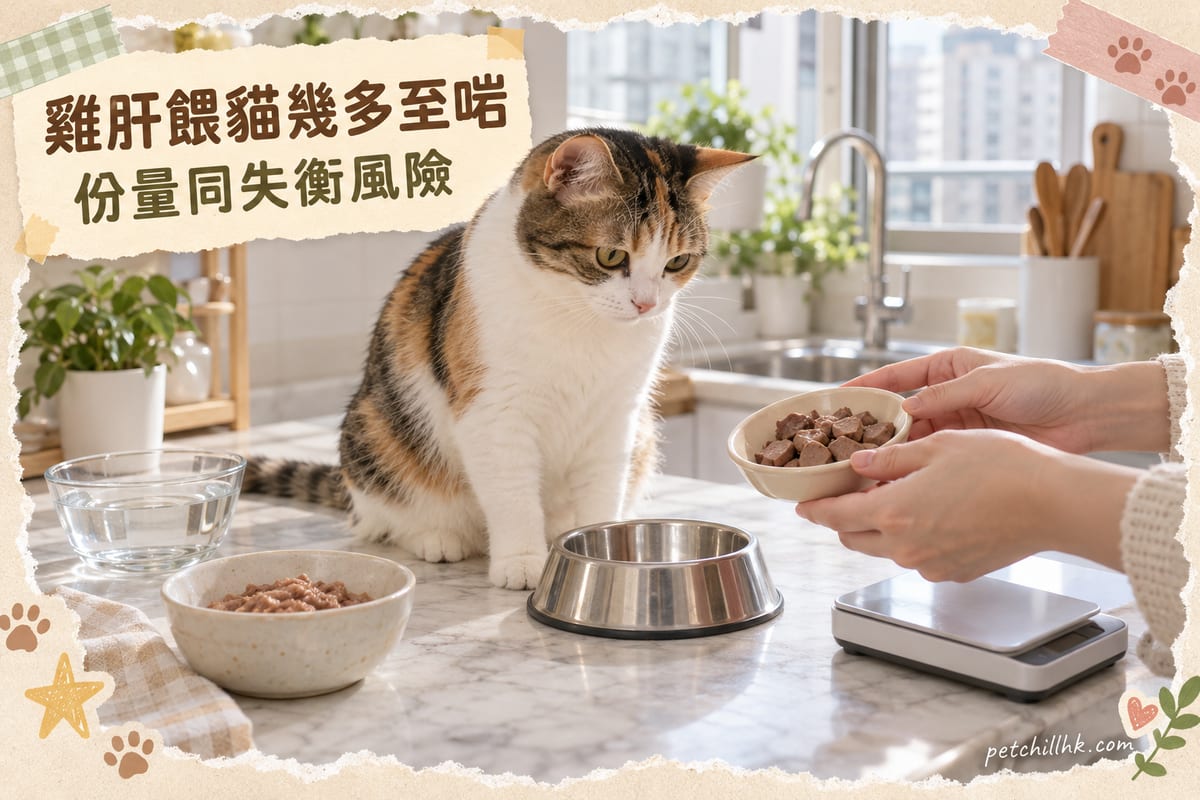
- Weigh grams with a kitchen scale before each feeding; do not estimate by "a piece" or "a spoon".
Which cats should not be given chicken liver without advice?
The following situations are not suitable for adding liver on your own, or require asking a veterinarian first:
- Kittens: growing animals have high calcium requirements, and all-meat or all-liver meals most easily cause bone problems; kittens should be fed kitten formula food or mother's milk/replacement milk as the main food.
- Senior cats: kidney function generally declines, phosphorus load must be controlled, and liver is high in phosphorus (405 mg per 100 g cooked liver).
- Cats with chronic kidney disease: need phosphorus restriction; any high-phosphorus food must be counted.
- Cats with liver disease or copper metabolism disorders: liver contains copper (about 0.5 mg per 100 g cooked liver) and high vitamin A concentration, both requiring veterinary assessment.
- Pancreatitis or history of pancreatitis: fat and organ meat load must be careful.
- Urinary stones or history of urinary disease: mineral ratios must follow veterinary instructions.
- Cats already on prescription diets: extra feeding will offset the phosphorus, sodium and protein ratios designed into the prescription diet.
- Obese cats or those needing weight loss: any topper must be counted in daily calories.
If the following signs appear, do not try to solve it by "feeding less liver"; contact a veterinarian immediately:
- Neck stiffness, reluctance to jump, noticeably reduced forelimb joint mobility, or sudden change in gait.
- Persistent decrease in appetite, weight loss of more than 5% in two weeks.
- Loose teeth, abnormal jaw feel, unexplained fractures.
- Complete anorexia for more than 24 hours, repeated vomiting or diarrhoea, blood in stool or vomit.
Building on a balanced staple: a sample weekly menu for Hong Kong
The correct use of chicken liver is "on top of a balanced staple food", not replacing it. Here is a sample plan for a 4 kg indoor adult cat:
- 90% of calories from a complete balanced food (dry food or complete wet food, check the packaging for a "Complete and Balanced" statement).
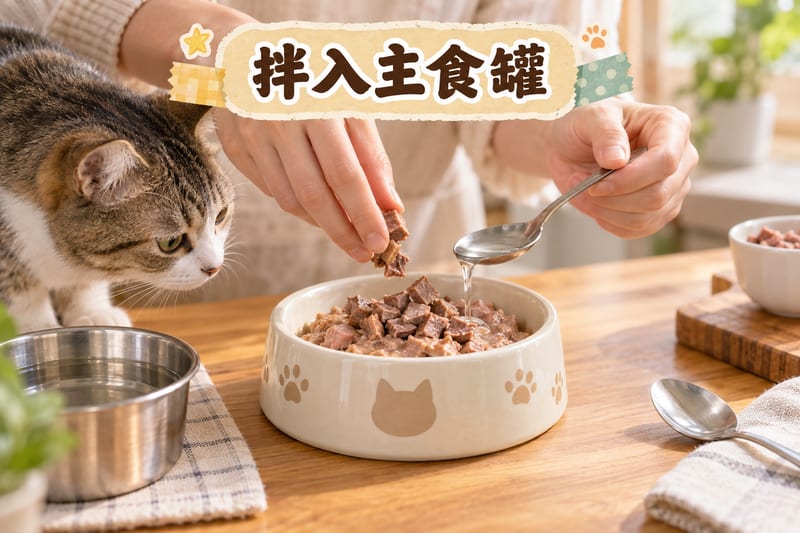
- Chicken liver 1 to 2 times per week, 5 to 10 g each time, finely chopped and mixed into meals, not as a separate meal.
- Mix into wet food or add a little warm water, because liver is low in moisture; increasing water intake helps urinary health.
- Record the date and grams each time, weigh every two weeks; weight gain is usually a portion issue with toppers.
- Health check every three to six months, more often for senior cats or those with chronic disease as advised by the veterinarian.
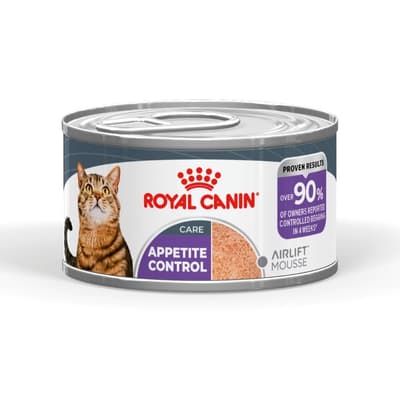
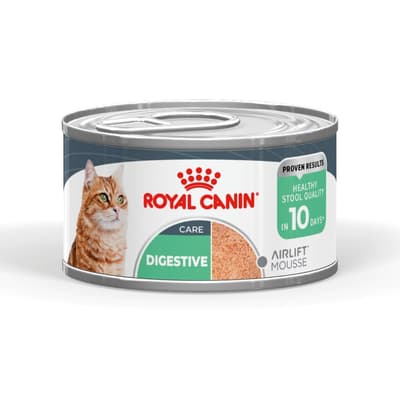
If you want to use commercial wet food as the staple base, here are some in-store references (other brands, for directional comparison only, not a recommendation):
- Royal Canin AIRLIFT Cat Pouch Adult Gravy 85g (4240700) — HK$24
- Royal Canin AIRLIFT Cat Pouch Adult Digestive Care 85g (4241300) — HK$24
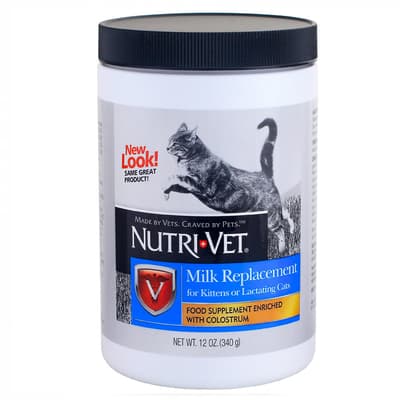
- Nutrivet Cat Milk Powder with Colostrum 12oz (NV99878) — HK$180 (available for pre-order)
Prices and stock are subject to the online store's current listed price. One final reminder: milk powder is for kittens during weaning and cannot be used as a reason to "replace milk or staple food with chicken liver"—kittens are the stage that most needs a complete balanced formula.
Frequently asked questions
How to feed chicken liver correctly to avoid nutritional imbalance?
Treat chicken liver as a topper, not a meal: keep 90% of calories from a complete balanced food, and give 5 to 10 g of liver 1 to 2 times per week mixed into meals. For a 4 kg adult cat, the 10% calorie limit equals about 17 g raw liver per day, and eating that amount daily long-term is already too much. A liver-only meal provides only about 13 mg calcium, less than 5% of the 300 mg daily minimum, so the calcium-phosphorus ratio is unbalanced; you need calcium supplementation and a balanced food base.
How many times a week can I feed chicken liver?
For most domestic cats, 1 to 2 times per week, 5 to 10 g each time, providing 3% to 7% of daily calories. For a 4 kg adult cat eating about 200 kcal per day, the 10% limit is 20 kcal, or about 17 g raw liver; that works out to about 118 g per week. For raw homemade diets, use a different ratio: liver makes up 5% of total food weight, so about 6 g per day for a 4 kg cat, plus 5% other secreting organs.
Will eating chicken liver cause vitamin A toxicity in cats?
Only with large amounts long-term; short-term moderate amounts do not. Vitamin A is stored in the liver, and chronic toxicity cases in the literature mostly involve 2 to 5 years of continuous liver consumption, presenting as bone spurs on the cervical spine and large joints, stiffness in the neck and forelimbs, and in severe cases liver fibrosis. Research shows that daily intake near the NRC safe upper limit (about 23,000 to 27,000 IU for a 4 kg cat) for 18 months already produced mild bone and liver changes, so you should not rely on large amounts of liver to supply vitamin A.
Will a cat eating only chicken liver develop bone softening or calcium deficiency?
Yes, and it appears faster than vitamin A problems. Raw chicken liver has only 8 mg calcium and 297 mg phosphorus per 100 g, a calcium-phosphorus ratio of about 1:37; a 4 kg cat eating 200 kcal of liver (about 168 g) gets only about 13 mg calcium, equal to 4.5% of the 300 mg daily minimum. Long-term calcium deficiency causes fibrous osteodystrophy (rubber jaw), bone softening in adult cats, and rickets in kittens.
Should chicken liver be fed raw or cooked?
Cooking is safest; the centre must reach at least 74°C. Chicken liver is an organ meat, and raw feeding carries risks of Salmonella, Campylobacter and Toxoplasma; freezing cannot guarantee killing all parasites, and pregnant women and immunocompromised family members should not handle raw liver. Cooking does not destroy vitamin A (per 100 g cooked liver actually rises to about 13,253 IU due to moisture loss), but taurine and water-soluble B vitamins leach into the juices, so steaming or brief boiling with little water is recommended.
Further reading
- Pet Nutrition Hub: ingredients, calories, how to choose prescription diets (2026)
- Do steroids harm the liver and kidneys? A guide to liver and kidney monitoring for long-term medication in cats and dogs
- Freeze-dried cat food guide: freeze-dried vs fresh food? Nutrition, rehydration and Hong Kong feeding methods
- Freeze-dried dog food Hong Kong buying guide: ingredients, feeding methods and price comparison
For emergencies, contact a veterinarian immediately; this article is for reference only and cannot replace veterinary diagnosis.
Information checked as of 2026-10-12Source: PetChill editorial team
 Royal Canin full guide →
 Fuji One full guide →