Quick Answer
- CIAO meat puree treat version (14g per tube) official published figures: protein minimum 7.0%, fat minimum 0.2%, ash maximum 1.7%, moisture maximum 91.0%, about 7 kcal.
- Converted using the dry-matter formula, the treat version's dry-matter protein is about 77.8%, but dry-matter fat is only about 2.2% — far below the AAFCO adult maintenance minimum of 9%.
- The complete nutritional food version in the same series (14g) is labelled at about 13 kcal, with dry-matter protein about 46.7% and fat about 25.3%, and its ingredient list includes complete vitamins, minerals, and taurine.
- So the two have different positioning: the treat version is a treat, the complete nutritional food version is the complete food, and they cannot replace each other.
- Daily cap: veterinary nutrition commonly uses "treats no more than 10% of daily total calories"; the brand's official FAQ states its own upper limit as 20%. The conservative approach is to choose 10%.
- A 4kg indoor adult cat needs about 200 kcal a day; 10% is 20 kcal, equal to about 2 to 3 tubes of the treat version; even using the 20% cap, it's only about 5 tubes.
- Hong Kong online shop reference prices as of 2026-10-12: 4-tube pack HK$8.4 (about HK$2.1 per tube), 20-tube pack HK$34.9 (about HK$1.75 per tube), 50-tube pack HK$75.9 (about HK$1.52 per tube).
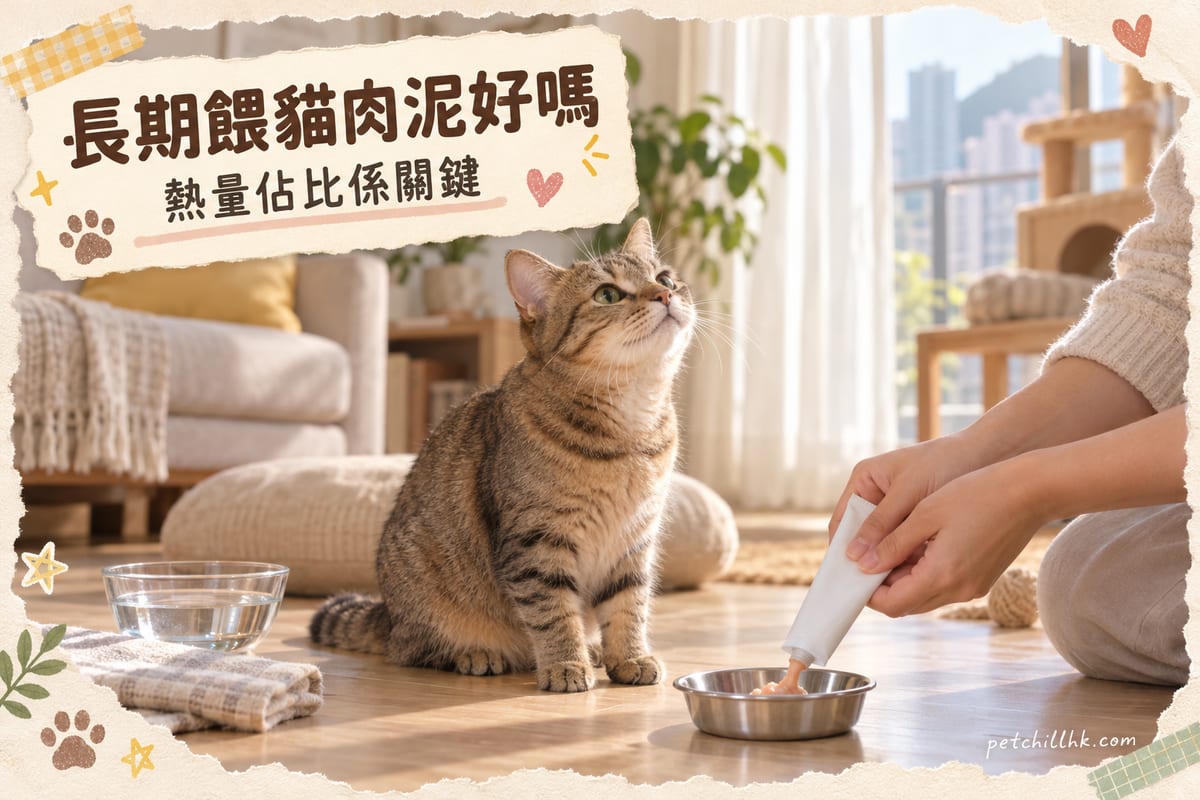
People searching "Does long-term CIAO meat puree feeding affect cat health?" have mostly been feeding it for a while and want to know whether to stop. The direct answer: the question isn't whether the puree is harmful, but how much of the daily calories it takes up and whether it has replaced the main food. Based on the brand's published figures, a 14g treat tube has only about 7 kcal and moisture up to 91%, making it a low-calorie, high-moisture liquid treat; as long as it stays within 10% of daily total calories and the main meals are eaten in full, long-term feeding itself does not constitute a health problem.
Conversely, if a cat eats five or six tubes a day, or starts refusing main meals, three things appear at once: calories over the limit, a one-dimensional nutrition source, and the behaviour of "call and it appears". That is the real risk to address, not the product itself. Below we first break down the packaging numbers and dry-matter conversion to see clearly how the claim of "high protein" should be calculated for meat puree; then we cover the three major risks of long-term feeding, how to choose between the 10% and 20% caps, the actual tube counts and Hong Kong prices for a 4kg cat; and finally list the situations where you should stop immediately and see a vet. To first build an overall food-selection framework, you can read the site's Pet Nutrition Complete Guide, then come back with the numbers in this article to calculate your own cat's cap.
How many calories and nutrients in a 14g tube? Start with the official figures
The first step in judging whether long-term feeding will have an impact is not to read reviews but to look at the expected analysis on the packaging. "Minimum" and "maximum" represent regulatory lower and upper limits, not laboratory averages — keep this in mind when reading the numbers. Below are the figures the brand has published externally:
| Product (per 14g tube) | Protein (min) | Fat (min) | Crude fibre (max) | Ash (max) | Moisture (max) | Calories | Packaging positioning |
|---|---|---|---|---|---|---|---|
| Meat puree treat version, tuna | 7.0% | 0.2% | 0.1% | 1.7% | 91.0% | about 7 kcal | Treat |
| Meat puree treat version, kitten assortment | 7.0% | 0.5% | 0.2% | 3.2% | 89.0% | about 7 kcal | Treat |
| Complete nutritional food version, tuna | 7.0% | 3.8% | 0.5% | 3.0% | 85.0% | about 13 kcal | Complete nutritional food (staple) |
All three are 14g per tube, but the moisture of the treat version and the complete nutritional food version differs by 6 percentage points, and calories differ by nearly double. The reason isn't hard to understand: the complete nutritional food version needs to add complete vitamin, mineral, and taurine premixes while raising fat to support calorie density, so moisture naturally has to give way.
To compare canned food and meat puree, you first convert to a dry-matter basis; there is only one formula:
Dry matter percentage = labelled percentage ÷ (100 − moisture percentage) × 100
For example, the treat version has protein minimum 7.0% and moisture maximum 91.0%, so the dry-matter factor is 9.0, and dry-matter protein = 7.0 ÷ 9.0 × 100 = about 77.8%. Using the same formula for fat minimum 0.2% gives 0.2 ÷ 9.0 × 100 = about 2.2%.
| Product (per 14g tube) | Dry-matter factor | Protein (dry matter) | Fat (dry matter) | Ash (dry matter) | kcal/100g | Against AAFCO adult cat (protein 26%/fat 9%) |
|---|---|---|---|---|---|---|
| Meat puree treat version, tuna | 9.0 | about 77.8% | about 2.2% | about 18.9% | about 50.0 | Protein far exceeds, fat seriously insufficient |
| Meat puree treat version, kitten assortment | 11.0 | about 63.6% | about 4.5% | about 29.1% | about 50.0 | Protein far exceeds, fat insufficient |
| Complete nutritional food version, tuna | 15.0 | about 46.7% | about 25.3% | about 20.0% | about 92.9 | Both protein and fat pass |
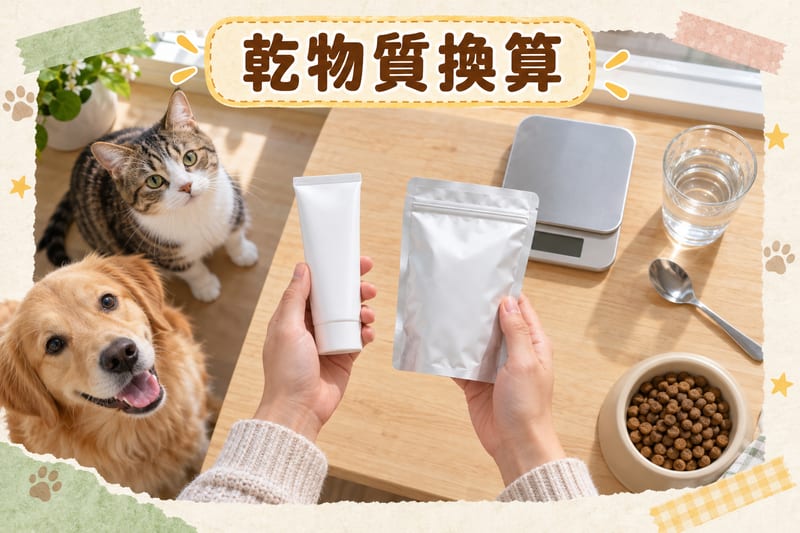
Three practical conclusions. First, the selling point of the treat version is low calories and high moisture, not complete nutrition: a 14g tube provides about 12.7 ml of water and about 0.98 g of protein, with only about 0.028 g of fat. This combination makes it very suitable as a hydration tool and reward, but the calorie density is so low that 100g has only about 50 kcal — roughly half that of a typical complete wet food — so even feeding to fullness may not provide enough energy. Second, dry-matter fat of 2.2% is the most critical number: even if the actual value is one to two times higher than the labelled minimum, dry matter would still be only 4% to 7%, some distance from the AAFCO adult maintenance minimum of 9%. Fat is also a carrier of essential fatty acids and fat-soluble vitamins, so long-term insufficiency will have an impact. Third, the ingredient list says it even more clearly: the treat version adds only "vitamin E", with no complete mineral and vitamin premix and no separately listed taurine; the complete nutritional food version's ingredient list specifies minerals (Ca, Cu, Mn, Zn, I, Fe, Na, P, Cl, K), vitamins (A, E, B1, B2, B6, K, choline, biotin, folic acid) and taurine. This difference is the dividing line between "treat" and "complete food".
The three major risks of long-term feeding: calories, nutrition, behaviour
With the packaging numbers covered, we can talk specifically about what to watch with long-term feeding. The three items below are ordered by frequency of occurrence, and they usually appear together.
One, calorie excess (obesity is an arithmetic problem). A single 7 kcal tube looks harmless, but it adds up fast: 4 tubes a day = 28 kcal, already 14% of a 4kg adult cat's daily requirement of about 200 kcal, exceeding the 10% cap; 6 tubes a day = 42 kcal, equal to 21%. Those 42 kcal don't disappear — they either make the cat eat less main food or turn directly into body weight. Note that liquid treats have extremely low satiety; a cat that has eaten 6 tubes will still eat its main meal, so "it can still eat after" does not mean there is no excess.
Two, one-dimensional nutrition source (replacing main food is the real risk). Every 10% rise in treat share means 10% less main food intake. The meat puree treat version has no complete balanced statement, dry-matter fat of only about 2.2%, and an ingredient list that adds only vitamin E; if it occupies 30% to 40% of daily calories long-term, that means 30% to 40% of daily nutritional needs are not fully covered. In practice, the most common scenario is "the picky cat only eats puree", and the owner feeds more and more to maintain appetite, so the main meal share keeps shrinking. Note that some purees use tuna or bonito as the main protein source, and methylmercury from large deep-sea fish accumulates up the food chain; vets usually advise against using a single large fish species as the main protein source long-term, and recommend rotating flavours and proteins.
Three, behavioural habituation (not dependence, but learning). What the internet calls "puree addiction" is not drug dependence but behavioural habituation: the cat learns that "calling brings it", so meowing becomes a fixed tool — meowing late at night, in front of guests, before main meals. This has nothing to do with ingredients; it's about feeding rhythm. The solution is timed and measured feeding — fixed one to two times a day, fixed number of tubes each time, and never adding more because of meowing.
Two more points worth adding. One is teeth: meat puree is liquid and requires no chewing, offering zero help in removing plaque and tartar; if the cat is also mainly on soft food, oral cleaning must be arranged separately. The other is chronic disease: for cats already diagnosed with chronic kidney disease, diabetes, heart disease, or a history of urinary tract disease, the phosphorus, sodium, carbohydrate, and moisture ratios of the puree must be re-evaluated, and any additional feeding should first be discussed with a vet — don't assume it's safe just because "it will eat it". To understand dietary principles for chronically ill cats, see the site's Chronic Disease Cat Diet Management Guide.

How to calculate the daily cap: 10% or 20%?
This section is the most practical part of the article. Two numbers are often cited in the market:
- 10% — the commonly used upper limit for treats in veterinary nutrition, i.e. treat calories not exceeding one-tenth of daily total calories. This number is conservative and suitable for most indoor adult cats.
- 20% — the upper limit stated in the brand's own official FAQ, specified on the premise of "not affecting the nutritional balance of the main food". This number is looser and is a manufacturer guideline rather than a clinical standard.
Neither is wrong, but they are used differently. If the cat is in standard body condition, has normal activity, and eats its main food in full, calculating with 10% is safest; 20% applies only to short-term situations, such as using highly palatable food to encourage eating during illness, and should involve a vet. Below are the actual caps by body weight:
| Cat weight | Estimated daily energy (50 kcal/kg) | 10% cap | Equal to how many treat tubes (7 kcal) | 20% cap | Equal to how many treat tubes |
|---|---|---|---|---|---|
| 3 kg | about 150 kcal | 15 kcal | about 2 tubes | 30 kcal | about 4 tubes |
| 4 kg | about 200 kcal | 20 kcal | about 2 to 3 tubes | 40 kcal | about 5 tubes |
| 5 kg | about 250 kcal | 25 kcal | about 3 to 4 tubes | 50 kcal | about 7 tubes |
| 6 kg | about 300 kcal | 30 kcal | about 4 tubes | 60 kcal | about 8 tubes |
Four steps to calculate, no special tools needed:
- Measure the cat's ideal weight (not current weight; for overweight cats use ideal weight, not current weight to inflate the cap).
- Ideal weight × about 50 kcal/kg × 1.1 activity factor gives daily total calorie requirement. For indoor neutered adult cats with lower metabolism, 50 kcal/kg is a commonly used practical estimate; if the cat is clearly underweight or very active, adjust upward.
- Daily total calories × 0.1 gives the calorie cap that treats can occupy.
- Cap calories ÷ calories per tube (treat version about 7 kcal, complete nutritional food version about 13 kcal) gives the daily tube count, then round down.
Using a 4kg adult cat as an example: about 200 kcal a day, 10% is 20 kcal, 20 ÷ 7 = 2.86, so in practice take 2 tubes (conservative) to 3 tubes (at the cap). If feeding only 1 tube a day, that's about 3.5% of daily calories — very safe; 5 tubes a day already reaches 35 kcal, or 17.5%, exceeding the 10% cap.
The same set of numbers in money: based on Hong Kong online shop prices as of 2026-10-12, a 4-tube pack is about HK$2.1 per tube, so 2 tubes a day is about HK$4.2, or about HK$126 a month; using the 20-tube pack (about HK$1.75 per tube), 2 tubes a day is about HK$3.5, or about HK$105 a month. So the "daily cap" is not just a health line but also a spending line — calculating the cap clearly actually makes it easier to buy larger packs without losing control.
What to do if the cat only eats puree and refuses main food
This is the most practical difficulty with long-term feeding. Below is a checklist to follow in order; skipping steps is not recommended:
- First rule out physical problems. A sudden refusal of main food may be oral pain, dental problems, kidney disease, pancreatitis, etc. — take the cat to a vet first. A cat that eats nothing at all for more than 24 hours is a situation requiring immediate attention.
- Switch to timed and measured feeding. Fix two to three meals a day, 20 to 30 minutes each, remove the food when time is up, and no treats in between. This step is the hardest but most effective, usually taking one to two weeks.
- Downgrade the puree to a topper. No longer as a standalone meal, but squeeze a teaspoon onto the surface of the main food to use aroma to stimulate appetite, with the total locked within 10%.
- Reduce the proportion gradually, 5% at a time. For example, start from puree at 30% of daily calories and reduce by 5 percentage points every three to four days, slowly down to 10%, over two to four weeks, to avoid the cat resisting all at once.
- Rotate protein sources and textures. The same flavour long-term reinforces pickiness; rotating chicken, fish, and different textures (shreds, pate, gravy) can broaden acceptance.
- Record weight and tube counts. Weigh every two weeks and note how many tubes were fed each day. Weight gain is usually not a main-food problem but a treat-bag problem.
For behaviour training, meat puree is actually an extremely useful reward tool; the key is "reward after behaviour" rather than "call and it appears". To systematically understand how to use treats in training and portion control, see the site's Training Treats Guide.
Shopping, prices, and storage practicalities
Hong Kong online shops offer many meat puree choices; the same brand has 4-tube, 12-tube, 20-tube, 40-tube, 50-tube, and 60-tube packs, and the per-tube price difference can exceed 40%. Below are live prices as of 2026-10-12 (prices and stock are subject to the online shop's live prices):
| Product (spec) | Online shop price | Price per tube | Calories per tube |
|---|---|---|---|
| CIAO Churu Tuna (Maguro) 14g x 4 (SC-71) | HK$8.4 | about HK$2.10 | about 7 kcal |
| CIAO Churu Original Chicken Puree Chicken Breast Flavour 14g x 4 (SC-73) | HK$8.4 | about HK$2.10 | about 7 kcal |
| CIAO Churu Tuna 14g x 20 (CC20-SC121) | HK$34.9 | about HK$1.75 | about 7 kcal |
| CIAO Churu Olive Oil Flavour 14g x 50 (CC50-TSC11T) | HK$75.9 | about HK$1.52 | about 7 kcal |
| CIAO Meat Puree Tuna Paste 14g x 60 cans (SC-139) | HK$142.4 | about HK$2.37 | about 7 kcal |
Online shop product links:
- CIAO Churu Tuna (Maguro) 14g x 4 (SC-71) — HK$8.4
- CIAO Churu Original Chicken Puree Chicken Breast Flavour 4x14g (SC-73) — HK$8.4
- CIAO Churu Tuna Cat Treats 14g X 20 (CC20-SC121) — HK$34.9
- CIAO Churu Olive Oil Flavour Cat Wet Treats 50x14g (CC50-TSC11T) — HK$75.9
- CIAO Meat Puree Cat Treats Tuna Paste 14g 60-tube can (SC-139) (discontinued) — HK$142.4
Prices and stock are subject to the online shop's live prices.
Two price observations. First, the biggest pack is not necessarily the cheapest: the 60-tube can is about HK$2.37 per tube, actually more expensive than the 20-tube pack (about HK$1.75) and the 50-tube pack (about HK$1.52), so before ordering always calculate the unit price as "price ÷ number of tubes", not just the total price. Second, the quantity bought each time should match the consumption rate: at 2 tubes a day, a 50-tube pack lasts about 25 days, and after opening you need to watch the shelf life and storage method.
If the cat needs complete-food wet food for balance, here are same-shop references (other brands, for directional comparison only, not a recommendation):
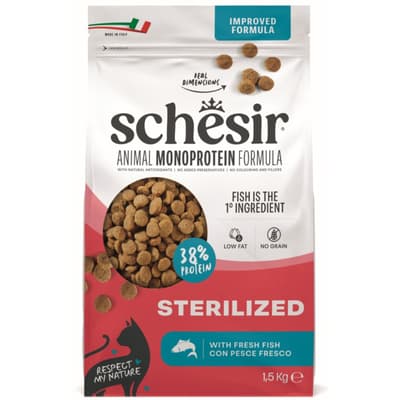
- Schesir Cat Food Neutered Weight Control Formula Fish 1.5kg (SCH13806) — HK$179 (available for pre-order)
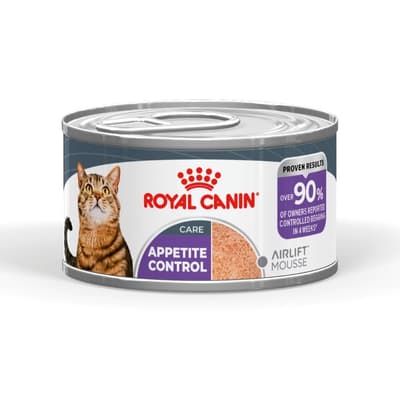
- Royal Canin AIRLIFT Cat Can Food Adult Cat Care Complete Wet Food 85g (4240700) — HK$24
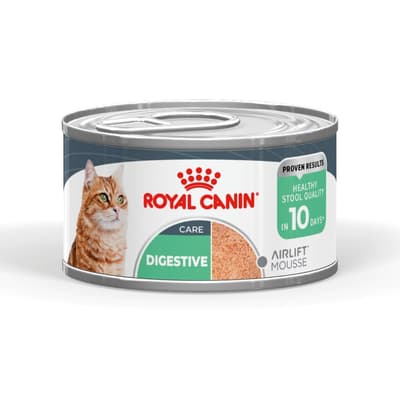
- Royal Canin AIRLIFT Cat Can Food Adult Cat Digestive Care Complete Wet Food 85g (4241300) — HK$24
Prices and stock are subject to the online shop's live prices.
On storage: keep unopened packs in a cool, dry place away from direct sunlight; after opening, do not leave at room temperature for more than two hours, transfer leftovers to a covered container in the fridge and finish quickly; if feeding only half a tube at a time, refrigerate the remainder immediately and do not reheat and reuse. If the outside of the tube gets saliva on it, wipe it clean before refrigerating to reduce bacterial growth. To understand differences in nutritional needs at the breed level, see the site's Cat Food Selection and Breed Needs Comparison.
When to stop immediately and see a vet
The following situations should not be solved by "reducing treats" or "changing flavour" — contact a vet immediately:
- The cat eats no main food at all for more than 24 hours, or is clearly dehydrated or lethargic.
- Continuous vomiting or diarrhoea for more than 24 hours, or blood in the stool or vomit.
- Frequent trips to the litter box but unable to urinate (urethral obstruction in male cats is an emergency requiring immediate attention).
- Significant weight gain or loss in a short period (more than 5% of body weight change in a month).
- Already diagnosed with chronic kidney disease, diabetes, heart disease, pancreatitis, or a history of urinary tract disease, and you want to adjust the puree portion.
- Kittens or senior cats refusing food — don't force it with puree; check the body first.
If the vet has already prescribed a prescription diet, ask the vet before adding meat puree or any other treats; the phosphorus, sodium, and protein ratios of prescription diets are designed for the condition, and extra treats can offset the treatment effect.
Further Reading
- Pet Nutrition Complete Guide | How to Choose Ingredients, Calories, Prescription Diets (2026)
- Training Treats Guide | Hong Kong Cat and Dog Small Natural Treat Selection and Portion Calculation in Practice
- Chronic Disease Cat Diet Management Guide | Must-Read for Hong Kong Cat Owners: Low Phosphorus for Kidney Disease, Low Carb for Diabetes, Low Fat for Pancreatitis
- Cat Food Selection × Breed Needs Differences | Hong Kong 5 Major Breeds Nutrition Comparison Table
For emergencies, contact a vet immediately; this article is for reference only and cannot replace veterinary diagnosis.
Information checked as of 2026-10-12 · Source: PetChill editorial team
⚠️ Some products mentioned in this article have been discontinued (marked "discontinued" in the text); the related prices are pre-discontinuation records; for other products, please refer to the online shop's live prices.
 CIAO full guide →
 Royal Canin full guide →
 Fuji One full guide →