Quick answers
- Yes. Royal Canin's dry dog food is split into at least two layers: a size range (X-Small / Mini / Medium / Maxi / Giant) and a breed range, with different kibble size, shape and texture.
- Official size boundaries: X-Small under 4 kg, Mini 4 to 10 kg, Medium 11 to 25 kg, Maxi 26 to 44 kg, Giant over 45 kg.
- The age for switching from puppy to adult food follows size: about 10 months for X-Small and Mini, 12 months for Medium, 15 months for Maxi; there is no one-size-fits-all rule.
- Kibble design aims to match jaw structure and chewing habits and encourage chewing; the official notes say some breeds (such as the Labrador Retriever) have a kibble shape designed to make them eat more slowly.
- The retail range and the prescription range are two separate lines: prescription diets must be chosen after veterinary assessment and cannot be picked or switched like ordinary food.
- Portions depend on three things: weight, body condition and activity level. The official Mini Adult table shows the same 4 kg dog needs 69 g on low activity, 80 g on medium and 90 g on high, a difference of 21 g.
- When changing food, mix gradually over 7 to 10 days: new food at one quarter for the first 2 to 3 days, then increase daily, with a full switch in the last 2 days.
"Does Royal Canin dog food come in different kibble sizes?" The answer is yes, and it is split more finely than most brands. Within the same brand, the dry kibble that an X-Small, Mini, Medium or Maxi dog gets differs in size and shape; the breed range adjusts further according to facial and jaw structure. These designs are not packaging gimmicks; they directly affect whether a dog can crunch the kibble, how fast it eats, and how smoothly it digests.
This article explains it in four steps: first, how the official size and breed ranges are divided and which weights each range covers; second, how kibble size relates to bite, chewing speed and digestion, and how to measure kibble yourself; third, the difference between the retail range and the veterinary prescription range, and why prescription diets must be chosen after veterinary assessment; fourth, the practical steps for calculating portions by weight, body condition and activity level, with excerpts from the official feeding tables and the 4 most common mistakes made by Hong Kong dog owners.
How are the ranges divided? Size range first, then breed range
Royal Canin's dog food system is not "one food for all dogs"; it first splits by size, then by breed, age and health condition. Within a size range, kibble weight, diameter, shape and hardness are adjusted together, not just the formula. So the correct way to ask "does kibble size vary?" is: which range does your dog belong to, and that is the kibble it gets.
The official size boundaries and approximate adult stage are as follows:
| Size range | Official weight range | Approximate adult stage | Kibble design direction |
|---|---|---|---|
| X-Small | Under 4 kg | About 10 months | Smallest, thinnest kibble for small mouths |
| Mini | 4 to 10 kg | About 10 months | Small kibble for miniature jaws |
| Medium | 11 to 25 kg | About 12 months | Medium kibble for medium bites |
| Maxi | 26 to 44 kg | About 15 months | Larger kibble to encourage chewing |
| Giant | Over 45 kg | Depends on breed | Largest kibble for large jaws |
This table has two practical messages. First, weight is the first ruler for choosing a range, not the breed name. A 9 kg Shiba Inu and a 9 kg Schnauzer both fall at the Mini to Medium boundary; weight is more accurate than breed. Second, the age of adulthood is linked to size: X-Small and Mini dogs reach adulthood at about 10 months, Medium at 12 months, and Maxi at 15 months, so "when to switch from puppy to adult food" cannot be one-size-fits-all; dogs from the same litter can differ by months.
The breed range (purebred series) is another layer. The official explanation is that the kibble shape, size and texture of breed formulas are designed to suit each dog's facial and jaw structure and chewing habits, and notes that the way a dog eats is an important part of the whole digestive process—how a dog chews and how fast it eats has a real effect on digestion, especially for certain breeds. The official also names several breeds with different digestive needs, including the German Shepherd, Bulldog, French Bulldog and Great Dane.
In other words, the size range is about "big or small", and the breed range is about "shape and bite"; both can apply at once: a French Bulldog is both a small/medium weight and a short-nosed breed, so the kibble shape it gets will differ from other dogs of the same weight.
For long-term considerations from size and exercise to joints and heart, see our Rottweiler breed complete guide.
How does kibble size affect eating? Bite, chewing speed and digestion
The first step in eating dry food is crunching, the second is swallowing, and the third is digestion. Kibble size determines how smoothly the rest goes from the first step. Three things are most directly affected:
1. Bite efficiency. Dogs grip with the incisors and grind with the molars. If kibble is too small, many dogs swallow without chewing; if too large, a small dog's mouth may not be able to crunch it, leading to holding it without swallowing, pushing it onto the floor, or eating half and walking away. The official description of the Mini range is that the kibble "fits the miniature jaw", while for Maxi it says the kibble's "unique size and shape match the jaw structure and help encourage proper chewing"—this is exactly what is meant.
2. Chewing speed and digestion. Eating too fast is a common problem in large dogs; gulping can lead to vomiting and bloating. The official notes that although the Labrador Retriever has the same scissor bite as the Golden Retriever, Labradors tend to eat fast, so the kibble design goal for that range is to help them eat more slowly and encourage chewing. This is the best example of "same size, different breed, different kibble".
3. When to change kibble. Three situations require you to re-check the range: switching from puppy to adult food (following the ages above), weight crossing a size boundary (for example, growing from 9 kg to 12 kg), or a veterinarian recommending a kibble size change due to mouth or dental condition. The third must follow veterinary instructions; do not cut large kibble smaller or soak it as a solution yourself.
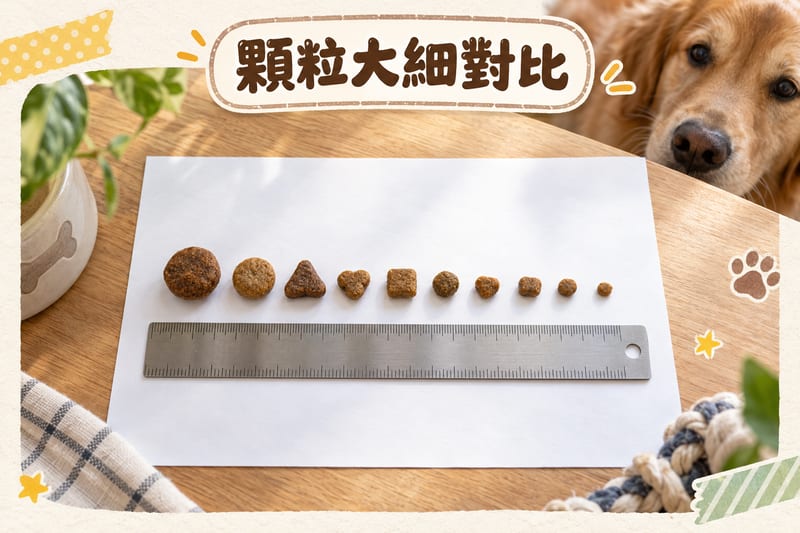
To know whether the kibble in your bag is large or small, the most practical approach is to measure. Take 10 whole kibbles, measure the diameter of each with a ruler, calculate the average, and compare the average with the target size written on the official packaging. The benefit is that after a packaging change, colour change or formula change, you still know whether you have bought the right range.
Kibble design in the breed range: short-nosed dogs and fast eaters
The breed range is the easiest to overlook, but for some types of dog, kibble shape affects whether they will eat more than the formula numbers do.
Short-nosed dogs (French Bulldog, Pug, Boston Terrier) have short faces, and their nasal and oral structures differ from long-nosed dogs, as does the bite angle. They cannot grip large kibble well and often have to push it against the palate with the tongue to bite it, eating slowly and with difficulty. For these dogs, choose kibble that is smaller and thinner; do not choose a range by weight alone.
Fast eaters (Labrador Retriever, Beagle, some mixed breeds) are the opposite; the problem is eating too fast. The official explanation is that kibble design can help them eat more slowly, by making kibble larger and changing the shape so they have to chew a few more times before swallowing.
Large dogs (German Shepherd, Great Dane, Rottweiler) need attention to digestion and joints. The official notes that large dogs have a relatively shorter digestive tract for their size and are more prone to digestive sensitivity; it also notes that most of their weight is on their joints, so formulas target bones and joints. For kibble, the Maxi range takes a larger kibble approach to match large jaws and chewing habits.
If switching from one range to another, do not change all at once. The recommended process is:
- Days 1 to 2: new food at one quarter, the rest old food, mixed well.
- Days 3 to 4: new food up to half.
- Days 5 to 6: new food up to three quarters.
- Days 7 to 10: fully switch to new food.
- During this time, check daily stool consistency, vomiting, appetite and energy; if soft stool lasts more than 2 days, go back to the previous stage's ratio and consider asking a veterinarian.

Retail range vs prescription range: prescription diets must be chosen after veterinary assessment
This is the part Hong Kong dog owners most often get wrong. The same brand's veterinary prescription range and the retail range (size/breed/life-stage range) are two systems and should not be understood as a "premium version" or "strengthened version".
| Item | Retail range (size/breed/stage) | Veterinary prescription range |
|---|---|---|
| How to obtain | Buy directly from general pet shops or online stores | Officially positioned as a veterinary-exclusive formula, to be chosen after veterinary assessment |
| Design purpose | Daily complete and balanced nutrition, divided by size/breed/age | Dietary support for specific health conditions, as part of the veterinarian's overall plan |
| Example | Medium Adult formula M25 15kg | Oral care prescription (DENTAL) range, etc. |
| Can you switch on your own? | Yes, gradually according to body condition, mixing over 7 to 10 days | Do not switch or stop on your own; follow veterinary instructions and attend follow-ups on time |
Why a veterinarian? Because the prescription range is used alongside a diagnosis; the same dog may need a different formula at different stages, and changes are judged by follow-up data (such as weight, oral condition, blood or urine tests), not by appearance. The official wording for prescription products is itself "veterinary-exclusive formula; please ask your veterinarian whether it is suitable for your pet". So the correct approach is: take the dog to a veterinarian for assessment first, let the veterinarian decide whether to use it, which one, and for how long, then feed the portion instructed by the veterinarian; prescription food should not be bought long-term on your own, added on your own, or stopped on your own.
PetChill products mentioned in this article (prices and stock are subject to the online store's current listed price):
- Royal Canin dog food MEDIUM Adult medium-breed nutrition formula M25 15kg (defective item) (discontinued) — HK$547
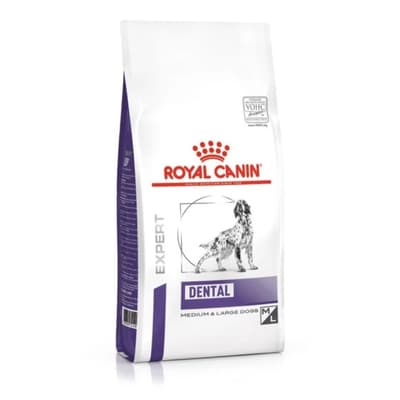
- Royal Canin prescription diet DENTAL medium and large breed dental care health management prescription 6kg (3093000) — HK$604 (stock 0, available for pre-order)
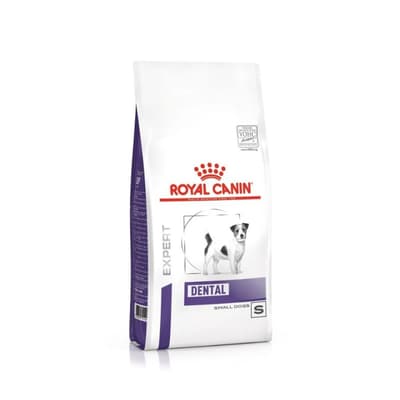
- Royal Canin prescription diet DENTAL small breed dental care health management prescription 1.5kg (3094600) — HK$249 (stock 0, available for pre-order)
Prices and stock are subject to the online store's current listed price. Note that the first product's name itself states it is a defective item; please consider this before buying. The latter two are veterinary prescription lines; remember to choose them after veterinary assessment.
How to calculate portions? Weight, body condition and activity level together
"How many grams at what age" is the wrong question—official feeding tables never use age as the main axis; they use weight × activity level, then adjust by body condition. Below are excerpts from the official Mini Adult and Medium/Maxi Adult feeding tables (daily total, dry food fed alone):
| Weight | Low activity | Medium activity | High activity |
|---|---|---|---|
| 4 kg (small) | 69 g | 80 g | 90 g |
| 6 kg (small) | 93 g | 108 g | 122 g |
| 10 kg (small) | 137 g | 158 g | 177 g |
| 11 kg (medium) | 150 g | 174 g | 197 g |
| 25 kg (medium) | 277 g | 321 g | 365 g |
| 26 kg (large) | 278 g | 322 g | 366 g |
| 44 kg (large) | 413 g | 478 g | 543 g |
Practical steps:
- Weigh the dog: use the same scale at the same time (morning on an empty stomach is recommended) and record it.
- Do a body condition score: feel the ribs—feeling them but not seeing them is ideal; unable to feel them means overweight; clearly protruding means underweight.
- Choose the activity column: less than 1 hour of daily walking counts as low activity; 1 to 2 hours as medium; working dogs or more than 2 hours of daily exercise as high.
- Take the gram amount from the official feeding table, then weigh with a digital scale; do not rely on visual cup measures.
- Weigh every 2 to 4 weeks; if weight trends up or down, adjust by about 10% according to body condition, then observe for 2 weeks.
For weight management, the official example is: a 12 kg dog with a target of 10 kg uses the "target weight 10 kg" column for the first four weeks, i.e. 148 g per day; after four weeks, if progress stalls, switch to the "after four weeks" column, i.e. 126 g per day; the weight-loss pace targets 1 to 3% of body weight per week. The key is to look at target weight, not current weight. Weight management is a health matter; if the dog has a chronic illness or is on a prescription diet, always follow veterinary instructions.
To learn more about comparing nutrient ratios in different formulas, see our Pet Nutrition Complete Guide | Ingredient lists, calories, how to choose prescription diets (2026), which covers dry matter conversion and calorie density calculations.
The 4 most common mistakes Hong Kong dog owners make
- Feeding large-dog kibble to small dogs (or vice versa). Assuming "it's the same brand", but kibble diameter is designed around the mouth. The most common result of a small dog eating large kibble is holding it without swallowing; in serious cases, choking.
- Counting pieces instead of weighing grams. "Two cups a day" sounds convenient, but cups are visual estimates; how firmly packed, kibble size and cup type all affect actual weight. A difference of a dozen grams a day adds up to several hundred grams a month.
- Switching all food within one day. The gut needs 7 to 10 days to adapt; the most common reactions to a sudden switch are soft stool and vomiting.
- Treating prescription food as ordinary food and feeding it long-term on your own. The prescription range is dietary support alongside a diagnosis; it must be chosen after veterinary assessment and adjusted according to follow-up results. Feeding it long-term on your own or stopping it on your own may cause a previously controlled condition to flare up.
Extra reminder: after opening dry food, seal it and store it in a cool, dry place, away from direct sunlight and near the stove. The smell changes over time after opening; if a dog suddenly refuses the same bag of food, first check whether it is damp or has an off smell, then consider whether the dog is unwell.

Further reading
- Pet Nutrition Complete Guide | Ingredient lists, calories, how to choose prescription diets (2026) — from ingredient lists and calorie density to the role of prescription diets, a clear framework for choosing food.
- Hong Kong Dog Food Recommendations | 2026 Complete Dog Food Guide · 8 Brand Reviews — filter by age, size, activity level and health condition, with switching methods.
- Reading Dog Food Labels | Essential for Hong Kong Dog Owners: Carbohydrate Calculation + Dry Matter Conversion — learn to compare two formulas on a dry matter basis so you are not misled by percentages.
- Dog Forbidden Foods Complete Guide | 10 Major Food Traps Hong Kong Dog Owners Must Know — before mixing food or adding toppings, confirm these ingredients cannot go in the bowl.
In an emergency, contact a veterinarian immediately; this article is for reference only and cannot replace veterinary diagnosis.
Information checked as of 2026-10-12 · Source: PetChill editorial team
⚠️ Some products mentioned in this article have been discontinued (marked "discontinued" in the text); the prices shown are records from before discontinuation. For other products, please refer to the current price displayed in the online store.
 Royal Canin full guide →