Quick answers
- Cat vitamin B12 (cobalamin) supplements come in 6 main dosage forms: injections, oral tablets, capsules, powders, liquid drops and B12-plus-folic-acid combinations.
- By ingredient there are only 4 cobalamins: cyanocobalamin, hydroxocobalamin, methylcobalamin and adenosylcobalamin; there is no "exclusive cat-only ingredient".
- The veterinary laboratory reference range for feline serum B12 is 290–1500 ng/L; below 400 ng/L is usually considered within the range that warrants supplementation.
- B12 deficiency rates in feline chronic enteropathy range from 17% to 78% (one statistic is 61%); 77% of cats with exocrine pancreatic insufficiency are below 290 ng/L.
- All of a cat's intrinsic factor is produced by pancreatic exocrine cells, so cats with pancreatic problems are particularly prone to B12 deficiency.
- About 1% of B12 can be absorbed by passive diffusion along the entire digestive tract, so oral supplementation can still be effective in some cats with severe ileal lesions.
- Human B12 products should never be fed to cats; blood testing should be done before starting supplementation because serum B12 rises afterwards.
Cat vitamin B12 (also written vitamin B12, scientific name cobalamin) supplements come in 6 main dosage forms: injections performed at the veterinary clinic, and at-home oral tablets, capsules, powders, liquid drops, and combination products with folic acid. By ingredient there are only 4 cobalamins: cyanocobalamin, hydroxocobalamin, methylcobalamin and adenosylcobalamin. These two classifications must be kept distinct—products marketed as "active B12" or "cat-specific B12" are all combinations of these 4 ingredients and 6 dosage forms.
But a list of forms is not a shopping list. Cobalamin is a water-soluble vitamin, and healthy cats eating complete and balanced commercial food generally get enough—most commercial pet foods (including vegetarian formulas) are themselves supplemented with cobalamin. Those who truly need extra supplementation are cases already shown to have low serum B12, or with chronic enteropathy, exocrine pancreatic insufficiency (EPI) or intestinal lymphoma that affect absorption. Moreover, whether to use oral or injectable forms is not something the owner can decide: the absorption routes, monitoring points and suitable situations differ, and injections in particular must be assessed and performed by a veterinarian. This article breaks down the 4 ingredients and 6 dosage forms, the difference between oral and injectable, how to read blood test reports, the risks of human products, and what to check before choosing a product. For an overall framework on nutrition, see Pet Nutrition Guide.
What are the 6 forms of cat vitamin B12 supplements? Ingredients and dosage forms separately
First, ingredients. The following 4 are all "cobalamins"; they differ in stability and conversion pathways in the body, not in which is "more premium".
| Ingredient | Features | Commonly found in | Note |
|---|---|---|---|
| Cyanocobalamin | Synthetic, most stable, lowest cost; requires conversion to active forms in the body | Veterinary clinic injections, most oral products on the market | Most research and clinical experience; traditional first choice |
| Hydroxocobalamin | Commonly used in injections; in human medicine also used for cyanide poisoning | Veterinary intramuscular or subcutaneous injections | Studies in cats show it can restore serum B12 to normal; use determined by veterinarian |
| Methylcobalamin | One of the active forms; light-sensitive, less stable | Some oral and combination products | Protect from light and store as labelled; do not repackage yourself |
| Adenosylcobalamin | Active form used in mitochondria | Mostly in combination products | Does not necessarily mean better efficacy; look at the overall formula |
Now dosage forms. This is the part owners ask about most, but remember: none is "buy it and start on your own"; all should be decided by a veterinarian based on blood test results.
| Dosage form | Main ingredient | Features | Typical use situation | Can it be bought and used on your own? |
|---|---|---|---|---|
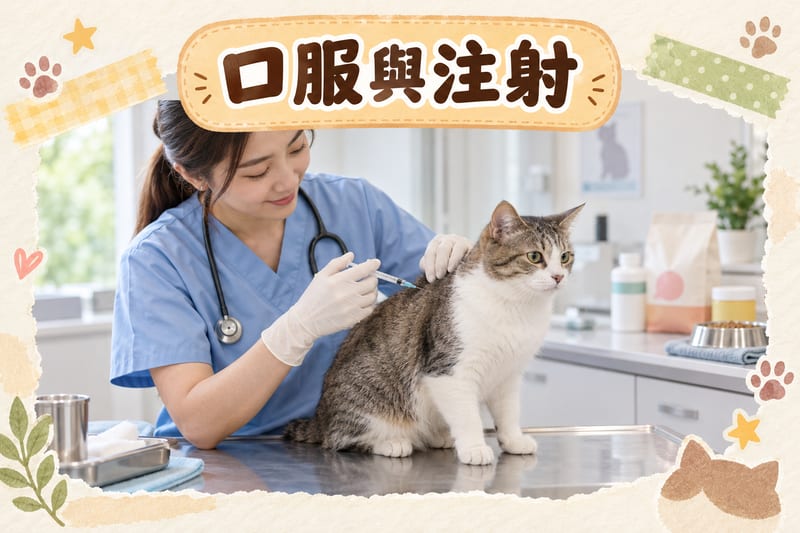
| Injection | Cyanocobalamin, hydroxocobalamin | Given by veterinarian subcutaneously or intramuscularly; absorption not affected by intestinal lesions; most reliable effect | More severe intestinal lesions, cats vomiting or completely anorexic, poor oral absorption | No; must be assessed and performed by veterinarian |
| Oral tablet | Mainly cyanocobalamin | Most common home form; requires the cat to accept it or be mixed into food | Stable condition, eating, veterinarian agrees to home supplementation | Do not start on your own |
| Capsule | Cyanocobalamin, methylcobalamin | Can be opened and contents mixed into wet food; easy to adjust dose | Cats refusing medicinal taste, needing mixing into food | Do not start on your own |
| Powder/granules | Cobalamin powder | Easiest to mix into food, but requires accurate measuring and moisture protection | Long-term supplementation, multi-cat households needing separate feeding | Do not start on your own |
| Liquid drops | Cobalamin oral liquid | Given into the mouth with a needleless syringe; suits cats that will not chew tablets | Requires veterinarian confirmation of dosage form and feeding method | Do not start on your own |
| Combination product | B12 + folic acid, or plus B complex, probiotics | Addresses both B12 and folic acid deficiency at once | Blood tests show both B12 and folic acid low, or concurrent dysbiosis | Do not start on your own; veterinarian must judge |
Two common misconceptions need debunking. First, "natural food to supplement B12" is not the same as safe: raw liver and raw offal are natural sources of B12, but raw food carries bacterial and parasitic risks, and cats have low vitamin A tolerance; long-term large amounts of liver can cause vitamin A excess, so raw liver is not recommended as a supplementation strategy. Second, the claim that "cabbage, seaweed and fermented foods contain B12" does not apply to cats—cats get B12 mainly from animal tissues, and the content and absorption rate from plant foods are unreliable, and cats are obligate carnivores.
Oral or injection? The veterinarian decides based on 5 factors
Owners searching for "B12 supplement forms" usually really want to know "does my cat need injections?". The answer depends on the cat's absorption capacity, so you must first understand feline physiology.
Cobalamin must bind with intrinsic factor (IF) to form a complex that is then absorbed in the ileum via specific receptors. All of a cat's intrinsic factor is produced by pancreatic exocrine cells—this differs from dogs and humans (in humans it mainly comes from the gastric mucosa), so once a cat has exocrine pancreatic insufficiency, the B12 absorption chain is broken. Another key fact: besides the receptor pathway, about 1% of cobalamin can be absorbed by passive diffusion along the entire digestive tract. This mechanism is why oral supplementation works in cats—even with ileal disease, increasing the oral dose can still absorb enough.
| Comparison item | Injection | Oral |
|---|---|---|
| Absorption route | Directly into blood, bypassing the digestive tract | Mainly passive diffusion plus remaining receptor function |
| Suitable situations | Severe lesions, vomiting, complete anorexia, poor oral absorption | Stable condition, eating, veterinarian agrees to home administration |
| Who performs | Veterinarian (some cases can be arranged after veterinary guidance) | Owner follows veterinary instructions |
| Advantages | Most reliable effect, unaffected by intestinal condition | Convenient at home, lower cost, less frequent clinic visits for the cat |
| Limitations | Requires regular clinic visits; higher stress and time cost for the cat | Cannot be done if the cat will not eat; efficacy in severe ileal disease uncertain |
| Monitoring | Blood test for serum B12 at follow-up | Also requires blood test follow-up to see if target reached |
Veterinarians usually decide the route based on the following 5 factors: first, location and severity of lesions (ileal and diffuse lesions have the greatest impact on oral); second, whether the cat will eat and whether there is vomiting (oral medication may be vomited straight back during vomiting); third, whether there is exocrine pancreatic insufficiency (digestive enzymes must also be addressed, not just B12); fourth, the owner's ability to administer and distance to follow-up; fifth, monitoring plan.
Regarding the literature, a retrospective study followed 25 cats with chronic enteropathy; after oral cyanocobalamin tablets, serum B12 all returned to normal, taking 28 to 97 days; another study compared oral and subcutaneous cyanocobalamin, and both restored B12-deficient cats to normal levels. However, note that the efficacy of oral in severe ileal disease remains undetermined, so "if oral works, no injection needed" is not a conclusion applicable to all cats. Only a veterinarian can make this judgment; owners calculating doses themselves is high-risk behaviour.
How to read blood test reports? Look at B12 and folic acid together
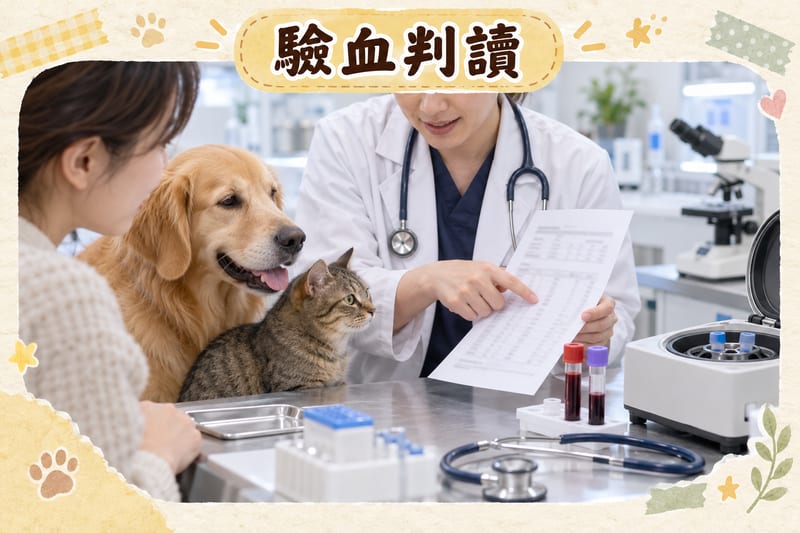
Blood testing before supplementation is essential for two reasons: first, the symptoms of B12 deficiency (weight loss, poor appetite, diarrhoea, lethargy) overlap with many diseases; second, serum B12 rises after supplementation, making later reports difficult to interpret. The veterinary laboratory reference range for feline serum B12 is 290–1500 ng/L, and the feline serum folic acid reference range is about 8.5–26.9 µg/L (actual ranges depend on your laboratory report).
Why look at both? Because their absorption sites differ: B12 is absorbed in the ileum (end of the small intestine), folic acid in the proximal small intestine (duodenum, jejunum). Together, the two values provide a rough map of the small intestine.
| Serum B12 (cat) | Serum folic acid (cat) | Common interpretation | Usual veterinary direction |
|---|---|---|---|
| Below 290 ng/L | Normal | Ileal or diffuse small intestinal disease; also rule out exocrine pancreatic insufficiency | Supplement B12; also test feline trypsin-like immunoreactivity (fTLI) to rule out EPI |
| 290–693 ng/L (low end of range) | Normal or low | Serum still within range but cellular deficiency may already exist | Most would recommend supplementation and regular follow-up |
| Low | Low | Diffuse small intestinal disease | Supplement both B12 and folic acid; investigate cause |
| Low | High | Commonly small intestinal dysbiosis: bacteria produce folic acid while taking up B12 | Address dysbiosis first (diet, probiotics or veterinarian-specified medication), then supplement B12 |
| Normal or high | Low | Lesion concentrated in proximal small intestine | Address proximal small intestinal problem; some cases need folic acid supplementation |
Three points to add. First, serum B12 does not fully equal intracellular B12: cats with values in the lower part of the range (e.g., 290 to 400 ng/L) may already have functional deficiency, so some guidelines suggest considering supplementation below 400 ng/L; laboratories also use methylmalonic acid (MMA) as an indicator closer to cellular status. Second, "high" does not mean you can supplement freely: studies have found that high feline serum B12 is associated with hepatobiliary and neoplastic diseases; high values require investigation, not celebration. Third, before supplementation, honestly report what has been eaten, including supplements, nutritional pastes and prescription diets, otherwise the veterinarian cannot interpret accurately.
For how diet fits in, see Complete Cat Nutrition Guide and Hong Kong Cat Food Recommendations.
Can human B12 supplements be fed to cats? 4 red lines
This section is the most important part of the article to remember. Many people think "B12 is a water-soluble vitamin, excess is excreted", so they casually feed human B12 tablets, B complexes and energy drinks to cats. The following 4 are hard red lines.
- Doses are designed for adults. The content of human B12 products is based on adult daily requirements; one tablet can be many times what a cat needs. Water-soluble does not mean no upper limit; the premise is "no other active ingredients, appropriate dose, veterinary monitoring", and human products meet none of these three.
- Additive risks. Human chewable tablets, gummies and oral sprays usually contain sweeteners, flavourings, colourings and binders. Xylitol can cause hypoglycaemia and liver failure in dogs; although there are no consistent poisoning reports in cats, there is no need to take this risk at all.
- Combination ingredients can be genuinely harmful. Human B-complex products often also contain high doses of vitamin B6, iron, vitamin A or D. Cats are particularly sensitive to vitamin A and D excess, and iron excess can also be toxic, while owners often only notice the three letters "B12" on the front of the pack.
- No pet dose, no monitoring, no accountability. These products are not designed for cats, and there is no veterinary follow-up if adverse reactions occur; moreover, if something goes wrong, it is hard to determine whether it was the B12 itself, additives or other ingredients.
| Common ingredients in human products | Risk to cats | Can it be used on your own? |
|---|---|---|
| High-dose cyanocobalamin single-ingredient tablets | Dose designed for adults; difficult to convert | Not recommended |
| Sweeteners (including xylitol types) | Can cause hypoglycaemia and liver damage in dogs; cat risk not fully clear | Not recommended |
| High-dose vitamin A or D | Cats have low tolerance; long-term excess can cause poisoning | Absolutely not |
| Iron supplements | Excess can cause gastrointestinal and systemic poisoning | Absolutely not |
| High-dose vitamin B6 | Long-term excess associated with neurological symptoms | Not recommended |
| "Energy" formulas containing caffeine or herbs | Caffeine is toxic to cats; herbal safety not validated in cats | Absolutely not |
| Pet-specific, veterinarian-confirmed cobalamin products | Dose and dosage form designed for cats | Use under veterinary instruction |
In one sentence: if supplementation is needed, use a product labelled for pets and confirmed by a veterinarian. Under no circumstances should human supplements be fed to cats as "safe vitamins".
5 checks before choosing a product, and dietary support
After the veterinarian decides supplementation is needed, you can check the actual product choice in 5 steps; do not just look at the front of the pack.
- Check the ingredient and concentration: state whether it is cyanocobalamin, hydroxocobalamin, methylcobalamin or a combination, and the concentration. If the pack only says "active B12" or "natural B12" without specifying the ingredient, do not buy it.
- Confirm it is pet-specific: the product should state directions for cats. Human or "universal" supplements should be skipped.
- Identify other active ingredients: whether it contains B complex, iron, vitamins A/D, herbs or probiotics. Combinations are not necessarily bad, but each item must be agreed by the veterinarian.
- Check storage and dosage form: methylcobalamin is light-sensitive, so protect from light and store as labelled; powders need moisture protection; liquid drops must be used within the labelled time after opening.
- Take the packaging to ask the veterinarian: whether folic acid is also needed, which dosage form, when to recheck—all decided by the veterinarian based on blood test results.
During B12 supplementation, dietary support is equally important, because many cats with B12 deficiency have chronic intestinal problems, and veterinarians will also adjust texture, protein source and calorie density. The following are examples available at PetChill's online store that are often included in dietary discussions by veterinarians (prescription diets should be used according to veterinary advice):
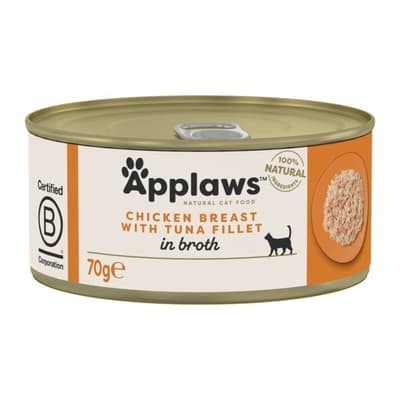
- Applaws Cat Can Shredded Chicken Breast + Tuna in Broth 70g (1027) — HK$14 (available for pre-order)
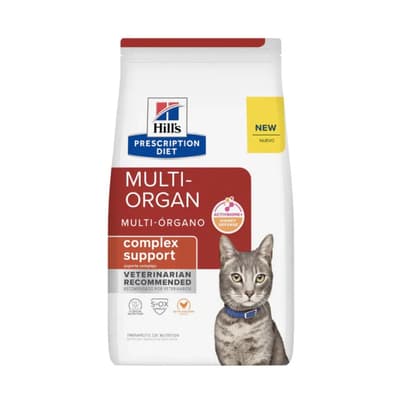
- Hills Prescription Diet k/d Early Support Multi-Organ Care Formula 4lbs (609528) — HK$329 (available for pre-order)
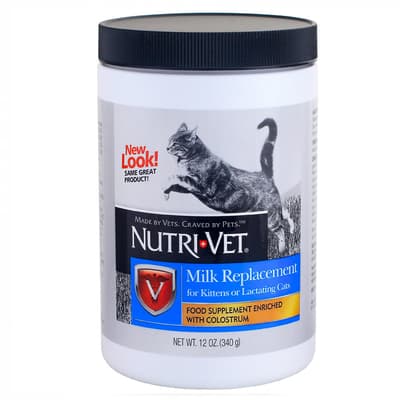
- Nutrivet Cat Milk Powder with Bovine Colostrum 12oz (NV99878) — HK$180 (available for pre-order)
Prices and stock are subject to the online store's current listed price.
Note that these products are dietary support, not B12 supplements: wet food helps increase water intake and appetite, prescription diets target specific organ conditions, and cat milk powder is for kittens or cases needing high-energy supplementation. Buying a prescription diet does not mean B12 has been supplemented; the two matters must be handled separately. Weight management should also be followed in parallel, because the most common change in cats with chronic enteropathy is continued weight loss; see Cat Weight Management Guide.
When to see a veterinarian immediately? Recheck schedule
In the following situations, do not wait any longer, and do not buy supplements on your own first:
- Chronic vomiting, diarrhoea, weight loss or poor appetite lasting more than 3 weeks (chronic enteropathy is defined as more than 3 weeks).
- Blood tests already show serum B12 below 290 ng/L, or in the low range of 290 to 693 ng/L.
- Continued weight loss despite normal or even increased appetite, with greasy, voluminous faeces—rule out exocrine pancreatic insufficiency.
- Kittens with stunted growth, lethargy, or neurological signs such as seizures—these are emergencies and require same-day veterinary care.
- The cat has eaten nothing for more than 24 hours, because cats are at risk of fatty liver.
Regarding rechecks, veterinarians usually arrange blood tests after starting supplementation (studies observed serum B12 returning to normal in 28 to 97 days, so recheck intervals are usually measured in weeks, not days), then decide whether to continue, adjust or stop based on results. In some cases—such as food-responsive enteropathy—supplementation can stop once the cause is resolved; but cats with exocrine pancreatic insufficiency or selective cobalamin malabsorption may need lifelong supplementation. This decision depends on recheck values and clinical signs and should not be made by stopping on your own.
At home, start recording from day one: weekly weight, daily food intake, faecal consistency (using a 1 to 7 scale), any vomiting, and the type and actual intake of supplements. This record is very useful to the veterinarian at follow-up because it shows whether improvement comes from B12 supplementation, dietary adjustment or other treatment. Also remember that if any new symptoms appear or the cat refuses medication at any time, call the clinic first rather than increasing or stopping the dose yourself.

Further reading
- Pet Nutrition Guide | Ingredient lists, calories, how to choose prescription diets (2026)
- Hong Kong Cat Food Recommendations | How to choose for kittens, adults and seniors
- Cat Weight Management Guide | How to handle overweight and underweight
- Complete Cat Nutrition Guide | Protein, taurine, water requirements
In emergencies, contact a veterinarian immediately; this article is for reference only and cannot replace veterinary diagnosis.
Information checked as of 2026-10-12Source: PetChill editorial team
 Fuji One full guide →