Quick answers
In short: no brand can have an "overall verdict" — Kit Cat, AIME Kitchen, Nutriplan, HEROMAMA and the rest are all the same. First use 3 layers to separate where the information comes from, then use 4 indicators to verify whether a review is credible, and finally compare like with like using dry-matter ratios and price per kg — not brand fame.
- No single "overall verdict" applies to all cats and dogs: the same brand can suit Cat A and not Cat B. The key is 3 variables — age, weight and health status.
- The first step in reading a review is to separate 3 layers: official specs (verifiable), owner experience (subjective), and media or influencer summaries (possibly sponsored). Mixing all three leads to misjudgement.
- To judge whether an owner review is credible, look at at least 4 indicators: real-name or purchase tag, adequate sample size, stated feeding duration plus the cat's age and weight, and specific spec numbers in the content.
- Don't compare two brands by feel — calculate price per kg: a 250g pack selling at HK$87.2 works out to about HK$348.8 per kg; only compare specs at the same price point.
- When reading the ingredient list, convert to dry matter: the formula is "labelled percentage ÷ (100 − moisture percentage) × 100". Without conversion, wet and dry food cannot be compared directly.
- Country of origin and manufacturer are always per the pack label — check 4 items: origin, manufacturer, batch number and importer. Japanese barcode prefixes are 45 to 49, but a barcode only indicates the GS1 registration country, not the manufacturing country.
- Be extra careful with phrases like "don't buy", "must buy" or "the only choice": Hong Kong's Trade Descriptions Ordinance (Cap. 362) regulates false trade descriptions, but that doesn't mean every online review is reliable.
Questions like "What is the overall verdict on Kit Cat products? Are they worth buying?" usually get one of two answers online: "good" or "so-so". Neither helps you place an order. The only actionable answer is this: look at the specs of the product in your hand and whether they match your cat's age, weight and health. Within the same brand, adult and kitten food have different nutritional requirements; the same formula means something completely different to a cat with a sensitive stomach versus a healthy adult cat. So this article doesn't rank or score — it breaks "review" down into individual actions you can check one by one.
This article covers 9 brand or product-line names often searched in Hong Kong: Kit Cat, AIME Kitchen, Nutriplan, HEROMAMA, Wang Miao Xing Qiu, Monster Tribe, plus Naxos Puppy, Natural Signature and Fujiichi. Behind all these names is the same question — "how do I know the reviews online are trustworthy?" Below we first explain the 3 layers of reviews and 4 credibility indicators, then demonstrate how to check each brand, and finally give you a 6-step buying checklist and 2 practical calculations (dry-matter conversion and price per kg) so you can reuse them yourself instead of asking someone every time.
Why is there no standard answer to brand reviews? First separate the 3 layers
The same brand can get wildly different reviews — not because "someone is wrong", but because people are talking about different layers. Once you separate the layers, you'll know how much weight to give each statement.
| Review layer | Common examples | Reference value | How to check |
|---|---|---|---|
| Official specs | Ingredient list, nutrition analysis, origin, net weight, life stage | High — verifiable data, though still self-declared by the manufacturer | Read the front and back labels and compare with the brand's official information |
| Owner experience | "My cat's coat improved after eating this", "refused to eat after 2 days" | Medium — genuine but subjective, affected by individual differences | Check for purchase records, sample size, feeding duration and the cat's background |
| Media or influencer summaries | Rankings, unboxing videos, comparison articles | Low to medium — may involve sponsorship or affiliate links | Check whether sponsorship is disclosed and whether verifiable numbers are cited |
The first layer is the most useful because every number can be checked; the third layer is the most misleading because it often uses the tone of the first layer to present the content of the second. For example, "Brand X food has 40% protein" is a spec statement you can check; "is Brand X food good?" is a value judgement that varies from person to person. When an article says "I tried 6 foods and Brand X is the best", you should ask: how many cats, for how long, was there a control, and is there a commercial relationship behind it?
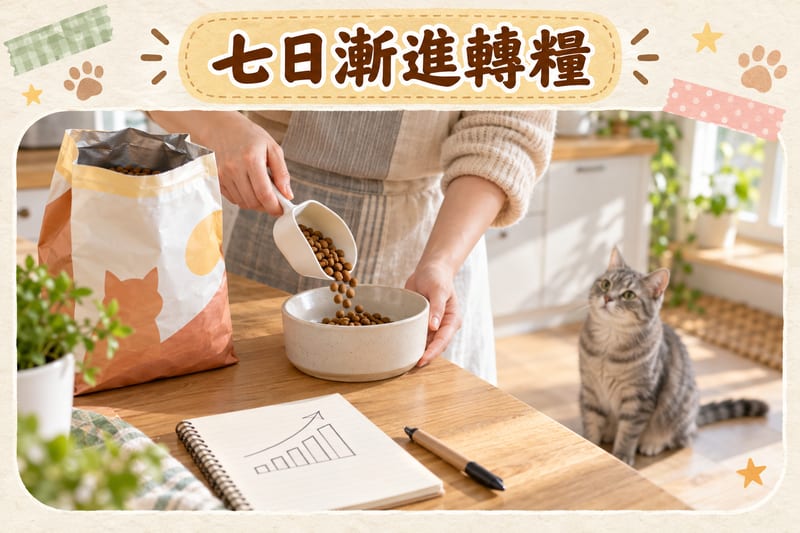
Another common misunderstanding: assuming "most people say it's good" means "it suits my cat". Palatability and digestive response are the two most individually variable factors. With the same batch of food, some cats adapt in 3 days, some need 10, and some refuse entirely. That doesn't mean the product is faulty — just that it doesn't suit that cat. The practical approach: buy the smallest size, do a 7-day gradual transition, record stool and appetite, and let your own cat's response be the final judge. If stool softens during the trial, see PetChill's digestive health hub for common causes and how to handle them.
How to read Kit Cat reviews: 4 verifiable angles
Kit Cat is a common brand in Asia, with product lines spanning cat food, cat treats and cat litter, so "is Kit Cat good?" is itself a vague question — asking about cat food and asking about cat litter are two different things. The following 4 angles apply to any of its products.
Angle 1: Does the nutrition analysis meet a complete nutrition standard? Check the protein, fat and moisture percentages on the back panel, and whether there is a statement of "complete and balanced nutrition" or a reference to the AAFCO cat food nutrient profile. As a reference line: the AAFCO cat food nutrient profile minimums are 26% protein and 9% fat for adult maintenance; 30% protein and 9% fat for kittens and reproduction (on a dry matter basis). Falling below this line while still claiming complete nutrition is rare — if you see it, ask the distributor to clarify.
Angle 2: Country of origin and manufacturer. "Origin" and "manufacturer" are two different fields on the pack; a brand can be registered in country A and manufactured in country B. To find the actual production location, read these two fields plus the importer information, and if unclear, ask the importer listed on the pack directly.
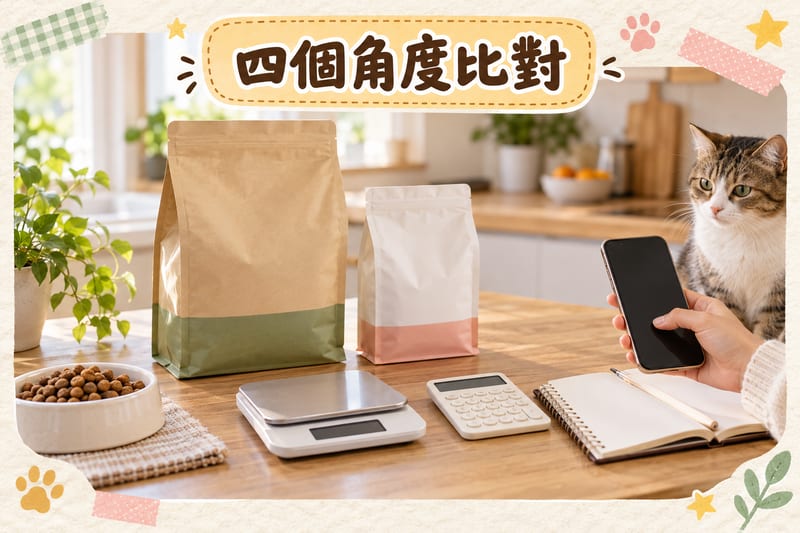
Angle 3: Net weight and price per kg. The same product line usually comes in several sizes, and small packs always cost more per kg. Use "price ÷ net weight × 1000" once and you'll know whether the premium comes from portion size or from the formula.
Angle 4: Life stage. Most packs state kitten, adult or all life stages, and some say "1 year and older". If you have a kitten or a senior cat, don't order based on the word "cat food" alone — check the life stage and the daily feeding amount (per the feeding table on the pack).
How to judge AIME Kitchen cat can "downsides"? First separate complete from complementary wet food
The question "does AIME Kitchen cat food have downsides" really means "will I buy the wrong thing". To answer accurately, the first step is not to rate the taste but to determine whether the can is complete or complementary — this distinction matters more than the brand.
| Item | Complete wet food | Complementary wet food / treat can |
|---|---|---|
| Pack statement | Usually states complete and balanced nutrition, or references the AAFCO complete nutrition standard | Mostly says "complementary food" with no complete nutrition statement |
| Protein (dry matter) | Must meet a complete nutrition standard, generally higher | Can be high or low, not usually |
| Moisture | Usually about 75% to 80% | Also high, but doesn't mean it can be a staple |
| Use | Can be the daily main food | Mixer, reward, hydration |
| Check before ordering | Complete nutrition statement, life stage | Count as a treat in daily calories |
Once you've separated them, the word "downside" can be reduced to 3 objective differences: can size, ingredient positioning and price range. Small cans are convenient for one meal with no waste, but usually cost more per kg than large cans; high-moisture cans must be counted in daily water and calorie intake; and if a can has no complete nutrition statement, its role is complementary and it shouldn't be the sole long-term staple — all of these are spec issues, not "good" or "bad" judgements.
As for online "not recommended" claims, before ordering ask yourself 3 questions: did the person specify which product (the same brand may have a dozen formulas)? Did they state how long it was fed? Are they talking about the cat refusing to eat, or about health symptoms? If the answer is "symptoms", the right move is to take the cat to a veterinarian, not to look for similar experiences online — cat symptoms have too many causes, including food allergies, and you can refer to cat allergy management for investigation directions. Also, cans are a great hydration helper, but hydration doesn't replace balanced nutrition — keep the two separate.
How to tell real owner reviews from fake? 4 indicators and one cross-check method
For Nutriplan, HEROMAMA or any other brand, you can find plenty of "owner reviews" online. This article won't cite any unverified individual comments; instead it teaches you a verification method you can use yourself.
Indicator 1: Is there a purchase record or real-name tag? An "already purchased" tag on an e-commerce platform, or a traceable account history, is more reliable than an anonymous comment. Completely anonymous content that just says "not good" has almost zero reference value.
Indicator 2: Sample size. One or two reviews can be caused by anything, including logistics, damaged packaging, or a temporary stomach upset. Use 20 as a rough threshold — fewer than that shouldn't be treated as a "common problem".
Indicator 3: Is feeding duration and cat background stated? Good reviews usually say "fed for 3 months" or "8-year-old Scottish Fold, 4.5 kg"; ones that just say "bad after eating" with no time, age or weight lack information and can't be compared to your situation.
Indicator 4: Are there specific spec numbers? "38% protein, 1.5kg net weight, gained 0.4 kg in two months" is a verifiable statement; "poor quality" is not a statement, it's an emotion.
Besides the four indicators, watch for two reverse signals: the same text appearing on multiple platforms usually means copying or promotion; reviews clustering in a short period may be manipulation. Conversely, if you see the same product praised and criticised for different reasons, that looks more like a real distribution.
The most practical cross-check: match the review content against the pack label. If a review says "bad ingredients", look at the ingredient list; if it says "my cat had diarrhoea", check whether they describe the transition method — a 7-day gradual transition versus a 1-day switch can give completely different results. To try a new food, a 7-day gradual transition is the baseline: 25% new food for the first 2 days, 50% on days 3–4, 75% on days 5–6, and 100% on day 7; if stool softens, stop for 2 days then continue. If your cat has a weak stomach, you can first learn about when probiotics are appropriate, but don't add supplements yourself instead of seeing a vet.
How to compare Wang Miao Xing Qiu and Monster Tribe? 4 dimensions + price per kg calculation
These two brands are often compared in the same sentence, but their product line combinations aren't identical, so saying "which is better" directly has limited meaning. The right approach is to lock onto the same type of product you actually want to buy, then compare across 4 dimensions.
| Comparison dimension | What to look at | How to check |
|---|---|---|
| Product form | Complete wet food, freeze-dried, dry food or fresh food — form determines moisture and portion | Read the product name and life stage on the front of the pack |
| Protein and fat ratios | Labelled percentages; convert wet food to dry matter first | Read the back-panel nutrition analysis |
| Pack size | E.g. 250g bags versus 80g cans — portions differ several-fold | Read the net weight label |
| Price per kg | Price ÷ net weight × 1000 | Calculate yourself using the current online price |
Why must you calculate price per kg? Because pack sizes vary so much. A 250g pack selling at HK$87.2 works out to about HK$348.8 per kg; a larger pack at the same price may be much lower per kg. If you don't calculate once, you'll easily mistake "expensive" for "premium", or "large pack" for "good value".
Why convert to dry matter first? Canned food is usually 75% to 80% moisture, dry food about 10%, so directly comparing labelled percentages is a wrong comparison. The formula is: dry matter percentage = labelled percentage ÷ (100 − moisture percentage) × 100. For example, a can labelled 10% protein and 78% moisture converts to 10 ÷ (100 − 78) × 100 ≈ 45.5% dry matter. Apply the same formula to both products and the comparison becomes valid. For situations needing extra nutritional supplements (e.g. a vet recommends added vitamins), follow the vet's instructions and don't adjust on your own; you can first refer to the basic principles in vitamin supplements for cats.
Naxos Puppy, Natural Signature, Fujiichi: how to check 3 examples
How to look at Naxos Puppy Mini puppy food. "Mini" usually refers to kibble size, designed for small breeds — it doesn't mean a lower or higher nutrition standard. To judge suitability, look at 3 things: the age range stated on the pack; whether the protein and fat ratios meet puppy needs; and the daily feeding amount — puppy food feeding amounts are graded by current weight and expected adult weight, so always follow the pack's feeding table and adjust by weight every 2 to 4 weeks. Puppy transitions also use the 7-day gradual method; don't increase the amount just because they eat fast. If you also have a kitten at home, you can compare the feeding rhythm in the kitten care hub.
How to judge Natural Signature negative reviews. When you see a negative review, first sort it into 3 categories: palatability issues (the cat refuses to eat); temporary soft stool from switching too fast; and expectation gaps on price and size. None of these three means the product quality is bad. What really deserves attention: does the negative review have specific spec numbers and a timeline, is the same wording repeated verbatim across multiple platforms, and does it include descriptions of health symptoms. If there are skin or digestive symptoms, see a vet for a diagnosis first — don't judge based on similar online experiences alone.
How to check Fujiichi origin and quality (4 steps). 1. Read the "origin" and "manufacturer" fields separately — they can differ. 2. Check the barcode prefix: 45 to 49 is the GS1 Japan prefix, but it only indicates the barcode registration country, not the manufacturing country. 3. Check the importer label and batch number — the batch number is key for later traceability and enquiries. 4. Ask the importer listed on the pack directly for a certificate of origin or contract manufacturer information. If the pack doesn't clearly state "country of origin", always go by the pack label — don't rely on online hearsay.
6-step buying checklist + 2 practical calculations
| Step | Check item | What to look at specifically | What to do if it fails |
|---|---|---|---|
| 1 | Nutrition specs | Protein, fat, moisture percentages; complete nutrition statement (reference line: adult cat minimum 26% protein, kitten 30%, minimum 9% fat, on a dry matter basis) | If no complete nutrition statement, treat as complementary or ask the distributor |
| 2 | Ingredient list | First 3 ingredients; whether animal species and source are stated | If ingredient names are unclear, ask the importer directly |
| 3 | Origin / manufacturing | 4 items: origin, manufacturer, batch number, importer | If any is missing, go by the pack label and write to enquire |
| 4 | Size and specs | Net weight, kibble size, life stage | Buy the smallest size to trial first |
| 5 | Price | Price per kg (price ÷ net weight × 1000) | Compare specs at the same price point, not brand fame |
| 6 | Trial period | 7-day gradual transition (25% → 50% → 75% → 100%), record stool shape and appetite daily | If stool softens, stop for 2 days and continue when improved |
Calculation 1: Price per kg. Price ÷ net weight (g) × 1000. Example: HK$87.2 ÷ 250g × 1000 = HK$348.8/kg. Measure all candidate products with the same ruler and you'll find price differences usually come from portion size and formula, not brand fame.
Calculation 2: Dry matter conversion. Labelled percentage ÷ (100 − moisture percentage) × 100. Before comparing wet and dry food, convert both sides, otherwise you'll reach wrong conclusions like "canned food is very low in protein".
Two supporting habits: weigh regularly (every 2 to 4 weeks is recommended; more often for kittens and senior cats), and keep a food diary (which food, how many grams per day, stool condition). With data, you have a basis for discussing with your vet; without data, you only have impressions.
In-stock spec reference: compare before ordering
Below are a few specs currently in stock at PetChill's online store, so you can practise using the checklist above. These examples mainly demonstrate how to read "size, unit price and suitability" and are not a recommendation of any brand:
- Monster Tribe Cat Food 98% Fresh Meat Complete Cat Food Horse Mackerel 250g (A172) — HK$87.2 (currently 2 in stock)
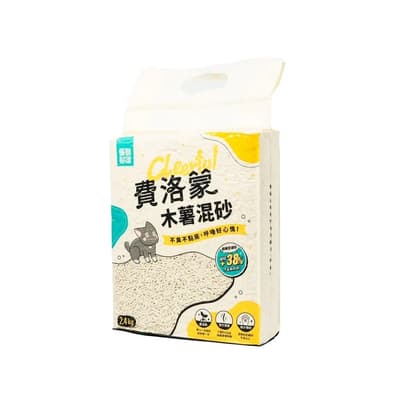
- Monster Tribe Pheromone Cat Litter Tofu-Cassava Mixed Litter 2.4kg — HK$59 (currently 5 in stock)
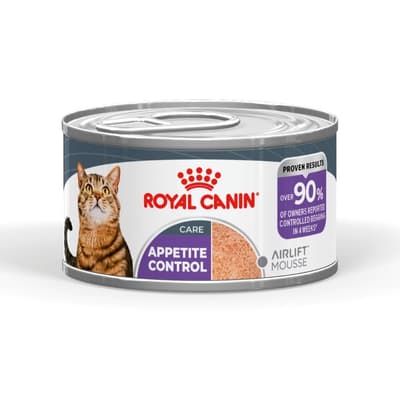
- Royal Canin AIRLIFT Cat Can Adult Greedy Cat Care Complete Wet Food 85g (4240700) — HK$24 (currently 21 in stock)
Prices and stock are subject to the current online store price.
Using the second link as an example: 2.4kg for HK$59 works out to about HK$24.6 per kg, a common price point for daily consumables; the same brand's 250g complete food is about HK$348.8 per kg. The two shouldn't be measured with the same ruler — one is litter used every day, the other is a staple counted meal by meal, so the calculations differ and only like products can be compared.
Further reading
- Complete Cat and Dog Nutrition Guide | Ingredients, portions, transitions, weight management (2026)
- Cat Digestive Health Hub | Soft stool, vomiting and dietary adjustment
- How to choose cat probiotics? When they apply and principles of use
- Cat Allergy Management | Itchy skin and food allergy investigation
In an emergency, contact a veterinarian immediately; this article is for reference only and cannot replace veterinary diagnosis.
Information checked as of 2026-10-12 · Source: PetChill editorial team
 Fuji One full guide →


 Royal Canin full guide →
 K9 Natural full guide →