Quick answers
- Pronature kitten (2 to 12 months) chicken formula states minimum 30% protein and minimum 18% fat.
- On a dry matter basis that is about 33.3% protein and 20.0% fat, above the AAFCO growth minimum of 30%.
- DHA and EPA are each minimum 0.01%, about 0.022% combined, above the AAFCO growth threshold of 0.012%.
- Calcium is minimum 1.3% and phosphorus minimum 1.0%, a ratio of about 1.3 to 1, within the growth range of 1 to 1 to 1.5 to 1.
- Nutrition only "supports" development; immunity depends on colostrum, vaccination and environmental management.
Direct answer to the search intent: based on the expected analysis published on Hong Kong retail listings, the Pronature kitten (2 to 12 months) chicken formula exceeds the AAFCO cat food growth minimums for protein, DHA plus EPA, calcium and phosphorus once converted to a dry matter basis. That means it provides enough raw material for muscle and organ development, brain and retina development, and bone mineralisation. But it is still an ordinary complete kitten food — it will not stop a kitten from getting ill. Kitten immunity depends mainly on colostrum antibodies, the vaccination schedule and environmental management.
This article does three things: first, it shows you how to convert label figures into comparable numbers and check each one against authoritative standards; second, it explains the physiological role behind protein, DHA and the calcium-to-phosphorus ratio; third, it draws a clear line around what nutrition can and cannot do, plus practical feeding, transitioning and weighing. The article does not endorse any brand.
1. What numbers does the Pronature kitten formula state?
To judge what a food does for a kitten, you cannot rely on the marketing words on the front of the pack. The "expected Analysis" on the back is the part you can check: crude protein (minimum), crude fat (minimum), crude fibre (maximum) and moisture (maximum) are the basic four, and some growth formulas also list ash, calcium, phosphorus, DHA, EPA and vitamin levels.
Take the Pronature kitten (2 to 12 months) chicken formula published on Hong Kong retail listings: the label states minimum 30% protein, minimum 18% fat, maximum 4.5% crude fibre, maximum 10% moisture, maximum 8% ash, minimum 0.01% DHA, minimum 0.01% EPA, minimum 1.3% calcium, minimum 1.0% phosphorus, minimum 11,100 IU/kg vitamin A, minimum 800 IU/kg vitamin D3 and minimum 70 IU/kg vitamin E.
These figures are on an "as-fed" basis, i.e. weight percentages including moisture. Dry food is usually 10% to 12% moisture while wet food can be over 75%, so you cannot compare dry food and canned food directly. For a fair comparison you must convert to a "dry matter basis": divide the stated percentage by (100 − moisture percentage). With maximum 10% moisture, the divisor is 90.
| Item | Label (as-fed) | Dry matter basis | AAFCO growth minimum | Verdict |
|---|---|---|---|---|
| Crude protein | min 30% | about 33.3% | 30.0% | Pass |
| Crude fat | min 18% | about 20.0% | 9.0% | Pass |
| Crude fibre | max 4.5% | about 5.0% | No minimum | Moderate |
| Ash | max 8% | about 8.9% | No minimum | Moderate |
| DHA | min 0.01% | about 0.011% | 0.012% combined with EPA | Pass |
| EPA | min 0.01% | about 0.011% | Same as above | Pass |
| Calcium | min 1.3% | about 1.44% | 1.0% | Pass |
| Phosphorus | min 1.0% | about 1.11% | 0.8% | Pass |
| Calcium-to-phosphorus ratio | about 1.3 to 1 | about 1.3 to 1 | Minimum 1 to 1 | Pass |
| Vitamin A | min 11,100 IU/kg | about 12,333 IU/kg | 9,000 IU/kg | Pass |
| Vitamin D3 | min 800 IU/kg | about 889 IU/kg | 750 IU/kg | Pass |
| Vitamin E | min 70 IU/kg | about 78 IU/kg | 30 IU/kg | Pass |
Note that the AAFCO growth threshold refers to the Growth and Reproduction profile, with values on a dry matter basis; adult maintenance requirements are much lower, for example minimum 26% protein, 0.6% calcium and 0.5% phosphorus. If a food can be fed to both kittens and adult cats, check which profile it passes.
Two more points to remember: first, the expected analysis gives minimum/maximum expected values, and actual batches are usually slightly higher or lower; second, different product lines from the same brand can state different figures — for example some Original kitten formulas state minimum 0.05% DHA, different from the 0.01% above — so always go by the label on the bag you actually buy, not memory or reposted data.
On brand background, Pronature is a Canadian brand; its official website lists manufacturer PLB International in Boucherville, Quebec, a family business operating since 1969 that began making dog and cat food in 1981, with products sold in more than 20 countries and holding local "Aliments du Québec" and "Les Produits du Québec" certifications. These are facts about origin and the company, separate from whether the formula is good; judgement still comes back to the label numbers. To build a complete nutrition reading framework first, see our pet nutrition hub.
2. Protein, fat and calories: kittens need more than twice an adult cat's energy
The AAFCO growth minimum for protein is 30% (dry matter), higher than the 26% for adult cats. The reason is that kittens are not just maintaining their body but growing bones, muscle and organs, and growing kittens need roughly twice an adult cat's calories per kilogram of body weight. The Pronature kitten formula states minimum 30% protein (about 33.3% dry matter) and minimum 18% fat (about 20.0% dry matter), a "moderate protein, high fat" growth formula structure. High fat is not a flaw: a kitten's stomach is small and it eats little at a time, so it needs high calorie density to eat enough.
You have to calculate energy needs yourself and not feed adult portions. The general approach is to work out resting energy requirement (RER) and multiply by a life-stage factor:
RER (kcal/day) = 70 × body weight (kg)^0.75
Kittens under 4 months need about 2.5 to 3 times RER; 4 to 12 months about 2 to 2.5 times; adult neutered indoor cats about 1.0 to 1.2 times. Below is the daily calorie range at 2 and 3 times, a general estimate that should be adjusted to body condition and veterinary advice:
| Kitten weight | RER (kcal/day) | About 2× RER | About 3× RER |
|---|---|---|---|
| 0.5 kg (about 4 to 6 weeks) | 42 | 83 | 125 |
| 1.0 kg (about 8 to 10 weeks) | 70 | 140 | 210 |
| 2.0 kg (about 4 to 5 months) | 118 | 235 | 353 |
| 3.0 kg (about 7 to 9 months) | 160 | 319 | 479 |
| 4.0 kg (about 12 months) | 198 | 396 | 594 |
To convert to grams, divide daily calories by (calories per 100 g on the pack ÷ 100). For example, if the pack says 360 kcal per 100 g, that is 3.6 kcal per gram, so a 2 kg kitten needing 235 to 353 kcal a day would eat about 65 to 98 g. This method is more tailored than following the pack's feeding table, because kittens of the same weight can differ greatly in activity. To track growth by week, see our kitten weight chart; if you just want the fundamental difference between kitten and adult food, the kitten food selection guide has a fuller framework.
On protein quality, the first ingredient in the Pronature kitten formula is chicken meal, followed by corn, wheat, chicken fat (preserved with mixed tocopherols), oats, beet pulp and barley, with taurine, DL-methionine and vitamin and mineral premixes later in the list. Chicken meal is a dehydrated concentrated animal protein with higher protein density than fresh meat, a common and reasonable source in dry food; note that the Hong Kong retail expected analysis does not list a taurine value, while the AAFCO minimum for extruded dry food is 0.10% (dry matter). To confirm actual content, the safest step is to ask the retailer or brand for the full expected analysis.

3. DHA and EPA: a direct effect on brain and retina development
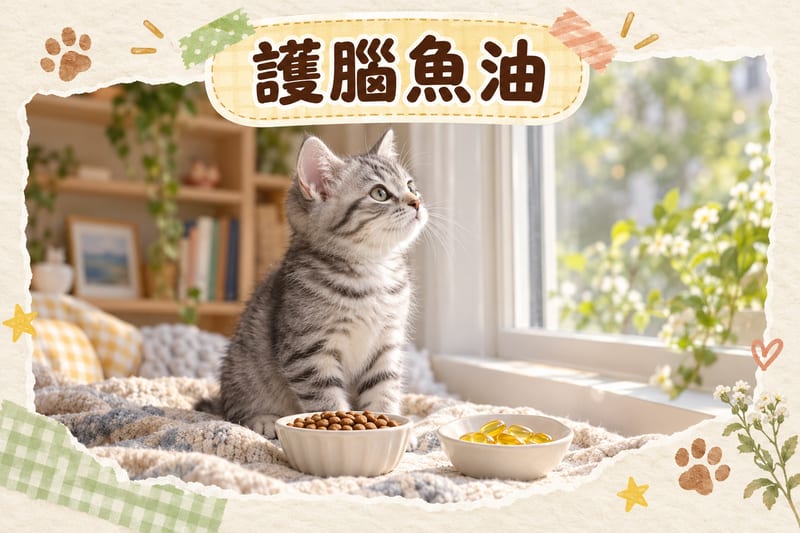
The first 12 months after birth are a period of rapid development of the brain, nervous system and retina, and DHA is the structural fatty acid in these tissues. Cats are obligate carnivores with very low hepatic delta-6 desaturase activity, so they struggle to convert enough DHA from plant-based alpha-linolenic acid; Pawlosky et al. (1997) found that the omega-3 level in a mother cat's diet directly affects DHA concentration in kitten brain and retina tissue, with the low-intake group showing clearly lower tissue DHA. The US National Research Council's 2006 Nutrient Requirements of Dogs and Cats lists DHA as a nutrient with a clear requirement during growth; the revised AAFCO cat food growth standard requires minimum 0.012% EPA plus DHA combined (dry matter), while adult maintenance is marked not determined (ND).
The Pronature kitten (2 to 12 months) chicken formula states minimum 0.01% DHA and minimum 0.01% EPA, with salmon oil listed as the source. Combined that is 0.02% (as-fed), about 0.022% on a dry matter basis, roughly 1.8 times the AAFCO growth minimum of 0.012%.
On the immunity side, EPA and DHA are precursors of anti-inflammatory mediators (such as resolvins), acting to "modulate" inflammation rather than "boost" immunity. This distinction matters: nutrition gives the immune system enough raw material to function, but it will not make a kitten invincible.
Four points to check when reading a DHA label:
- Does the expected analysis list DHA and EPA values separately, rather than just saying "contains fish oil"?
- Does the ingredient list name the fish species (e.g. salmon oil, herring oil), which is clearer than just "fish oil"?
- Fish oil is an easily oxidised ingredient; AAFCO notes that for every 1 g of fish oil added per kg of food, vitamin E should rise by 10 IU, so bear this in mind when reading the vitamin E figure.
- After opening, seal, keep away from light and avoid high temperatures to reduce oil oxidation affecting palatability and nutrition.
4. Calcium and phosphorus: where a 1.3 to 1 ratio sits
Kittens are not just growing muscle; their bones are mineralising, so besides protein, calcium and phosphorus are equally critical. The AAFCO growth minimum for calcium is 1.0% (dry matter) and for phosphorus 0.8%; adult maintenance needs only 0.6% and 0.5%. Besides absolute values, the ratio matters too: the European Pet Food Industry Federation (FEDIAF) nutritional guidelines specify a minimum calcium-to-phosphorus ratio of 1 to 1 for cats, a growth ceiling of about 1.5 to 1, and an adult ceiling relaxed to 2 to 1. Too low a ratio affects bone mineralisation, too high interferes with absorption, so more calcium is not better.
The Pronature kitten formula states minimum 1.3% calcium and minimum 1.0% phosphorus (as-fed), about 1.44% and 1.11% on a dry matter basis, a ratio of about 1.3 to 1, within the recommended growth range of 1 to 1 to 1.5 to 1.
Three practical reminders:
- A complete kitten food already balances calcium, phosphorus and vitamin D, so you should not add calcium powder, bone meal or extra vitamin D supplements; excess can be harmful. The AAFCO profile sets upper limits for some nutrients (e.g. zinc 2,000 mg/kg, vitamin D 10,000 IU/kg) precisely because excess carries risk.
- Vitamin D is responsible for calcium absorption. The growth minimum is 750 IU/kg (dry matter); Pronature states 800 IU/kg, about 889 IU/kg, which meets the level.
- Early bone problems show no obvious signs and usually need blood tests or imaging. If a kitten walks awkwardly, has bone pain or is clearly falling behind in development, that is a matter for a veterinarian and should not be handled by changing food yourself.
5. Immunity: what nutrition can and cannot do
The first layer of protection for a kitten's immune system is antibodies from the mother's colostrum, but these maternal antibodies (MDA) gradually decline over the weeks after birth, creating an "immunity gap". The World Small Animal Veterinary Association (WSAVA) 2024 vaccination guidelines address exactly this: core feline vaccines (FPV, FHV, FCV) can start from 6 weeks, then repeat every 2 to 4 weeks, with the final dose at 16 weeks or later; in high-risk environments it can extend to 20 weeks, with a further dose recommended at about 26 weeks or later to reduce maternal antibody interference.
So "boosting kitten immunity" cannot be done by food alone: the vaccination schedule, regular deworming, environmental hygiene and stress reduction matter just as much. Nutrition's role is to supply raw material so the immune system and every part of the body have enough resources to develop. Below are nutrients commonly linked to growth and immunity, with values converted from the Pronature kitten chicken formula label:
| Nutrient | Role for kittens | Label converted (dry matter) | AAFCO growth minimum |
|---|---|---|---|
| Protein and amino acids | Immune cells, antibodies, muscle and organ development | about 33.3% | 30.0% |
| Taurine | Heart, retina, immune cell function | Listed in ingredients, value not published | 0.10% (extruded dry food) |
| DHA + EPA | Brain, retina, anti-inflammatory mediator precursors | about 0.022% | 0.012% |
| Zinc | Immune cell differentiation, skin barrier | Not published on retail listing | 75 mg/kg |
| Selenium | Antioxidant enzymes (glutathione peroxidase) | Not published on retail listing | 0.1 mg/kg |
| Vitamin A | Epithelial barrier, vision | about 12,333 IU/kg | 9,000 IU/kg |
| Vitamin E | Cell membrane protection, antioxidant | about 78 IU/kg | 30 IU/kg |
| Calcium, phosphorus | Bone mineralisation, nerve and muscle function | about 1.44% / 1.11% | 1.0% / 0.8% |
Several items in the table have no published values on the retail listing (zinc, selenium, taurine), which does not mean the formula lacks them — the ingredient list usually names the source forms of zinc, selenium and taurine. To know the actual content, ask the brand or retailer for the full expected analysis and AAFCO statement.
Draw the conservative line clearly:
- You cannot say "feeding a certain food means no illness". Common kitten problems such as upper respiratory infection, intestinal parasites and diarrhoea are linked to environment, stress and vaccination timing.
- Do not stop medication or add supplements on your own. Prescription drugs, dewormers and probiotics should all follow veterinary instructions.
- Daily observation should focus on weight gain, appetite, stool consistency and demeanour. If a kitten does not eat for two days, vomits repeatedly, has bloody stool or rapid breathing, contact a veterinarian immediately.
6. In practice: how to check a kitten food and how to transition
If you do not want to rely on second-hand data, follow these seven steps:
- Write down the as-fed expected analysis figures: protein, fat, fibre, moisture, ash, calcium, phosphorus, DHA.
- Convert to a dry matter basis: percentage ÷ (100 − moisture percentage).
- Check each against AAFCO growth minimums: protein 30%, calcium 1.0%, phosphorus 0.8%, EPA plus DHA 0.012%, taurine 0.10% (dry matter).
- Find the AAFCO statement on the pack, confirm it says growth or growth and reproduction, and note whether it is "formulated to meet" or passed a feeding trial (a higher level of evidence).
- Check whether the first three to five ingredients include a named animal protein (the Pronature kitten formula's first ingredient is chicken meal) and whether the fish oil species is named.
- Check calorie density, calculate daily grams from RER, and weigh weekly to confirm growth (a weekly gain of 50 to 100 g is a common range for kittens).
- Record the response over 4 to 6 weeks: stool, coat, appetite and demeanour, then decide whether to use it long term.
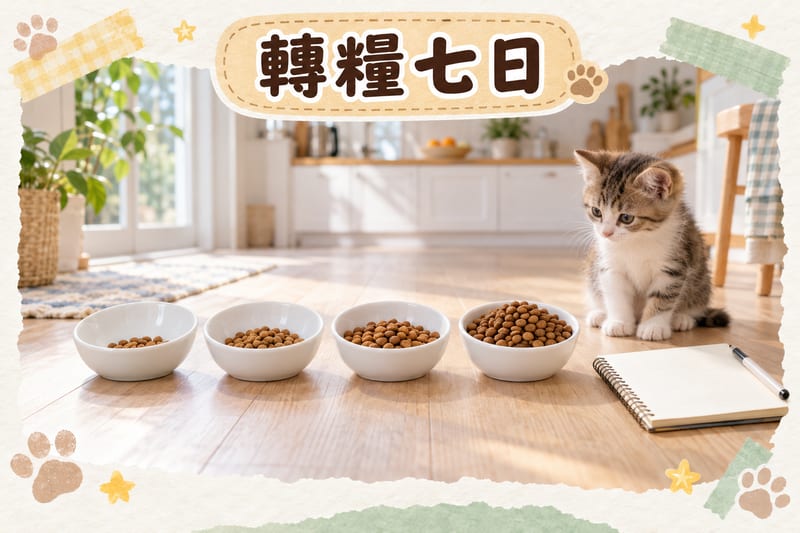
Do not switch foods in one step; an unprepared gut easily leads to soft stool:
| Stage | New food proportion | Original food proportion |
|---|---|---|
| Days 1 to 2 | 25% | 75% |
| Days 3 to 4 | 50% | 50% |
| Days 5 to 7 | 75% | 25% |
| From day 8 | 100% | 0% |
If soft stool appears, go back to the previous proportion for two more days; for sensitive kittens you can stretch it to 14 days. After neutering at around 4 to 6 months a kitten's energy needs gradually fall, and most switch back to an adult formula at 10 to 12 months; ask your veterinarian about timing. For a comparison framework across other kitten foods, see Hong Kong kitten food recommendations.
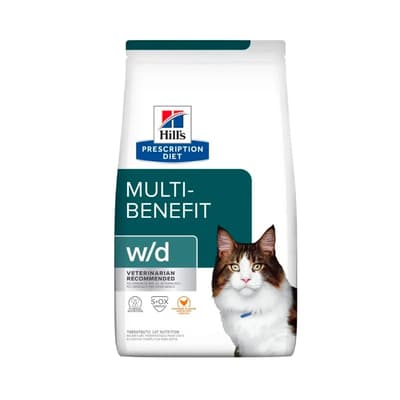
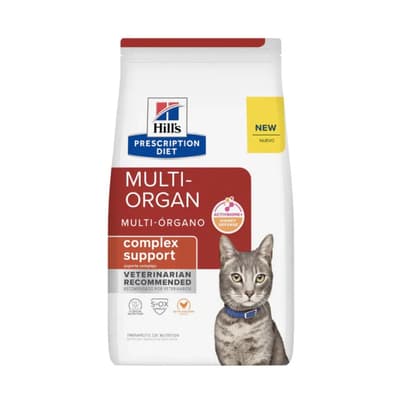
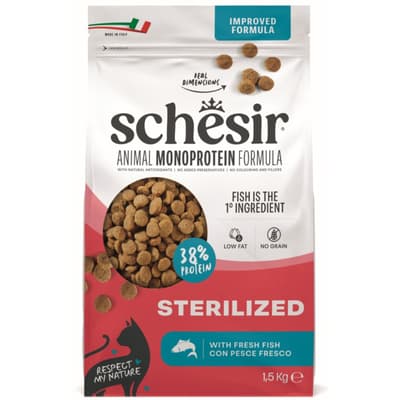
If a veterinarian assesses that a kitten has a specific problem and needs a prescription or specific-purpose formula, examples on our site include:
- Hills Prescription Diet Cat Food w/d Multi-Benefit 4lbs (6159) — HK$376 (available to pre-order)
- Hills Prescription Diet Cat Food k/d Early Support Multi-Organ Care 4lbs (609528) — HK$329 (available to pre-order)
- Schesir Cat Food Neutered Weight Control Formula Fish 1.5kg (SCH13806) — HK$179 (available to pre-order)
Prices and stock are subject to the live price on the online store. All three above are veterinary-line or specific-purpose formulas and must be used after a veterinarian has assessed the kitten's actual situation; long-term feeding on your own is not recommended.
Further reading
- Pet nutrition hub: ingredients, calories, choosing prescription food (2026)
- Kitten food selection guide
- Kitten weight chart
- Hong Kong kitten food recommendations
In an emergency, contact a veterinarian immediately; this article is for reference only and cannot replace veterinary diagnosis.
Information checked as of 2026-10-12 · Source: PetChill editorial team