Quick answers
- The first 6 ingredients in now FRESH cat formulas are deboned turkey, peas, potatoes, dried whole egg, pea flour and potato flour, with no wheat, corn, rice, barley or oats — so the claim that the cat formulas are truly grain-free holds.
- But grain-free doesn't mean low-carb: the official nutrition profile lists 33% carbohydrates (as fed) / 35% (dry matter) for the adult cat dry formula, while the usual "low-carb" dry food threshold is around 15%.
- The brand isn't fully grain-free: a check of the PetChill catalogue on 2026-10-12 found 10 of 106 now FRESH products contain grains (8 with ancient grains, 2 with brown rice), all for dogs; all 25 cat products are labelled grain-free.
- Grain-free doesn't mean hypoallergenic either: a case review covering 78 cats found beef accounted for 18% of allergy cases, fish 17% and chicken 5%, while wheat and corn each accounted for only 4%.
- The heart issue is unresolved: as of 2022-11-01 the FDA had received 1,382 reports of canine dilated cardiomyopathy (DCM) and explicitly stated that the number of reports alone is not enough to establish a causal relationship.
- Price differences mainly depend on pack size: on the same now FRESH grain-free adult cat line, a 7.26kg bag works out at about HK$111/kg and a 1.36kg bag at about HK$234/kg — more than double.
- To confirm whether the bag in your hand is truly grain-free, the most practical check is whether wheat, corn, rice, barley, oats, rye or millet appear in the first 10 ingredients.
"now FRESH cat food gets good reviews — is it really grain-free?" If the question is about the cat formulas, the answer is yes — at least at the ingredient-list level: neither the dry nor the wet foods list wheat, corn, rice, barley, oats or other grains, using peas, potatoes, pea flour, potato flour and sweet potato as carbohydrate sources instead. But if the question is "does grain-free mean better?", the answer is no — because grain-free doesn't mean hypoallergenic or low-carb, and the brand itself isn't fully grain-free.
This article doesn't rank any brands. It does four things: breaks down the ingredient list and official nutrition figures for now FRESH cat formulas item by item; explains the scientific consensus on the "grain-free" issue; checks the Hong Kong catalogue to see which now FRESH formulas actually contain grains; and finally teaches you a three-step self-check, with unit prices calculated from online prices on 2026-10-12 so you can compare directly with other formulas.
Is now FRESH cat food really grain-free? A closer look at the ingredients
now FRESH is owned by Canadian company Petcurean, which launched the brand in 2007; the company was founded in 1999 in British Columbia's Fraser Valley and is headquartered in Chilliwack, with products sold in more than 30 countries. The brand's official website describes all now FRESH formulas as grain-free, with no by-products or meat meal, and no artificial colours, flavours or preservatives. These are the brand's own product positioning statements, not third-party certifications; the only reliable way to verify "truly grain-free" is to read the ingredient list.
Below is the ingredient order (first ten) from the official nutrition profile for the adult cat grain-free formula (checked 2026-10-12):
| Order | Ingredient | Category |
|---|---|---|
| 1 | Deboned turkey | Animal protein |
| 2 | Peas | Legume (carbohydrate plus plant protein) |
| 3 | Potatoes | Tuber (starch) |
| 4 | Dried whole egg | Animal protein |
| 5 | Pea flour | Legume (carbohydrate plus plant protein) |
| 6 | Potato flour | Tuber (starch) |
| 7 | Natural flavour | Palatability |
| 8 | Canola oil | Fat |
| 9 | Coconut oil | Fat |
| 10 | Deboned salmon | Animal protein |
The first ten contain no grains at all, so the "grain-free" claim is verifiable on the cat formulas. But note two things. First, animal proteins and carbohydrate sources alternate: positions 2, 3, 5 and 6 are all legumes or tubers, meaning no grains doesn't mean no carbohydrates — just a different source. Second, ingredients are listed by weight, and fresh meat contains a lot of water, so being first doesn't mean meat makes up the largest share; the real judgement requires looking at the protein and fat percentages together. For a deeper understanding of how to read an ingredient list, see the nutrition overview in Further Reading.
Breaking down the official nutrition figures: grain-free but 33% carbs
Many Hong Kong consumers assume "grain-free" = "low-carb", but now FRESH's own official nutrition profile lists a key figure: the adult cat grain-free formula contains 33% carbohydrates (as fed) and 35% (dry matter basis). That's lower than many budget grain-inclusive foods, but far from "low-carb".
| Item | As fed basis | Dry matter basis | Comparison |
|---|---|---|---|
| Protein | 32% | 35% | Cats are obligate carnivores; protein quality matters more than grain or no grain |
| Fat | 18% | 20% | Grain-free formulas tend to be higher in fat for energy and palatability |
| Fibre | 3.4% | 3.7% | Formula contains pea fibre, pumpkin and dried chicory root |
| Ash | 5.7% | 6.2% | Reflects total minerals |
| Carbohydrates | 33% | 35% | Usual "low-carb" dry food threshold is around 15% |
| Taurine | 0.25% | 0.27% | AAFCO dry food minimum is 0.10% |
| Calories | 3,802 kcal/kg, 418 kcal per cup | — | Energy sources: 30% protein, 40% fat, 30% carbohydrates |
| Standard | AAFCO Cat Food Nutrient Profiles (Maintenance) | — | Not Growth / All Life Stages |
This table carries three practical messages. First, 33% carbs versus the "low-carb" threshold of about 15% is more than double, proving grain-free doesn't mean low-carb. Second, taurine at 0.25% is 2.5 times the AAFCO dry food minimum of 0.10% — a reassuring figure for cats, since they cannot synthesise enough taurine themselves. Third, the standard is adult maintenance, meaning this line is designed for healthy adult cats; kittens and cats with medical conditions should choose formulas for the appropriate life stage or a veterinary line.
Incidentally, few brands are willing to publish carbohydrate percentages and energy source ratios — many packs only carry a expected analysis (protein, fat, fibre, moisture), leaving you to estimate by subtraction. now FRESH's approach is more transparent for consumers, but transparency doesn't mean it suits your cat better; the two are separate issues.

Three common misconceptions: hypoallergenic, low-carb, always better
"Grain-free" is a marketing term, not a nutritional grade or a product safety certification. Hong Kong has no legislation specifically regulating pet food; pet food is only covered by the general Trade Descriptions Ordinance (Cap. 362), which prohibits false or misleading trade descriptions, including descriptions about ingredients. With that in mind, here are the three most common misconceptions.
| Common claim | Scientific consensus | What to do |
|---|---|---|
| Grain-free = hypoallergenic | The most common food allergens in cats are meat proteins. Among 78 case cats, beef accounted for 18%, fish 17%, chicken 5%, and wheat and corn 4% each | Have a veterinarian arrange an 8-week elimination diet trial; don't judge by the label alone |
| Grain-free = low-carb | A 2025 systematic review found grain-free formulas were on average lower in carbs than grain-inclusive ones, but the two groups overlapped heavily, so they can't all be treated as low-carb | Estimate nitrogen-free extract by subtracting protein, fat, moisture and ash from 100% |
| Grain-free = always better | Grain-free may offer advantages in glycaemic control, lower mycotoxins and palatability, but there is a potential link with canine dilated cardiomyopathy (DCM), and causation has not been established | See a vet if symptoms appear; choose food by the complete and balanced statement and life-stage standard |
First, hypoallergenic. A 2025 systematic review in the journal Animals on grain-free diets noted that grain-free pet foods are widely marketed as natural and hypoallergenic, but food allergy actually accounts for less than 1% of skin problems in dogs and about 10% of allergic skin problems; in a study of 128 cats with itching or gastrointestinal signs, only 17% were ultimately diagnosed with food allergy. The case review cited in the same review further shows that the most common allergens in cats are beef, fish and chicken, with wheat and corn ranking lower. So for most cats suspected of sensitivities, cutting out grains may be aiming in the wrong direction.
Second, low-carb. The same review compared the nutrient composition of grain-free and grain-inclusive products on the market and found grain-free formulas generally higher in protein and fat and lower on average in carbohydrates (nitrogen-free extract), but the two data sets overlapped widely, stating plainly: "grain-free diets should not be uniformly considered equivalent to low-carbohydrate diets." The 33% carbs listed officially by now FRESH is one example.
Finally, the heart. Since July 2018 the US FDA has been investigating the potential link between certain diets and canine dilated cardiomyopathy; the dietary features examined include being labelled grain-free and having peas/lentils/potatoes among the top ten ingredients. As of 2022-11-01 the FDA had received 1,382 dog case reports (plus more than 20 cat cases before July 2020), but the FDA also explicitly stated that the number of adverse event reports alone is not enough to establish a causal relationship with the products, and that the cause is a complex scientific question. Tufts University's Petfoodology also notes that although case numbers have declined, the cause remains unknown. The practical conclusion: don't panic over "grain-free", and don't stop the food on your own because of the controversy; for cats with a history of heart or gastrointestinal disease, let a veterinarian decide the formula.
Which now FRESH formulas in Hong Kong contain grains?
This section is the most practically useful part of the article, because "well-known brand" doesn't mean "fully grain-free". A live check of PetChill product data (app 7) on 2026-10-12 gave these results:
- now FRESH has 106 products in total;
- 25 are cat products, all labelled "grain-free" in their names, without exception;
- the other 10 products not labelled grain-free are all for dogs: 8 are "dry food with a rich turkey bone broth coating (with ancient grains)" (3.5lb / 12lb / 22lb, adult and small breed formulas), and 2 are "chicken and brown rice wet pouches" and "beef and brown rice wet pouches" (2.8oz).
In other words: if you're buying now FRESH cat food, you're getting a grain-free formula; but if you buy its dog food simply because "now FRESH is a grain-free brand", you may end up with a version containing ancient grains or brown rice. Similar names and similar-looking packaging across old and new versions may also belong to different formulas, so the safest approach is to read the ingredient list every time rather than trusting the brand.
The same logic applies to other brands under the same manufacturer: besides now FRESH, Petcurean also has Go! Solutions (some formulas explicitly contain grains) and Summit (which uses grains in its formulas), showing that grain-inclusive versus grain-free is decided formula by formula. A quick look at the first ten ingredients before buying is far more reliable than looking at the brand logo.
Three steps to verify "truly grain-free" and calculate unit cost
Step one: look for grain keywords in the first ten ingredients — wheat, corn, rice, barley, oats, rye, millet. If the label says "grain-free" but any of these appear in the first ten ingredients, the label contradicts the list; terms like "ancient grains" and "brown rice" are also grains and cannot be counted as grain-free.
Step two: estimate the carbohydrate percentage. Add up the protein, fat, moisture and ash percentages on the pack and subtract from 100%; the resulting nitrogen-free extract (NFE) roughly equals the carbohydrate-type components. To compare with the "low-carb" threshold (about 15%), convert to a dry matter basis: first subtract the moisture, then recalculate each component as a percentage of dry matter. Note that this estimate includes fibre and is only a rough indicator.
Step three: calculate the price per kilogram (price divided by net weight; 1 lb is about 0.4536 kg) — the most practical comparison method for Hong Kong consumers:
| Product | Net weight | Price on 2026-10-12 | Price per kg |
|---|---|---|---|
| now FRESH grain-free adult cat turkey, salmon & duck 16lb | 7.26 kg | HK$805 | HK$111/kg |
| now FRESH grain-free adult cat turkey, salmon & duck 3lb | 1.36 kg | HK$318 | HK$234/kg |
| now FRESH grain-free kitten 3lb | 1.36 kg | HK$314 | HK$231/kg |
| now FRESH grain-free senior 3lb (closer best-before date) | 1.36 kg | HK$95.4 | HK$70/kg |
| Absolute Holistic grain-free complete food chicken with hake 500g | 0.5 kg | HK$173.6 | HK$347/kg |
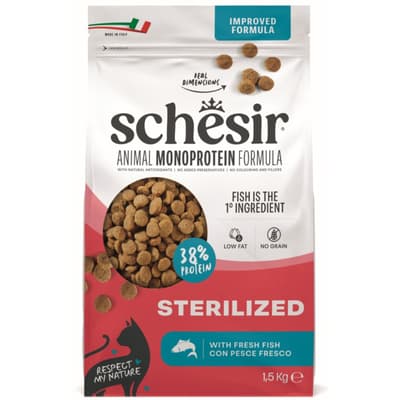
| Schesir neutered weight control formula fish 1.5kg | 1.5 kg | HK$179 | HK$119/kg |
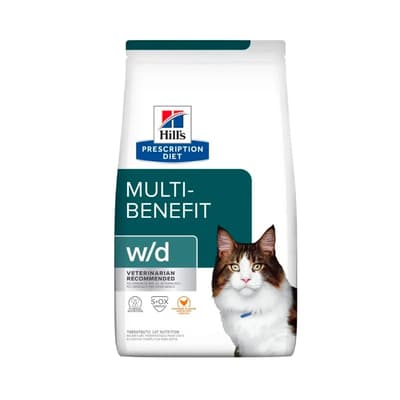
| Hills w/d multi-benefit management formula 4lbs | 1.81 kg | HK$376 | HK$207/kg |
This table is not a ranking, just a unit-cost comparison from the same day. Several things stand out: larger packs have a clearly lower unit cost (7.26kg at HK$111/kg versus 1.36kg at HK$234/kg); small or trial packs can cost as much as HK$347/kg; packs close to their best-before date are often the cheapest option, but you need to work out whether your household can finish them. Single-cat households buying large bags should watch out for storage and oxidation after opening — don't buy more than can be eaten just because the unit price is low.
Here are the actual prices from the PetChill online store for direct comparison:
- Schesir cat food neutered weight control formula fish 1.5kg (SCH13806) — HK$179 (stock 0, available to pre-order)
- Absolute Holistic cat food grain-free complete food chicken + hake 500g (AD-6697) (best-before 2026.11.23) — HK$173.6 (stock 4)
- Hills prescription cat food w/d multi-benefit management formula 4lbs (6159) — HK$376 (stock 0, available to pre-order)
Prices and stock are subject to the online store's live prices.
When to consider a grain-free formula and when not to
Based on the information above, you can use the following checklist to decide:
- Consider it: your veterinarian has diagnosed a genuine adverse reaction to a specific grain; or you have calculated the carbohydrate percentage and want to switch to a formula using legumes and tubers as carbohydrate sources.
- No need to chase it: healthy adult cats and households on a budget. The focus should be on whether the pack has a "complete and balanced" statement, whether it meets the standard for the appropriate life stage, and the quality of the protein sources — not on the words "grain-free".
- Needs veterinary advice: cats with undiagnosed skin or gastrointestinal signs, a history of urinary or heart disease, or currently on prescription food. In these cases you should not change or stop the food on your own.
- Check the life stage: kittens and senior cats have different nutritional needs; now FRESH's adult cat grain-free formula is designed to the AAFCO adult maintenance standard and is not suitable for feeding kittens directly.
- Check the fat: the 2025 systematic review found grain-free formulas generally higher in protein and fat; cats needing weight control should count calories (e.g. 3,802 kcal/kg converted to a daily portion by body weight) and not free-feed.
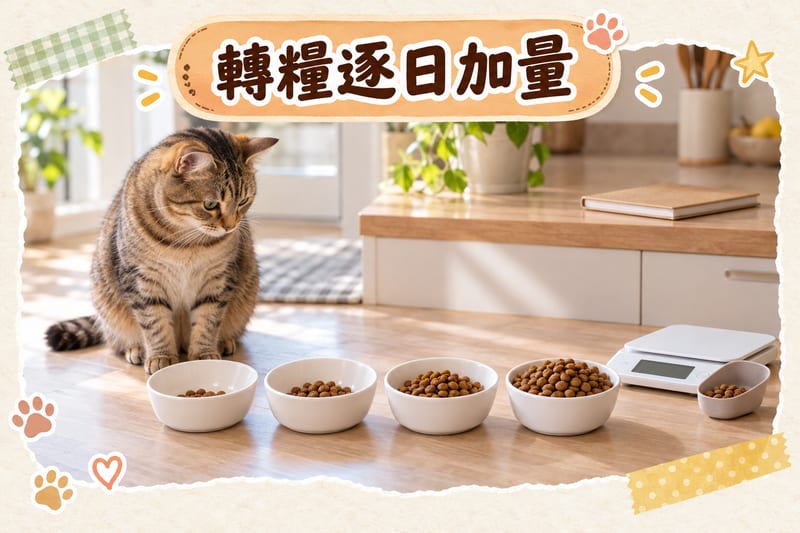
- How to transition: gradually over 7 to 14 days, adding 25% at a time, going back a stage if stools soften.
Further reading
- Complete pet nutrition guide | How to choose by ingredients, calories and prescription food (2026) →
- What is grain-free dog food? Ingredient lists and common misconceptions →
- The truth about grain-free cat food 2026 | Grain-free doesn't mean low-carb (with real Hong Kong price comparisons) →
- How to use fresh food toppers properly? Portions and transition methods →
In an emergency, contact a veterinarian immediately; this article is for reference only and cannot replace veterinary diagnosis.
Information checked up to 2026-10-12 · Source: PetChill editorial team
 K9 Natural full guide →
 Feline Natural full guide →