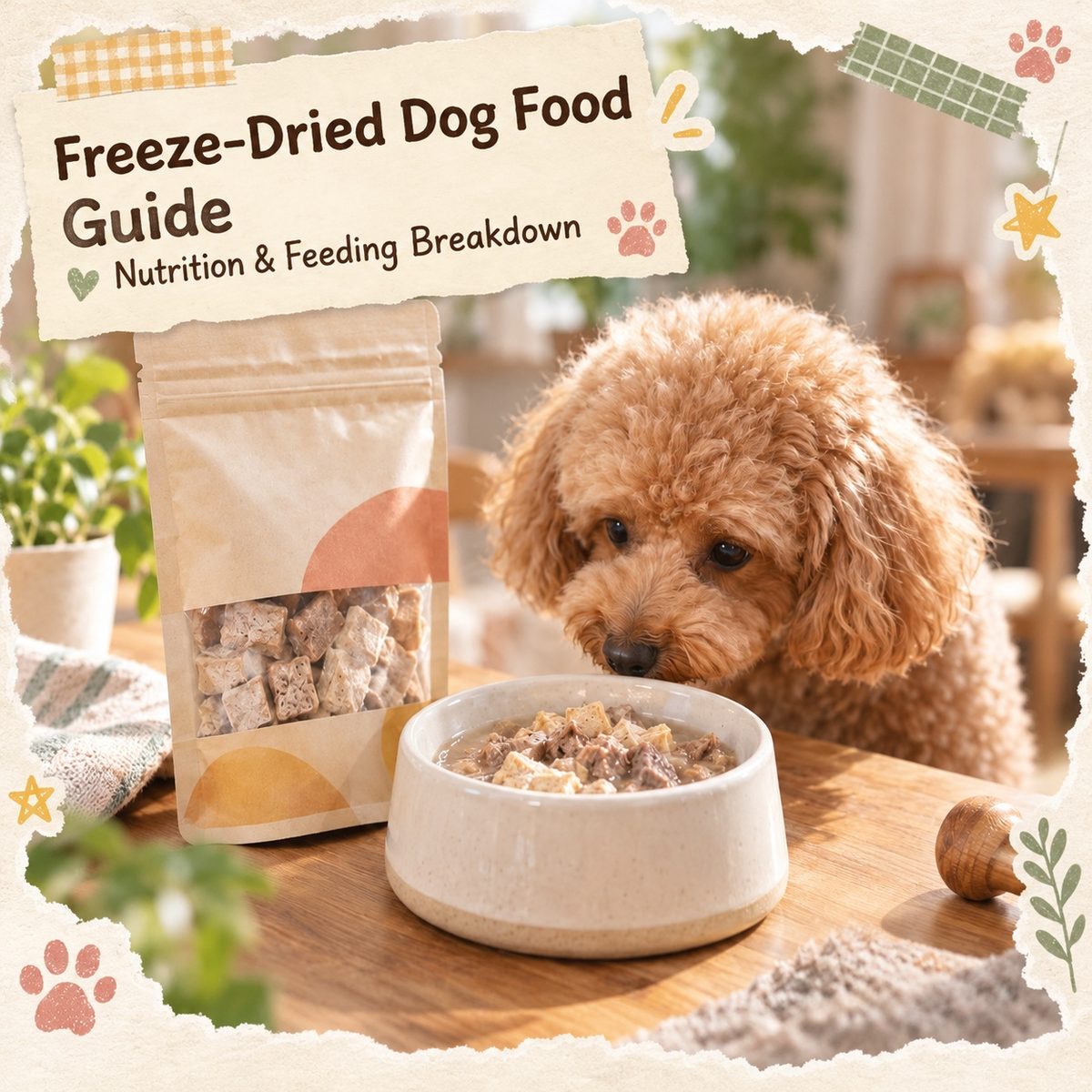
Quick answer: Freeze-dried dog food locks in over 90% of nutrients through low-temperature vacuum processing and is convenient to store at room temperature, but it is expensive and very low in moisture. Hong Kong owners who want to use it as a main meal must choose products labelled 'Complete & Balanced' and rehydrate with warm water; otherwise, it can only be used as a treat or topper.
The selling points of freeze-dried dog food are low-temperature processing, nutrient retention of over 95%, and room-temperature storage; the trade-offs are high cost and very low moisture, requiring rehydration with warm water before feeding. To use as a main meal, you must choose products labelled 'Complete & Balanced'; pure meat freeze-dried products can only be used as toppers. This article breaks down the principles, pros and cons, rehydration methods, and selection pitfalls.
What is freeze-drying technology?
Freeze-drying is a low-temperature drying technology: fresh ingredients are rapidly frozen, then placed in a vacuum environment so that water sublimates directly from ice to gas. This process does not involve high temperatures, so nutrients, enzymes, and flavour are retained at over 95%, far better than traditional high-temperature baking.
Because it does not rely on high heat and large amounts of starch for shaping, freeze-dried food can have a higher meat content and more complete protein retention—this is why it is expensive, and also why it is worth the price.
Freeze-dried vs dry food vs fresh food

| Type | Moisture | Protein | Nutrient retention | Convenience | Price |
|---|---|---|---|---|---|
| Dry food | ~10% | Medium | Fair | High | Cheap |
| Freeze-dried | <5% | High | Excellent | Medium (needs rehydration) | Expensive |
| Fresh food | 70%+ | High | Good | Low (needs refrigeration) | Expensive |
Simply put: for convenience and nutrition, choose freeze-dried; for fresh ingredients and hydration, choose fresh food; for budget-friendliness, choose dry food. The three can be rotated; for example, 'dry food as base + freeze-dried sprinkled on top' is the most cost-effective combination used by most people.
Pros and cons of freeze-dried dog food
Pros:
- Most complete nutrient retention—vitamins, enzymes, and flavour are preserved
- High protein—pure meat freeze-dried can have over 50% protein
- No refrigeration needed—store at room temperature, convenient
- Natural ingredients—most have no artificial additives and are grain-free
Cons:
- Most expensive—freeze-drying technology is costly
- Very low moisture—as a main meal, it must be rehydrated, otherwise your dog may not drink enough water
- Hard and dry, choking risk—supervise when feeding directly; older dogs with poor teeth must have it softened
Tip: Use warm water for rehydration, not boiling water—boiling water will destroy the nutrients that freeze-drying worked hard to preserve.
How to feed freeze-dried dog food? Three methods
- Rehydrate with warm water as a main meal: freeze-dried food and warm water at about 1:1, let sit for 5-10 minutes to absorb water, restoring a texture similar to fresh food—adequate water intake and good taste. After rehydration, best to consume within 30 minutes; discard leftovers, do not refrigerate and feed next meal.
- Feed directly as treats: freeze-dried meat pieces are great training treats, but supervise your dog while eating to avoid swallowing whole.
- Crumble and sprinkle over dry food: use the high flavour to entice picky dogs to eat their main meal while controlling the amount of freeze-dried food to save money—using freeze-dried as a topper rather than a main meal is the most practical approach for most Hong Kong households.
Complete freeze-dried vs treat freeze-dried? The most common pitfall
Freeze-dried products fall into two categories; buying the wrong category as a main meal will cause nutritional imbalance:
- Freeze-dried complete food: labelled 'Complete & Balanced', nutritionally complete, can be used as a long-term main meal.
- Pure meat freeze-dried treats: single meat type, imbalanced calcium-phosphorus ratio, can only be used as toppers or rewards, cannot replace main meals.
When choosing freeze-dried food, note four points: ① check for a 'complete' label; ② dry matter protein ≥40% is suitable for main meals; ③ choose reputable brands with clear ingredient sourcing; ④ energy density is high, use a kitchen scale to measure by dry weight, do not overfeed.
Commercial vs homemade? How to save money and eat well
- Commercial complete freeze-dried: most worry-free nutritionally, but most expensive, suitable for full meals or as a supplement for large dogs.
- Commercial pure meat freeze-dried: single chicken or duck slices, best value for toppers and training rewards.
- Homemade with a home freeze-dryer: you can control the meat source and cost is lower, but ensure thorough drying—residual moisture can cause mould; homemade products are not nutritionally complete and can only be used as treats, not as main meals.
Money-saving formula: dry food as base + pure meat freeze-dried sprinkled on top—nutrition and appetite both satisfied, using only a fraction of the amount of a full freeze-dried meal.
When should you be extra careful?
- Dogs with kidney disease: freeze-dried food is high in protein and phosphorus; consult your veterinarian on suitability.
- Overweight dogs: high calorie density, measure accurately.
- Puppies transitioning foods: any food transition should be over 7-10 days, monitor stools.
- Older dogs with poor teeth: direct feeding of hard freeze-dried food poses a choking risk; always soften.
When to see a vet: if your dog vomits, has abdominal pain after eating freeze-dried food, or gags or shows signs of choking after swallowing whole, handle immediately and consult a registered veterinarian.

What you can do starting today
- Check whether your freeze-dried food at home is 'complete' or 'treat' grade; do not use products without a complete & balanced label as a main meal.
- Rehydrate with warm water at 1:1 for 5-10 minutes, feed once to see your dog's acceptance.
- Buy a kitchen scale; measure freeze-dried food by dry weight, do not estimate with a cup.
- Count treat-type freeze-dried food within the 10% daily calorie limit.
Freeze-dried dog food is a choice of high nutrition and convenience—using freeze-dried as an everyday topper and fresh food as an extra meal is also a good combination. Want to compare brands? PetChill's dog food review guide has comprehensive ingredient data. This article is for reference only; consult a registered veterinarian for any concerns.
Related product recommendations
Below are products related to this article, available at PetChill:
- Fuji One Freeze-Dried Cat & Dog Food Raw Meat Complete Food Duck Recipe 500g (Fuji One) — freeze-drying technology locks in nutrients
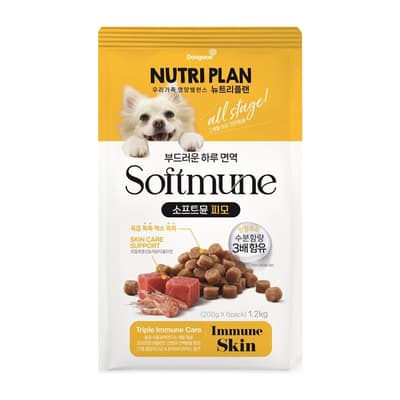
- Nutriplan Soft Dog Food Immune & Skin Care Support 1.2kg (64337) (Nutriplan) — skin and coat care
Want to see more: Fuji One Brand Guide
Product prices and latest offers are subject to the product page; this article is for reference only.
Further reading
- 2026 Hong Kong Dog Food Recommendation Guide →
- Dry Dog Food Recommendations →
- Dog Wet Food Recommendations →
- Grain-Free Dog Food →
Hong Kong small-unit practical checklist: from storage to feeding in one go
Hong Kong homes are small; although freeze-dried food does not need refrigeration, moisture and pest prevention are key. It is recommended to buy aluminium pouch packaging with a one-way degassing valve; after opening, immediately transfer to an airtight glass jar, add a food-grade desiccant packet, and place on the coolest shelf of the kitchen wall cabinet; if your home is humid, consider a mini vacuum machine to remove air and extend freshness.
Feeding can be condensed into three minutes:
- Every evening, pre-measure the next day's portion by 'dry weight', bag separately, to reduce morning rush.
- Use a thermos to hold warm water (about 40–50°C); 5 minutes before feeding, pour over the freeze-dried food, cover with the lid and let it steam—no need to turn on the stove.
- After rehydration, immediately put in the bowl and consume within 30 minutes; discard leftovers directly into the toilet and flush, do not leave in the sink to avoid bacteria growth.
If your dog cannot finish a full portion, switch to the 'freeze-dried + dry food' mixing method: first weigh the dry food, then sprinkle 5–10% freeze-dried crumbs, pour warm water only over the freeze-dried part, keeping the dry food crunchy; your dog still drinks more water and will not eat slowly because everything is wet.
Finally, Hong Kong veterinary clinics generally open during the day; if your dog vomits, gags, or is lethargic after eating freeze-dried food, remember to bring the packaging and feeding records so the doctor can quickly determine whether it is high protein, choking, or simply too rapid a food transition.
📌 Key takeaways
- ✅ Complete freeze-dried food must be labelled 'Complete & Balanced'
- ✅ Rehydrate with warm water at 1:1 for 5-10 minutes before feeding
- ❌ Feeding pure meat freeze-dried as a long-term main meal causes nutritional imbalance
- ❌ Feeding dry pieces directly can cause choking; always soften for older dogs
- ✅ Dry food + freeze-dried topper is the most economical and appetising
 Fuji One full guide →


 Fuji Cat full guide →
 Nutriplan full guide →