PetChill Pet Encyclopedia
Dog Breeds

Shiba Inu Weight Growth Curve: What's the Hong Kong Standard in kg? Complete Guide from Puppy to Adult

What is the standard adult weight for a Shiba Inu in kg? This article compiles the weight growth chart for Shiba Inus from puppy to adult, differences in body size and shoulder height between males and females, whether Mame Shiba is a separate breed, a three-step body condition score to judge fat or thin at home, and the risks of excess weight on joints. A must-read for prospective Shiba owners in Hong Kong before getting a dog.

Published: 2026-09-16·9 min read·Author: PetChill Editorial
Shiba Inu Weight Growth Curve: What's the Hong Kong Standard in kg? Complete Guide from Puppy to Adult — PetChill

Quick answer: The Shiba Inu is a small to medium, solidly built breed. The ideal adult weight is about 7–10 kg (males slightly larger, females slightly smaller). They stop growing taller at 10–12 months and fill out and stabilise by 18–24 months. Before choosing a puppy, understand the growth curve so you don't unknowingly raise a fat Shiba.

Want to know the Shiba Inu comprehensively? First see the Shiba Inu breed profile and the Shiba Inu complete guide.

1. Standard Shiba Inu body size: know what 'should be' first

The Shiba Inu is a native Japanese small hunting dog; the key words for its body are 'well-proportioned, muscular and solid' rather than 'small'. The breed standards of the American Kennel Club (AKC) and the Nihon Ken Hozonkai are roughly as follows:

Item Male Shiba Female Shiba
Shoulder height About 37–40 cm About 34–37 cm
Ideal weight About 8–11 kg About 7–9 kg
Fully formed 18–24 months 16–20 months
Skeletal features Solid, deep chest, tucked waist Finer build, softer lines

Note: this is a 'structural standard', not a scale target. Within the same breed line, European bloodlines are generally larger and sturdier, and smaller 'Mame Shiba' individuals also appear from time to time (Mame Shiba is not an independently recognised breed, just a smaller body size). These differences remind you: whether adopting or buying, looking at the parents' weight is far more useful than looking at internet averages.
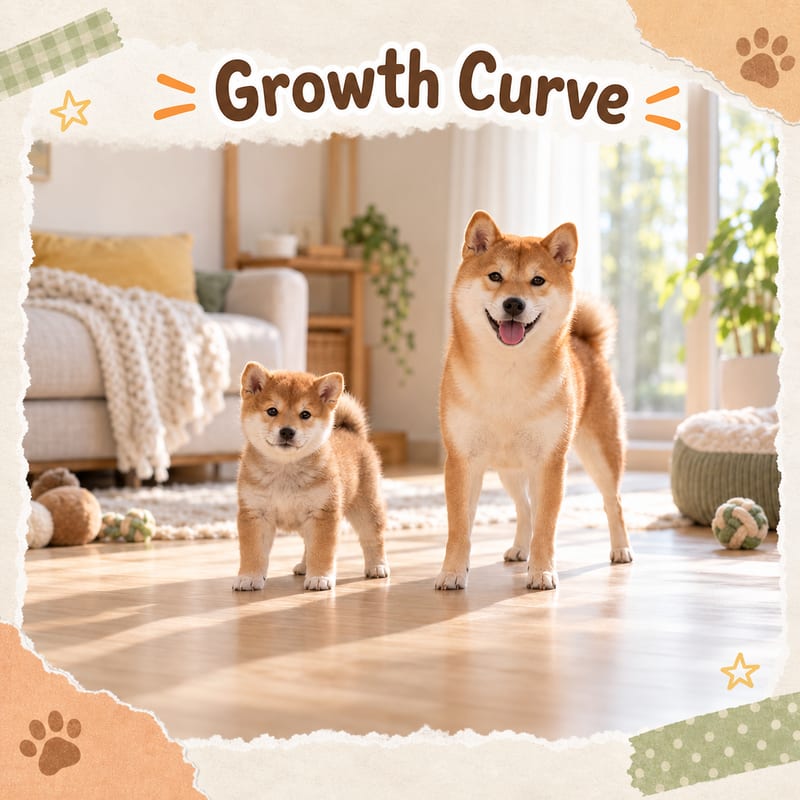
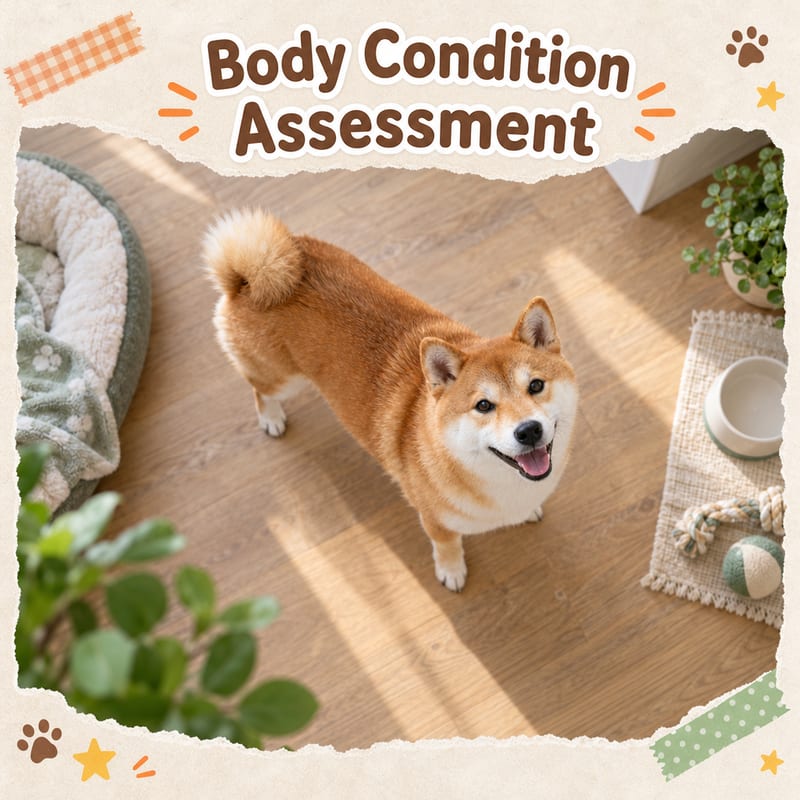
shiba-inu-size-weight-hk knowledge card 1

2. Shiba Inu growth curve: weight reference from puppy to adult

The following is the approximate growth rhythm (individuals can vary by 10–20%; focus on the trend rather than matching every point):

Age (months) Weight reference (kg) Growth focus
Birth About 0.3–0.5 Steady daily weight gain means healthy
2 months 1.5–2.5 Settling-in period at home, feed in divided meals
4 months 3–4.5 Teething period, most prone to 'sneaky fattening'
6 months 4.5–6.5 Peak weight-gain period, discuss neutering arrangements with veterinarian
9 months 6–8.5 Growth slows, easy to maintain ideal range
12 months 7–9.5 Close to adult height
18–24 months 7–10 (plus a little muscle) Chest girth and muscle fill out, body shape stabilises

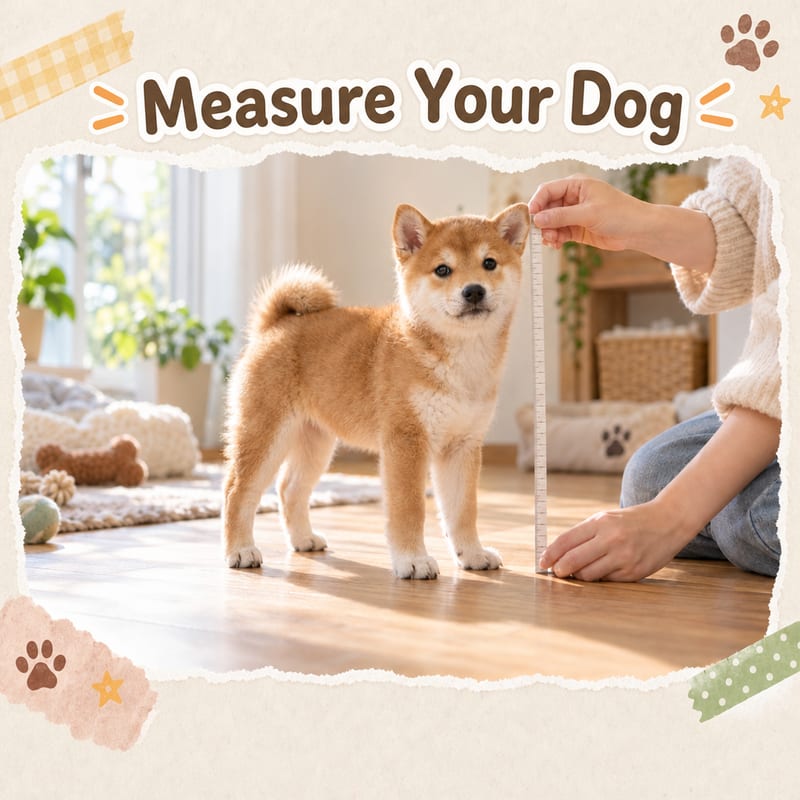
Owner measuring a Shiba puppy's shoulder height with a hand, with a growth record book nearby

3. Body condition score: know fat or thin without a scale

The nine-point body condition score commonly used by veterinarians can be simplified at home into three steps:

  1. Feel the ribs: You can feel them with light pressure and cannot see individual ribs—ideal; you have to press firmly to feel them—overweight; ribs visible to the eye—too thin.
  2. Look from above: There should be a clear waist behind the chest; straight up and down like a barrel is a sign of excess weight.
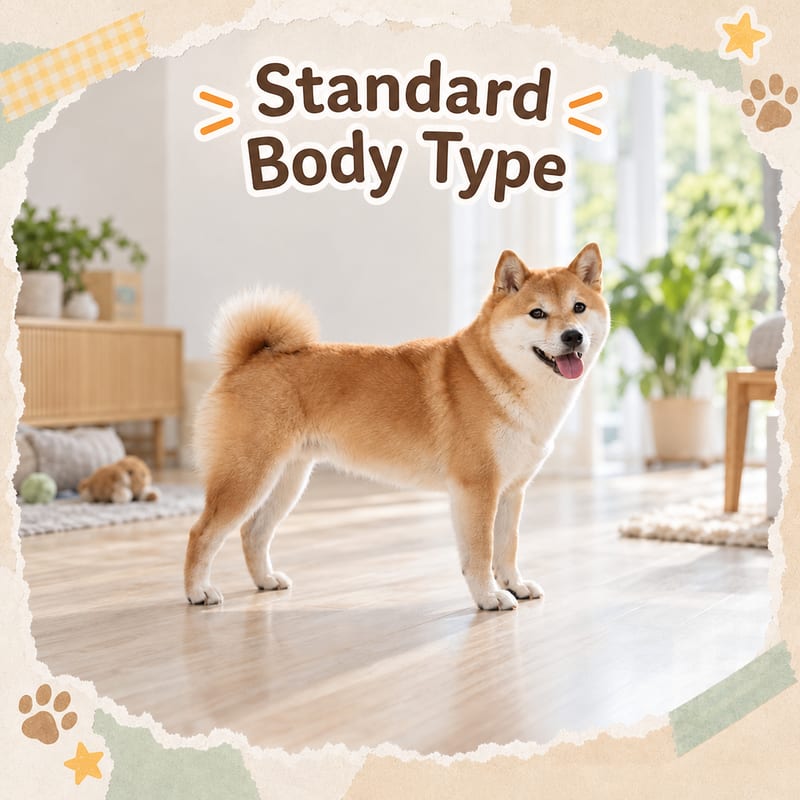
  3. Look from the side: The abdomen should tuck up from the chest towards the rear for a standard body shape.

The Shiba's double coat easily creates 'visual deception': fluffy fur looks round, but the dog may actually be thin; conversely, fat may not be visible, so weighing once a month at the same time, before feeding, on the same scale is the reliable method. Some Shibas' chest fur 'puffs up' after two years old, making them all look large; owners need to be even more data-conscious.

4. Risk checklist for overweight and underweight

Shiba Inus have a small frame and are sensitive to joint load. Excess weight is generally thought to significantly exacerbate patellar luxation (the Shiba's number one orthopaedic concern), cruciate ligament and spinal load; fat accumulation also increases the risk of eczema in skin folds. Being underweight is often related to parasites, malabsorption, or insufficient food intake. If appetite is normal but weight continues to drop, see a veterinarian as soon as possible; do not dismiss it as 'thinner due to shedding'. For the topic of extending companionship, see the 'Shiba Inu lifespan' article; the common answer to both is: maintain ideal body condition.

5. Body size decisions when choosing a puppy: measure with a ruler whether adopting or buying

For those searching 'free puppy adoption', 'puppy buying recommendations', or 'Shiba Inu puppy price', body size is an often-overlooked variable in choosing a dog:

  • Adopting a puppy: Source records may be incomplete; adult weight can only be estimated from parent information or littermates. Use 'weight at six months multiplied by 1.4–1.6' for a rough estimate, allowing about 15% margin of error.
  • Buying a puppy: Ask to see parents and littermate records; 'black Shiba puppy' or 'black Shiba puppy' has no reason to be larger than a red Shiba—coat colour is unrelated to body size.
  • Home compatibility: 7–10 kg is exactly why Shiba Inus are popular in Hong Kong—easy to carry, suitable for lifts, and can be kept in small flats; but exercise and grooming needs are not discounted because of small size.

In one sentence: body size determines your lifestyle compatibility, not how cute they are.
Adult Shiba standing on a bathroom scale, owner recording weight in a phone memo

6. Feeding and exercise notes during growth

  • Puppy period (2–12 months): feed two to three meals a day at regular times and in fixed amounts, starting from the package recommendation and adjusting according to the weight curve.
  • Chewing during teething is not mischief; it is a need—give appropriately sized chew toys.
  • Avoid jumping up and down before bones are fully developed (carry them up and down stairs or use a ramp) to reduce joint impact.
  • Treat calories should not exceed 10% of the daily total; Shiba Inus are smart and will actively 'perform' for food.

7. Quick answers to common body size questions

  • 'My Shiba eats a lot but isn't fat—is that normal?' During puppyhood, metabolism is high and they are active; being on the thin side before nine months is common. If appetite is good but weight does not increase long-term, or stools are soft with mucus, rule out parasites and absorption problems; bringing a stool sample to the veterinarian is the most worry-free.
  • 'A round Shiba face and a fat body are two different things.' Thick fur on the cheeks and neck is a breed characteristic; do not assume they need to lose weight just because 'the cheeks are so soft', and do not feel free to feed more just because the face looks lean. Judge fat or thin by body condition score plus weight, not just the face.
  • 'Is Mame Shiba a separate breed?' Mame Shiba is not an independently recognised breed in mainstream kennel clubs; it is simply a smaller-sized Shiba individual or a marketing term selling smallness. If you see a 'Mame Shiba' premium, first ask about the parents' weights and screening records; do not pay for three words.
  • 'Does neutering always cause weight gain?' Metabolism drops slightly after neutering, but 'neutering = fat' is an outdated impression; the real mechanism is unchanged food intake and reduced activity. After neutering, proactively reduce portions by about 10% and maintain exercise; most Shiba Inus can maintain standard body condition.
  • 'When to switch to adult food?' It is generally recommended to switch gradually after body size approaches adult (twelve to eighteen months), mixing food over seven to ten days. During the transition, observe stool firmness; if soft, slow down the steps.

All these points are extensions of the question 'how many kg'—weight is only the result; feeding, exercise, and screening are the causes.
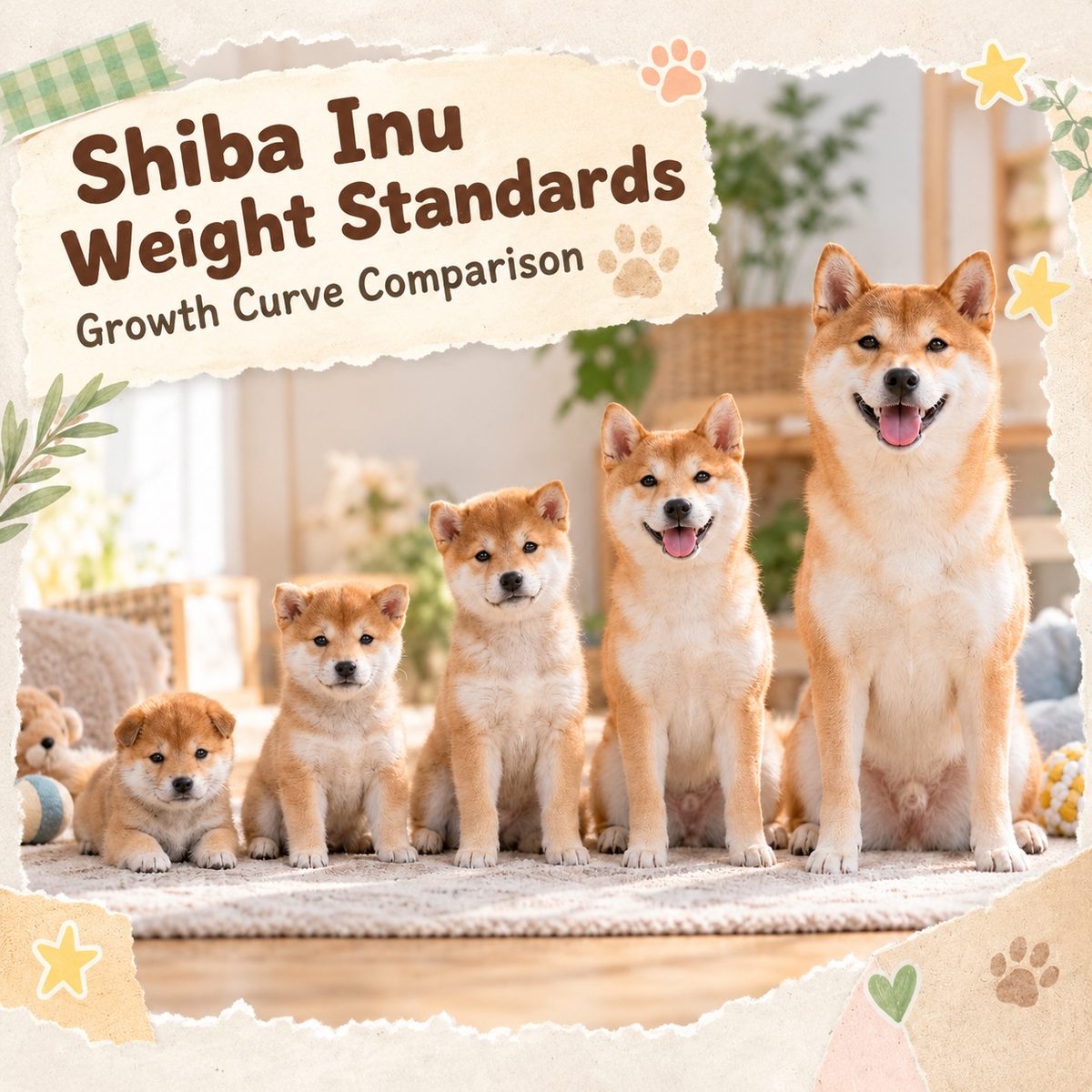
shiba-inu-size-weight-hk knowledge card 2

Key Summary

  • ✅ The ideal adult weight for a Shiba Inu is about 7–10 kg; males slightly larger, females slightly smaller; fully mature at 18–24 months.
  • ✅ Focus on the trend of the growth curve: weigh at the same time each month; no need to quibble over internet averages pound by pound.
  • ✅ The double coat can mask fat or thin; body condition scoring (feel ribs, look for waist, look for tuck) is the truth.
  • ✅ Shiba Inus have a small frame; excess weight is very harmful to patellae and joints, so portion-controlled feeding starts from puppyhood.
  • ✅ Coat colour is unrelated to body size; differences between European and smaller individuals come from bloodline; choose a dog by looking at parents, not photos.
  • ✅ Whether adopting or buying a puppy, adult weight is a hidden factor in the decision; allow margin for error.

The figures in this article are breed standards and general growth references; individual dogs vary greatly. For abnormal weight or feeding questions, consult a registered veterinarian.

Frequently Asked Questions

📌 Key Takeaways

  • This article covers: 1. Standard Shiba Inu body size: know what 'should be' first, 2. Shiba Inu growth curve: weight reference from puppy to adult, 3. Body condition score: know fat or thin without a scale, 4. Risk checklist for overweight and underweight, 5. Body size decisions when choosing a puppy: measure with a ruler whether adopting or buying, and more
  • Jump to any section via the table of contents for the key details
  • If in doubt, consult a registered veterinarian

📚 Dogs article index

This article is part of the Dogs topic cluster. Explore related articles:

⭐ Pillar guide: Dogs complete guidePug: Hong Kong Care Guide (Price, Health, Summer Care)→ ReadBeagle Drawbacks: What Are They and Are Beagles Easy to Keep in Hong Kong?→ ReadBeagle Care in Hong Kong: Laws, Home Setup and Heat Protection→ ReadHow Long Do Beagles Live? A Hong Kong Guide to a Longer, Healthier Life→ ReadBeagle Personality and Intelligence: What Hong Kong Owners Must Know→ ReadBeagle price and adoption in Hong Kong: legal channels, verification steps and cost estimates→ ReadBorder Collie Colour Guide: Coat Types and Care Differences→ ReadBorder Collie Disadvantages: 8 Truths and How to Cope→ ReadBorder Collie Hong Kong Care Guide 2026: Laws, Climate and Prices→ ReadBorder Collie Lifespan and Health: A Hong Kong Guide to a Longer Life→ ReadBorder Collie Intelligence and Personality: A Complete Guide for Hong Kong Owners→ ReadBorder Collie Prices in Hong Kong and Adoption Guide→ ReadDachshund Downsides: 8 Truths to Know Before You Adopt→ ReadDachshund Hong Kong Care Guide: Laws, Climate and Home Care→ ReadDachshund Lifespan: 12–16 Years and How to Help Them Age Well→ ReadDachshund Intelligence and Personality: How to Read Small-Dog Rankings→ ReadDachshund Prices in Hong Kong 2026: A Guide to Buying and Adoption Costs→ ReadGolden Retriever Coat Colours: The Full HK Guide — Beyond Gold→ ReadGolden Retriever Lifespan: How Many Years? Hong Kong Owner's Guide to Extending Life | Tumour and Joint Risks→ ReadGolden Retriever Hong Kong Care Guide: Public Housing, Weather and Hiking→ ReadGolden Retriever Drawbacks Fully Disclosed | 8 Honest Assessments Before Keeping One in Hong Kong→ ReadGolden Retriever Puppy Growth Curve and Weight Chart (Hong Kong)→ ReadGolden Retriever Personality and Intelligence: A Hong Kong Guide→ ReadGolden Retriever Price and Adoption Guide (Hong Kong) 2026→ ReadPomeranian Coat Colours: A Complete Guide for Hong Kong Owners — White, Black and Orange, and What They Cost→ ReadPomeranian Weight Chart | Hong Kong Pomeranian Growth Standards from Puppy to Senior→ ReadGerman Shepherd Size & Growth: Hong Kong Puppy Weight Chart + Growth Prediction Guide→ ReadPomeranian Personality and Intelligence | A Must-Read for Hong Kong Owners: How to Train a Smart but Stubborn Small Dog→ ReadGerman Shepherd Lifespan: Health Risks and Longevity Checklist for Hong Kong Owners→ ReadHow Long Do Pomeranians Live? A 15-Year Longevity Guide for Hong Kong Owners→ ReadBlack German Shepherd: Comparing Pure Black, Sable and White German Shepherd Coat Colours→ ReadPomeranian Downsides Fully Disclosed | 8 Honest Assessments and Solutions for Hong Kong Owners→ ReadGerman Shepherd Drawbacks List | 8 Major Challenges to Consider Before Getting One in Hong Kong→ ReadPomeranian Hong Kong Care Guide: Home, Climate and Legislation→ ReadGerman Shepherd Price and Adoption: Hong Kong Buying Guide and Verification Checklist→ ReadPomeranian Price and Adoption Guide (Hong Kong) 2026→ ReadGerman Shepherd Personality | A Must-Read for Hong Kong Owners: Loyalty, Alertness, Intelligence and Training→ ReadGerman Shepherd in Hong Kong: Full Keeping Guide — Law, Public Housing Limits and Summer Heat Management→ ReadHow Much Should a Bichon Frise Weigh? Hong Kong Puppy to Adult Growth Curve Chart→ ReadLabrador Colours Explained | A Must-Read for Hong Kong Pet Owners: Black, Yellow, Chocolate and the Truth About Rare Colours→ ReadShiba Inu Colours: Black Shiba, Red, Sesame and White — Differences and Prices→ ReadLabrador Lifespan: How Long Do They Live? A Hong Kong Owner's Guide to Longevity and Health Risks→ ReadShiba Inu Lifespan: How Long Do They Live in Hong Kong?→ ReadLabrador drawbacks: 8 things to know before getting one (2026 Hong Kong guide)→ ReadShiba Inu Regret List: 8 Downsides Hong Kong Owners Must Know and How to Cope→ ReadYorkshire Terrier Personality Explained | A Must-Read for Hong Kong Owners: A Smart, Affectionate Companion with a Mind of Its Own→ ReadLabrador Puppy Growth Curve and Weight Chart (Hong Kong)→ ReadShiba Inu in Hong Kong: A Complete Guide to Public Housing, Summer Heat and the Law→ ReadYorkshire Terrier Price and Adoption Guide: 2026 Hong Kong Market, Channels and Verification Checklist→ ReadLabrador Personality and Intelligence: A Must-Read for Hong Kong Owners — Obedience, Food Drive and Separation Anxiety→ ReadHow Long Do Yorkshire Terriers Live? | Hong Kong 11–15 Years, Key Factors and a Longevity Checklist→ ReadChihuahua Disadvantages: A Full List for Hong Kong Owners — 7 Hidden Issues in a Tiny Body→ ReadHow Long Do Chihuahuas Live? | Hong Kong Chihuahua Lifespan and Common Diseases Explained→ ReadChihuahua Personality and Intelligence: Small Dog, Big Dog Soul in Hong Kong→ ReadChihuahua Price in Hong Kong: Adoption Routes, Buying Checklist and Real Monthly Costs→ ReadCorgi Disadvantages Exposed | Must-Read Before Getting One in Hong Kong: 8 Realities + Zero-Cost House Rules→ ReadHong Kong Corgi Ownership Complete Guide: Public Housing, Moisture Control and Heat Protection in One Article→ ReadHow Long Do Corgis Live? | Average Lifespan in Hong Kong and a Longevity Checklist→ ReadCorgi Intelligence Ranking and Personality: A Hong Kong Guide→ ReadCorgi Price and Adoption in Hong Kong: A Practical Guide→ ReadLabrador Care Guide for Hong Kong: Public Housing, Deeds of Mutual Covenant, Heat and Humidity→ ReadAre Poodles Easy to Keep? 7 Downsides and How to Handle Them (Hong Kong Dog Owner's Guide)→ ReadHow Long Do Poodles Live? | Hong Kong Guide to Small Poodle Lifespan and Health Management→ ReadPoodle Intelligence Ranking and Personality | A Must-Read for Hong Kong Owners: The Strength of Second Place→ ReadPoodle Prices 2026: Giant Poodle Cost, Four Sizes and Adoption→ ReadHow Big Does a Poodle Get? A Full Breakdown of Hong Kong's Four Poodle Sizes and Weights→ ReadSchnauzer Disadvantages: 8 Truths to Know Before Getting One in Hong Kong→ ReadHow Long Do Schnauzers Live? Miniature Schnauzer Lifespan and Common Health Issues in Hong Kong→ ReadSchnauzer Intelligence and Personality | Hong Kong Sentinel Dog Smart and Opinionated Full Analysis→ ReadSchnauzer Prices in Hong Kong 2026: The Complete Guide to Buying and Adopting All Three Sizes→ ReadShiba Inu Personality | A Must-Read for Hong Kong Owners: The Independent, Stubborn, Highly Intelligent Cat-Like Dog→ ReadThe Downsides of Owning a Yorkshire Terrier | 6 Real Costs Hong Kong Owners Must Know→ ReadBichon Frise Downsides: 7 Real Costs Hong Kong Owners Must Know (With Monthly Budget)→ ReadBichon Frise Hong Kong Care Guide: Public Housing Rules, Damp and Heat Management, and Source Verification→ ReadBichon Frise Lifespan: 12–15 Years and How to Help Them Live Longer→ ReadBichon Frise Personality and Intelligence Explained | Hong Kong Owner's Training Guide: Smartness and Obedience at a Glance→ ReadBichon Frise Price and Adoption Guide | Hong Kong Buying Tips 2026→ ReadAre French Bulldogs Easy to Keep? 8 Downsides and Fixes Every Hong Kong Owner Should Read→ ReadFrench Bulldog Hong Kong Care Guide: Legislation, Heat Protection and Home→ ReadHow Long Do French Bulldogs Live? A Hong Kong Guide to Flat-Faced Dog Health and Longevity→ ReadFrench Bulldog Personality Explained | A Must-Read for Hong Kong Owners: Intelligence and Getting Along→ ReadFrench Bulldog Hong Kong Price and Adoption Guide (2026)→ ReadFrench Bulldog Size and Weight Standards | A Complete Guide to Puppy Growth Curves in Hong Kong→ ReadLabrador Price and Adoption Guide (Hong Kong) 2026→ ReadShiba Inu Hong Kong Price & Adoption Guide: 2026 Buy or Adopt→ ReadBest Dog Wet Food in Hong Kong | How to Choose Complete Wet Food & Brand Comparison→ ReadBest Dry Dog Food in Hong Kong | Ingredient Picks & Brand Comparison→ ReadCorgi Breed Guide | Spine Care, Weight & Small-Flat Living in Hong Kong→ ReadWhich Dog Food Is Best? Hong Kong's 5-Step Picking Guide, Label Decoding & Switching Tips→ ReadFreeze-Dried Dog Food Guide | Hong Kong Freeze-Dried Dog Food Nutrition, Pros & Cons, Feeding Methods→ ReadFrench Bulldog Breed Guide | Temperament, BOAS Health & Hong Kong Care Guide→ ReadGolden Retriever Guide | Temperament, Hip Joints & Hong Kong Care→ ReadGrain-Free Dog Food Guide: Pros, Cons and Shopping Tips for Hong Kong Dog Owners→ ReadHong Kong Mixed-Breed Dog Guide: Local Dogs, Advantages & Adoption Tips→ ReadPoodle Breed Guide | Complete Hong Kong Guide to Standard, Miniature & Toy Poodles→ ReadShiba Inu Hong Kong Care Guide: Temperament, Shedding, Training and Hereditary Conditions→ ReadDog Food Recommendations Hong Kong 2026 | Puppy Food Picks + Brand Ranking Comparison→ Read

Products mentioned in this article

4 items · prices checked 2026-10-21

  •  Special offer

    HK$707HK$906

    About HK$56.68 per kg

    Details

    Price checked 2026-10-21; the store page shows the live price, stock and offers.

  • Royal Canin Dog Food French Royal Canin PUPPY Indoor Small Breed Nutrition 50g (2433000511) (Gift) (Not for Sale)

    Royal Canin Dog Food French Royal Canin PUPPY Indoor Small Breed Nutrition 50g (2433000511) (Gift) (Not for Sale)

    HK$88

    About HK$1,760 per kg

    Details

    Price checked 2026-10-21; the store page shows the live price, stock and offers.

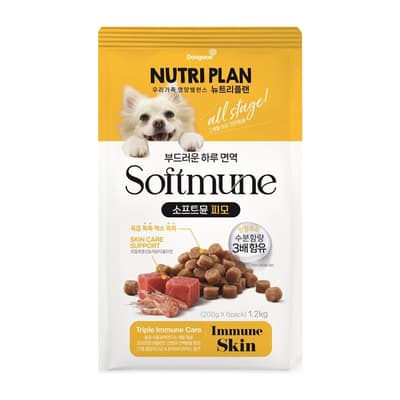
  • Nutriplan Soft Dog Food Immunity and Skin Care Support 1.2kg (64337)

    Nutriplan Soft Dog Food Immunity and Skin Care Support 1.2kg (64337)

    HK$98

    About HK$81.67 per kg

    Details

    Price checked 2026-10-21; the store page shows the live price, stock and offers.

  • Bella & Molly's Dutch Berry Royal Selected Dog Food AAFCO Grain-Free Single Protein Salmon Formula 50g (Limited Time Experience)

    Bella & Molly's Dutch Berry Royal Selected Dog Food AAFCO Grain-Free Single Protein Salmon Formula 50g (Limited Time Experience)

    HK$10

    About HK$200 per kg

    Details

    Price checked 2026-10-21; the store page shows the live price, stock and offers.

The products above are store items related to this article. Prices are reference prices as of the check date (about HK$903 in total); the store page always shows the live price, stock and offers. This article is not medical advice.

You may also like