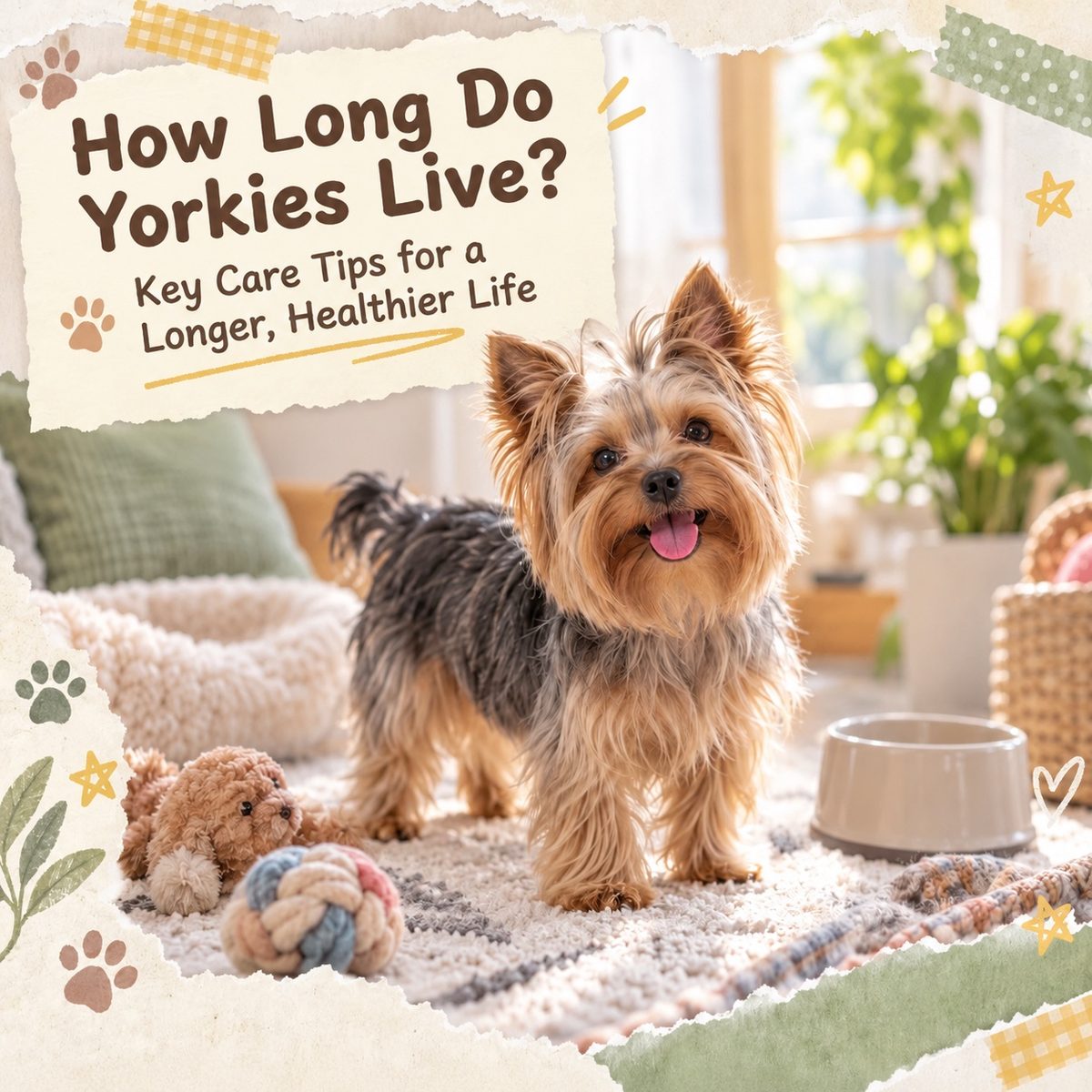
Quick answer: Yorkshire Terriers typically live around 11–15 years, making them one of the longer-lived small breeds. The key factors, in order of importance, are genetic background, weight control, dental care, knee and trachea management, environmental safety, and regular health checks. Below are check-up priorities for each life stage and a practical longevity checklist.
Want to know all about the Yorkshire Terrier? Start with the Yorkshire Terrier breed profile.
1. The baseline for Yorkshire Terrier lifespan: why small dogs generally live longer
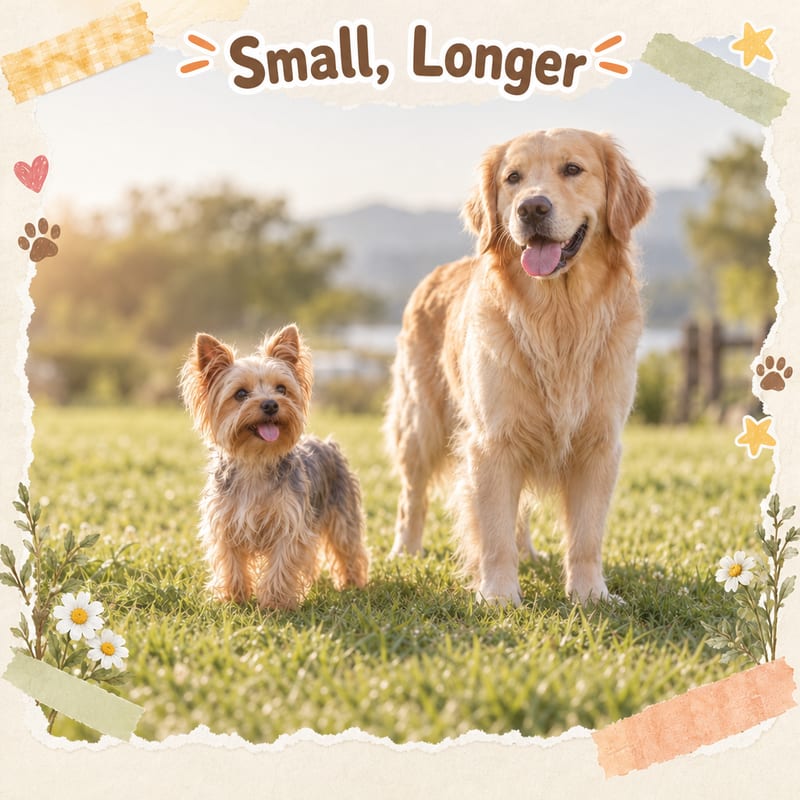
A 2013 study by O'Neill et al. at the Royal Veterinary College (RVC) found that dog lifespan is strongly related to body size, ranging overall from about 6–16 years, with small breeds significantly outliving large ones. The Yorkshire Terrier's standard weight is only about 2–3.2 kg, placing it right at the far right of the longevity curve: the American AKC and the UK Kennel Club describe the breed's typical lifespan as roughly 11–15 years.
The same principle answers questions about 'dog lifespan rankings': Chihuahuas, Toy Poodles, Yorkshire Terriers and other small breeds take turns at the top of the list, while large and giant breeds rank lower. Ranking details vary by data source (clinical records vs insurance data), but the overall direction is stable: the smaller the body, the longer the expected lifespan. The Yorkshire Terrier's actual performance ultimately depends on the six factors below.
2. Six factors affecting Yorkshire Terrier lifespan
1. Genetic background. Whether the parents were screened for eye, knee and liver problems determines the starting point. Registration papers do not guarantee health; parental screening does.
2. Weight. For a two-to-three-kilogram dog, 300 grams overweight is like a human being 10 kilograms overweight: joints, heart and trachea all bear double the load. Studies show overweight dogs have significantly shorter average lifespans, and small breeds are especially sensitive.
3. Teeth. The Yorkshire Terrier's small jaw and crowded teeth make it a recognised high-risk breed for periodontal disease. Periodontal bacteria entering the bloodstream over time burden the heart, liver and kidneys—dental care is a lifespan project, not a cosmetic one.
4. Knees and trachea. Patellar luxation is a common inherited tendency in Yorkshire Terriers, with great variation in severity; tracheal collapse is more common in middle-aged and older dogs, those pulled by collars, and obese individuals. Both affect activity levels and indirectly affect weight and cardiopulmonary health.
5. Environmental safety. This is the most underestimated cause of death in Yorkshire Terriers: falls from height, being knocked over by larger dogs, running into traffic, and ingestion of toxins (chocolate, xylitol, cooked bones all apply). In lifespan statistics, accidents are the number one preventable killer of small dogs; conversely, a closed window and a securely fastened leash cost nothing.
6. Veterinary rhythm. Small dogs age slowly but develop diseases quickly; after age 7–8, blood and urine tests every six months can detect kidney and endocrine problems half a year earlier—half a year in a fourteen-year life is 7%, but for a chronic kidney disease or early tumour it may be the difference between 'manageable' and 'advanced'. The first health check is recommended around one year of age to establish individual baseline values for later comparison.
3. Health-check focus table by life stage
| Stage | Age | Key checks | Daily essentials |
|---|---|---|---|
| Puppy | 0–1 year | Physical exam + vaccines, watch for hypoglycaemia, baby tooth replacement | Small frequent meals, prevent falls and crushing |
| Adolescent | 1–3 years | Annual exam, knee palpation, start tooth-brushing habit | Socialisation training, establish weight baseline |
| Adult | 3–7 years | Annual exam + dental assessment, tracheal sound assessment | Annual blood test baseline |
| Mature | 7–10 years | Blood and urine tests every six months, heart auscultation | Reduce jumping, switch to easily digestible diet |
| Senior | 10+ years | Imaging + blood tests every six months, cognitive assessment | Keep warm, non-slip mats, night lighting |
4. Longevity checklist: ten things to start today
- Feel your dog all over once a day: lumps, skin changes and abnormal breathing sounds are often first noticed by you.
- Brush teeth at least three times a week, starting the habit from the baby-tooth stage.
- Measure food with a kitchen scale, not by 'eyeballing a portion'.
- Add steps beside the bed and sofa to protect knees and prevent falls for life.
- Use a harness instead of a collar on walks to reduce tracheal irritation.
- Daily brain games (sniffing, commands) are more anti-ageing than an extra kilometre of walking.
- From age 7, health checks every six months; keep every report for trend comparison.
- Do not self-prescribe supplements to 'build them up'—the liver and kidney burden shows quickly (not the good kind).
- The weight curve matters more than a single weight: for a two-to-three-kilogram dog, gaining half a kilogram in three months is like a human gaining 10 kilograms in three months—find the cause.
- Follow the vet's schedule for vaccines and deworming: heartworm and tick-borne diseases are a year-round risk in Hong Kong's hot, humid climate; prevention is always cheaper than treatment.
5. How diet and exercise support longevity
In terms of calories, a Yorkshire Terrier's daily needs are actually very small: a 3 kg adult needs roughly only 150–200 kcal of complete food (depending on formula and activity level). That portion means any single piece of human food could be 30% over the calorie limit—so 'table feeding' is the number one cause of obesity in small dogs. Protein must be adequate, especially in old age to prevent muscle loss (sarcopenia); simply switching to a 'light diet' is not enough.
For exercise, Yorkshire Terriers need 'frequent and steady' rather than hiking: two 15–20 minute walks a day plus two indoor play sessions meet most needs. Watch the temperature of asphalt when walking—small dogs are close to the ground with thin paw pads, so burns and heatstroke risk in midsummer come faster than for large dogs. After exercise, watch recovery time; if it is twice as slow as usual, it is a signal for a cardiopulmonary check.
6. Warning signs: don't wait until tomorrow
Some signs in Yorkshire Terriers are 'see a vet today' level: continuous vomiting or a sharp drop in appetite (warning signs of hypoglycaemia and liver problems), a 'goose-honk' cough that worsens (tracheal collapse), sudden hind-leg hopping without putting the foot down (patella or cruciate ligament), sudden doubling of water intake and urine output (kidney, diabetes, endocrine). Research and clinical consensus agree: for small dogs, 'wait two days and see' is usually the start of a missed window. Medical content is for reference only; actual diagnosis should be based on a licensed veterinarian.

Key takeaways
- ✅ Yorkshire Terrier lifespan reference range 11–15 years, a long-lived small breed
- ✅ Six factors: genetics, weight, teeth, knees and trachea, environmental safety, health-check rhythm
- ✅ Accidents are the number one preventable killer of small dogs: prevent falls, use a leash, avoid large dogs
- ✅ Tooth-brushing is a lifespan project, not a cosmetic one
- ✅ From age 7, blood and urine tests every six months; trends matter more than single values
- ✅ 'Teacup' individuals generally have worse healthy lifespans—don't pay for size
- ✅ Prevent overfeeding at the table; exercise should be frequent and steady, and watch for hot pavement
- ✅ Sudden changes in appetite, drinking, breathing or walking: see a vet the same day
Related reading
- Yorkshire Terrier disadvantages and how to cope
- Yorkshire Terrier personality explained
- Yorkshire Terrier price and adoption guide
- Harnesses, dental care products and senior dog formulas: all available at PetChill pet supplies.
This article's health and lifespan descriptions combine kennel club breed standards, public literature and general clinical observations; individual variation is large. Any diagnosis and treatment should be based on a licensed veterinarian's advice.
 Royal Canin full guide →