

Quick answer: Golden Retrievers come in only a golden spectrum: from near-white cream through standard gold to deep red (often called Russian red), all within the breed standard. No black, no silver, no markings. 'Black Golden Retriever' is a search myth, usually a black Labrador or a crossbreed; shade has no effect on health or temperament, and paying a premium for a 'rare colour' is buying a story, not a dog.
Want to know the Golden Retriever inside out? Start with the Golden Retriever breed profile, or read the full Golden Retriever guide.
1. The Golden Retriever colour system: one golden spectrum, no second pigment colour
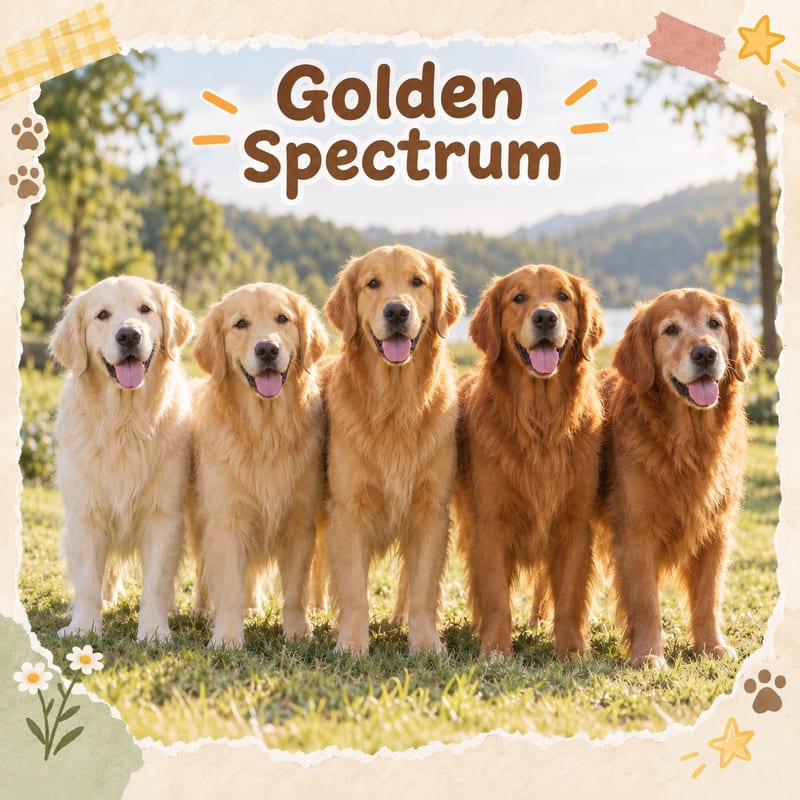
The recognised coat colour of the Golden Retriever, as stated in the American Kennel Club (AKC) breed standard, is 'rich, lustrous golden of various shades' — golden in all its depths. It's clearest to think of it as a spectrum:
| Colour group | Visual range | Market name | Recognition status |
|---|---|---|---|
| Light end | Near-white to cream | 'Cream Golden', 'English-type Golden' | Within standard (lighter end) |
| Middle | Standard gold, honey gold | 'True Golden' | Core standard range |
| Dark end | Caramel to deep red-copper | 'Russian red', 'American-type red Golden' | Within standard (darker end) |
| Black / silver / markings | Not genetically possible | Marketing talk | No such categories |
Three key points: First, depth of colour is determined by the ratio of two pigments: eumelanin (true black) and phaeomelanin (red-yellow). Purebred Golden Retrievers express only variations of the latter, with very small amounts of the former — which is why Goldens have black noses and eye rims but cannot produce a black coat. Second, 'English type tends lighter, American type tends redder' is a statistical tendency of breeding preferences, not a breed classification; mating dogs from the two lines still produces standard Golden Retrievers, not 'crossbreeds'. Third, there can be slight colour differences between hair tips and roots, and the summer coat after sun exposure may be a shade lighter than the winter coat — all normal oxidation and light effects, not signs of degeneration or mixing.

2. Why 'black Golden Retriever' exists in search bars but not in reality
The traffic for the search term 'black Golden Retriever' comes entirely from three misunderstandings:
- Confusion with Labradors: Black is one of the three recognised Labrador colours (black, yellow, chocolate). Both breeds are in the retriever group with similar outlines, so beginners who haven't compared carefully easily mistake a black Labrador for a 'black Golden'.
- Crossbreed cases: A black Labrador crossed with a Golden (a Lab-golden cross, distinct from a Labradoodle) can produce darker or brownish offspring, but those are crossbreeds, not 'mutant Goldens'.
- Marketing headlines: Some sources add filters to deep-red Goldens or simply mislabel them. Honest breeders don't sell 'black Goldens'; anyone selling one is a red flag you should walk away from.
While we're at it, for those searching 'Labrador colours' or 'black Labrador': the coat colour systems of Labradors and Golden Retrievers are two completely different genetic switches (the Labrador's E/B locus combinations produce black, yellow and chocolate), which is why there are black Labradors but no black Goldens. For more detail, see Labrador colours explained.
3. Breaking down rare-colour marketing: cream, Russian red and 'silver'
| Claim | Truth | Advice |
|---|---|---|
| 'Purebred cream, HK$20,000 more' | Light gold is within the standard; no basis for a premium | Negotiate within the standard range |
| 'Russian red is rare; the darker the purer' | The dark end is within the standard; 'red line' has some basis, but no premium is necessary | Buy the colour you like, don't treat it as an investment |
| 'Silver Golden, only a few worldwide' | No such recognised category; mostly crossbreeds or mislabelled very light coats | Skip it |
| 'Limited edition black Golden' | Genetically impossible | Treat as a red flag |
One principle: the degree to which coat colour affects price is the same as the degree to which it affects health — zero (the skin sensitivities associated with a few very light lines are a genetic issue, not a shade issue; the two should not be conflated). Any large premium that centres on shade as a selling point and cannot produce health screening records for the parents is selling a story. The same logic applies to searches for 'black Labrador price' or 'black Labrador adoption': black is a recognised Labrador colour and there's no reason for it to cost more than yellow at normal market rates; if both are being charged a colour premium, you know something's off without even seeing the dog.
4. Coat colour changes: the gap between puppy and adult shades
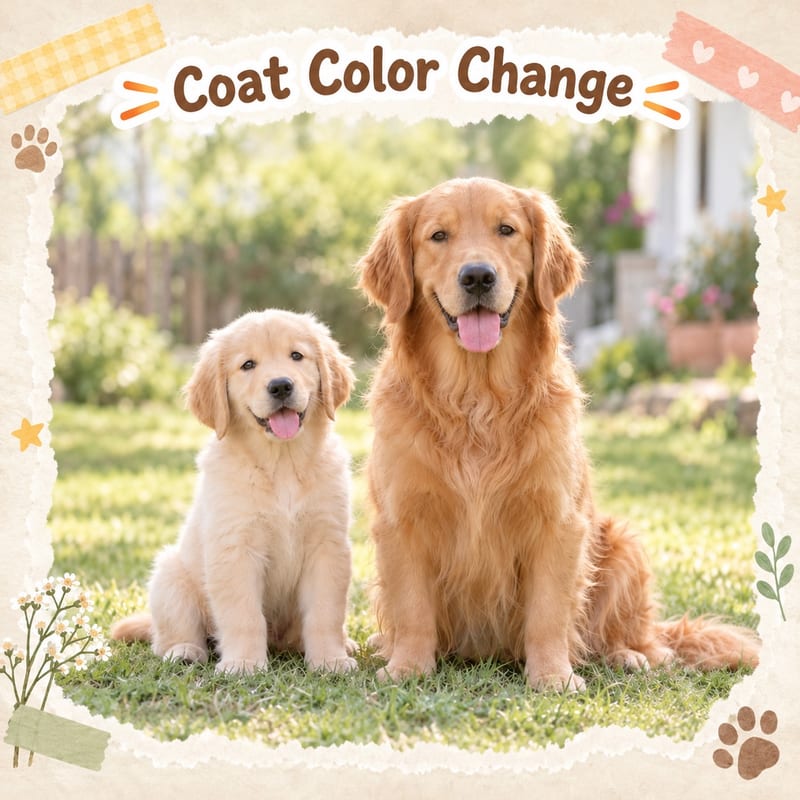
It's normal for a Golden puppy's coat colour to differ from the adult coat: light gold puppies darken as they grow, dark red puppies may fade to caramel, and the face and ears may not match the body at first. Rough timeline: between three and six months, during the puppy-coat moult, colour is most variable; after the first-year moult it's close to the final shade; after age two, slight red-brown darkening appears around the mouth and eyes from saliva oxidation. So: judging adult colour from puppy photos is unreliable; look at the parents and grandparents' photo albums for reference. If a seller can't even produce records of the parents' coat colours, that in itself reflects their breeding practices. And coat depth has no necessary connection to purity — 'the darker the gold, the more authentic' is a myth; the AKC standard text shows no preference for either end.
5. Grooming differences by shade
Coat colour doesn't affect health, but it does affect how 'dirty' a dog looks:
- Very light cream end: tear stains and saliva oxidation marks show most easily (red-brown marks on white fur); wipe the mouth fur dry after meals; grass stains from playing on the lawn are also most obvious on white coats.
- Standard gold middle: the easiest range to maintain; stains and oxidation marks are not exaggerated, and it's the core shade of the breed standard.
- Deep red-copper end: strong glossy look but oil stains and drool marks are equally visible; dark coats look 'thicker' visually, so judging overweight and muscle loss requires more hands-on checking than with light coats (see the growth article for body condition scoring).
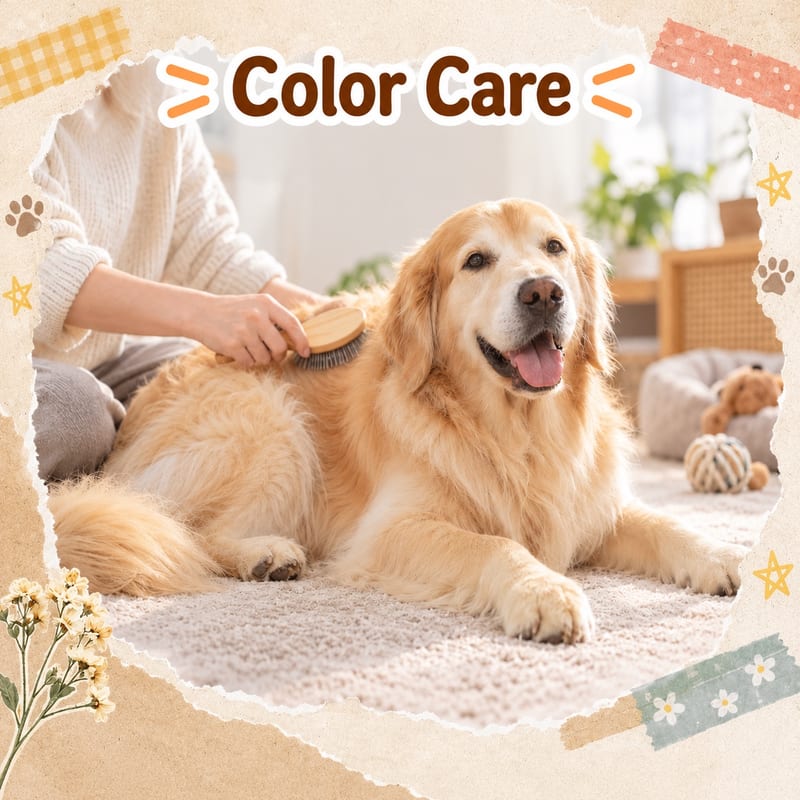
Common grooming points remain the same: pin brush and comb three to four times a week, dry thoroughly after bathing (check ears as they are drop-eared), and add an extra session daily during moulting season. Choosing a colour shouldn't mean choosing a grooming burden — the only thing you're really choosing is whether you can handle those few minutes of drool and tear stains each day.
Key takeaways
- ✅ Golden Retrievers only come in the golden spectrum: cream, standard gold and deep red (Russian red) are all within the standard
- ✅ 'Black Golden Retriever' doesn't exist; sources are Labrador confusion, crossbreeds or mislabels
- ✅ The two breeds have different colour genetic switches: Labradors have black, yellow and chocolate; Goldens have no black
- ✅ Shade has zero effect on health or temperament; paying a premium for a rare colour is buying a story
- ✅ Puppy colour settles around one year; assess from the parents, not puppy photos
- ✅ Choosing a colour is really choosing your tolerance for oxidation marks; grooming duties are the same for all shades
Coat colour descriptions in this article use the AKC breed standard as a general reference; for interpretation of pedigree documents, refer to the regulations of the registering body.
Related reading
- Golden Retriever personality and intelligence explained
- Golden Retriever price and adoption guide
- Labrador colours explained: black, yellow, chocolate and rare shades
- Pin brushes, combs, tear-stain cleaners and dryers: visit PetChill pet supplies to keep your Golden's coat looking great.
This article is compiled from breed consensus and clinical care guidelines; individual dogs vary widely. For health issues, consult a registered veterinarian first.
 Wellness Core full guide →
 Fuji One full guide →





