Quick answer: The Corgi is a recognised smart dog—in Stanley Coren's classic research based on obedience trial judges' questionnaires, the Pembroke Welsh Corgi sits in the top tier (often placed around 10th). But they are smart in a 'knows right from wrong, has a mind of its own' way: quick to learn, but they decide whether to comply.
Want to know Corgis inside out? Start with the Corgi breed profile and the Complete Corgi Guide.
1. What rank does the Corgi hold? First, clarify what the ranking means
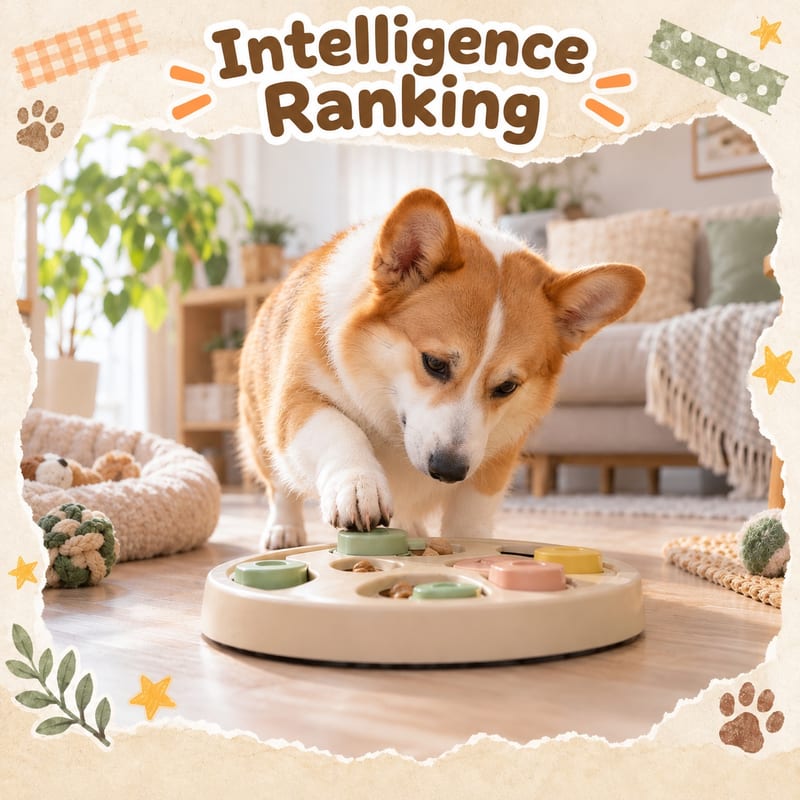
The most widely circulated 'dog intelligence ranking' comes from American scientist Stanley Coren's book The Intelligence of Dogs. Based on questionnaires from nearly 200 obedience trial judges, it measures a dog's 'speed of understanding new commands' and 'obedience rate on first hearing a command'. On this scale, Border Collies, Poodles and German Shepherds top the list, while the Pembroke Welsh Corgi usually ranks around 10th, in Coren's 'excellent working dog' tier. Note: exact positions vary slightly between editions, so it makes more sense to look at the tier rather than fixate on a number—in command-learning speed, the Corgi is in the top tier among small breeds.
2. How to read 'dog intelligence ranking 100' without misunderstanding
Coren also proposed that canine intelligence has at least three dimensions: instinctive intelligence (inherited working instinct), adaptive intelligence (solving problems by observation) and working obedience intelligence (listening to humans). The ranking table basically measures the third. As a herding dog, the Corgi scores high on all three: instinctively it knows to use a low posture to drive livestock and chase cars and ankles; adaptively it is excellent at observing family routines—who is soft-hearted, who takes it for walks, which cupboard holds the treats—it knows them all; and in obedience, learning sit, stay and go to bed usually takes a few days. For those searching 'Shiba Inu intelligence ranking', the Shiba ranks noticeably lower on obedience, but that reflects 'can't be bothered to comply quickly', not poor understanding—this example shows the ranking is a reference, not a report card.
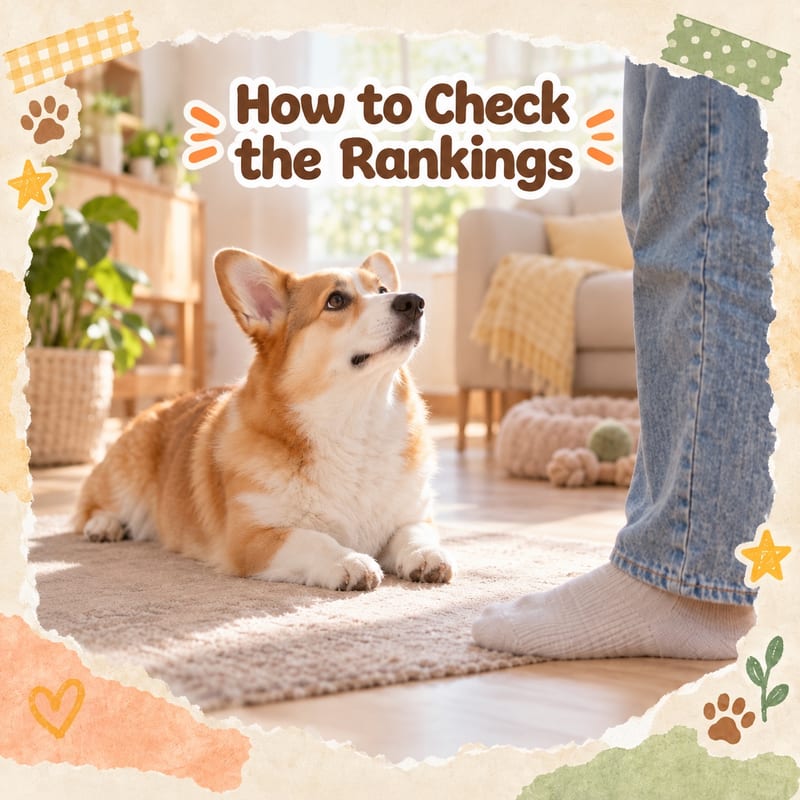
To judge whether your own Corgi is smart, use everyday indicators: can it open doors, does it appear at the sound of a treat packet being opened, does it use behaviour to 'train' its owner (bark and you stand up). These are direct evidence of adaptive intelligence.
3. Breaking down Corgi personality traits
| Trait | Everyday behaviour | Owner's response |
|---|---|---|
| Affectionate and home-loving | Follows you around, sits close when you sit down | Enjoy it but do gradual alone-time training |
| Alert and barky | Alerts at gate sounds, stairwell lights | 'Quiet' command + delayed reward |
| Herding instinct | Chases children, chases cars, nips ankles | From puppyhood, replace chasing with 'stay' and recall |
| Strong-willed | Pretends to be deaf and chooses not to listen | Shorten training, increase reward value |
| Food-motivated | Highly sensitive to food | Food rewards are most effective, but control portions |
| Emotionally perceptive | Senses changes in family atmosphere | Keep routines, avoid long periods alone at home |
The AKC breed standard describes the Pembroke Welsh Corgi as 'sturdy, alert and intelligent', and temperament should not be aggressive or overly shy. If your Corgi persistently lowers its head to avoid people or growls warnings at family members, these are signals deviating from the breed norm and worth early assessment by a registered behaviour consultant.
4. Living with children and other pets
Corgis are generally friendly to children, sturdy enough to play. Watch the herding instinct: they naturally drive moving targets by 'chasing, crouching, nipping ankles'—and children's running ankles hit the trigger exactly. The solution is simple: when children run, tell the dog to 'stay', reward compliance; also teach children not to run fast around the dog or pull tail or ears. Towards other dogs and cats, Corgis are usually confident but opinionated; early socialisation (intensive contact with gentle adult dogs at 3 to 12 weeks) is the best investment. Cat-owning families note: the cat's route is the route the Corgi wants to chase—practise 'ignore the cat' from puppyhood.
5. Male vs female Corgi personality differences (cautious version)
Experience generally suggests male Corgis are more outgoing, socially proactive, more interested in food and people; females more independent, alert and sensitive to environmental changes. But these differences are not decisive given individual overlap—the real order of influence on personality is: individual temperament, quality of socialisation, exercise and interaction quality. When choosing male or female, observe the puppy's interaction with your family on site rather than betting on sex.
6. Seven everyday signs of Corgi intelligence
Rankings are all very well, but evidence in daily life is more direct. If your Corgi shows the following behaviours, congratulations—you have a sharp-minded dog: 1. Can open room doors, cupboard doors or latched crates; 2. Appears at the kitchen door within seconds of hearing wrapping paper tear or the fridge open; 3. Distinguishes owner's tone and words—'no' and 'dinner' sound different; 4. When you sit down to put on shoes, it brings the leash—its ability to observe routines is stronger than many dogs; 5. Will 'trial and error': paw, nose-push, tooth-nudge, testing which method gets treats fastest; 6. Can pick people—same command, it may do it for you but just give a token response to other family members; 7. Uses behaviour to 'train' you: bark and get food, next time it will bark more precisely. None of these seven test obedience; all are adaptive intelligence—exactly the half the ranking table cannot measure. Incidentally, among small dog intelligence rankings the Corgi is near the top, and small size does not mean small brain—the Corgi demonstrates this most directly.
7. Golden training window: when to start teaching a Corgi
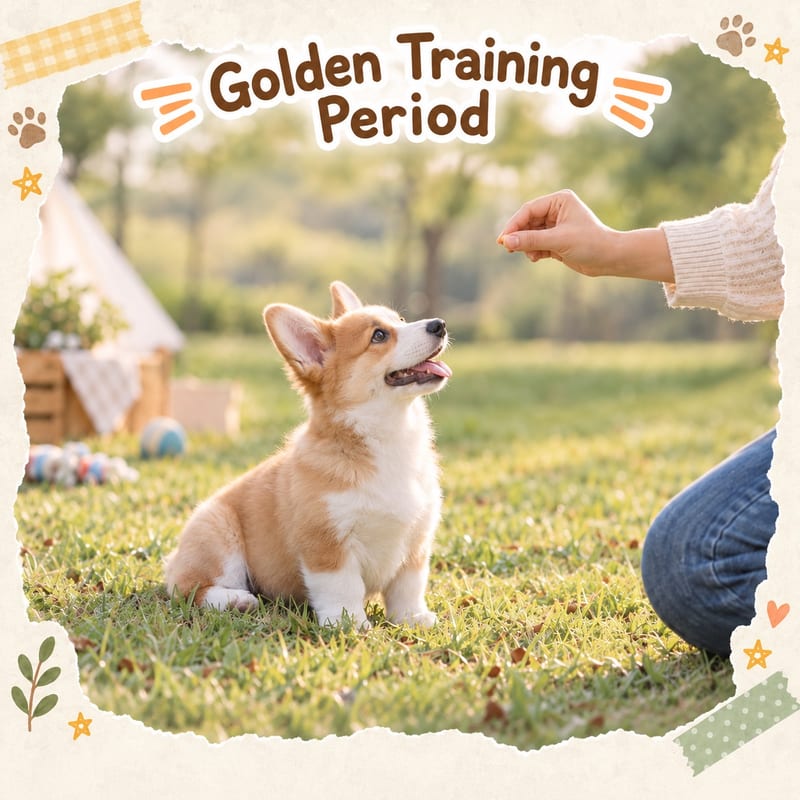
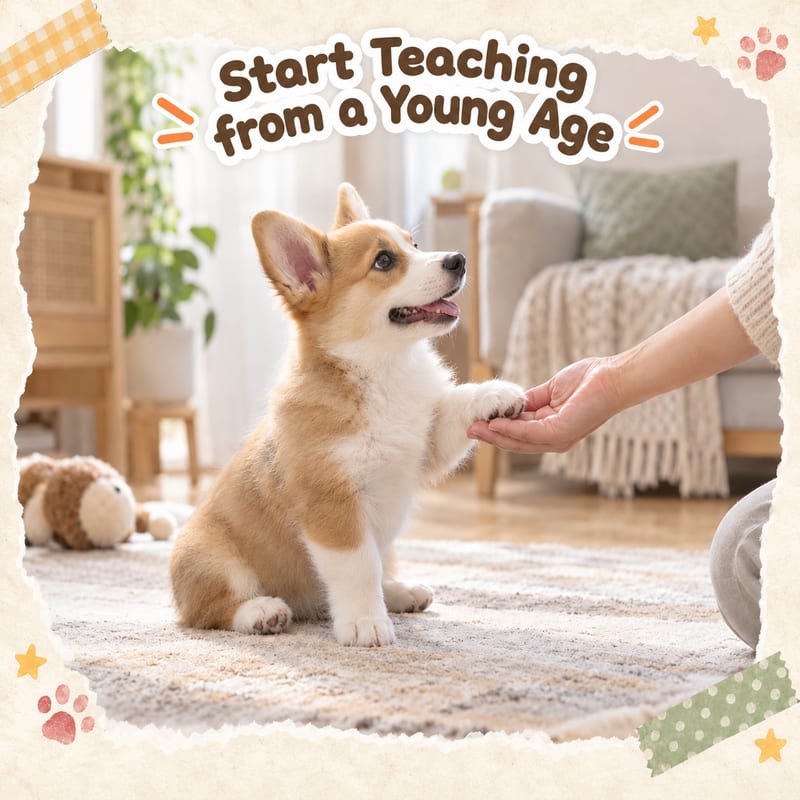
3 to 12 weeks is the socialisation window; before 18 weeks, meet many people, dogs and sounds—benefits last a lifetime; 4 to 6 months is the most efficient time to learn basic commands, as their 'obedience intelligence' is in a willing phase; 6 to 18 months is adolescence, focus dips and apparent 'not understanding' is normal brain reorganisation—don't think the dog has become stupid or rebellious; maintain rules, increase exercise and mental drain, and it will naturally improve. Focus and self-control are generally thought to mature truly by 18 to 24 months. Three 5-minute sessions daily are far more effective than one long weekend session; for a clever dog like the Corgi, remember to feed the brain too: snuffle mats, treat-dispensing toys, new command progression—a mentally tired Corgi is a good Corgi.
Key takeaways
- ✅ Corgis are in the top tier in Coren's research, top tier among small breeds for command-learning speed
- ✅ The ranking only measures obedience intelligence; Corgis are a 'smart + opinionated' combination
- ✅ Herding instinct (chasing, ankle-nipping) must be replaced from puppyhood with 'stay' and recall
- ✅ Socialise at 3 to 12 weeks, start command training from 4 months, expect pseudo-regression in adolescence
- ✅ Male-female differences are small, individual differences large; choose based on on-site interaction
- ✅ Clever dogs need brain work: snuffle mats and treat-dispensing toys drain energy faster than physical hikes
Related reading
- Full list of Corgi disadvantages and how to cope
- Complete guide to keeping a Corgi in Hong Kong
- Corgi lifespan and health guide
- PetChill pet supplies: treat-dispensing toys, snuffle mats and training treat pouches to help feed your clever Corgi's brain
 Wellness Core full guide →