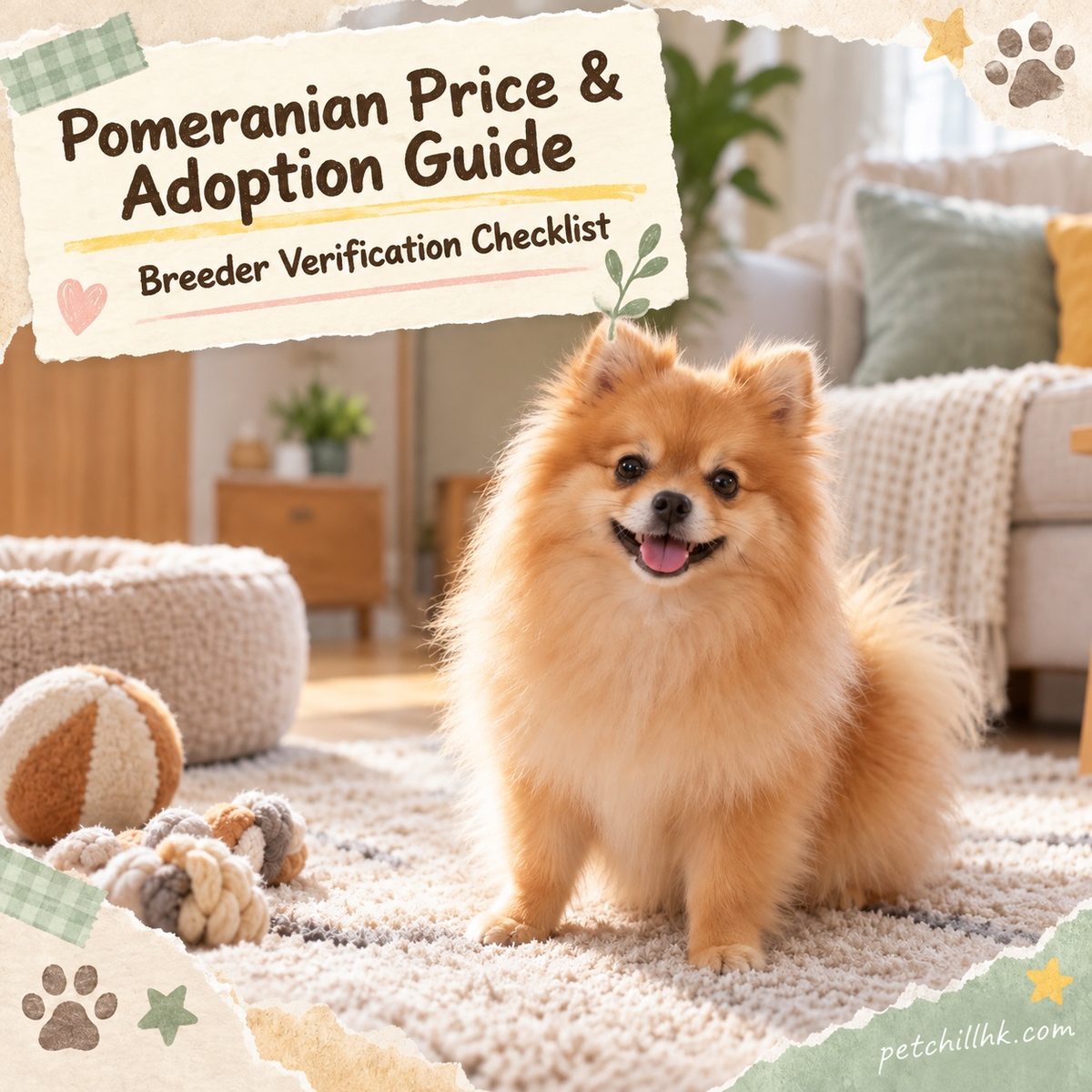
Quick answer: In 2026, Pomeranian prices in Hong Kong are generally around $10,000–25,000 for pet-grade and $25,000–45,000 for pedigree-grade; the price gap mainly comes from how far the pedigree can be traced and coat colour. 'Teacup' and 'mini' premiums have no objective standard, so be careful. SPCA, the Civil Association and rescue groups all have Pomeranians or Pomeranian mixes for adoption. Monthly costs are estimated at about $1,300–2,400, and whether buying or adopting, verification comes first.
Want to know all about Pomeranians? Start with the Pomeranian breed profile.
1. Pomeranian price: how much difference between pet-grade and pedigree-grade
The Pomeranian is a long-standing favourite small white dog in Hong Kong, and prices vary widely. Below are reference ranges for the general market in 2026; they reflect rough market levels only and are not a recommendation of any seller:
| Grade | Reference price (HKD) | Common differences | Suitable for |
|---|---|---|---|
| Pet-grade | About $10,000–25,000 | Has pedigree papers, may include neutering clause | People who want a companion, not planning to show |
| Pedigree-grade | About $25,000–45,000 | Parents registered or have champion records | Advanced owners who value traceable pedigree |
| 'Teacup'/'mini' claims | Often $40,000 or more | Not a recognised classification; standard is whatever the seller says | Better to walk away; risk and premium are disproportionate |
One principle bears repeating: a high price does not equal health. The American Kennel Club (AKC) classifies the Pomeranian as a toy-group breed with a standard weight of about 1.8–3.2 kg; but genetic tendencies (patellar luxation, tracheal problems, dental disease) are not directly related to certificates—what matters is whether the breeder screens the parents. Asking whether the parents have knee, eye and heart screening records is more important than asking 'are there papers?'
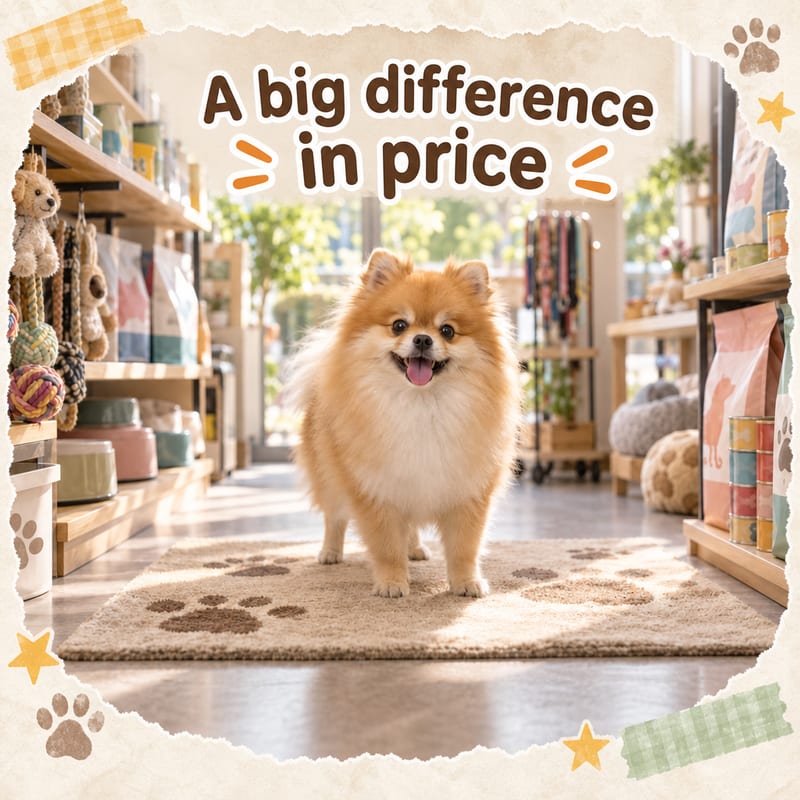
2. The truth about 'teacup Pomeranians' and colour premiums
'Teacup Pomeranian' and 'mini Pomeranian' are not official classifications recognised by any major kennel club. They commonly come from three sources: unusually small purebred individuals, crosses with other small breeds, or stunted, sickly dogs. Deliberately seeking extremely small individuals may come with bone, blood sugar and heart risks, and medical costs can be higher.
As for claims like 'white Pomeranian price' or 'the purer the orange, the more expensive': the AKC recognises Pomeranians in many colours including orange-red, black, cream, white and sable, with no health hierarchy. If someone charges a big premium for 'rare bi-colour' or 'parti premium', that is marketing; just refer to the reference range and don't pay the premium.

3. Real chances of adopting a Pomeranian
Many people search 'Pomeranian adoption' or 'small dog adoption' thinking there are none—but the reality is the opposite. Because Pomeranians need a lot of coat care, the surrender rate is not low: neglected grooming leading to full-body matting, or owners moving to pet-free housing, are common reasons for return. Proper routes include:
- SPCA (Hong Kong Society for the Prevention of Cruelty to Animals): adoption includes neutering, microchipping, vaccination and behavioural assessment, with follow-up mechanisms.
- Civil Association (New Territories Animal Care Centre): covers cat and dog adoption with transparent procedures.
- Rescue groups (e.g. IRC, SCAR): occasionally have Pomeranians or Pomeranian mixes; you can register your interest for matching.
Adoption fees generally range from about $1,500 to $4,000 and usually include basic medical care; actual fees are subject to the organisation's current fee schedule.
4. Why 'free adoption' and 'no home visit' should make you hesitate
If you are searching 'free puppy adoption' or 'adoption without home visit', first build a defensive mindset: proper adoption always involves screening. Home visits, questionnaires and reference calls are necessary steps to protect animal welfare and also protect you—if behavioural problems arise, there is an organisation to follow up. Sources that hand over a dog without screening commonly fall into three categories: unsold individuals from unlicensed breeders, 'free' transfers that have already been paid for privately, or individuals with hidden serious illness. If you discover problems after taking the dog home, surgery can easily cost tens of thousands of dollars, and you bear the cost.
5. Buyer's checklist: verify eight items one by one
- Check whether the seller holds a valid dog breeder licence (a category of dog seller licence under the Food and Environmental Hygiene Department's Public Health (Animals and Birds) Regulations; verifiable with the FEHD).
- Ask to see the parents' health screening records, especially knees and eyes.
- Check the puppy's vaccination and microchip records; the microchip number must match the documents.
- Observe the puppy's energy, faeces and weight; avoid taking home an individual on a 'take it and see' basis.
- Confirm whether a health guarantee period is offered (generally 7–14 days observation is a reasonable starting point).
- Clarify return/exchange terms and who is responsible for unexpected medical costs, in writing.
- Refuse 'on-the-spot transaction without receipt'; keep payment records.
- If any item is refused, prefer to go to the next seller.
6. Monthly cost estimate: small dog doesn't mean small wallet
| Item | Monthly reference (HKD) | Notes |
|---|---|---|
| Main food and treats | $300–600 | Choose small-breed formula by weight |
| Grooming, conditioning and trimming | $400–800 | Every 6–8 weeks, averaged monthly |
| Deworming and preventive care | $200–350 | Heartworm, fleas, annual vaccines |
| Medical reserve | $300–600 | Dental and knee problems are not rare in small dogs |
| Insurance (optional) | $150–400 | Depends on plan, age and coverage |
| Total | About $1,350–2,750 | Excludes toys, boarding and one-off costs |

7. Buying or adopting: how to choose without regret
Buying suits people who have clear requirements on size and colour and are willing to spend time verifying licences and parent records; adoption suits people who accept an adult dog with unknown background and are willing to go through screening. Whichever path you choose, budget for the first year's adjustment and medical costs after bringing the dog home: puppy training classes, dental care and behavioural consultation often affect long-term satisfaction more than the purchase price. If you just want a small dog for company, Pomeranian mixes at SPCA and rescue organisations are usually stable in temperament and medically complete, offering excellent value; if you insist on a purebred puppy, complete every item on the checklist above before paying a deposit, and write the refund conditions on the deposit receipt—the protection is in your hands.
One common myth to add: 'more expensive means healthier' does not hold. Unlicensed farms can package their dogs just as nicely, and licensed breeders also price reasonably. What really relates to health is three things: whether the parents are shown, whether there are health screening records, and whether there is after-sales follow-up; these three together are more trustworthy than any 'purebred guarantee certificate'. Conversely, if the other party only talks about pedigree and refuses to show you the parents and medical papers, walk away regardless of the price.

Key takeaways
- ✅ 2026 reference prices: pet-grade about $10,000–25,000, pedigree-grade about $25,000–45,000
- ✅ 'Teacup' and 'mini Pomeranian' are not recognised classifications; premium and risk are disproportionate
- ✅ High price does not equal health: checking parent screening records is more important than checking certificates
- ✅ 'Free adoption, no home visit' is a high-risk signal; proper adoption always involves screening
- ✅ Pomeranian adoption cases are not rare; grooming neglect and relocation are common reasons
- ✅ Monthly costs about $1,300–2,400; grooming and dental care are big items for small dogs
- ✅ Whether buying or adopting, budget for the first year's adjustment and medical costs—that is the fair decision
Related reading
- Pomeranian personality and intelligence explained
- Pomeranian lifespan and health risks
- Pomeranian disadvantages and how to cope
- Small-dog food, slicker brushes and pet shampoo: find them all at PetChill pet supplies.
Prices in this article are general market references and subject to supply and demand at the time; health content is general information—consult a registered veterinarian for any illness.
 Fuji One full guide →