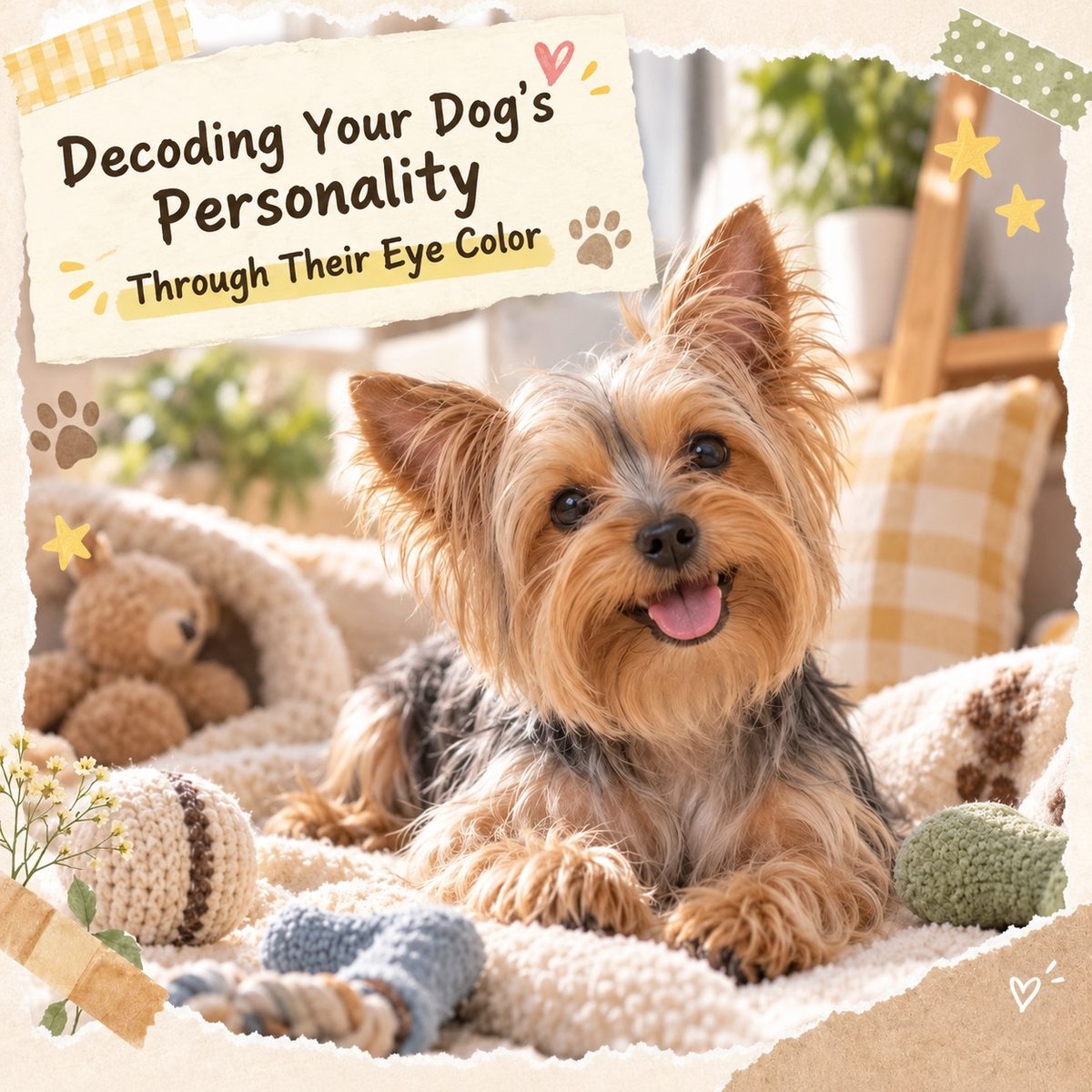
Quick answer: The Yorkshire Terrier's personality can be summed up in five words: brave, smart, affectionate, expressive, reserved with strangers. They rank 27th in canine intelligence research, learn quickly but have a mind of their own; their attachment to owners is deeper than most small breeds. Misinterpreting them as 'pretty dolls that don't need exercise or training' is the biggest source of Yorkshire Terrier behavior problems.
Want a full picture of the Yorkshire Terrier? First see the Yorkshire Terrier breed profile.
What is the Yorkshire Terrier's personality? 30-second summary table
The Yorkshire Terrier's personality is not simply that of a 'pretty little girl dog', but a ratter with a big dog soul in a 2–3 kg body. The table below covers the personality specs Hong Kong owners most often look up, with details broken down below:
| Item | Actual Yorkshire Terrier behavior |
|---|---|
| Personality keywords | Brave, alert, smart, affectionate, vocal, reserved with strangers |
| Canine intelligence ranking | 27th (learns new commands in 5–10 repetitions, ~80% obedience) |
| Attachment to owner | Extremely high, top tier among small breeds, 'follows you everywhere' |
| With strangers | Conservative and slow to warm, most bark first then observe |
| Barking tendency | High, vocal alarm barker, especially sensitive to hallway footsteps and doorbells |
| With children | Safer with children aged six or above who know how to be gentle |
| With other dogs | Overestimates itself, will actively challenge big dogs; owners must intercept |
| Alone tolerance | Low to medium; unprepared long periods alone easily develop into anxiety |
| Daily exercise needs | 15–20 minute walks × 2 + mental games, about 45–60 minutes |
| Average lifespan | About 13–16 years |
Three sentences to sum up:
- They are not dolls — Terrier heritage leaves three legacies: confidence, alertness, and persistence. Without training, they will find their own jobs (barking, chewing, chasing shadows).
- Deep attachment is factory setting — Affection is a virtue, but the price is that being alone must be practiced in advance; they are not born knowing how.
- Barking is communication, not defiance — Instinct cannot be banned, only managed: quiet command + reduce visual triggers + fixed routine.
Yorkshire Terrier price and monthly costs (2026 Hong Kong market, including grooming)
The Yorkshire Terrier is a classic case of 'not expensive to buy, expensive to keep due to grooming'. The table below lists actual Hong Kong market rates:
| Item | Range | Notes |
|---|---|---|
| Registered breeder puppy | HK$12,000–25,000 | With pedigree certificate, parental health screening records |
| Licensed pet shop | HK$6,000–15,000 | Depends on coat color, size, and vaccination records |
| Adoption | HK$0–2,000 | Most already neutered, vaccinated, microchipped |
| First-year vaccines (three shots) | HK$900–1,600 | Annual booster thereafter |
| Neutering | HK$2,000–4,500 | Females more expensive (abdominal surgery) |
| Microchip + license | HK$300–500 | Required by Hong Kong law |
| Monthly food | HK$250–500 | 2–3 kg body weight, small appetite |
| Monthly treats/supplements | HK$80–200 | Training treats, joint or skin supplements |
| Monthly grooming (bath & trim) | HK$350–700 per session, every 4–8 weeks | Yorkshire coat needs professional trimming, not just a bath |
| Home grooming supplies | HK$50–120/month | Amortized comb, detangling spray, shampoo |
| Monthly medical reserve | HK$200–400 | Common issues: tracheal collapse, knee joints, tartar |
| Monthly total | About HK$1,000–2,200 | Grooming is the largest share, can exceed 40% |
The most underestimated cost for Hong Kong owners is grooming. The Yorkshire coat is like human hair with no obvious shedding season, but if not trimmed every 4–8 weeks, it will mat into felt, and then it can only be shaved short or handled by a veterinarian. To save money, you can learn to trim a short style yourself, but tool and time costs must also be counted.
Three budget approaches:
| Item | Budget | Standard | Secure |
|---|---|---|---|
| Food | HK$250/month | HK$350/month | HK$500/month |
| Grooming | DIY, tool amortization HK$100/month | Every 8 weeks HK$450/session ≈ HK$250/month | Every 4–6 weeks HK$600/session ≈ HK$400/month |
| Medical reserve | HK$0 (pay as you go) | HK$250/month | HK$400/month + pet insurance |
| Monthly total | About HK$600 | About HK$1,000 | About HK$1,500 |
Who is a Yorkshire Terrier suitable for? + Three reverse self-checks
| Owner type | Suitability | Reason |
|---|---|---|
| Work from home/retired | Very suitable | Plenty of companionship time; affectionate trait becomes an advantage |
| Couple household, someone home long hours | Suitable | Daily alone time can be kept within 4–6 hours |
| Renting small flat, sensitive upstairs neighbors | Needs assessment | Piercing barks; complaints are a real risk |
| With children aged six or above | Suitable (rules required) | Small size easily injured; clear rules allow coexistence |
| Single, 9am–9pm | Not recommended | Left alone over 10 hours daily; high anxiety risk |
| Frequent business trips, away several nights a week | Not recommended | Attached breeds fear unpredictable long alone time |
Reverse self-check (three questions; if you can't answer 'yes', consider another breed):
- Do you have 45–60 minutes daily? Includes two walks plus a 5–10 minute training session. Yorkshire Terriers have low physical needs but terrier-level mental needs; without it, they will entertain themselves with barking and chewing.
- Can you allocate HK$350–700 monthly for grooming? Or are you willing to spend an hour and a half every 6–8 weeks trimming yourself? This is a breed hard cost, not a luxury.
- Can you tolerate daily barking at the doorbell? Neighbors walking up and down stairs, food delivery, elevator doors opening are all triggers. If you have zero tolerance for noise, this breed will keep you tense long-term.
If you can't answer 'yes' to two of the three, consider a Toy Poodle (similar grooming cost but less barking) or adopting an adult dog (personality already set, can be assessed).
Yorkshire Terrier compared with other small breeds
| Breed | Weight | Barking | Affection | Grooming frequency | Monthly cost | Beginner-friendly |
|---|---|---|---|---|---|---|
| Yorkshire Terrier | 2–3 kg | High | Extremely high | Every 4–8 weeks | HK$1,000–2,200 | If you have time |
| Toy Poodle | 2–4 kg | Medium | High | Every 4–6 weeks | HK$1,200–2,500 | Yes |
| Chihuahua | 1.5–3 kg | High | Extremely high | Almost none | HK$700–1,400 | Yes (train alone time) |
| Pomeranian | 1.5–3 kg | High | High | Every 6–8 weeks | HK$900–1,800 | Yes |
| Bichon Frise | 3–6 kg | Low to medium | High | Every 4–6 weeks | HK$1,100–2,000 | Yes |
| French Bulldog | 8–14 kg | Low | High | Almost none | HK$1,500–3,000 | Medical costs need buffer |
In one sentence: want less barking, choose Bichon or Toy Poodle; want least grooming, choose Chihuahua; want terrier confidence and playfulness, choose Yorkshire Terrier—the price is barking, grooming, and daily mental games.
Four most common Yorkshire Terrier misconceptions
| Misconception | Reality |
|---|---|
| Yorkshire Terriers are 'no exercise needed' house dogs | Low physical needs, but terrier-level mental needs. Insufficient exercise and play leads to barking, chewing, shadow chasing—all 'finding their own jobs' |
| Yorkshire coats don't shed, so no brushing needed | Coat like human hair, no obvious shedding season, but still mats; brushing 3–4 times a week is the minimum to prevent felting |
| Yorkshire Terriers are naturally aggressive and bite | Breed standard says 'confident and spirited'. Defensive snapping mostly stems from being hurt, insufficient socialization, or long-term neglect—a husbandry issue |
| Two together will definitely prevent anxiety | Two attached dogs reinforce each other's anxiety; not an automatic solution. Costs and grooming time also double |
A practical tip: from the first day your dog comes home, record two columns weekly: 'barking triggers' and 'alone hours'. After a month, you'll have a behavior map of your own dog, and all training can be targeted.
1. Soul setting: the confidence of a ratter
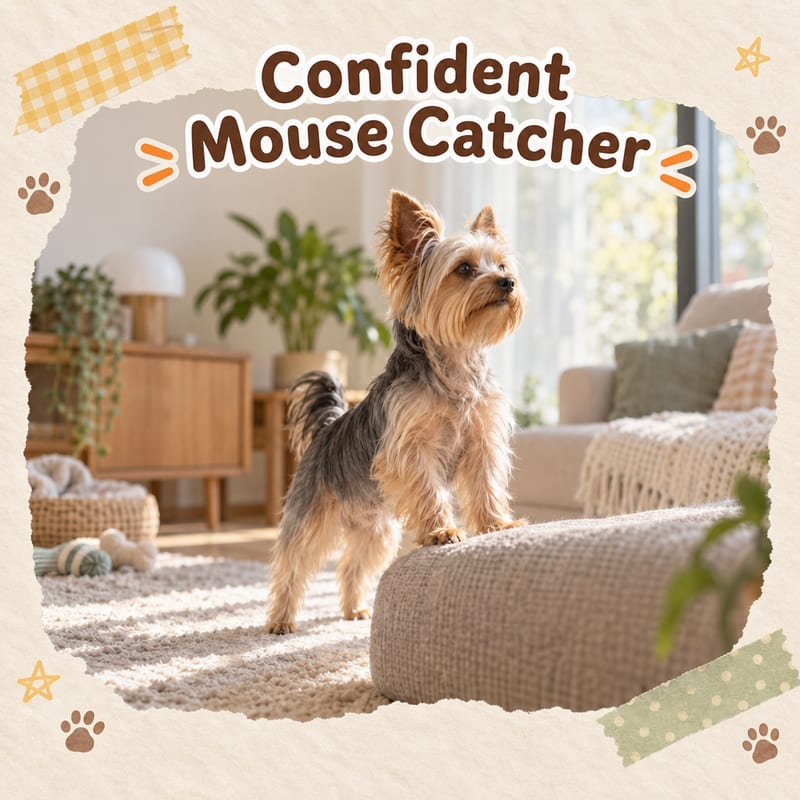
To understand the Yorkshire Terrier, first understand their working history: 19th-century rat catchers in Yorkshire mines and textile mills. This history left three legacies—confidence (charging at targets larger than themselves), alertness (highly sensitive to sounds and movement), and persistence (bite and don't let go, translated into 'won't return the toy'). The UK Kennel Club breed standard describes the Yorkshire Terrier's temperament as 'confident and spirited'. So when a 3 kg dog barks at a 30 kg dog, it's not being stupid; it's following its ancestors' job description.
2. Intelligence: learns fast, but first asks 'who am I learning for?'
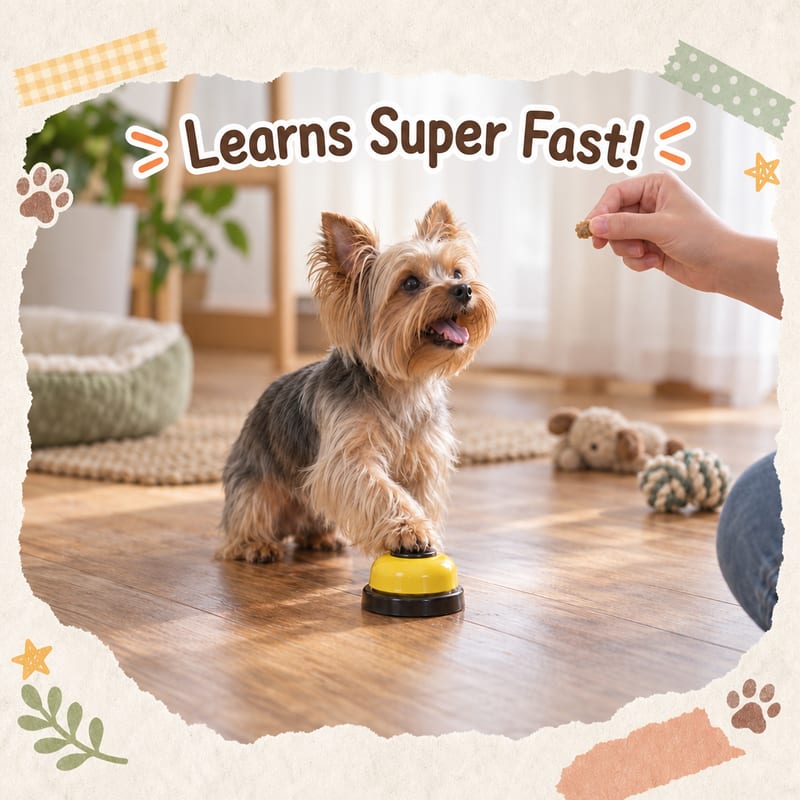
In Coren's canine working and obedience intelligence research, the Yorkshire Terrier ranks 27th: learns new commands in 5–10 repetitions on average, about 80% obedience—a 'smart but negotiates' level. Clinical trainers' general observation agrees: Yorkshire Terriers learn sit, shake, fetch quickly; the problem is not ability but motivation—they assess 'is there benefit in obeying you'.
Training advice: Use high-value rewards (small chicken pieces, dried liver bits) to beat their calculator; five to ten minutes per session, multiple sessions daily—long sessions tire them more than you; inhibitory commands like 'quiet' and 'drop it' should be taught from day one like 'sit' and 'stay'. High-intelligence dogs without mental work will find their own jobs—chewing, barking, chasing shadows are all 'employment performance'. Rather than cleaning up afterwards, give them something to do beforehand.
3. Emotional structure: one person angry, whole house knows
The Yorkshire Terrier is a typical 'selects its person' breed: attachment to the primary caregiver is top-tier among small breeds—follows you everywhere, licks your hand when you cry. But the other side of the same sensitivity: tense family atmosphere, owner's low mood, sudden schedule changes—they absorb it all. Some individuals show stress through decreased appetite, increased clinginess, or excessive barking—the Yorkshire Terrier easily 'takes on' human emotions.
Coexistence advice: Treat the Yorkshire Terrier as 'family' not 'the family dog': can watch you eat but no table scraps; bedroom rules set early; fixed daily alone and companionship periods. Deep attachment is not a flaw; it's their factory setting—use it right and they are the most devoted partner in the world.
4. Getting along with children and other pets
With children: Generally recommended for children aged six or above who know 'gentle hands and respect'. Risks on both sides: a child picking them up may drop them, pulling the tail hurts, and pain may cause snapping—terrier heritage won't show mercy when hurt. Rules must be clear: pet the back not the tail or ears; don't disturb while sleeping or eating; ask an adult before picking up. If children follow, the Yorkshire Terrier can be a very patient playmate and 'exclusive plush toy'.
With other dogs: Yorkshire Terriers socialize well, but overestimate themselves—they don't think they're small and will actively challenge big dogs. Owners must intercept during off-leash meetings: their 'play invitation' to big dogs may be interpreted as provocation. With cats: Hunting instinct means chasing moving small animals; families with early co-growth or calm cats can coexist peacefully, but 'ignore the cat' must be trained from puppyhood, not innate.
| Trait | Daily behavior | Coping advice |
|---|---|---|
| Brave and confident | 'Expresses' first at big dogs and strangers | Assess before meeting, control distance with leash |
| Smart with a mind of its own | Learns fast but negotiates | Short sessions, high rewards, consistent commands for life |
| Deep attachment | Follows, supervises, senses family mood | Fixed daily companionship + gradual alone practice |
| Alert and vocal | Vocal alarm barker, broadcasts anything | Quiet command + reduce visual triggers |
| Reserved with strangers | Slow to warm, talks after getting used to | Gentle socialization experiences in puppyhood |
5. Male vs female differences and 'one or two'
Regarding sex differences, general observations in the breeding community (not strict scientific conclusions): females usually have better focus and slightly higher command acceptance; males react more outwardly to external stimuli, with stronger curiosity and 'expressive' urges; some males need early habit management for leg-lifting marking. But in Yorkshire Terriers, individual differences far exceed sex differences—littermates can have very different personalities; always choose based on individual assessment and interaction.
As for 'will two keep each other company better': Yorkshire Terriers generally accept companion dogs well, and two together do consume energy and reduce destruction risk; but the cost is doubled expenses and grooming time, and two attached dogs reinforce each other's anxiety—the new dog's first month should have separate routines before integration.
6. Daily life template: give the smart dog a job
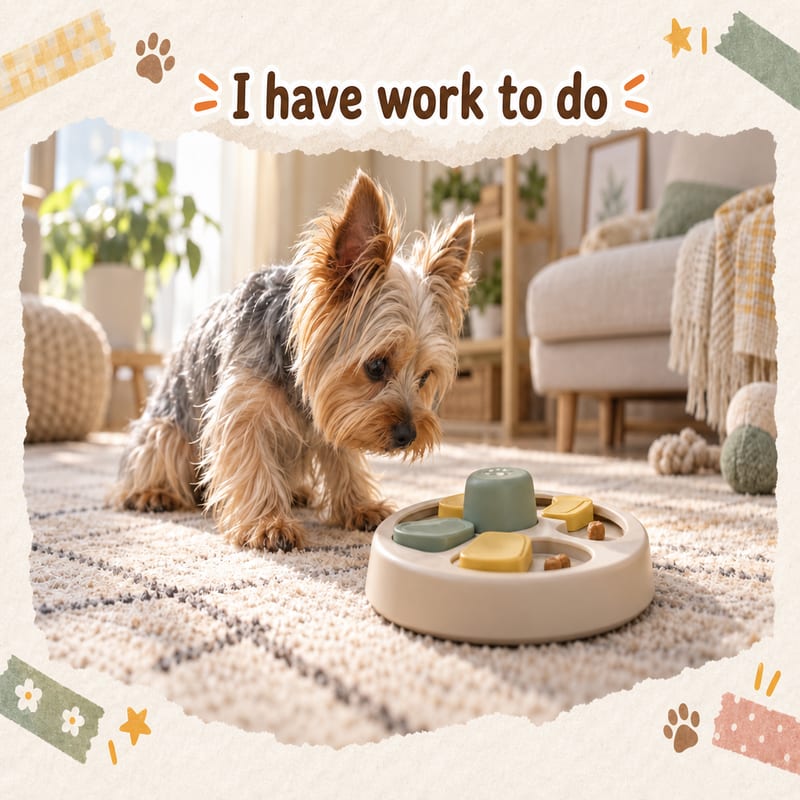
Sample schedule: morning walk 15–20 minutes plus five minutes sniffing game; leave a food puzzle toy or frozen kong when the owner goes to work; after work, a walk plus a 5–10 minute command training session; free play after dinner, five minutes brushing as a closing ritual. Total daily exercise need not be an hour, but mental activity must be sufficient—for a dog ranked 27th in intelligence, boredom is always harder to bear than tiredness; sniffing and treasure hunt games are the cheapest mental supplements.

Yorkshire Terrier barking management: four-week barking reduction plan
Barking is the Yorkshire Terrier's way of communicating; it cannot be eliminated but frequency can be greatly reduced. Here is a practical four-week approach, only 10 minutes daily:
| Week | Goal | Daily action | Observation indicator |
|---|---|---|---|
| Week 1 | Establish the word 'quiet' | 5 repetitions per set, reward before barking, stop when they start | Stops for 1 second upon hearing command |
| Week 2 | Reduce visual triggers | When doorbell/hallway sounds, guide to designated spot (mat) | Number of times going to mat voluntarily |
| Week 3 | Add distance practice | Start from 30 cm and increase distance after success | Can wait 10 seconds on mat |
| Week 4 | Real-life drill | Ask a friend to ring the doorbell, repeat full sequence | From bark to stop in under 5 seconds |
Four rules never to break:
- Never let barking earn any reward. Opening the door when they bark, picking them up when they bark—that's paying a bonus every time.
- Don't shout to stop. Your shout is 'barking together' to them, only worsening it.
- Reward at the moment of quiet. Half a second late and you're rewarding barking; timing is the whole technique.
- Practice only 10 minutes daily. Yorkshire Terriers are smart but have short concentration; when tired they lose accuracy and resist.
If after four weeks they still bark continuously for over a minute whenever someone passes, or show door-charging or destruction, seek an accredited behavior trainer for a home assessment. Don't add punishment yourself—punishment for alert breeds mostly escalates anxiety.
Common questions
Are Yorkshire Terriers very angry? Not breed-aggressive, but highly alert: gentle to family, reserved with strangers, barking to warn of 'suspicious movement'. Defensive snapping occurs only in individuals long ignored or hurt—these are husbandry issues, not 'natural aggression'.
Can Yorkshire Terriers read your mood? Research consensus on canine emotion reading: they can distinguish human tone and facial expressions, and highly attached breeds like the Yorkshire Terrier are especially good at it. So they really do pick up your temper—keep routines and tone stable, and training is twice as effective.
Is destruction severe? Moderate to low, provided exercise and mental activity are sufficient. Yorkshire Terrier chewing is mostly a product of boredom or separation anxiety; targeted treatment (more games, alone practice) is more effective than punishment; the punish-then-chew cycle only teaches them to 'avoid you' rather than 'not chew'.
Key summary
- ✅ Five keywords: brave, smart, affectionate, expressive, reserved with strangers
- ✅ Intelligence rank 27th: learns fast; training should manage motivation, not pressure
- ✅ 'Big dog soul': fearless with big dogs; owners must intercept
- ✅ Deep attachment is a setting, not a flaw, but reserve companionship time and alone practice
- ✅ Children six or above + clear rules for long-term coexistence
- ✅ Daily mental games are more anti-aging and anti-mischief than longer walks
- ✅ Male-female differences are smaller than individual differences; choose based on individual assessment
Related reading
- Yorkshire Terrier disadvantages and solutions
- Yorkshire Terrier lifespan and health
- Yorkshire Terrier price and adoption guide
- Food puzzle toys, frozen kongs, training treats, and leashes: PetChill pet supplies has them all.
Behavior descriptions in this article combine kennel club breed standards, public research, and general training observations; individual differences are large. For aggression or severe anxiety, consult a practicing veterinarian or accredited behavior trainer.
 Almo Nature full guide →
 Wellness Core full guide →
 Royal Canin full guide →