PetChill Pet Encyclopedia
Dog Breeds

German Shepherd Personality | A Must-Read for Hong Kong Owners: Loyalty, Alertness, Intelligence and Training

German Shepherds are loyal and alert, with intelligence ranked among the highest in the world. This article breaks down the 5 key personality traits, male-female differences, conditions for living with children, common misconceptions, and practical training and socialisation steps to help you assess whether a German Shepherd suits your home.

Published: 2026-09-23·9 min read·Author: PetChill Editorial
German Shepherd Personality | A Must-Read for Hong Kong Owners: Loyalty, Alertness, Intelligence and Training — PetChill

Quick answer: The German Shepherd's personality can be summed up in five key words: loyal, alert, intelligent, driven to work, and protective of family. In Coren's study of canine working obedience intelligence, it ranks third—it learns a new command after fewer than five repetitions, making it one of the easiest breeds to train according to trainers worldwide. But precisely because it is so intelligent and opinionated, it needs consistent rules and plenty of mental work; "it will automatically behave once you get one" absolutely does not apply to the German Shepherd.

Want a full picture of the German Shepherd? Start with the German Shepherd breed profile.

1. The five personality axes: breaking down the "police dog image" to see the real thing

The German Shepherd breed standard of the German Shepherd Dog Club (SV) describes the breed as confident, steady, attentive and with a protective instinct. In daily life, this official description translates into five independent axes:

Trait Daily behaviour Common misconception Suggested response
Loyal attachment Follows you everywhere, sleeps at the doorway "Too clingy"—it's herding instinct Practise being alone from day one, gradually lengthen
High alertness Gets up immediately at footsteps outside the door "Easily angered"—actually the radar switching on Cover windows to reduce stimulation + "go to place" command
Extremely fast learning Masters a new action in three to five tries "Good"—it learns bad habits just as fast Good and bad habits are both self-taught
Work drive Finds its own job when bored (chewing, barking, chasing cars) "High energy"—actually task hunger Daily mental tasks: scent work, routines, tug
Protective tendency Reserved and observant with non-family "Aggressive"—the standard is steady, not biting Intensive friendly socialisation in puppyhood; do not deliberately train "guard attack"

german-shepherd-personality-hk knowledge card 1

2. What ranking third in intelligence means: three layers of intelligence to distinguish

Psychologist Stanley Coren's classic study, based on a survey of over 200 obedience judges in the US and Canada, ranks the German Shepherd third in working obedience intelligence—measured by learning a new command after fewer than 5 repetitions and first-time obedience to known commands above 95%. What this position actually means is: it learns everything you teach quickly, including the things you don't want it to learn.

It is important to distinguish three layers of German Shepherd intelligence: instinctive intelligence (the inherited tasks of herding and guarding—full marks here), adaptive intelligence (solving problems on its own: opening doors, moving a stool, recognising your hiking routes across Hong Kong—high), and obedience intelligence (whether it listens to you—the thing Coren ranked, and the only layer improved through the training relationship). Many owners complain "it's clearly so smart but won't listen"—that is disappointment with the third layer. It's not that it doesn't understand; it's that it doesn't yet see the need.
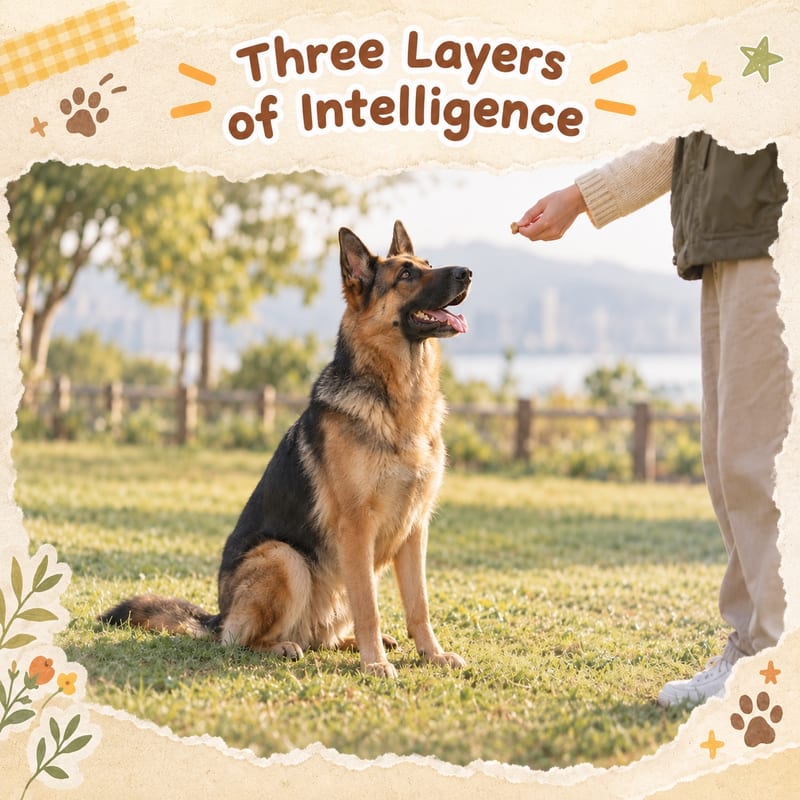
A trainer in a grassy field uses a toy as a reward; the German Shepherd finishes a "play dead" action and looks to the owner for the next cue

3. With children and other pets: conditional harmony

German Shepherds are often described as "nanny dogs of their own home"—patient with family members (including children) and automatically caring and watchful. But there are three practical prerequisites:

  1. The physics of size: an adult German Shepherd weighs over 30 kg; an excited jump is enough to knock over a toddler. Adults set the interaction rules, and the dog's eating and resting areas are off-limits to children.
  2. Prey drive: there is a tendency to chase small, fast-moving animals such as chickens, rabbits and cats; success rates are highest when a cat is raised together from puppyhood. Introducing a cat later requires barrier-separated scent exchanges and short, leashed meetings.
  3. Misread protection: the pitch and movements of children screaming and playing can easily be misread by a German Shepherd in its alert phase. This is not "it suddenly bit someone"; it is how it has always viewed the world, only no one taught it in advance what is normal.

4. Male-female differences and common misconceptions

General observations (individual differences outweigh sex differences): males are more outgoing, more dominant, more likely to provoke unfamiliar male dogs, and about 20% larger; females are more reserved and alert, more deeply attached to family, and mature earlier and more obedient. Females come into season twice (roughly every six to eight months) and need care arrangements. Research and clinical experience both support: neutering, quality of socialisation and consistency of training have a far greater impact on personality than sex itself. When choosing a dog, base your decision on observing in person how it reacts to people, sounds and the leash—don't just gamble on sex.

Three of the most widespread misconceptions, cleared up at once:

  • ❌ "German Shepherds are naturally fierce" → The standard personality is steady and observant; biting cases almost all involve lack of socialisation, long-term restraint or deliberate training.
  • ❌ "They'll settle down naturally when they grow up" → They only stabilise around 2 years old; missing the 3–16 week socialisation window makes remedial work several times more costly.
  • ❌ "It knows how to sit, no need to teach more" → Working dogs need ongoing tasks; a German Shepherd whose lessons stop will invent its own homework, usually home demolition.
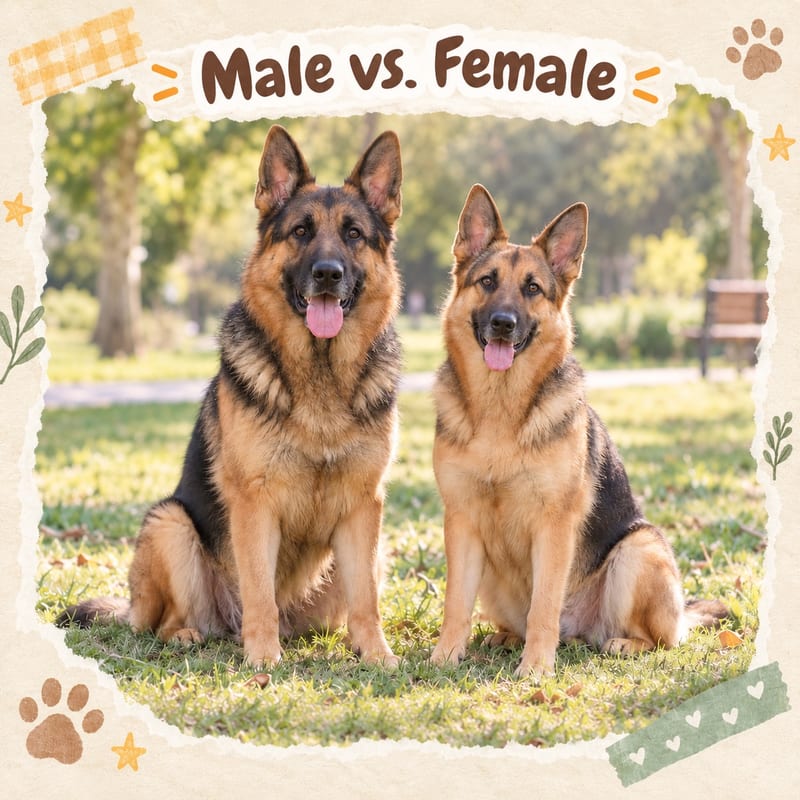
In a park surrounded by other dogs, a German Shepherd puppy sits at its owner's feet learning calm socialisation

5. A training bottom-line checklist for prospective owners

  1. Complete core socialisation by 8–16 weeks: every week, expose the puppy to new people, dogs, sounds, surfaces and traffic situations, pairing each with food. Once the window passes, it costs ten times more to catch up.
  2. One rulebook for the whole family: whether the dog goes on the sofa, eats at the table, when it goes out—hold a meeting and decide together; German Shepherds are experts at exploiting inconsistent rules.
  3. 30 minutes of mental work daily: rotate command review, scent games and tug games; this drains "work drive" better than walking alone.
  4. Build on positive training: this breed is extremely sensitive to the owner's emotions; shouting and scolding produces an anxious, defensive dog, while a combination of food, toys and praise is far more efficient.
  5. Consider formal classes: BH/CGC-level obedience classes not only train the dog but are a shortcut to helping novice owners build consistency.

6. A typical German Shepherd's day (time allocation reference)

  • 06:30 Morning walk 25–30 minutes (avoid crowds and hot ground; free sniffing time takes priority over walking speed)
  • 07:30–18:00 Alone time: safe den, covered windows, chew items; ideally sleeping all day with one short break in between
  • 18:30 Main walk 30–40 minutes + 20 minutes mental tasks (rotate command review, tug, scent work)
  • 19:30 Brush teeth for one minute (longevity work, see the lifespan article)
  • 21:00 Calm interaction: lie next to you watching TV; don't set off excitement right before bed

In this rhythm, all the abstract advice in this personality article—work drive, attachment, alertness—converges into one conclusion: nine out of ten German Shepherd personality problems are schedule problems. Keep the schedule stable and the dog is stable; leave the schedule blank and it will draw its own with your furniture.
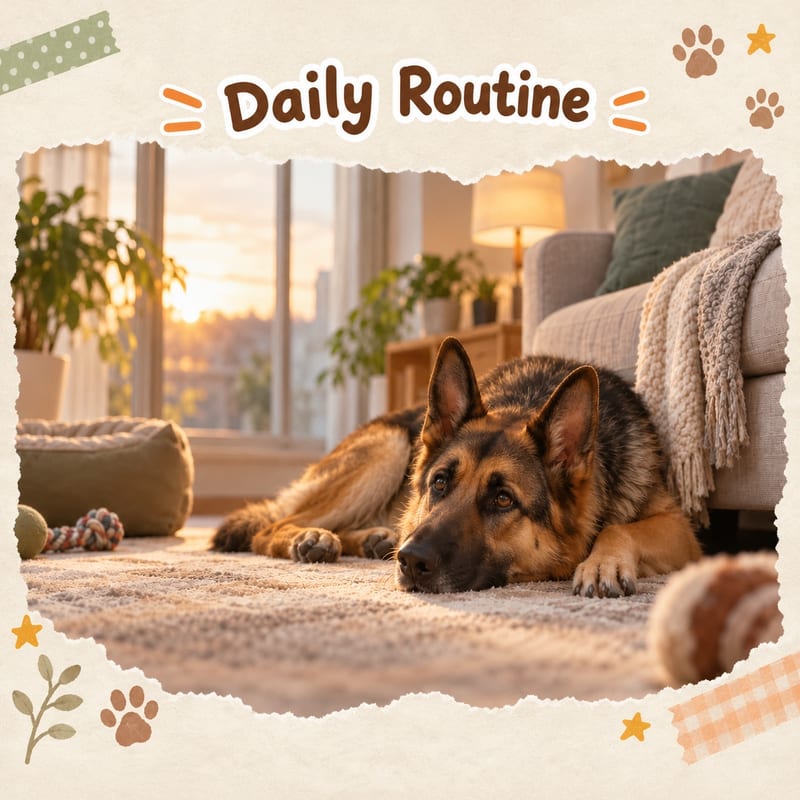
german-shepherd-personality-hk knowledge card 2

Key takeaways

  • ✅ Third in Coren's working obedience intelligence: learns extremely fast—good habits and bad habits alike—so seize the training window
  • ✅ Five key trait axes—loyalty, alertness, intelligence, work drive, protection—each has a corresponding management method
  • ✅ Living with young children depends on adults holding the authority over rules, not on "whether it likes children"
  • ✅ Sex differences exist but rank low; observing reactions in person is the most accurate way to choose a dog
  • ✅ Socialisation at 3–16 weeks is the personality foundation for life; missing it makes remedial work several times more costly
  • ✅ 30 minutes of daily mental tasks is the best value for preventing destruction and barking
  • ✅ Intelligence is an amplifier: positive training produces a teammate, shouting produces a bomb

The behavioural content in this article is general information. If aggression, self-harm or severe separation anxiety is involved, please consult a registered veterinarian or an accredited behaviour consultant.

Brand guides mentioned in this article

These brands appear in this article; their guide pages cover product lines, nutrition ranges and buying tips.

Frequently Asked Questions

📌 Key Takeaways

  • This article covers: 1. The five personality axes: breaking down the "police dog image" to see the real thing, 2. What ranking third in intelligence means: three layers of intelligence to distinguish, 3. With children and other pets: conditional harmony, 4. Male-female differences and common misconceptions, 5. A training bottom-line checklist for prospective owners, and more
  • Jump to any section via the table of contents for the key details
  • If in doubt, consult a registered veterinarian

📚 Dogs article index

This article is part of the Dogs topic cluster. Explore related articles:

⭐ Pillar guide: Dogs complete guidePug: Hong Kong Care Guide (Price, Health, Summer Care)→ ReadBeagle Drawbacks: What Are They and Are Beagles Easy to Keep in Hong Kong?→ ReadBeagle Care in Hong Kong: Laws, Home Setup and Heat Protection→ ReadHow Long Do Beagles Live? A Hong Kong Guide to a Longer, Healthier Life→ ReadBeagle Personality and Intelligence: What Hong Kong Owners Must Know→ ReadBeagle price and adoption in Hong Kong: legal channels, verification steps and cost estimates→ ReadBorder Collie Colour Guide: Coat Types and Care Differences→ ReadBorder Collie Disadvantages: 8 Truths and How to Cope→ ReadBorder Collie Hong Kong Care Guide 2026: Laws, Climate and Prices→ ReadBorder Collie Lifespan and Health: A Hong Kong Guide to a Longer Life→ ReadBorder Collie Intelligence and Personality: A Complete Guide for Hong Kong Owners→ ReadBorder Collie Prices in Hong Kong and Adoption Guide→ ReadDachshund Downsides: 8 Truths to Know Before You Adopt→ ReadDachshund Hong Kong Care Guide: Laws, Climate and Home Care→ ReadDachshund Lifespan: 12–16 Years and How to Help Them Age Well→ ReadDachshund Intelligence and Personality: How to Read Small-Dog Rankings→ ReadDachshund Prices in Hong Kong 2026: A Guide to Buying and Adoption Costs→ ReadGolden Retriever Coat Colours: The Full HK Guide — Beyond Gold→ ReadGolden Retriever Lifespan: How Many Years? Hong Kong Owner's Guide to Extending Life | Tumour and Joint Risks→ ReadGolden Retriever Hong Kong Care Guide: Public Housing, Weather and Hiking→ ReadGolden Retriever Drawbacks Fully Disclosed | 8 Honest Assessments Before Keeping One in Hong Kong→ ReadGolden Retriever Puppy Growth Curve and Weight Chart (Hong Kong)→ ReadGolden Retriever Personality and Intelligence: A Hong Kong Guide→ ReadGolden Retriever Price and Adoption Guide (Hong Kong) 2026→ ReadPomeranian Coat Colours: A Complete Guide for Hong Kong Owners — White, Black and Orange, and What They Cost→ ReadPomeranian Weight Chart | Hong Kong Pomeranian Growth Standards from Puppy to Senior→ ReadGerman Shepherd Size & Growth: Hong Kong Puppy Weight Chart + Growth Prediction Guide→ ReadPomeranian Personality and Intelligence | A Must-Read for Hong Kong Owners: How to Train a Smart but Stubborn Small Dog→ ReadGerman Shepherd Lifespan: Health Risks and Longevity Checklist for Hong Kong Owners→ ReadHow Long Do Pomeranians Live? A 15-Year Longevity Guide for Hong Kong Owners→ ReadBlack German Shepherd: Comparing Pure Black, Sable and White German Shepherd Coat Colours→ ReadPomeranian Downsides Fully Disclosed | 8 Honest Assessments and Solutions for Hong Kong Owners→ ReadGerman Shepherd Drawbacks List | 8 Major Challenges to Consider Before Getting One in Hong Kong→ ReadPomeranian Hong Kong Care Guide: Home, Climate and Legislation→ ReadGerman Shepherd Price and Adoption: Hong Kong Buying Guide and Verification Checklist→ ReadPomeranian Price and Adoption Guide (Hong Kong) 2026→ ReadGerman Shepherd in Hong Kong: Full Keeping Guide — Law, Public Housing Limits and Summer Heat Management→ ReadHow Much Should a Bichon Frise Weigh? Hong Kong Puppy to Adult Growth Curve Chart→ ReadLabrador Colours Explained | A Must-Read for Hong Kong Pet Owners: Black, Yellow, Chocolate and the Truth About Rare Colours→ ReadShiba Inu Colours: Black Shiba, Red, Sesame and White — Differences and Prices→ ReadLabrador Lifespan: How Long Do They Live? A Hong Kong Owner's Guide to Longevity and Health Risks→ ReadShiba Inu Lifespan: How Long Do They Live in Hong Kong?→ ReadLabrador drawbacks: 8 things to know before getting one (2026 Hong Kong guide)→ ReadShiba Inu Regret List: 8 Downsides Hong Kong Owners Must Know and How to Cope→ ReadYorkshire Terrier Personality Explained | A Must-Read for Hong Kong Owners: A Smart, Affectionate Companion with a Mind of Its Own→ ReadLabrador Puppy Growth Curve and Weight Chart (Hong Kong)→ ReadShiba Inu in Hong Kong: A Complete Guide to Public Housing, Summer Heat and the Law→ ReadYorkshire Terrier Price and Adoption Guide: 2026 Hong Kong Market, Channels and Verification Checklist→ ReadLabrador Personality and Intelligence: A Must-Read for Hong Kong Owners — Obedience, Food Drive and Separation Anxiety→ ReadShiba Inu Weight Growth Curve: What's the Hong Kong Standard in kg? Complete Guide from Puppy to Adult→ ReadHow Long Do Yorkshire Terriers Live? | Hong Kong 11–15 Years, Key Factors and a Longevity Checklist→ ReadChihuahua Disadvantages: A Full List for Hong Kong Owners — 7 Hidden Issues in a Tiny Body→ ReadHow Long Do Chihuahuas Live? | Hong Kong Chihuahua Lifespan and Common Diseases Explained→ ReadChihuahua Personality and Intelligence: Small Dog, Big Dog Soul in Hong Kong→ ReadChihuahua Price in Hong Kong: Adoption Routes, Buying Checklist and Real Monthly Costs→ ReadCorgi Disadvantages Exposed | Must-Read Before Getting One in Hong Kong: 8 Realities + Zero-Cost House Rules→ ReadHong Kong Corgi Ownership Complete Guide: Public Housing, Moisture Control and Heat Protection in One Article→ ReadHow Long Do Corgis Live? | Average Lifespan in Hong Kong and a Longevity Checklist→ ReadCorgi Intelligence Ranking and Personality: A Hong Kong Guide→ ReadCorgi Price and Adoption in Hong Kong: A Practical Guide→ ReadLabrador Care Guide for Hong Kong: Public Housing, Deeds of Mutual Covenant, Heat and Humidity→ ReadAre Poodles Easy to Keep? 7 Downsides and How to Handle Them (Hong Kong Dog Owner's Guide)→ ReadHow Long Do Poodles Live? | Hong Kong Guide to Small Poodle Lifespan and Health Management→ ReadPoodle Intelligence Ranking and Personality | A Must-Read for Hong Kong Owners: The Strength of Second Place→ ReadPoodle Prices 2026: Giant Poodle Cost, Four Sizes and Adoption→ ReadHow Big Does a Poodle Get? A Full Breakdown of Hong Kong's Four Poodle Sizes and Weights→ ReadSchnauzer Disadvantages: 8 Truths to Know Before Getting One in Hong Kong→ ReadHow Long Do Schnauzers Live? Miniature Schnauzer Lifespan and Common Health Issues in Hong Kong→ ReadSchnauzer Intelligence and Personality | Hong Kong Sentinel Dog Smart and Opinionated Full Analysis→ ReadSchnauzer Prices in Hong Kong 2026: The Complete Guide to Buying and Adopting All Three Sizes→ ReadShiba Inu Personality | A Must-Read for Hong Kong Owners: The Independent, Stubborn, Highly Intelligent Cat-Like Dog→ ReadThe Downsides of Owning a Yorkshire Terrier | 6 Real Costs Hong Kong Owners Must Know→ ReadBichon Frise Downsides: 7 Real Costs Hong Kong Owners Must Know (With Monthly Budget)→ ReadBichon Frise Hong Kong Care Guide: Public Housing Rules, Damp and Heat Management, and Source Verification→ ReadBichon Frise Lifespan: 12–15 Years and How to Help Them Live Longer→ ReadBichon Frise Personality and Intelligence Explained | Hong Kong Owner's Training Guide: Smartness and Obedience at a Glance→ ReadBichon Frise Price and Adoption Guide | Hong Kong Buying Tips 2026→ ReadAre French Bulldogs Easy to Keep? 8 Downsides and Fixes Every Hong Kong Owner Should Read→ ReadFrench Bulldog Hong Kong Care Guide: Legislation, Heat Protection and Home→ ReadHow Long Do French Bulldogs Live? A Hong Kong Guide to Flat-Faced Dog Health and Longevity→ ReadFrench Bulldog Personality Explained | A Must-Read for Hong Kong Owners: Intelligence and Getting Along→ ReadFrench Bulldog Hong Kong Price and Adoption Guide (2026)→ ReadFrench Bulldog Size and Weight Standards | A Complete Guide to Puppy Growth Curves in Hong Kong→ ReadLabrador Price and Adoption Guide (Hong Kong) 2026→ ReadShiba Inu Hong Kong Price & Adoption Guide: 2026 Buy or Adopt→ ReadBest Dog Wet Food in Hong Kong | How to Choose Complete Wet Food & Brand Comparison→ ReadBest Dry Dog Food in Hong Kong | Ingredient Picks & Brand Comparison→ ReadCorgi Breed Guide | Spine Care, Weight & Small-Flat Living in Hong Kong→ ReadWhich Dog Food Is Best? Hong Kong's 5-Step Picking Guide, Label Decoding & Switching Tips→ ReadFreeze-Dried Dog Food Guide | Hong Kong Freeze-Dried Dog Food Nutrition, Pros & Cons, Feeding Methods→ ReadFrench Bulldog Breed Guide | Temperament, BOAS Health & Hong Kong Care Guide→ ReadGolden Retriever Guide | Temperament, Hip Joints & Hong Kong Care→ ReadGrain-Free Dog Food Guide: Pros, Cons and Shopping Tips for Hong Kong Dog Owners→ ReadHong Kong Mixed-Breed Dog Guide: Local Dogs, Advantages & Adoption Tips→ ReadPoodle Breed Guide | Complete Hong Kong Guide to Standard, Miniature & Toy Poodles→ ReadShiba Inu Hong Kong Care Guide: Temperament, Shedding, Training and Hereditary Conditions→ ReadDog Food Recommendations Hong Kong 2026 | Puppy Food Picks + Brand Ranking Comparison→ Read

Products mentioned in this article

4 items · prices checked 2026-10-21

  • Nutriplan Soft Dog Food Immunity and Skin Care Support 1.2kg (64337)

    Nutriplan Soft Dog Food Immunity and Skin Care Support 1.2kg (64337)

    HK$98

    About HK$81.67 per kg

    Details

    Price checked 2026-10-21; the store page shows the live price, stock and offers.

  • Bella & Molly's Dutch Berry Royal Selected Dog Food AAFCO Grain-Free Single Protein Salmon Formula 50g (Limited Time Experience)

    Bella & Molly's Dutch Berry Royal Selected Dog Food AAFCO Grain-Free Single Protein Salmon Formula 50g (Limited Time Experience)

    HK$10

    About HK$200 per kg

    Details

    Price checked 2026-10-21; the store page shows the live price, stock and offers.

  •  Special offer

    HK$175HK$235

    About HK$77.16 per kg

    Details

    Price checked 2026-10-21; the store page shows the live price, stock and offers.

  • Royal Canin Dry Dog Food - Medium Light Weight Care Adult Dog 12kg (3053300)

    Royal Canin Dry Dog Food - Medium Light Weight Care Adult Dog 12kg (3053300)

    HK$625.1

    About HK$52.09 per kg

    Details

    Price checked 2026-10-21; the store page shows the live price, stock and offers.

The products above are store items related to this article. Prices are reference prices as of the check date (about HK$908.1 in total); the store page always shows the live price, stock and offers. This article is not medical advice.

You may also like