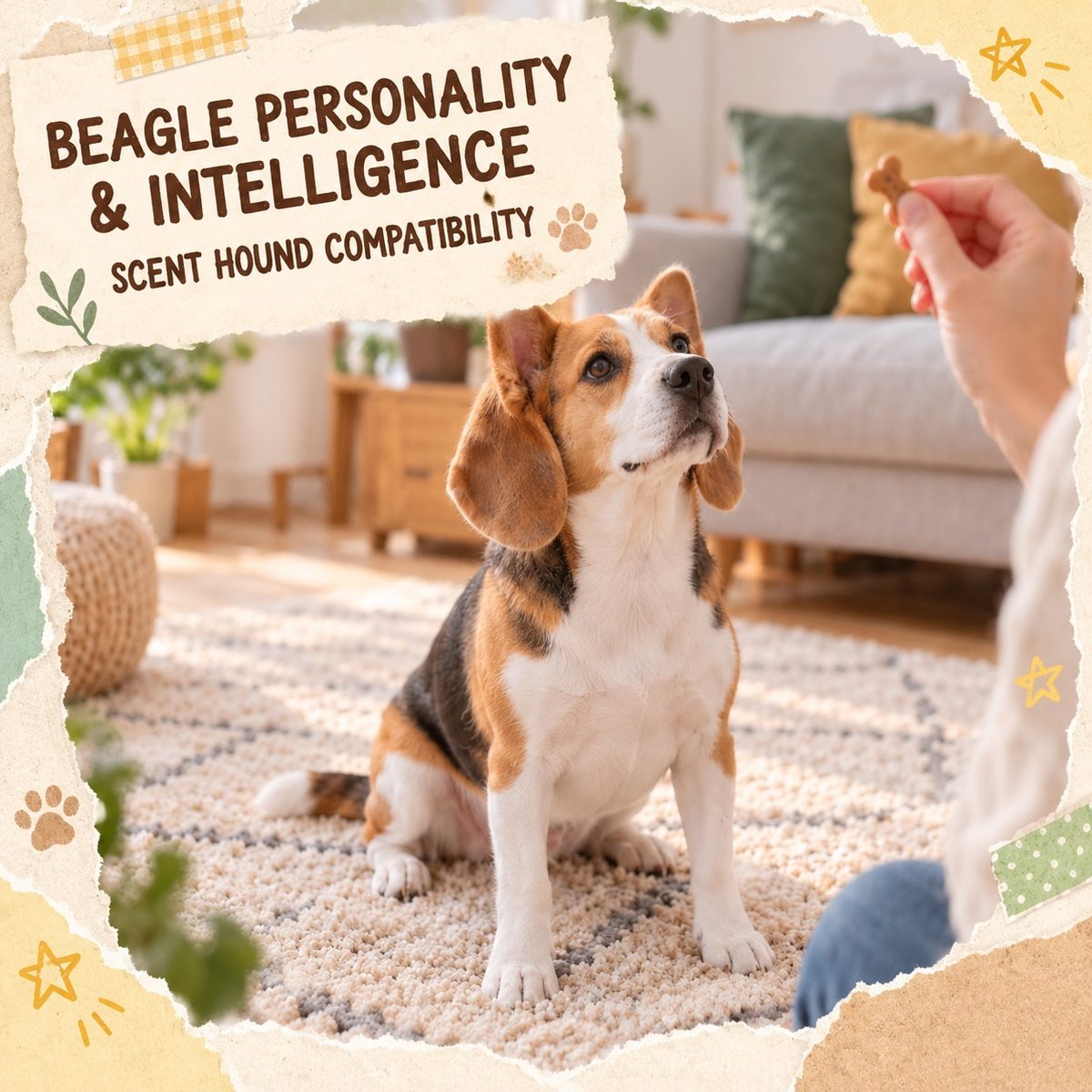
Quick answer: The Beagle's personality is friendly, playful, curious but stubborn—a 'happy-go-lucky' family dog. Intelligence must be viewed separately: obedience training rankings are not high, but scent-work ability is extremely strong. To raise one well, the key isn't making them obedient, but using scent games and high-reward training to direct their cleverness where you want it.
Want to learn more about Beagles? Continue reading the series below.
1. Beagle Personality: Four Words, Then Unpacked
If you describe a Beagle in four words, the industry most often says friendly, playful, curious, stubborn—those searching for 'Beagle personality' want exactly this breakdown. Three points to clarify:
For a complete guide to Beagle personality, price, health, and Hong Kong keeping requirements, see the Beagle breed guide.
First, they really have no airs around people. The UK Kennel Club breed standard requires temperament to be 'amiable and alert, showing no aggression or timidity'—friendly, alert, with neither aggression nor shyness. That means a standard Beagle will wag its tail and approach a stranger, not bark the house down.
Second, they are 'merry' to the point of sometimes being noisy. The American Kennel Club (AKC) sums up the breed in one word—merry, always happy, always wagging. This makes them very easy to bond with, but also means when excited they will bark and jump, without knowing when to stop.
Third, stubbornness is in their genes. Beagles were bred to hunt in packs, historically needing to judge the prey's trail themselves and coordinate with packmates rather than wait for owner commands. Stubbornness isn't disobedience; it's how they were built to work. Understanding this makes training smoother.
| Trait | Daily behaviour | Response direction |
|---|---|---|
| Friendly | Wags at people and dogs, not suited as a guard dog | Accept their lack of wariness; train a settle-and-wait cue |
| Playful | Excitedly spins for food and toys | Use play as reward; establish 'calm comes first' rules |
| Curious | Sniffs non-stop outdoors, reluctant to move on | Set aside 15 minutes of 'sniff time' each walk |
| Stubborn | May 'selectively listen' even after learning | High rewards, short sessions, avoid repeating their name |
2. Beagle Intelligence: Why a Low Ranking Doesn't Mean Dumb
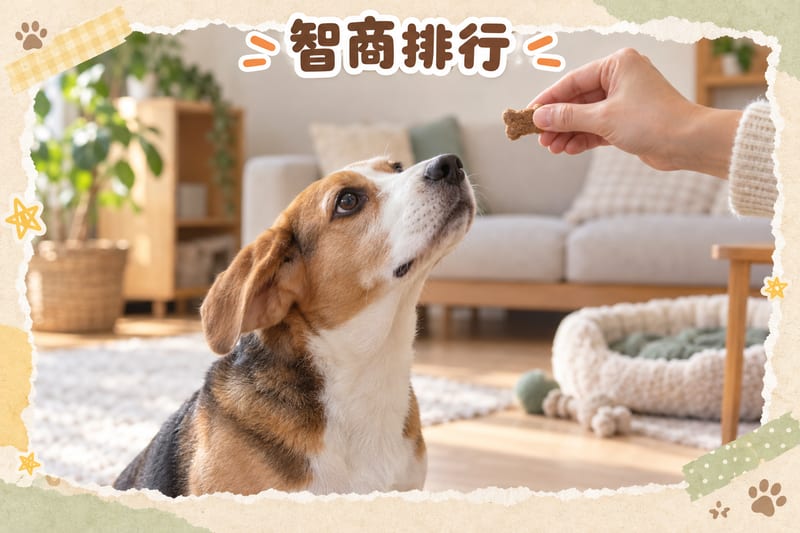
Searching 'Beagle intelligence' most often brings up a ranking that looks poor. Stanley Coren, professor of psychology at the University of British Columbia, in 'The Intelligence of Dogs', used 'number of repetitions needed to learn a new command' and 'success rate on first command' as criteria, placing the Beagle in the 'lowest degree of working/obedience intelligence' group.
But this ranking needs three caveats:
- It measures 'obedience', not 'cleverness'. Coren himself notes in the book that this standard is biased towards obedience and unfair to hound breeds bred for independent judgement (Beagles, Bloodhounds, Basset Hounds).
- Beagles are born for scent work. Their trained task is to follow a scent for miles, making decisions along the way, not waiting for the owner's nod at every step.
- A low obedience ranking doesn't mean they can't learn. It just takes more repetition, higher rewards, and shorter sessions.
So the honest answer to 'Beagle intelligence' is: it's not that they don't understand, it's that they don't feel the need to obey immediately. The solution isn't louder volume, but more attractive rewards and more fun training.
3. Living with Children, Other Dogs, and Cats
Beagles generally score high on family suitability for practical reasons: medium size (9–14 kg) won't hurt children, emotionally stable, friendly to their own kind. Three details to note:
With children: Beagles are playful and rarely aggressive, a common family dog choice. But they are food-driven, and snacks in a child's hand are easily snatched in one bite; teach children to sit still before feeding, not to eat while walking, and not to pull a Beagle's ears.
With other dogs: Beagles are a breed that hunts in company; a single Beagle is more prone to separation anxiety, while two together are usually more stable. They are generally friendly to dogs, but males react more strongly to same-sex dogs' scents, so introductions should be gradual.
With cats: Chasing movement is hound instinct. Starting positive associations in puppyhood (see cat → get treat) can greatly improve things, but introducing a cat to an adult Beagle requires gradual on-leash training—don't just put them in the same space.
4. Male vs Female: The Safe Statement Is 'Individual Differences Outweigh Sex Differences'
There are many folk sayings about 'male or female', but the safe way to understand it is:
- Build: Males are generally slightly heavier and taller, females a bit smaller—the difference is usually only 1–2 kg.
- Behavioural tendencies: General observations suggest males have stronger interest in scent-marking by other dogs and want to sniff the ground more on walks; some females are more clingy, and if not neutered, heat brings practical issues (spotting, being surrounded by males).
- Three things that really shape personality: puppy socialisation (the 8–16 week golden period), neutering arrangements, and daily training and exercise.
The conclusion is simple: rather than choosing male or female, ask yourself 'do I have space for socialisation training?' and 'can I take them out daily?' Both can be excellent family dogs, and both can be hard work—the difference is how you raise them.
5. Interaction Suggestions: Use Their Cleverness Where You Want It
Beagles need outlets for both energy and intelligence, or they turn to destructive chewing and howling. Four practical approaches:
- Scent games (most important): Scatter treats under a mat or hide them in cardboard boxes and let them use their nose. Ten minutes of scent work often uses more brain power than half an hour of walking.
- High-reward recall training: Start indoors, give a high-value treat (like chicken jerky) when they hear their name, gradually increase distance. Never test recall off-leash in open spaces—one failure teaches them 'I can ignore you'.
- Short sessions, high frequency: 3–5 minutes each time, several times a day, better than one half-hour session. Breeds with low obedience rankings fear repetition and frustration most.
- Puzzle feeding: Use treat-dispensing balls and snuffle mats instead of a bowl, turning meals into work.
One more thing to expect: Beagles bay rather than bark normally, and the sound carries. Hong Kong homes have limited soundproofing, so teach a 'quiet' cue from puppyhood and use training to burn energy, rather than shouting them down.

Related Reading
- Beagle Price Hong Kong: Buying and Adoption Costs Explained
- Beagle Disadvantages: Full List and Solutions
- Beagle Hong Kong Keeping Guide: Laws, Home, and Heat Protection
- Beagle Lifespan and Common Health Issues
- PetChill Pet Supplies: treat-dispensing toys, snuffle mats, and training treats—training starts with play
 Wellness Core full guide →
 Fuji One full guide →