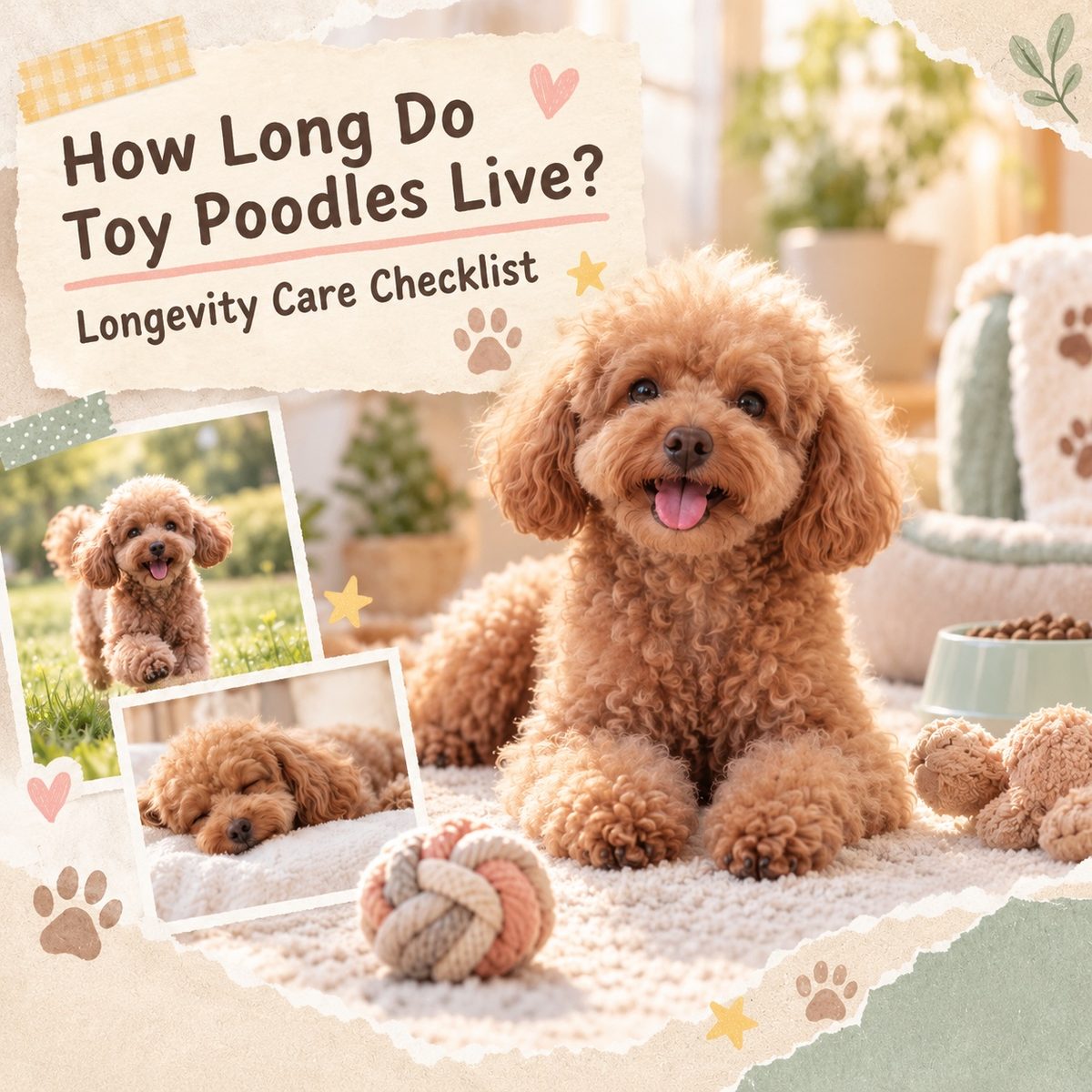
Quick answer: Poodle lifespan by size: Toy 14–16 years, Miniature 13–15 years, Standard 11–13 years, Giant about 10–12 years (general observation ranges). Small Poodles are among the long-lived tiers in the dog world; breed-related concerns to watch: patellar luxation, PRA eye disease, Cushing's, and ear canal infections. Weight control, mental exercise, and six-monthly senior check-ups are the three key ways to extend lifespan.
Want to know all about Poodles? First see the Poodle breed profile and the Complete Poodle Guide.
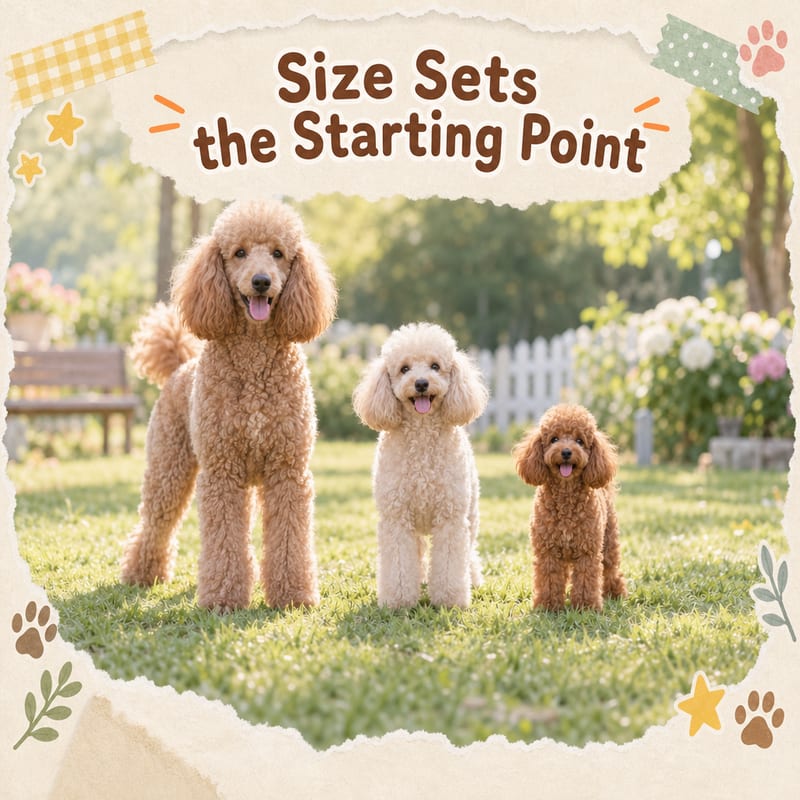
1. Lifespan ranges: size determines the starting point of the curve
"Poodle lifespan" is not one number, but four:
| Size | General lifespan range | Age entering senior | Main health concerns |
|---|---|---|---|
| Toy | About 14–16 years | 10 years + | Patellar luxation, teeth, eye diseases |
| Miniature | About 13–15 years | Around 10 years | Eye diseases, Cushing's, skin |
| Standard | About 11–13 years | 8–9 years | Hip joints, gastric torsion, thyroid |
| Giant | About 10–12 years | 7–8 years | Joints, heart, gastric torsion |
Kennel Club breed health statistics and AKC breed data both support the rule that within the same breed, the larger the size, the shorter the lifespan; the Poodle is a natural control group running four sizes from the same gene pool. The practical meaning of this structure for Hong Kong families: owners of Toy Poodles should plan for "accompanying them for sixteen years"—including moving, marriage and children, and job changes, with the dog counted in every life stage; conversely, families with Giant Poodles should start senior care in the seventh or eighth year, not wait until "obviously old". A note on adoption scenarios: adopting a ten-year-old Toy Poodle still leaves considerable high-quality years, while adopting a Standard Poodle over eight years old should directly put "check-up every six months" into the schedule for the first month after adoption—the older the age, the shorter the payback period of preventive medicine and the higher the density needed.
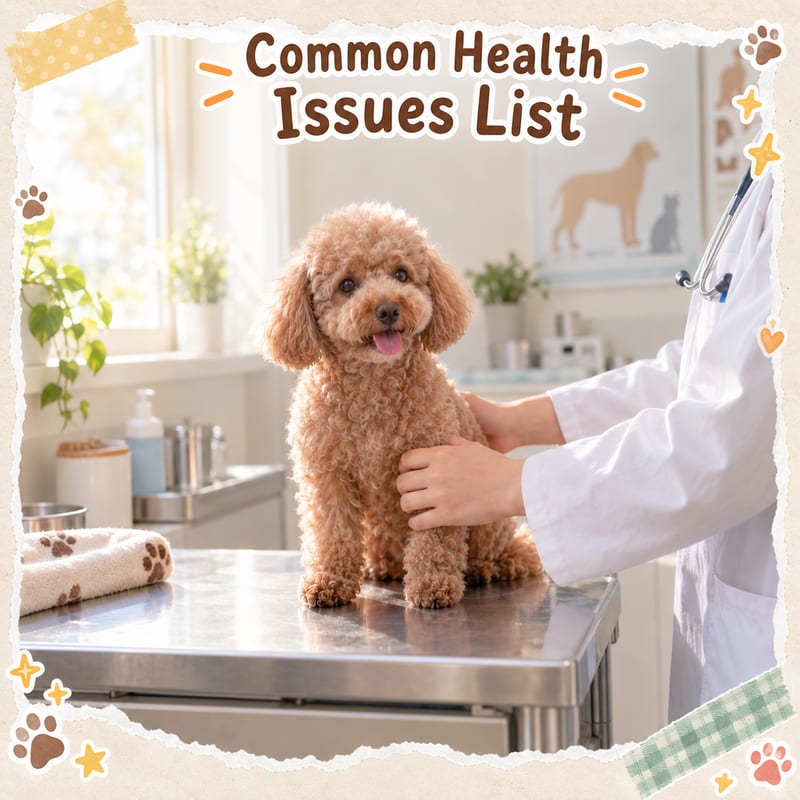
2. Poodle disease list: four high-frequency groups to know early
1. Skeleton: Patellar luxation in Toy and Miniature Poodles is a genetic tendency; "suddenly skipping a step while walking" is not cute, it's a signal—show a video to the veterinarian; weight control and non-slip flooring at home are the most effective conservative management. 2. Eyes: PRA (progressive retinal atrophy) has genetic tests available for several Poodle bloodlines; reputable breeders should be able to do this; cataracts are common in old age. Night-time bumping into things and abnormal light response should be screened early; for gradual vision loss caused by cataracts, keeping the environment fixed (not moving furniture, stair gates) can extend the years of independent living. 3. Endocrine: Cushing's disease (hyperadrenocorticism) and hypothyroidism are among the common breeds in Poodle literature; typical signs are "sudden increase in drinking and urination + abdominal enlargement + symmetrical hair loss"—so a blood test every six months for senior Poodles is not over-medicalisation. 4. Neurological: some bloodlines have an epilepsy tendency; repeated seizures require proper diagnosis to rule out other causes, don't panic and seek random treatment. Medical content is for reference only; for diagnosis and medication always consult a registered veterinarian; the frequency and combination of check-ups should be individualised according to your dog's size category and family history.
3. Pendulous ears and double coat: two chronic risk points specific to Poodles
Two items rarely written in Poodle lifespan charts but happening daily: Ears—pendulous ears plus long hair in the ear canal, poor ventilation, stuffy and damp; repeated ear canal infections increase overall medication and stress; weekly checking and cleaning, drying after washing is "free lifespan extension"; Teeth—Toy and Miniature Poodles have small teeth and fast tartar build-up; gum disease is related to chronic heart and kidney burden (veterinary dental consensus); brushing plus timely dental scaling assessment is the most cost-effective health investment for small Poodles. These two are not "major diseases", but chronic items affecting quality of life for over ten years, worth putting on the schedule; comparing costs makes it clearer: the annual cost of a bottle of ear cleaning solution and a toothbrush is far lower than a single ear infection or one dental scaling procedure.
4. Care rhythm at each age stage
0–1 year: establish weight curve and care routine (brushing, ear check, tooth brushing trio), complete vaccinations, discuss neutering timing with the veterinarian; Giant and Standard puppies should avoid gaining weight too fast—the faster the growth, the higher the risk of joint disease. 1–7 years: annual check-up, monthly weighing; Toy types watch for knee signals, during grooming season watch the skin. From 7/8–10 years (earlier for Giant, later for Toy): switch to a six-month rhythm—blood tests (liver, kidney, thyroid), blood pressure, brief eye exam; reduce dietary calories, increase easily digestible proportion. 10 years + (Toy) / 8 years + (Giant): senior management: non-slip flooring, ramps, low water and food bowls, small night lights; observation items upgrade from "is there disease" to "has quality of life dropped".
5. Lifespan extension list: five key ways and three things not to do
Five key ways: 1. BCS 4–5 body weight management (small Poodles are most prone to obesity, and the harm of obesity is proportionally greater); 2. Daily sniffing walks + weekly new commands (mental stimulation is related to cognitive ageing); 3. Oral care (brushing + regular dental scaling assessment); 4. Ear canal drying and checking once a week; 5. Check-up rhythm: annual for adults, every six months for seniors. Three things not to do: don't believe in "anti-ageing supplements" (calorie restriction is the most solidly evidenced lifespan extension method); don't use human medication on your own; don't skip senior blood tests just because "the dog seems fine now"—endocrine diseases are asymptomatic early on, only blood tests reveal them.

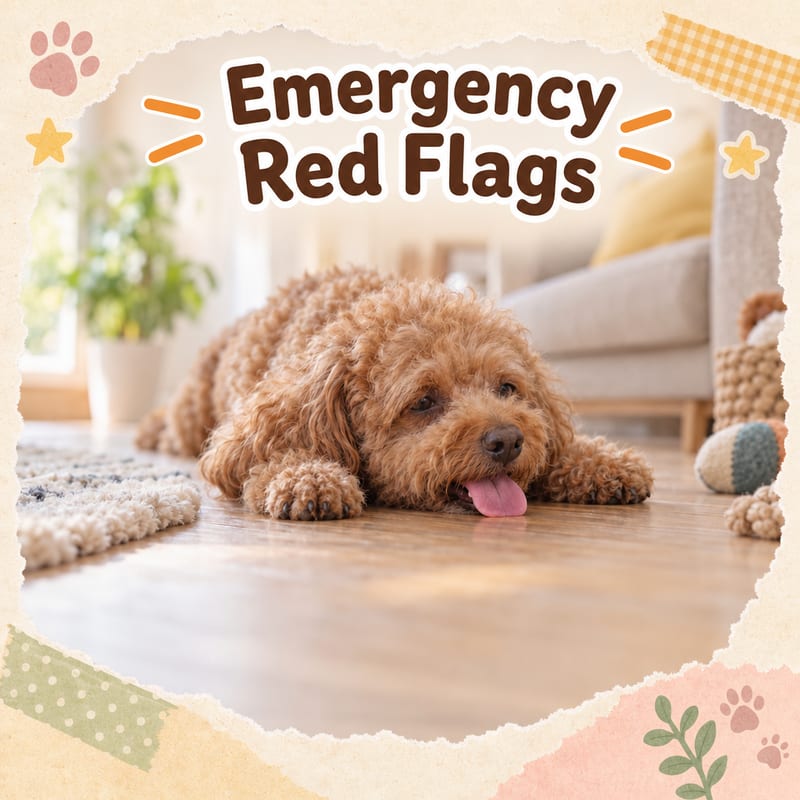
6. Emergency red flags: these three groups are measured in hours
Poodle owners (especially Standard and Giant types) should memorise: repeated dry retching without vomiting + abdominal distension—suspected gastric torsion, a deep-chested emergency, measured in hours; sudden hind limb weakness / seizure lasting more than five minutes—seek care immediately; rapid breathing with purple gums—cardiopulmonary emergency. Toy types add one more group: after a fall or falling off the sofa, unwilling to move a leg—treat as fracture/dislocation first, restrict movement and see a veterinarian immediately, do not massage and wait. Apart from emergencies, senior Poodles have three "not urgent but need an appointment" soft signals: appetite decline for a week, suddenly waking up and wandering during sleep, and water intake clearly exceeding previous records—these three are often the first signs of endocrine or painful diseases; booking an appointment half a month earlier is often the difference between "medication control" and "hospitalisation and rescue".
Key summary
- ✅ Poodle lifespan by size: Toy longest (14–16 years), Giant shortest (10–12 years)
- ✅ Four major breed concerns: patella, PRA, Cushing's, epilepsy + two chronic points: ear canals and gums
- ✅ Senior check-up rhythm: Giant from 8 years, Toy from 10 years, blood test every six months
- ✅ Gastric torsion, seizures, rapid breathing are emergencies, measured in hours, do not wait
- ✅ Five key ways to extend lifespan: weight, mental stimulation, oral care, ear care, check-ups; supplements are not the main character
- ✅ Keeping a Toy Poodle = committing to a sixteen-year life plan; keeping a Giant = starting senior care in the seventh or eighth year
- ✅ Soft signals (appetite drop, disturbed sleep, sudden increase in drinking) warrant early appointment, don't wait for an emergency to see the doctor
Related reading
- Poodle disadvantages and how to cope
- Poodle size and weight full analysis
- Poodle intelligence and personality analysis
- PetChill pet supplies: senior dog non-slip mats, dental chews and ear cleaning solution, the three treasures for Poodle longevity