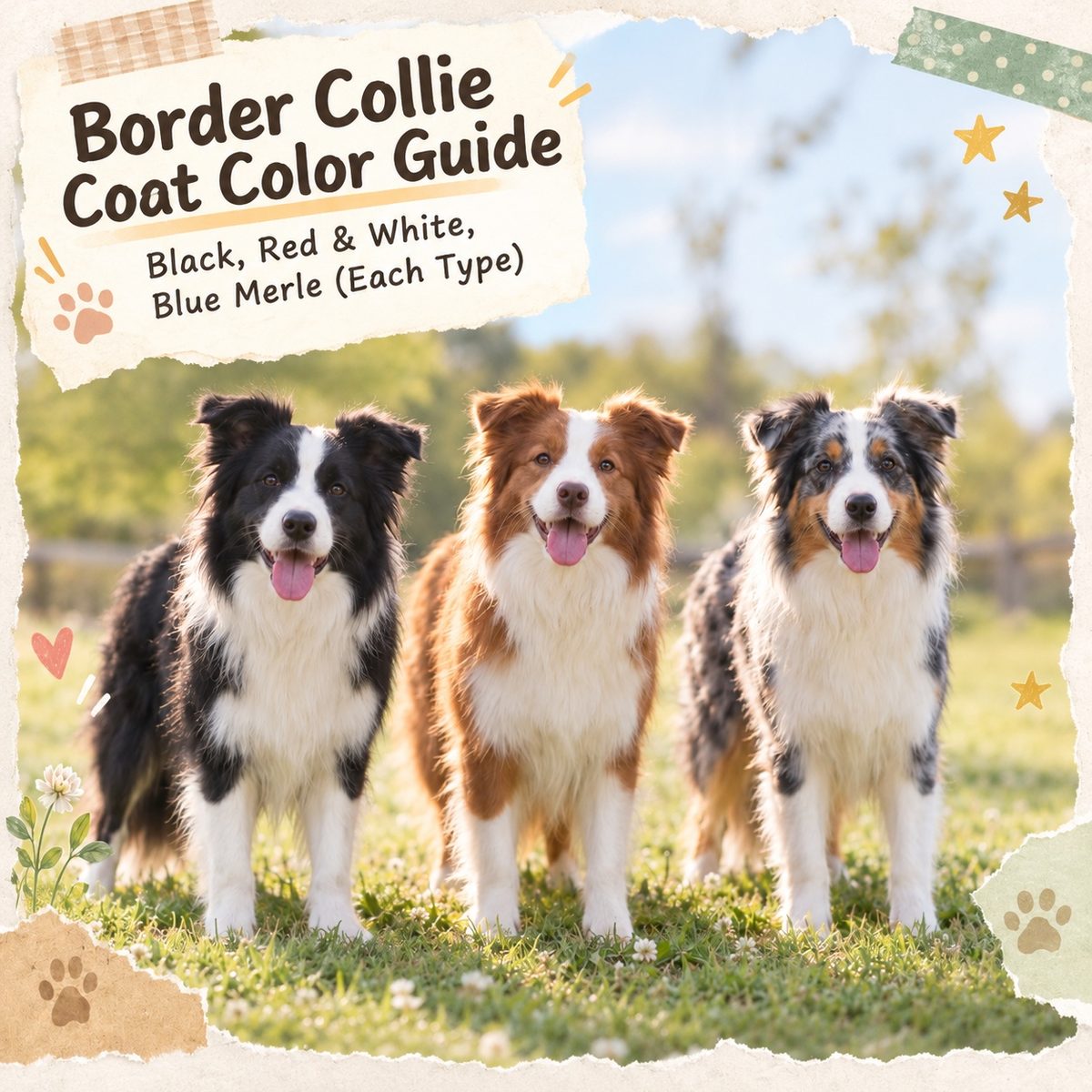
Quick answer: Common Border Collie colours include black and white, red and white, tricolour, blue merle, red merle, sable and white. Black and white is the most common, while rare colours like golden are less seen. Remember two things: coat colour does not affect intelligence or personality; for merle and rare colours, check health and genetic testing—don't pay a premium just for colour.
Want to learn more about Border Collies? Keep reading the series below.
1. Border Collie Colour Overview: Colour Type × Features × Commonness
| Colour type | Features | Commonness |
|---|---|---|
| Black and white | Most classic, white collar, white socks, white tail tip | Most common |
| Red and white | Brown-red to golden base with white, warm tone | Common |
| Tricolour | Black, red and white, distinct tan markings | Common |
| Blue merle | Grey base with black patches, unique pattern | Less common |
| Red merle | Beige base with red-brown patches, more light-coloured eyes | Less common |
| Sable | Black-tipped hair, overall golden brown | Moderate |
| White | Predominantly white, may have other colour patches | Less common |
Border Collie coat colour diversity comes from combinations of multiple pigment genes, and different colours in the same litter are very common. International kennel clubs are relatively lenient on Border Collie colour standards, and combinations other than black and white are generally accepted; the only bottom line is not "which colour is pretty" but "whether the genetic testing behind that colour is complete".
2. The Three Most Common Colours: Black and White, Red and White, Tricolour
Black and white is the recognised classic: black body, white collar, white socks, often with a white blaze on the forehead, and is the Border Collie image most people recognise at a glance. Red and white ranges from light brown to golden red, visually softer, and is often on family owners' preference lists. Tricolour means black, red and white, with two tan eyebrow spots and red cheeks, usually giving a livelier expression. Care for these three colours is basically the same—shedding amount is determined by the double coat structure and shedding season, with little relation to colour—in Hong Kong's humid weather, dry the undercoat and brush daily, the same for any colour.
3. Merle: Two Things to Ask Beyond Beauty
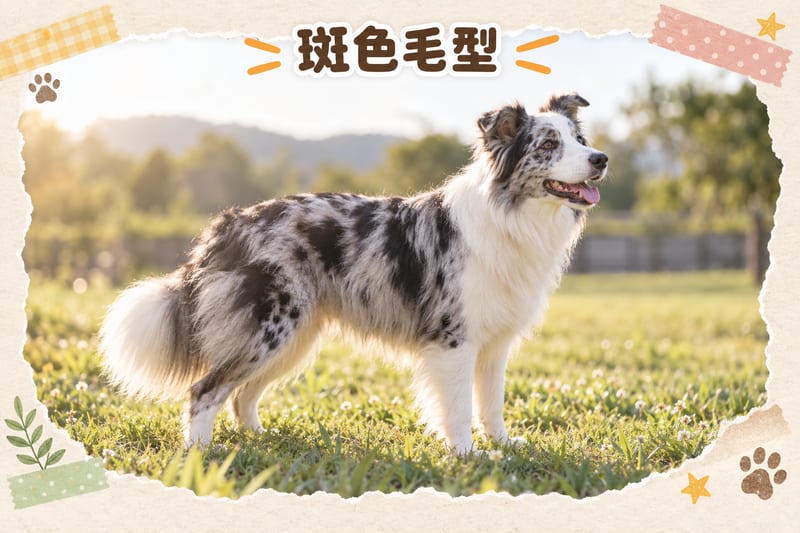
Blue merle and red merle are colour patch distributions caused by the merle gene, each pattern unique and highly ornamental. The first thing to ask is breeding risk: when two merle genes meet (double merle), the risk of hearing and vision defects, including congenital deafness, increases significantly—so responsible breeders avoid merle-to-merle matings and are happy to show hearing and vision test records; before buying a merle puppy, this question must be asked. The second thing is sensory details: merle individuals more often have light-coloured or odd eyes, and eye examination records should also be checked. Merle is not a "problem dog"—single merle individuals are generally healthy and normal, and the point is always whether the breeder has done their work.
4. Golden Border Collie: How to Check Prices for Rare Colours
Golden generally refers to a red/cream tone caused by a recessive gene, with a soft golden coat, noticeably less common than black and white. The search "golden Border Collie price" actually hides two questions: first, why is it expensive?—rare is precious, plus the breeder's selection costs for a specific colour; second, is it worth it?—as always, colour should not be the only reason for a premium. The price-checking method is the same as the price article in this series: first distinguish channel categories (licensed pet shop, private breeder, licensed breeding farm), then compare multiple sellers at the same tier, look at public price lists and owner discussions, and finally meet the sire and dam in person, verify licences and health documents before deciding. Two reminders: rare colour does not mean healthier or smarter; if the other party only promotes colour and avoids genetic testing and parent records, ask elsewhere.
5. Light-Coloured and White Individuals: Sun Exposure and Skin Care
Care differences are concentrated in light-coloured areas. Individuals with a high proportion of white have skin more susceptible to UV damage—in Hong Kong summers, take care with sun protection during outdoor activities, avoid midday sun, and use pet-safe sun protection if necessary (ask your veterinarian first). Light-coloured coats show stains more obviously; tear stains and water stains need regular cleaning, and washing may be more frequent than for dark individuals. White ear canals and toe gaps should be kept dry, as skin problems are more likely in humid environments. As for dark and merle coats, shed hair is harder to notice during shedding season, so daily brushing is even more important—it's not "out of sight, out of mind". In summary: colour changes the focus of care, not the total amount of care.
6. Three Practical Colour Questions When Buying
Question one: Are rare colours healthier? No. Coat colour genes have no necessary link to constitution or energy; rarity is just a market phenomenon of supply and demand. Understanding the premium as "buying prettier" is fine; understanding it as "buying better" is wrong. Question two: Will a puppy's coat colour change? Yes. Many Border Collie puppies' white patches shrink or expand with age, and dark undercoats may lighten, especially in red and white and tricolour individuals—when choosing a puppy, expect the adult look to differ from now, and don't decide based on one photo. Question three: How do I verify the seller's colour claims? Ask to see the sire and dam (puppy colour is usually similar to one parent), ask clearly about the family record of merle genes, and check health examination documents; neither veterinarians nor kennel club standards grade health by coat colour, so any claim that "this colour is especially disease-free" should be discounted. Colour is a preference question; health is a document question—answer them separately to avoid buying wrong.

7. Coat Colour Does Not Determine Intelligence or Personality
The most common myth needs to be cleared up once and for all: "Which Border Collie colour is smartest?" "Are merles especially wild?"—coat colour is determined by pigment genes and has no necessary relationship with obedience intelligence, energy or sensitivity. The Border Collie's famous high intelligence is a breed-wide trait, the same whether black and white or red and white, merle or not; personality differences come from the individual, socialisation and training, not coat colour. The same applies to health: any colour may carry genetic risks, so when buying a dog the priority should be parent health records, seller credibility, and in-person interaction, with colour last. Choose colour by preference, choose a dog by documents.
For the German Shepherd, also a working breed, see German Shepherd coat colours explained for its colour standards and common colour types.
Related Reading
- Border Collie intelligence and personality analysis
- Border Collie price and adoption guide
- Border Collie disadvantages and how to cope
- PetChill pet supplies: grooming tools, sun protection gear and coat care products for every coat colour