
Quick answer: Corgis are short-legged herding dogs that can live in Hong Kong small flats, but spine care is crucial: no jumping up and down plus strict weight control, two daily walks totalling 30-60 minutes, and good anti-slip and fall prevention to reduce the risk of intervertebral disc disease.
First, the answer: The Corgi is a short-legged herding dog from Wales — smart, lively and loyal, with an adorable round bottom, but the biggest task in owning one is spine care: short legs and a long body make them prone to intervertebral disc disease (IVDD), and no jumping up and down plus weight control are the two golden rules. They are full of energy and need daily walks to burn it off. This is part of the Hong Kong dog breed guide series.
Corgi basic facts
| Item | Details |
|---|---|
| Size | Small to medium, 10-14 kg |
| Lifespan | About 12-15 years |
| Coat | Double coat, moderate to heavy shedding |
| Two breeds | Pembroke (tailless/docked, most common), Cardigan (with tail) |
| Temperament | Smart, hardworking, alert, loyal |
| Exercise needs | 30-60 minutes daily |
| Main health concerns | Spine (intervertebral disc disease), obesity |
Pembroke and Cardigan temperaments are almost identical; Pembrokes are rounder and more common in Hong Kong. Choosing between them is mainly about personal preference and breeder quality.
Temperament: a herding dog's soul in short legs
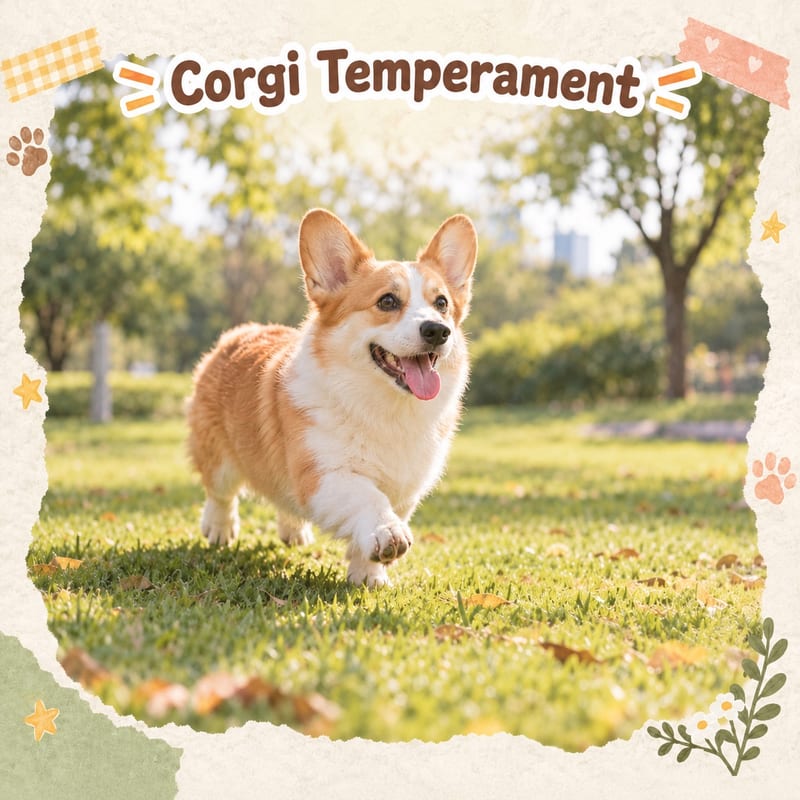
Although short-legged, Corgis are working dogs at heart: smart — they learn new commands quickly; lively and hardworking — if they have nothing to do, they will find something; loyal and clingy — they like to follow you around; alert — they are good watchdogs and will alert you to anything, which in a flat can turn into noise complaints.
Energy and intelligence are a double-edged sword: if they don't get enough daily exercise and mental stimulation, bored Corgis will chew furniture, chase cars, and bark non-stop. Their brains need a 'job' — snuffle mats, food puzzle games, simple command training — any of these can make them much calmer. Also watch out for the Corgi 'herding nip': some will lightly nip at ankles to herd their 'flock' (that's you), especially when children are running. This is not aggression, but you need to teach manners from an early age, otherwise the bigger the height difference, the harder it is to manage.
Spine care: the number one priority for Corgi owners
Corgi intervertebral discs are under more pressure than those of most dogs, and IVDD risk is a breed-level high incidence issue. Four golden rules for prevention:
- No jumping up and down — sofas, beds, car boots are all high-risk spots; use steps or lift them on and off by hand
- Control weight — every extra kilo puts several times more strain on the spine; you should be able to feel the ribs
- Avoid standing on hind legs to beg — 'beg' or 'stand up for treats' are not Corgi-friendly
- Anti-slip floors — Hong Kong tiles are shiny; lay a runner to reduce the risk of splaying and spinal injury
When to see a vet: sudden limping, arched back, reluctance to go down stairs, crying when you touch the back, and in severe cases hind leg weakness or even incontinence — disc problems are an emergency, see a veterinarian within 24 hours; delay may require surgery.
Training, diet and grooming
Training: Corgis learn fast but are opinionated and will 'choose whether to listen'. Use positive reinforcement; treats and praise work much better than scolding. Socialise them between 3-6 months with people, dogs and city sounds. Whether they are allowed on the sofa or in the bedroom, the whole family must be consistent — Corgis are good at testing the waters.
Diet: Corgis are famous 'foodies' and will eat as much as you give. Feed set amounts twice a day; treats should not exceed 10% of daily intake. Choose food with sufficient protein and moderate calories, weigh them monthly and cut back immediately if gaining. For food suitable for easy weight gain, see the dog food guide.
Coat: double coat with thick undercoat; brush 2-3 times a week, almost daily in shedding season. Bathe about once a month and dry thoroughly afterwards, otherwise damp undercoat can easily cause dermatitis. Check ears weekly; trim nails every 2-3 weeks — overlong nails change gait and put extra strain on the spine.
Hong Kong living: small flats and the law
Most Hong Kong homes are small flats; the Corgi's medium size actually suits apartment living, but you need to do three things: daily walks (one session morning and evening, 30-60 minutes total; LCSD parks and waterfront promenades are popular routes — remember the leash); manage heights (add steps to sofas, don't let them jump onto windowsills or balconies); noise management (teach a 'quiet' command from an early age to avoid neighbour complaints).
Legal note: Under Hong Kong law, dogs over five months old must have a dog licence (issued by the Agriculture, Fisheries and Conservation Department Licensing Office), display it when out in public, and be vaccinated against rabies with records kept. Taking a dog out without a licence can lead to prosecution, so start preparing when your Corgi is three months old. As for buying, registered breeders or pet shops charge from a few thousand to over ten thousand dollars; always see the parents on site, check health records, and ask specifically about spine and weight management advice. For adoption, SPCA and Hong Kong Dog Rescue occasionally have Corgis or mixes; adult dogs have settled temperaments which can be more stable — see the new pet owner guide for steps.
For actual prices and verification steps for buying or adopting, see the Corgi price and adoption guide.

Caring for the senior Corgi
Average lifespan is about 12-15 years; after 8 they enter old age, and check-ups every six months are recommended. Watch for changes in gait (spinal problems often appear in middle age), weight and joints; senior Corgis should jump less, and you should add anti-slip mats and softer bedding. If your dog is unsteady for the first few steps after waking, or won't let you touch the back or loin, it could be a sign of joint or spinal problems — consult a registered veterinarian and don't just rely on changing the bed.
Pembroke or Cardigan? Comparison with other short-legged dogs
| Item | Pembroke | Cardigan |
|---|---|---|
| Tail | Tailless/short tail | Long tail (fox tail) |
| Size | Slightly smaller, rounder | Slightly larger frame |
| Colours | Red, tricolour, sable | Also brindle |
| Common in Hong Kong | High | Low |
Compared with the Dachshund, also long-bodied and short-legged: Corgis are more muscular and more athletic, but the spine care principles are the same — weight control and no frequent jumping are common to both. If your home has many stairs and slippery floors, do the anti-slip work first for any short-legged breed; don't just blame the breed.
How to split daily exercise?
Corgis' 30-60 minutes daily is not meant to be done all at once 'walked until exhausted': split into 15-20 minutes in the morning and 20-30 minutes in the evening, with a sniffing game or simple command training in between; mental work tires them out more than walking alone. Avoid midday hot pavements (short-legged dogs are closer to hot tiles); in summer, test the asphalt with the back of your hand for five seconds before walking. On rainy days, replace with indoor food puzzle games and step training, but don't practise repeated jumping down — that also impacts the spine.
You can tell if exercise is too much or too little
To judge if a walk was enough, watch the few minutes after getting home: if the Corgi is still excited, circling and jumping on people, it wasn't enough; if they flop down and sleep, it was just right. Conversely, if the next day they are hesitant to walk or reluctant to go upstairs, it may be too much and they've hurt their spine — shorten the route and observe. Puppies' bones aren't fully formed; long-distance forced walks and frisbee-type jumping are not recommended. Start with short flat walks and increase gradually as they mature.
What you can do starting today
- Do a home check: add steps to sofas, beds and cars, or lift them by hand.
- Measure out the daily portion and cut treats by half immediately.
- Check the dog licence expiry and vaccination records; renew anything missing.
- Set a daily walk schedule, morning and evening, and use sniffing games on rainy days.
- Take a side-profile photo of your Corgi and compare monthly from the same angle to see weight changes clearly.
How to choose Corgi food and spine-care products (steps, anti-slip mats)? PetChill's product guide has reviews. For more breed comparisons, see the dog breed quick guide, Shiba Inu guide and Golden Retriever guide. This article is for reference only; consult a registered veterinarian for any concerns.
📌 Key points
- ✅ Walk 30-60 minutes daily, split into two sessions is best
- ✅ Add steps to sofas, beds and car boots; no jumping
- ✅ You should be able to feel the ribs for a healthy weight
- ❌ Standing on hind legs to beg is extremely harmful to the spine
- ❌ Jumping down stairs and slippery floors can cause splaying and spinal injury