Quick answer: Buying a beagle in Hong Kong is generally observed at around $8,000–18,000 for pet grade and from $18,000–35,000 for pedigree grade, for budgeting reference only; to save money you can adopt through organisations such as the SPCA and the Hong Kong Animal Adoption Centre, where neutering, microchipping and vaccination are usually included. Whether you buy or adopt, do not skip any of these four steps: check the licence, meet the mother dog, verify the microchip and vaccinations, and sign a health agreement.
Want to know more about beagles? Read on through the series below.
1. Beagle prices in Hong Kong: comparing the four legal channels
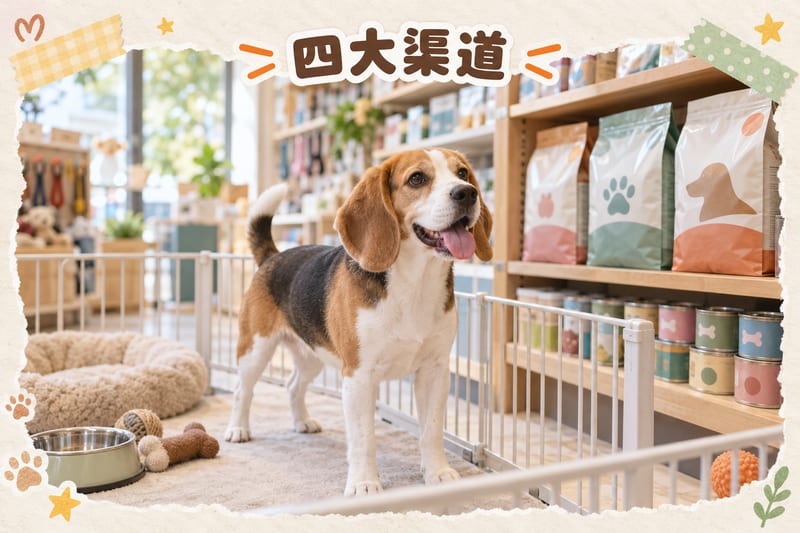
"How much does a beagle cost in Hong Kong" is the most-searched question about this breed (people also search "beagle price Hong Kong", "pet shop dog price Hong Kong" and "beagle adoption" — it is all the same question), but the answer is not a single number, it is a range. The sale of dogs in Hong Kong is governed by Cap. 139B, the Public Health (Animals and Birds) (Trading and Breeding) Regulations: anyone who sells a dog, even the offspring of their own pet, must hold a licence or permit, so there are essentially only four categories of legal purchase channel. The table below lists only the channel categories, market price ranges and how to verify the source, so you can match them against your budget:
| Purchase channel category | Market price range (reference) | How to verify the source |
|---|---|---|
| Licensed animal trader (pet shop) | Pet grade around $8,000–18,000 | Check the AFCD list of licensed pet shops; advertisements must state the licence number |
| Licensed dog breeder (Class A/Class B) | Pet grade around $10,000–25,000 | Check the breeder list; visit the premises and see the parent dogs in person |
| Local individual breeding (single permit) | Around $8,000–15,000 | Check the yellow copy of the single permit and the microchip number |
| Pedigree grade / puppy with pedigree certificate | Around $18,000–35,000 or more | Pedigree certificate plus health screening reports for the parent dogs |
Two things to watch: first, a high price does not equal health — a pedigree certificate will not pay for a slipped disc; second, an advertisement without a licence number is already a breach — the law requires advertisements offering dogs for sale (including online posts) to state the licence or permit number, and advertisements for an individual dog must also state the microchip number. If you cannot see a licence number, treat the seller as non-compliant.
2. Why can the same beagle cost two or three times as much?
Five factors affect the quoted price — here they are one by one:
- Pedigree and certificates: where there is a family pedigree and the parent dogs have screening records, the premium is most justified; where the seller merely "says there is a certificate" but cannot produce the documents, the premium is not worth it.
- Age: puppies aged 8–16 weeks are the most sought-after and the most expensive; adult dogs past the puppy stage drop noticeably in price.
- Sex: some sellers price males and females differently, usually reflecting breeding value rather than any difference in temperament.
- Coat colour: beagles commonly come in tricolour (black, white and tan), while lemon and hare colour are rarer; be extra careful with "rare colour" premiums — do not overlook health documents for the sake of coat colour.
- The seller's compliance costs: licensing, premises inspections and record-keeping all cost money, and sellers who are willing to let you visit the premises in person are usually a little more expensive.
There is also a bottom line to hold: the "teacup beagle" is not a breed standard. The American Kennel Club (AKC) recognises only two height varieties, 13 inches and 15 inches, with a shoulder height of about 33–38 cm and a weight generally of 9–14 kg; individuals that are abnormally small often come with skeletal and organ development problems. If you are offered "expected small" or "miniature" selling points, ask clearly about the parent dogs' size, or simply move on to the next seller.
3. Adopting a beagle in Hong Kong: routes, process and scam prevention
Many people search for "dog adoption", "small dog adoption", "adoption centre" and even broad terms like "labrador adoption" — in fact the proper routes for adopting a dog in Hong Kong are basically the same few, and they work just as well for beagles:
- SPCA: browse the animals currently available for adoption, submit an application form, and the organisation will assess your home environment and keeping conditions.
- RSPCA and the Hong Kong Animal Adoption Centre: rehoming and adoption platforms where dogs are usually already neutered and fully vaccinated.
- Volunteer breed-rescue groups: search social media for "beagle rescue" or "beagle adoption" to find active volunteer groups that specifically take in abandoned beagles.
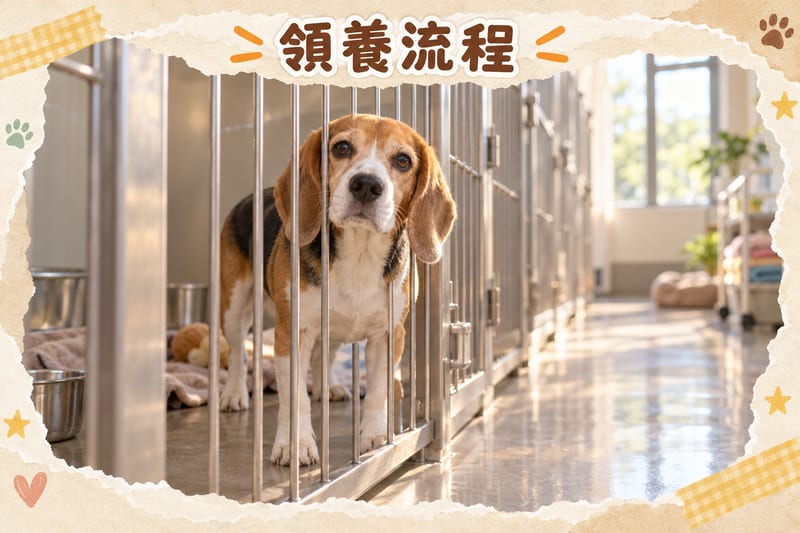
The process is not quick, and it should not be: submit an application → home/conditions assessment → meeting and interaction → sign an adoption agreement → take the dog home. Legitimate organisations will ask where you live, whether you have time, and whether there are other animals at home; being screened out is actually responsible towards both you and the dog.
Beagles are a popular breed, so a purebred beagle in a shelter is hard to come by; most of the time you will have to wait, or accept an adult or a mixed breed — the upside is that the character is already settled, saving you the home-wrecking stage.
Take the phrase "adoption centre" apart: legitimate organisations will assess you, arrange a meeting and sign an agreement, and they never rush the process; anyone who demands an instant transfer from the outset, takes a "deposit" or "shipping fee" and then disappears, refuses to meet, or offers a free dog but ties you to buying specified products is most likely a scam. Do not transfer money before seeing the dog, and do not sign before seeing the environment — these two rules always apply.
4. Six-step checklist for verifying a purchase (printable version)
Whichever route you end up choosing, go through these items one by one when you buy a dog in person:
- Check the licence: check the AFCD list of licensed pet shops and the lists of Class A and Class B dog breeders; if unsure, call the AFCD on 2150 7077 to verify.
- Visit the licensed premises in person: the law requires dogs to be displayed only at licensed premises — walk away from anyone who takes you to "somewhere else" to see the dog.
- Meet the parent dogs: see at least the mother dog, and get a sense of the rearing environment, hygiene and the dogs' condition.
- Check the documents: for local breeding, the yellow copy of the AFCD-endorsed "Dog Breeder Declaration" (commonly called the yellow form); for imported dogs, the health certificate from the exporting country and a special permit from the AFCD; and the original vaccination certificate.
- Check the microchip: scan the microchip number in person and match it against the vaccination card, the receipt and the dog licence — if the three do not agree, do not buy.
- Sign a written health agreement and keep the receipt: the receipt must state a detailed description of the dog and the microchip number, so that you have evidence if a dispute arises later.
Two more legal points to remember: the buyer must be at least 16 years old; and dogs offered for sale must be at least 10 weeks old, microchipped and have received two vaccinations. Dogs over 5 months old must hold a dog licence, and after taking the dog home remember to transfer the keeper's name as instructed.
5. First-time and monthly cost estimates
The price is only the entry fee; the real cost comes afterwards. The following are general estimates; the actual figures depend on the food and medical plan you choose:
| Item | First-time budget reference | Monthly budget reference |
|---|---|---|
| The dog itself | Buy $8,000–35,000 / adoption charges a handling fee only | — |
| Food (dry food + wet food) | First bag plus bowls about $600–1,500 | $500–1,100 |
| Parasite prevention (heartworm + flea and tick treatment) | — | $150–300 |
| Equipment (crate, bowls, leash, toys, pee pads) | $1,500–4,000 | $100–300 |
| Vaccinations, microchip, dog licence | $500–1,500 (first year) | Annual boosters and licence renewal spread over the year |
| Medical reserve / insurance | — | $300–800 |
Hong Kong's climate is humid, so heartworm and tick prevention is a fixed cost and not somewhere to cut corners; the dog licence and vaccinations are usually renewed every few years, so remember to include them in your annual budget.
6. Buy or adopt: three questions to help you decide
One, do you want the puppy stage? If you want to raise a dog from a young age and witness every stage, buying a puppy through a proper licensed channel is a reasonable answer; if you cannot handle the unknown puppy years, adopting an adult dog is more practical. Two, is your budget tight? Adoption has a much lower entry cost, but you may need to invest time in behaviour rehabilitation at first; buying has a higher entry cost but brings more complete puppy socialisation and paperwork. Three, do you have time for training? Both routes require scheduled training time.
The only option that is genuinely not recommended is taking a dog home without verification, without a budget, and without having read the article on the drawbacks. With the money ready and the time ready, buying or adopting are both good beginnings; in the two weeks before the dog arrives, buy the dog food, bowls, crate and pee pads in advance so that the new environment is a stable one from the very first night. You can find the related supplies all in one place at PetChill pet supplies.
Key takeaways
- ✅ Pet grade around $8,000–18,000, pedigree grade from $18,000–35,000, for budgeting reference only
- ✅ There are only four legal channels: licensed pet shops, Class A/Class B breeders, single permits, and pedigree kennels
- ✅ An advertisement without a licence number is already a breach; dogs may only be displayed in person at licensed premises
- ✅ Proper adoption routes: SPCA, RSPCA, Hong Kong Animal Adoption Centre, breed rescues; a slow process is a sign of responsibility
- ✅ Two iron rules against scams: do not transfer money before seeing the dog, do not sign before seeing the environment
- ✅ Six verification steps: check the licence, visit in person, meet the mother dog, check the documents, check the microchip, sign the agreement
- ✅ Routine monthly costs around $1,000–2,500, plus a medical reserve; do not cut corners on parasite prevention and licence renewal
Related reading
- Beagle personality and intelligence explained
- Beagle drawbacks: the full list and how to cope
- Beagle keeping guide in Hong Kong: home, law and heat protection
- Beagle lifespan and common health problems
- PetChill pet supplies: puppy homecoming pack, food measuring cup and parasite prevention products, all in one go before your new dog arrives
 Fuji One full guide →