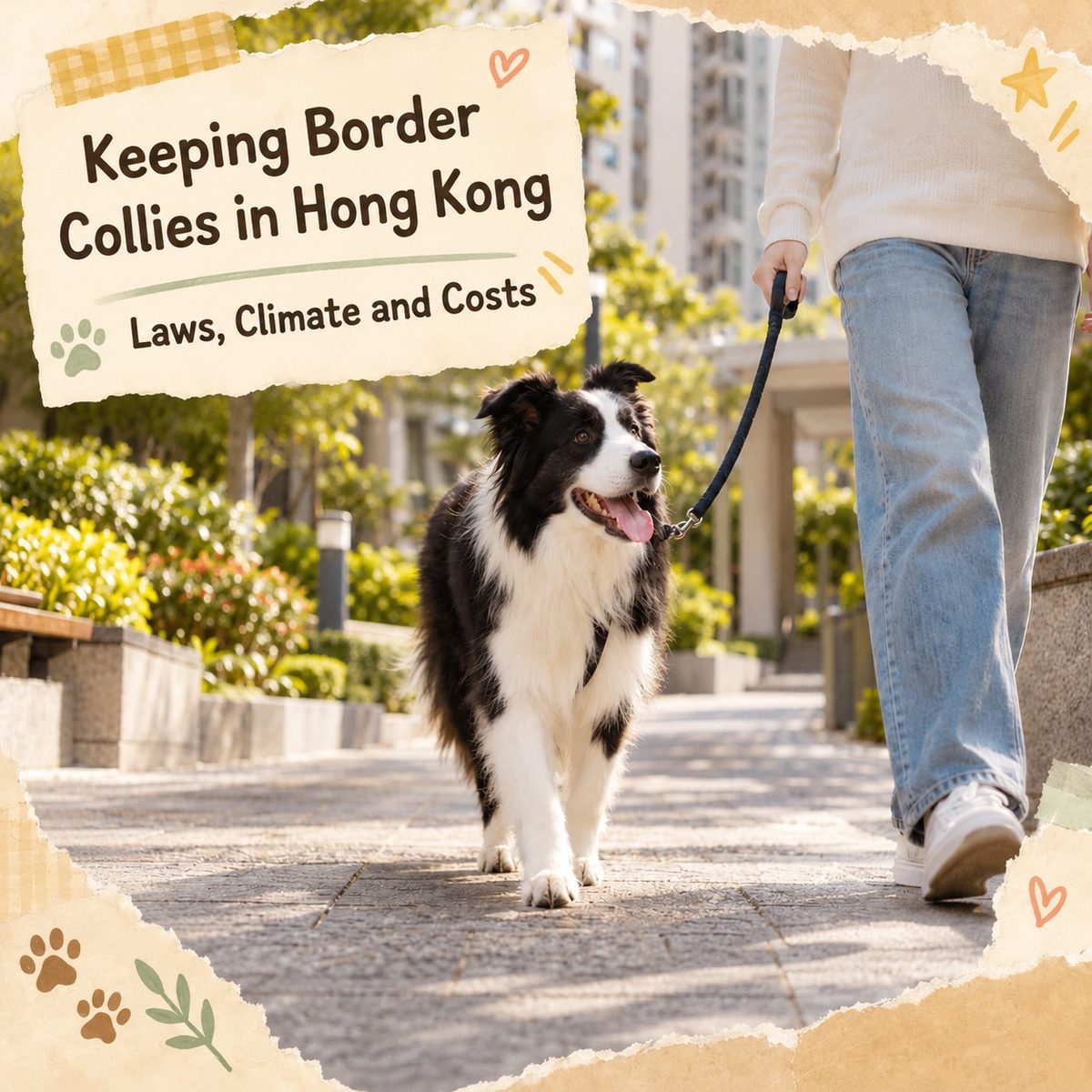
Quick answer: Border Collies can be kept in Hong Kong, provided you give one to two hours of activity plus mental tasks daily, comply with dog licensing and microchip registration, and check estate or DMC rules clearly. When buying a Border Collie in Hong Kong, compare multiple sellers within the same channel category; for adoption, you can queue with SPCA, RSPCA, HKAC and breed rescues. If space is short, make up for it with time.
Want to learn more about Border Collies? Keep reading our series below.
1. Border Collie suitability in Hong Kong: start with the exercise equation
Border Collies originate from the border hill country of the UK, where for centuries they accompanied people herding all day; their working-dog background means their needs are not 'enough of a walk' but 'having a job to do'. It is generally believed that an adult Border Collie needs one to two hours of physical activity daily, plus fifteen to twenty minutes of mental tasks (scent work, training, puzzle toys); the AKC lists the Border Collie as a high-energy breed and clearly states that insufficient exercise turns into behavioural problems. In Hong Kong, a typical approach is a thirty-minute brisk walk in the morning, forty-five to sixty minutes plus training at dusk, and a long countryside outing once at the weekend. Note the actual conditions of Hong Kong public places: estate walkways and streets are busy with people and vehicles, Border Collies chase moving things, so leash manners and reliable recall are daily essentials; for sports grounds, rooftops, promenades and similar places, first confirm with management whether dogs are allowed. The biggest misconception is using 'a big enough home' to replace 'enough time out'—flat size does not solve mental needs.
2. Hong Kong laws and building rules: licence, public housing, DMC
| Item | Rule or reality | Suggested action |
|---|---|---|
| Dog registration and microchip | Dogs aged three months or over must be microchipped and registered and licensed with the AFCD, renewed annually | Register as soon as possible after getting the dog, set a renewal reminder in your calendar |
| Public place rules | Leash, clean up faeces; some promenades, beaches and markets have additional entry restrictions | Check management office or district council announcements before setting out |
| Public housing policy | The Housing Department's current policy allows residents to apply to keep dogs, subject to estate management rules, no free-roaming in public areas | Check with the estate office before moving in or getting a dog |
| Building DMC | Private building deeds of mutual covenant may restrict or even prohibit pets | Check the DMC before renting or buying, confirm in writing before bringing a dog |
| Village house / rural units | Separate land lease and district management rules apply | Check the land lease and communicate with neighbours |
The above is not legal advice, just a summary of common situations; individual cases may differ, and if in doubt it is safest to check with the AFCD, Housing Department or owners' incorporation. Most Hong Kong owners' pitfall is not lacking the right to keep a dog, but discovering DMC restrictions only after moving—checking the DMC belongs on your flat-viewing checklist, as early as checking the voltage.
3. Hot humid summers and shedding season: heat and moisture prevention timetable
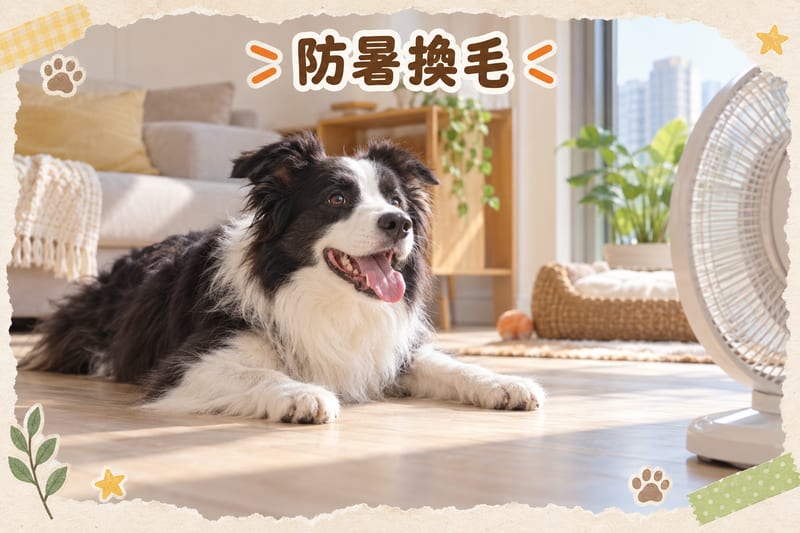
Hong Kong is hot and humid from May to October, and black-and-white Border Collies absorb heat noticeably, so heatstroke risk is higher than you might think. Three hard rules: 1. Avoid midday—avoid sun-exposed exercise between 10am and 4pm, switch to early morning and dusk; 2. Cooling equipment is essential—air-conditioning, fans, plenty of drinking water and a cooling mat, carry water when out; 3. Know the distress signals—heavy drooling, uncontrolled panting, vomiting, unsteady gait: cool the dog down immediately and take it to the clinic; heatstroke cannot wait. On humidity, the double coat easily traps moisture and causes skin problems: dry the undercoat when you get home, don't let it air-dry after a bath; during shedding season brush once daily, which reduces flying hair and catches skin rashes early. Although Hong Kong winters are mild, day-night temperature swings and dry air-conditioned rooms affect the skin, so regular brushing and annual check-ups should not be skipped.
4. How to look at Border Collie prices in Hong Kong: channel categories and sourcing methods
| Purchase channel category | Characteristics | Method for referencing market price range |
|---|---|---|
| Licensed pet shop | Physical shop, can observe dogs on site | Ask prices at multiple physical shops, compare published price lists |
| Private breeder | Can see sire and dam and rearing environment | Request written quotes, compare breeders of the same level |
| Licensed breeding establishment / kennel | Holds AFCD animal trading licence | Check licence then request quotation, compare same bloodline level |
| Adoption route | Not a purchase, arranged by organisation | Ask the organisation for official guidance, do not accept off-site quotes |
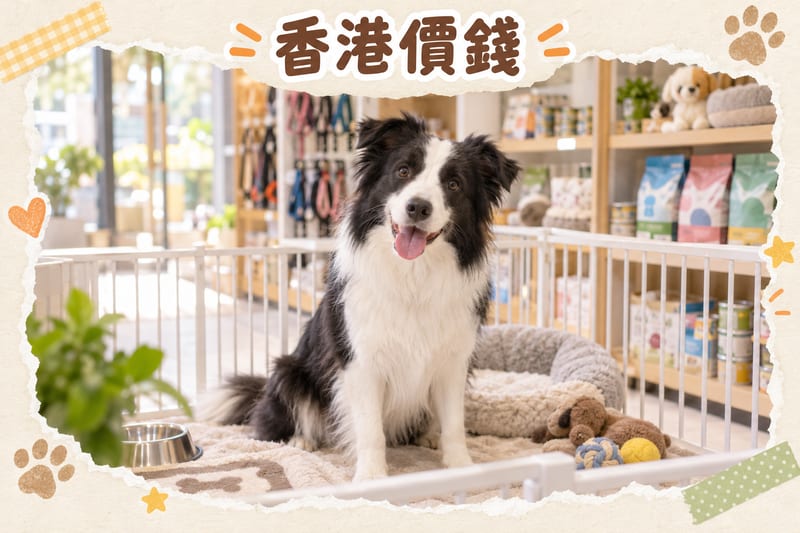
The point of price research is not to find one number but to build same-level comparisons: bloodline, coat colour, age, health checks and after-sales agreements all affect quotes, and prices at different levels are not comparable. Reading public discussions in owner groups and forums helps you understand the market, but note the year of the post—markets change, and figures from two years ago may not apply today. Two safety bottom lines: first, do not pay a large deposit before seeing the sire, dam and environment; second, if the other party cannot provide a licence number and health documents, walk away no matter how cheap.
5. Border Collie adoption in Hong Kong: routes and process
Besides buying, another route is adoption. Routes in Hong Kong include SPCA, RSPCA, the Hong Kong Animal Adoption Centre (HKAC), and private breed rescue organisations active on social media; some people also regularly check the AFCD and various organisations' adoption lists. The process is broadly similar: submit an application form, provide housing and family information, interview or home visit, sign an adoption agreement, transfer the microchip; most organisations have already arranged vaccinations and neutering. Two realities to prepare for: purebred Border Collie places are few, most people have to wait or consider a Border Collie mix; organisations screen you—if the assessment finds your time and space do not match, being turned down is actually better for both sides. Anti-scam rules are simple: before seeing the dog in person and signing an agreement, do not transfer any 'deposit' or 'shipping fee'; anyone rushing you is probably not a legitimate adoption.
6. Border Collie vs Shetland Sheepdog vs Miniature Collie: how to choose in Hong Kong
People searching 'Shetland Sheepdog Hong Kong' or 'Miniature Collie Hong Kong' are mostly comparing several medium-to-long-haired herding breeds. Simply put: the Shetland Sheepdog is the Shetland Sheepdog, about half the size of a Border Collie, commonly called a 'Miniature Collie', while the 'Miniature Australian Shepherd' is a different breed.
| Item | Border Collie | Shetland Sheepdog (Miniature Collie) |
|---|---|---|
| Size (generally believed) | Medium, about 15 to 21 kg | Small, about 7 to 11 kg |
| Daily exercise needs | High: one to two hours + mental tasks | Medium: about one hour plus basic training |
| Shedding amount | Double coat, noticeable in shedding season | Double coat but less total volume |
| Barking tendency | Alert, moderate | Alert, generally higher |
| Small Hong Kong flat | Need to make up space with time | Less space pressure |
The main subject of this article remains the Border Collie: if you can guarantee one to two hours daily, the Border Collie's obedience and training flexibility are top-tier; if time is limited, the Shetland Sheepdog is a much more practical choice. As for 'Border Collie Hong Kong price' and comparing the two, the approach is the same—split by channel, compare multiple sellers, meet the dog in person, and do not rely on a single quote.
7. Sample daily schedule for a Border Collie in a Hong Kong flat
Morning: thirty-minute brisk walk plus sniffing, don't feed a full meal before going out, use breakfast for a fifteen-minute foraging game. Daytime: turn on air-conditioning or fan, leave a durable puzzle toy, ensure water; don't leave alone for more than a few hours, less for puppies. Dusk: forty-five to sixty minutes main exercise, plus ten minutes training (new cue or review), then dinner. Night: full-body brushing, check paws and ears, set up a quiet sleeping spot. Prepare a rainy-day plan in advance: indoor scent mats, hide-and-seek, pet-friendly malls (check rules first)—Hong Kong weather makes 'not going out today' very common, so indoor mental activities go from backup to essential.
Malls have different pet entry levels, so before setting out you can check the list of pet-friendly malls across Hong Kong.
Key takeaways
- ✅ The hard threshold for keeping a Border Collie in Hong Kong is time: one to two hours physical plus fifteen to twenty minutes mental daily
- ✅ Three legal things: microchip registration, annual licence renewal, leash and clean up faeces in public places
- ✅ Checking the DMC belongs on your flat-viewing checklist; for public housing, check with the estate office first
- ✅ Three heat rules: avoid midday, provide air-conditioning and water, know heatstroke signals
- ✅ Prices: split by channel category, compare multiple sellers at the same level; don't pay a large deposit before seeing sire and dam
- ✅ Adoption: queue with SPCA, RSPCA, HKAC and breed rescues; don't transfer money before seeing the dog
- ✅ If space is short, make up with time; if time is short, the Shetland Sheepdog is a practical alternative
Related reading
- Border Collie intelligence and personality analysis
- Border Collie price and adoption full guide
- Border Collie disadvantages and how to cope
- PetChill pet supplies: cooling mats, grooming tools and puzzle toys for Hong Kong's humid shedding season