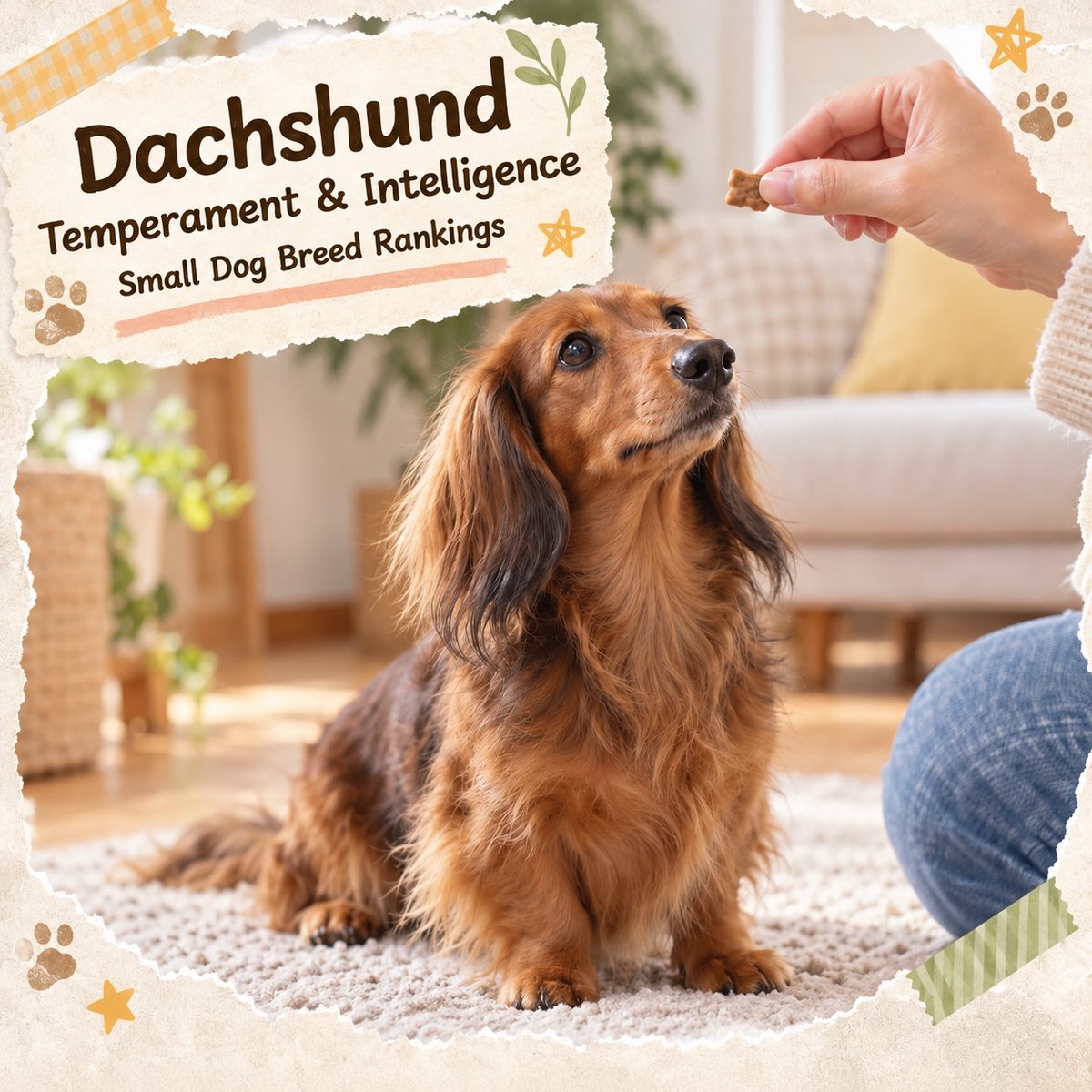
Quick answer: Dachshunds usually rank mid-range on most intelligence lists because the lists measure obedience response, not overall intelligence; what they're really good at is scent, memory, and independent problem-solving. Training should be short, varied, and reward with high-value treats—repeating commands doesn't work for them.
Want to learn more about Dachshunds? Continue reading the series below.
1. How to read the 'Dachshund intelligence ranking'
If you're searching for 'dog intelligence ranking 100' or 'Dachshund intelligence ranking', first understand what the lists measure. Canine intelligence research generally divides into four types: instinctive intelligence (what they're born to do), adaptive intelligence (figuring out solutions themselves), working and obedience intelligence (how quickly they learn repeated commands and how high the obedience hit rate is), and social intelligence (reading human expressions and communicating). Most popular ranking lists only test the third type—so what they measure is actually 'trainability and eagerness to please', not 'intelligence level'. Dachshunds generally rank mid-range on obedience tests: they can learn commands but execute selectively; in adaptive intelligence they stand out—typically 'ignoring you because they have their own plans'. By the way, some people also compare intelligence rankings of Shiba Inus, Corgis, etc.—comparison is good, but conclusions should be applied to your own dog: rankings should give you training methods, not a sense of superiority. This four-type framework originates from canine psychologist Stanley Coren's research framework (The Intelligence of Dogs), focusing on classification rather than ranking; popular lists mostly target obedience-tested dogs, and hounds are not born to work to please, so measuring them with the same ruler naturally won't yield pretty numbers.
2. The Dachshund's intelligence: a scent-hound brain
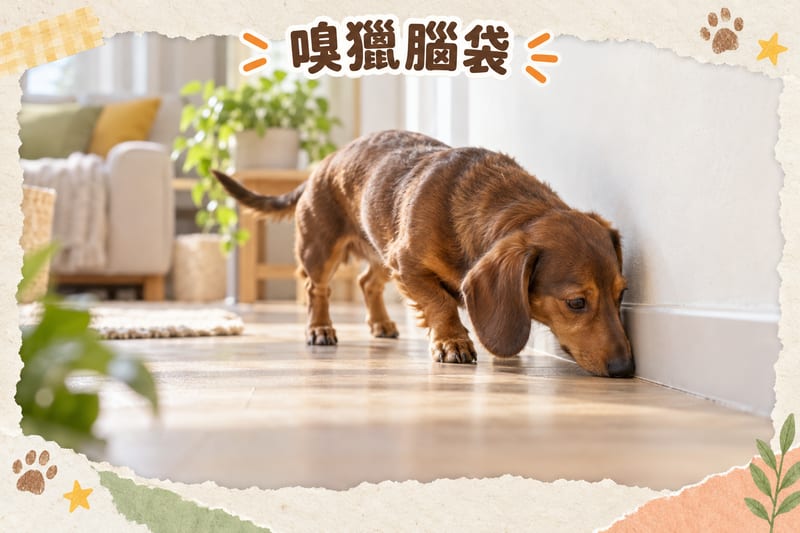
The Dachshund's ancestors were hounds that followed badgers into burrows. Their intelligence is nose-driven: remembering scent trails, judging prey in burrows, deciding when to advance or retreat when chased. This leads to three daily behaviours:
- Strong problem-solving: opening drawers, finding hidden treats, pushing open doors—they'll try until they succeed.
- Good memory: which spot once had food, which route has interesting scents—they remember it all, and walks become 'designated routes'.
- Selective obedience: when there's no reward or a better option, commands get filtered out—this is hound survival logic, not a bad habit.
In other words, a Dachshund won't fail to learn just because it ranks mid-range; it just won't want to learn if your training isn't rewarding enough. Also watch energy allocation: unused adaptive intelligence turns into finding things to do—chewing furniture, opening drawers, following you around whining—mostly symptoms of an idle brain, not behavioural breakdown.
3. Personality traits × behaviour × response table
| Trait | Daily behaviour | Response method |
|---|---|---|
| Scent-driven | Sniffing constantly on walks, diving into bushes | Allow 10–15 minutes of 'sniff time' each walk |
| Independent and stubborn | Ignoring recall | High-value reward recall training; use a long line until reliable |
| Alert barking | Barking at door or corridor sounds | Desensitise to sounds + 'quiet' command; reward when quiet |
| Chewing and digging | Puppy chewing furniture, digging carpets | Provide chew toys and snuffle mats; don't play with hands |
| Separation and alone time | Whining or destructive behaviour when left alone | Gradual alone-time training, starting from seconds |
| Human attachment | Following owner everywhere | Set a fixed rest area, practise independent naps |
4. Training strategy: short, varied, rewarding
Three principles throughout. Short—each session 5–10 minutes, several times a day; long sessions only make them shut down. Varied—practise the same command in the living room, corridor, and downstairs garden; reconsolidate when the environment changes. Rewarding—rewards must be valuable: chicken jerky or cheese cubes are ten times more useful than ordinary kibble; training is not conquest, it's negotiation—you provide the prize, they provide obedience; both sides benefit for it to last. Special reminder: recall is the most important lesson. Hounds go crazy when they catch a scent; train 'come' = good things happen from a young age, and always use a long line in open areas until mature; toilet training also needs patience—fixed times, fixed spots, reward immediately when done right; repeating for several weeks is normal progress.
5. Getting along with children, cats, and dogs
With children: Dachshunds can be good family dogs, but supervision is required. Teach kids three things—don't pick up the dog leaving the spine unsupported (support chest and abdomen), don't pull tail or ears, let the dog walk away when it wants to; also set up a rest area out of children's reach. With cats: possible but manage prey drive; starting contact during puppyhood is easier—introducing a cat to an adult dog is usually much harder. With other dogs: 3–12 weeks is the socialisation window, and continue meeting stable dogs afterwards; unneutered males are more likely to show same-sex aggression, so manage early. Seasonal points when socialising with other dogs: shedding season and scent changes make dogs reassess each other; when meeting unfamiliar dogs on walks, keep distance and observe—don't rush face-to-face meetings; that's basic social courtesy. Regardless of the interaction, spine safety always comes first—avoid 'chase and jump' games; switch to scent and puzzle games.
6. Male-female differences and daily interaction suggestions
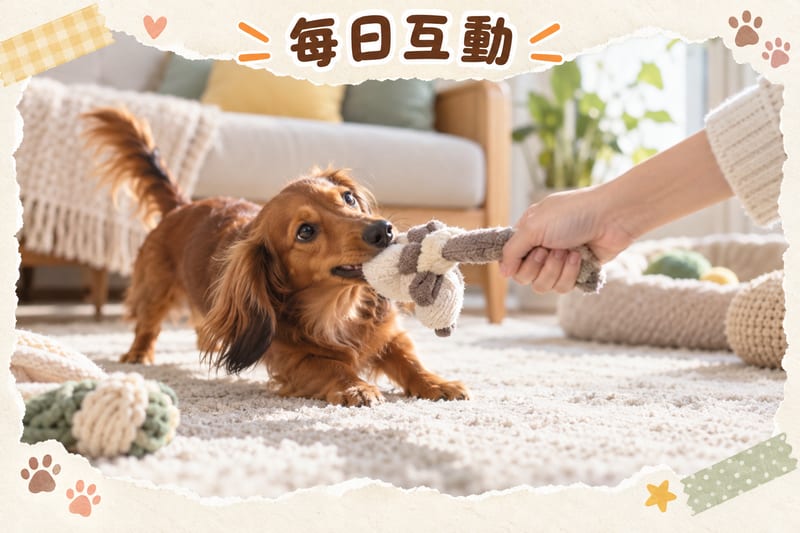
Sex differences generally observed: males are more clingy, with more noticeable body odour and leg-lifting marking; females are more refined and independent, with care needs during heat. However, individual differences are usually greater than sex differences; consult a registered veterinarian about the pros and cons of neutering (behaviour, disease, weight effects)—one-size-fits-all folk advice is for reference only. Daily interaction quota: two walks (about 40 minutes total, including sniff time) + one 5-minute training session + one puzzle toy; when it's too hot, switch to indoor scent games. Want to see when they show their smart side? Try hiding treats in cardboard boxes and rolled-up towels—when they successfully open it, ranking doesn't matter at all. Want to verify how smart they are? Daily signs are clear: opening doors themselves, remembering which cupboard hides treats, insisting on designated routes on walks—all are field evidence of adaptive intelligence, more real than any list. The above is general husbandry advice; consult a registered veterinarian for behavioural abnormalities or health concerns.
Key takeaways
- ✅ Intelligence lists measure obedience, not overall intelligence; a mid-range ranking doesn't mean dumb
- ✅ Their intelligence is nose-driven: good memory, problem-solving, designated walk routes
- ✅ Three training principles: short sessions, varied locations, high-value rewards—reward first, obedience follows
- ✅ Recall is lesson one; always use a long line until mature; harness protects neck and spine
- ✅ With children: supervise, support the chest when holding, give the dog an escape route; introduce cats and dogs from puppyhood
- ✅ Daily quota: two walks + 5-minute training + puzzle toy; mental exercise beats running wild
Related reading
- Dachshund price Hong Kong 2026: buying and adoption cost guide
- Dachshund Hong Kong care guide: laws, climate, and home care
- Dachshund disadvantages and how to cope
- Dachshund lifespan and health guide
- PetChill pet supplies: puzzle toys, training treats, harnesses, and long lines—everything for training and walks in one place
 Wellness Core full guide →
 Royal Canin full guide →