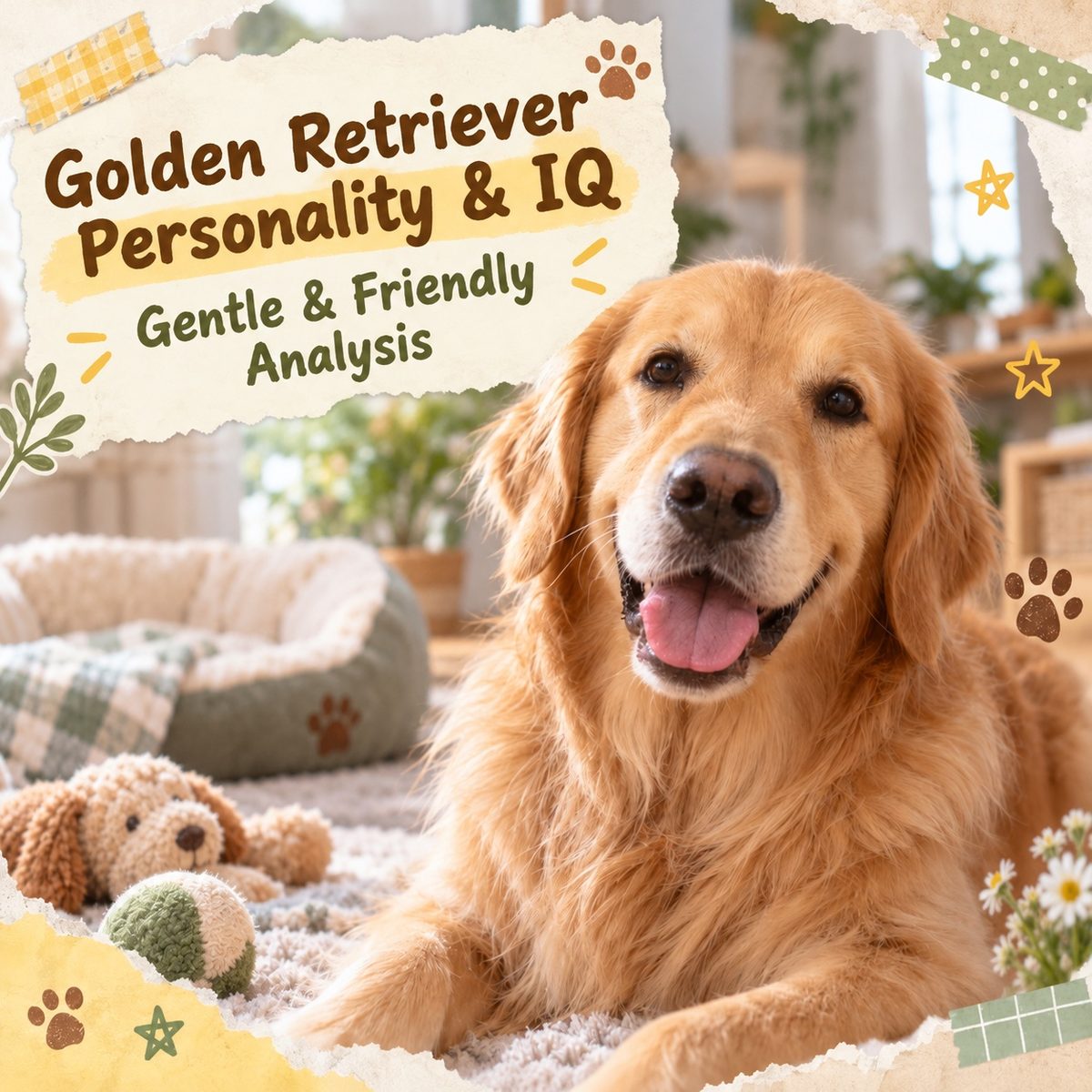
Quick answer: In Stanley Coren's canine intelligence research, the Golden Retriever sits in the top tier alongside the Border Collie and Poodle (4th for working and obedience intelligence), learning a new command in fewer than 5 repetitions on average. Its three hallmark traits are friendly, reliable and outgoing; but watch for two behavioural weaknesses — separation anxiety and food obsession — and interactions with children still need adult supervision.
Want to get to know the Golden Retriever properly? Start with the Golden Retriever breed profile, or read the full Golden Retriever guide.
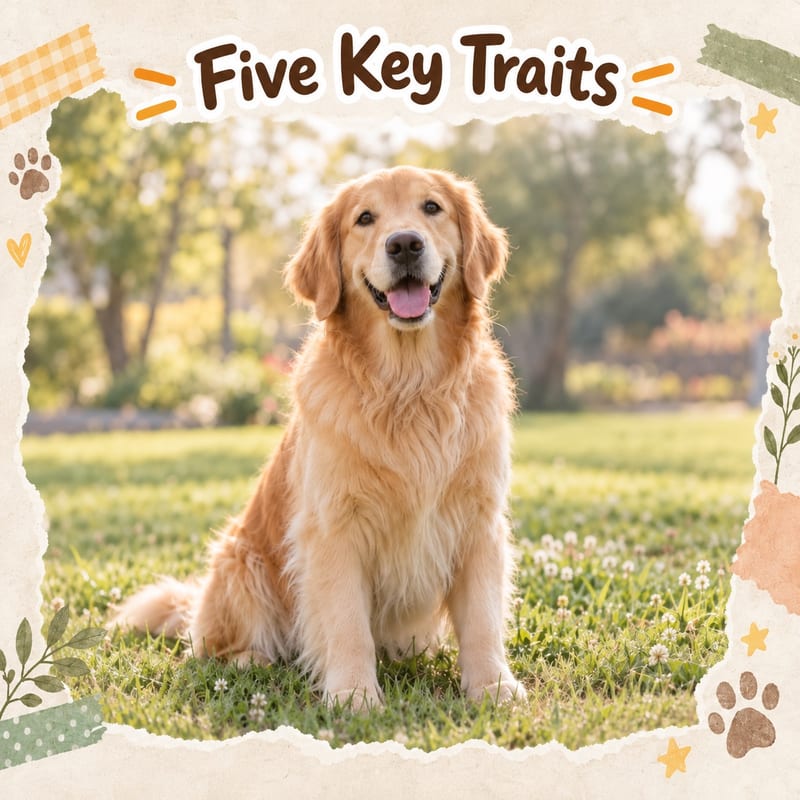
1. The Golden's five key personality traits: what's innate and what needs nurturing
The American Kennel Club (AKC) defines the Golden's breed temperament as Friendly, Reliable and Trustworthy. Broken down, there are five things you'll notice most in daily life:
| Trait | Everyday behaviour | How to manage it |
|---|---|---|
| Indiscriminate friendliness | Warm to owner, strangers and other dogs alike | Don't expect it to guard the home; instead train 'don't follow strangers' |
| Strong attachment to people | Follows you to the toilet | Practise being alone from puppyhood, building up time day by day |
| Strong food drive | Wants the next meal right after eating; scavenges | Carpet-level cleanliness management; train 'leave it' from an early age |
| Eager to please | Will read your mood and learn commands easily | Positive training far outperforms punishment; physical punishment destroys trust |
| Prolonged puppyhood | Behaves like a baby dog until age two — chewing, excitement | Bite inhibition and exercise routines start from day one |
'Indiscriminate friendliness' is the most misunderstood point: it makes the Golden a perfect family companion, and at the same time the worst possible guard dog candidate. If you're searching 'dog intelligence ranking 100', note that clever and guardhouse are two different things.
2. Golden intelligence: how far behind the Border Collie?
People searching 'Border Collie intelligence' or 'Golden Retriever intelligence' usually want the ranking. Canine behaviour researcher Stanley Coren's classic study, drawing on assessments from 200 trainers, measured learning speed and obedience as 'obedience and working intelligence': Border Collie 1st, Poodle 2nd, German Shepherd 3rd, Golden Retriever 4th, Labrador 7th. To be clear:
- This list measures 'how many repetitions before it understands', not problem-solving intelligence (instinctive and adaptive intelligence are two other dimensions).
- The Golden belongs to the tier that 'learns a new command in fewer than 5 repetitions on average, with a first-time compliance rate above 90%'.
- Compared with others on the list, the Golden's unique advantage is stable motivation: the Border Collie is clever but sensitive and prone to anxiety, the Poodle is clever but stubborn, while the Golden is 'clever and willing to work' — which is exactly why it works as a therapy dog more often than other breeds on the list.

3. Living with children and other pets: what it's really like
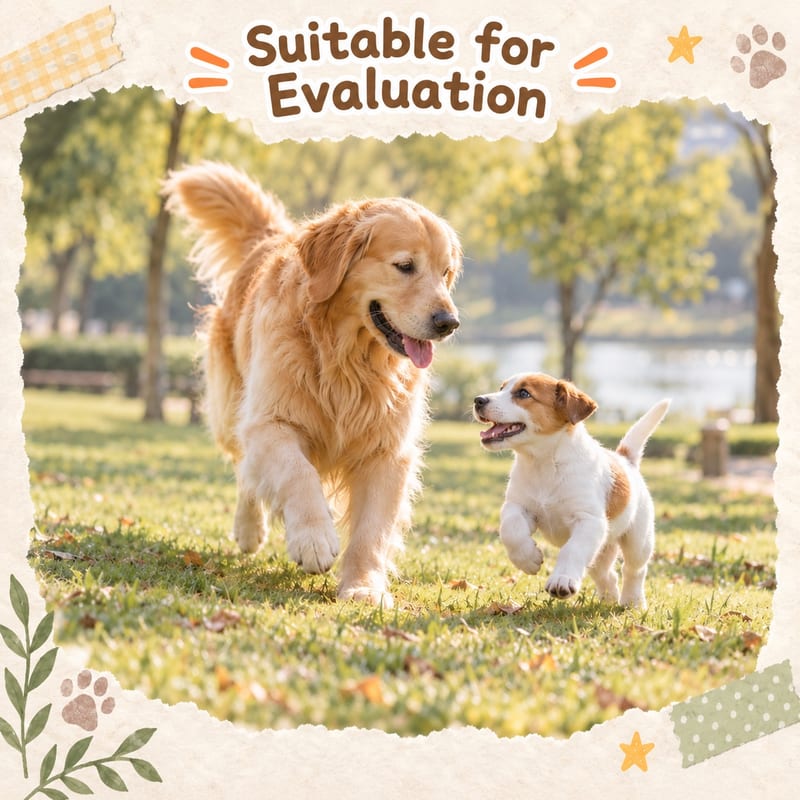
The Golden is widely considered one of the best large breeds for families with young children, for three reasons: a higher tolerance for pain, quick emotional recovery (no grudges), and soft play style (it doesn't treat biting force as a game). Research and breed organisations agree. But putting this into practice in Hong Kong, there are two practical points:
- Size is risk: an adult Golden can weigh 25–34 kg, and an excited jump is enough to knock over a toddler. Establish rules early: sit down when you see a child, don't jump up.
- Supervision is non-negotiable: however good a breed's reputation, leaving a young child alone with any dog is a management failure. Goldens are very tolerant of children, but tolerance is not consent — the bottom line is that an adult must watch.
As for getting on with other cats and dogs at home, the Golden has low prey drive (retrievers 'retrieve', they don't 'chase'), and generally coexists well with cats and small dogs. When introducing a new pet, use a baby gate for scent introduction and gradual meetings; the Golden's willingness to socialise usually makes this smooth.
4. The Golden's two addictive behavioural weaknesses: separation anxiety and scavenging
Separation anxiety: the Golden is a classic people-following dog, with one of the strongest attachment levels among large breeds. Symptoms include howling when left alone, scratching at doors, destructive behaviour at home, and excessive licking of itself. Prevention starts on day one of bringing the puppy home: short trips out and back, practising resting in a crate, and playing down both departures and returns. If you leave at 7 am and get back at 9 pm as a dual-income household, think carefully before getting a Golden, or plan daytime walking arrangements in advance.
Food obsession and scavenging: behind searches like 'are Labradors easy to keep' and 'are Goldens easy to keep', the most honest answer is that you have to deal with a food-obsessed constitution. A Golden will eat anything that hits the floor: toys, fruit peel, pills left out. The management principle is environmental control before verbal commands: bins with lids, no dropping human food in front of the dog, and using a lead on hikes to control sniffing range. Obesity is a double blow to a Golden's joints, so treat calories must be counted in the daily total.

5. Male vs female: a reliable conclusion
Owners often ask 'should I choose a male or a female'. For Goldens, research and trainer consensus agree: sex differences are far smaller than individual differences, and it's not worth sacrificing a temperament assessment for sex. The general direction observed: males are slightly more excitable and have a stronger wandering urge (the scent of a female in season attracts unneutered males), females learn obedience slightly faster early on. But whether male or female, Goldens stay in puppyhood until about age two — when choosing, go by 'does this dog's temperament fit my household routine', not by sex. The behavioural effects of neutering also vary between individuals; discuss each case with your veterinarian.
6. Who suits a Golden — and who should think twice
Suits: families with children or planning children (willing to supervise at all times), novices wanting to train their first large dog (the Golden is one of the easiest large breeds to handle), and runners with a regular hiking habit.
Think twice: jobs that keep you away from home for long hours (high risk of separation anxiety), living in public or private housing where the building's deed of mutual covenant doesn't allow large dogs (check first — Goldens usually exceed the small-dog weight limit), and families wanting guard-dog function (it's as friendly to burglars as to you).
Key takeaways
- ✅ The Golden ranks 4th on Coren's obedience intelligence list; its hallmark is 'clever and willing to work', with stable motivation
- ✅ The AKC's three temperament hallmarks: friendly, reliable, trustworthy — which also means it's unsuitable as a guard dog
- ✅ Top-tier with young children, but a 30 kg body needs a 'sit before greeting' rule
- ✅ Separation anxiety and food obsession are the two weaknesses to manage; environmental control before commands
- ✅ Male-female differences are small; choose a dog by individual temperament matching your family routine
- ✅ Behaves like a baby dog until age two; slow maturity is a phase every Golden goes through
The behaviour described here is a general breed tendency; for an individual assessment, consult a professional trainer or veterinary behaviourist.
Related reading
- Golden Retriever disadvantages and how to handle them
- Golden Retriever price and adoption guide
- Golden Retriever lifespan and health risks
- Puzzle feeders, training treats and leads: head to PetChill pet supplies to help your clever Golden burn mental energy.
 Wellness Core full guide →
 Royal Canin full guide →