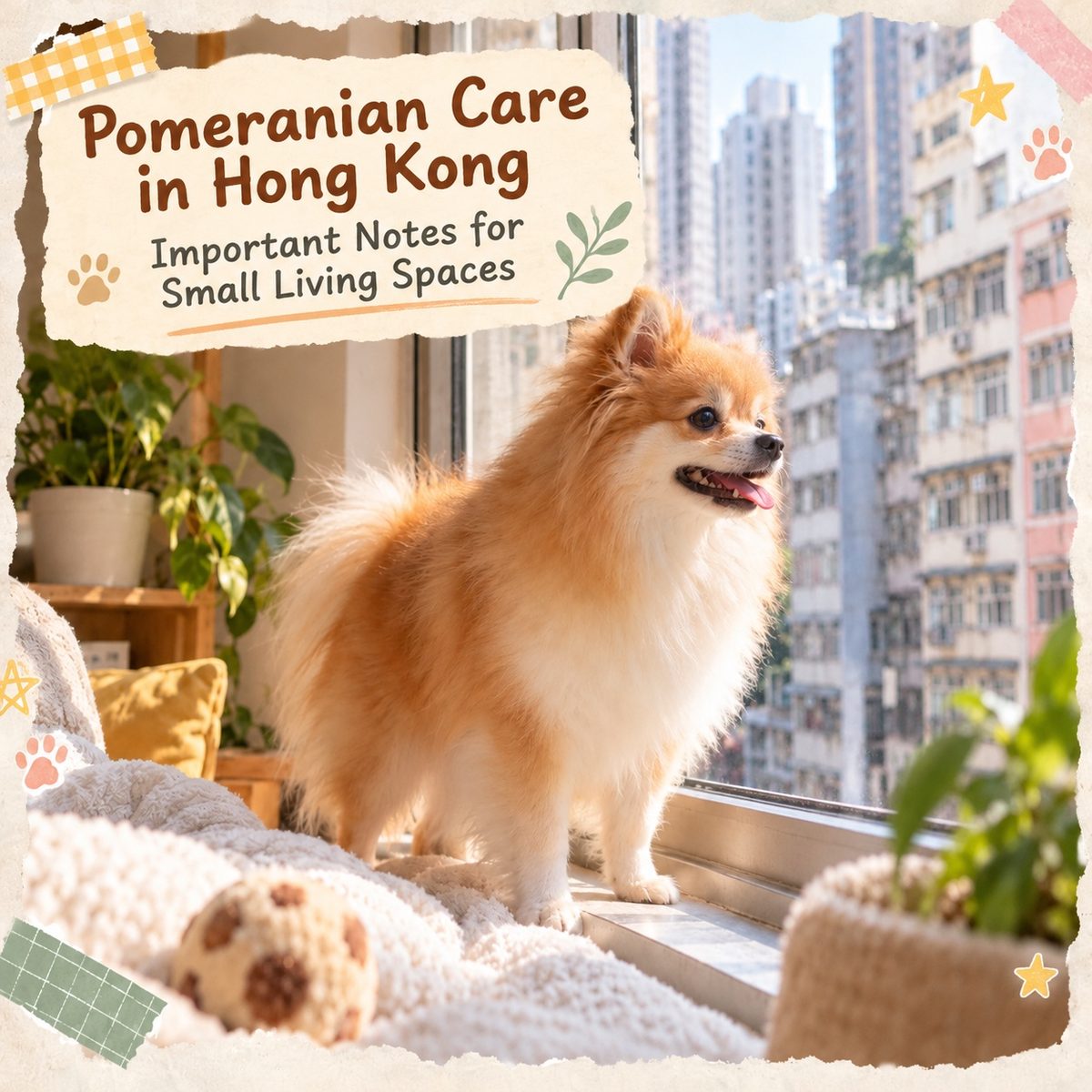
Quick answer: Keeping a Pomeranian in Hong Kong comes down to three local issues: housing (public housing policy generally does not allow dogs; for private buildings it depends on the Deed of Mutual Covenant), the law (rabies vaccination and a dog licence are mandatory from five months old), and the weather (the hot and humid climate poses skin and heatstroke challenges for a double-coated breed). Check these in advance so you can keep your dog with peace of mind.
Want to get to know the Pomeranian in full? Start with the Pomeranian breed profile.
1. First check "can I keep one": public housing, subsidised housing and the DMC
Hong Kong is densely populated, so the first step to keeping a dog is not looking at the dog, but looking at the building. Key points:
- Public housing: under current policy, keeping dogs is generally not allowed, except under specific schemes and individual circumstances; if in doubt, check the latest rules directly with the Housing Department — don't make decisions based on old information online.
- Subsidised and private housing: the Deed of Mutual Covenant (DMC) governs. Some estates only allow pets "not exceeding a certain weight"; an adult Pomeranian is about 1.8–3.2 kg, which meets most thresholds, but you still need written confirmation.
- Rented flats: only the landlord's stated position counts; a verbal yes is useless — getting it written into the tenancy agreement is safest.
How to verify: ask the management office about the DMC's pet-keeping clauses → check the tenancy agreement / management company's additional rules → if there is a dispute, ask the owners' committee. Complete these three steps before deciding to bring a dog home, so that moving the dog in is easy and giving it up is not.
2. Legal responsibilities: dog licence, rabies vaccination and leash
Under Hong Kong's Rabies Ordinance, dogs aged five months or above must: be vaccinated against rabies by a recognised vet and obtain a dog licence from the Agriculture, Fisheries and Conservation Department, renewed every year; when out, the dog must wear a valid licence or identification. In addition, most public places require dogs to be on a leash, and some places (such as within restaurant premises) do not welcome dogs — check the venue's rules before taking your Pomeranian out. A Pomeranian's small size does not mean an exemption — the law applies to all dogs alike, and enforcement officers will also check small dogs.
From booking an appointment and what documents to bring to how to replace a lost dog licence, see the Hong Kong dog licence application and renewal guide.

3. Hong Kong's hot and humid weather: heatstroke and damp prevention
The Pomeranian has a fluffy double coat — an advantage in cool regions, but homework in the South China climate:
- Heatstroke prevention: small dogs' body temperature rises quickly, so in summer shift outings to before 6 am or after sunset; before walking, press the back of your hand to the ground for five seconds — if it feels hot, it's too hot. Never leave the dog in a car, even with the windows open for just ten minutes.
- Damp prevention: during the returning-south dampness and midsummer, indoor humidity stays above 80% for long periods, and damp fur at the roots easily leads to skin problems. Air conditioning to dehumidify, drying the coat thoroughly (especially the belly and armpits), and regularly airing and sunning the bed are the basic three.
- Don't shave indiscriminately: shaving bald does not help dissipate heat; instead it damages hair follicles and increases the risk of sunburn and insect bites. If you want it shorter, choose a "styling trim" that leaves enough length.
- Parasites: fleas and ticks are active in the hot and humid season — use a vet-reviewed parasite prevention programme regularly; don't rely on "treat only when you see them".
4. Setting up a tong lau or small flat
Most dog-keeping households in Hong Kong live in flats of a few hundred square feet or tong lau, so for a Pomeranian we suggest:
| Item | Suggestion | Reason |
|---|---|---|
| Floor | Anti-slip mats / rugs over polished tiles | Small dogs slipping long-term easily injure joints and affect gait |
| Stairs | Carry or support puppies and senior dogs where possible, or set up a ramp | Lots of daily stair descent strains the kneecap |
| Dog bed | With rails, washable, placed in a fixed corner | Even a small flat needs "its own territory" to stabilise emotions |
| Barriers | Block sockets, cables, bins | Pomeranians love chewing small objects; the risk of electric shock must not be ignored |
| Pee pad area | Set in the bathroom or a covered spot on the balcony | Reduces odour, handy for rainy-day emergencies |
| Soundproofing | Curtains and rugs to absorb echoes | Barking is amplified in small spaces; benefits both neighbours and dog |

5. Exercise and socialising: an energy-burning plan for a city small dog
The Pomeranian's exercise needs are at the medium level for a small dog; two to three short walks a day (about 30–45 minutes in total) plus indoor sniffing games are enough. What's special about the Hong Kong environment:
- Lots of street socialising opportunities but variable quality: meeting an unleashed large dog in the park can easily frighten a small dog; knowing how to avoid is more important than forcing socialising.
- Lift etiquette: in enclosed spaces, pick up the small dog or keep it close on a short leash, to avoid others' fear of dogs.
- Alone-time training: small flats have poor soundproofing, so do gradual alone-time training from puppyhood to reduce "doorway alarm" barking — this is the core project for maintaining neighbourly relations (for details, see the barking response in the disadvantages article).
6. Four-season management checklist
| Season | Focus | Specific actions |
|---|---|---|
| Spring (Mar–May) | Shedding season, returning-south dampness | Brush more often, keep the dehumidifier on, check the skin |
| Summer (Jun–Aug) | Heatstroke and parasite prevention | Walk at dawn and night, deworm on time, zero time in cars |
| Autumn (Sep–Nov) | Post-typhoon management | Thunder-desensitisation training, rebuild walking habits |
| Winter (Dec–Feb) | Dry skin, festive bangs | Humidify, start quiet training ahead of fireworks season, don't take it to the Lunar New Year fair |
7. The five most common localised questions from beginners
- "Does the air conditioning need to be on all the time?" Pomeranians can adapt to air-conditioned environments; in summer keep the room at about 24–26 degrees and avoid blowing directly onto the bed; not turning it on for long periods and relying only on fans actually increases the chance of skin problems in hot and humid weather.
- "Is it okay not to go out at all?" Pee pads can handle emergencies short-term, but leash walks are also the source of socialising, scent stimulation and nail wear; zero outings every week is not ideal.
- "Grooming shops are too expensive — can I trim it myself?" Surface trimming can be self-taught, but matted undercoat, the area around the anus and paw-pad fur are best left to professionals; one bad trim takes months to a year to grow back.
- "What do I do when I meet someone in the lift?" Prepare a line like "Sorry, he's small" plus picking up the dog or shortening the leash — far more dignified than waiting for the other person to scream first.
- "Should I arrange backup care in advance?" The owner being hospitalised or travelling for long holidays is the most common trigger for small-dog abandonment; in the first month of bringing the dog home, find a backup boarding option (relatives/friends or a regular boarding centre) and write down the contact details — this is the step most people skip.
In Hong Kong, success at dog-keeping often doesn't depend on whether you love the dog, but on whether you've dealt with housing, the law, the weather and neighbours in advance. Get these four in order, and the Pomeranian is a companion dog extremely suited to city life.

Key summary
- ✅ Check three things before keeping: public housing policy / DMC / tenancy terms — written confirmation is safest
- ✅ Legal bottom line: five months old = rabies vaccination + dog licence + annual renewal + wear identification when out
- ✅ Hot and humid three: shift outing times, dehumidify the home, dry the coat completely, don't shave bald
- ✅ Small-flat setup centres on anti-slip, cable isolation and a fixed dog bed
- ✅ 30–45 minutes of split walks plus sniffing games daily is enough exercise
- ✅ Alone-time and quiet training are the key projects for maintaining neighbourly relations
- ✅ Each season has its focus: spring dehumidify, summer heatstroke prevention, autumn rebuild habits, winter guard against bangs
Related Reading
- Pomeranian Price and Adoption Full Guide
- Pomeranian Disadvantages and How to Cope
- Pomeranian Lifespan and Health Risks
- Anti-slip mats, dehumidifying products and pet shampoo: get them all at PetChill Pet Supplies.
The health content in this article is general information only. For skin, joint or heatstroke symptoms, please consult a registered veterinarian immediately; for legislation and policies, refer to the latest announcements from the Housing Department and the Agriculture, Fisheries and Conservation Department.