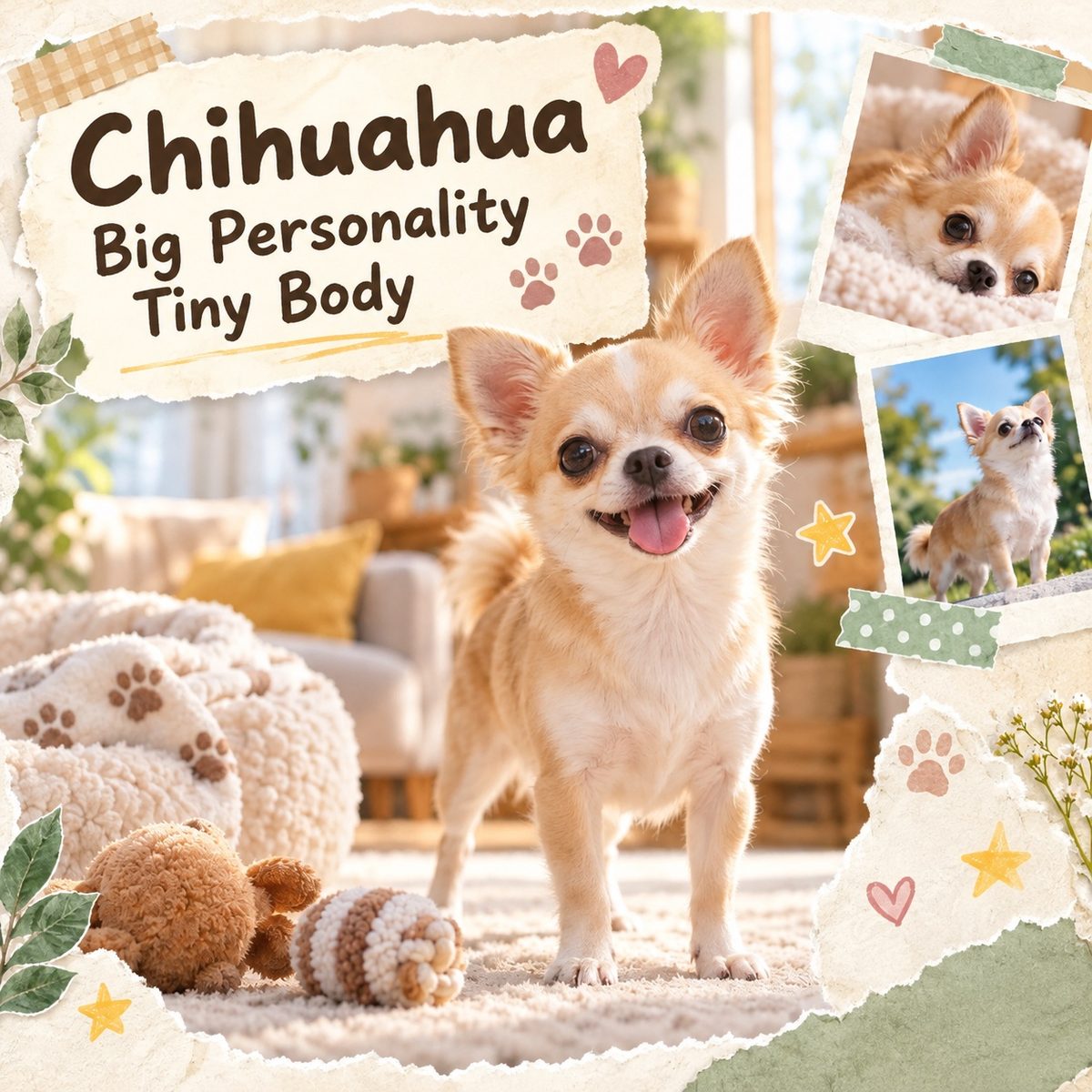
Quick answer: The Chihuahua personality is 'a big dog in a small package': confident, alert, and so devoted to their owner that they stick like glue, while treating anything unfamiliar with suspicion first and friendship later. Their intelligence is not low (upper-middle in Stanley Coren's framework, quick to learn), but their motivation to obey doesn't match their size—they know how to ask 'what's in it for me?'. Training keys: socialise from a young age, keep boundaries consistent, and don't exempt them from rules just because they're small.
Want to get to know Chihuahuas thoroughly? Start with the Chihuahua breed profile.
1. Intelligence: quick to learn, but not necessarily buying it
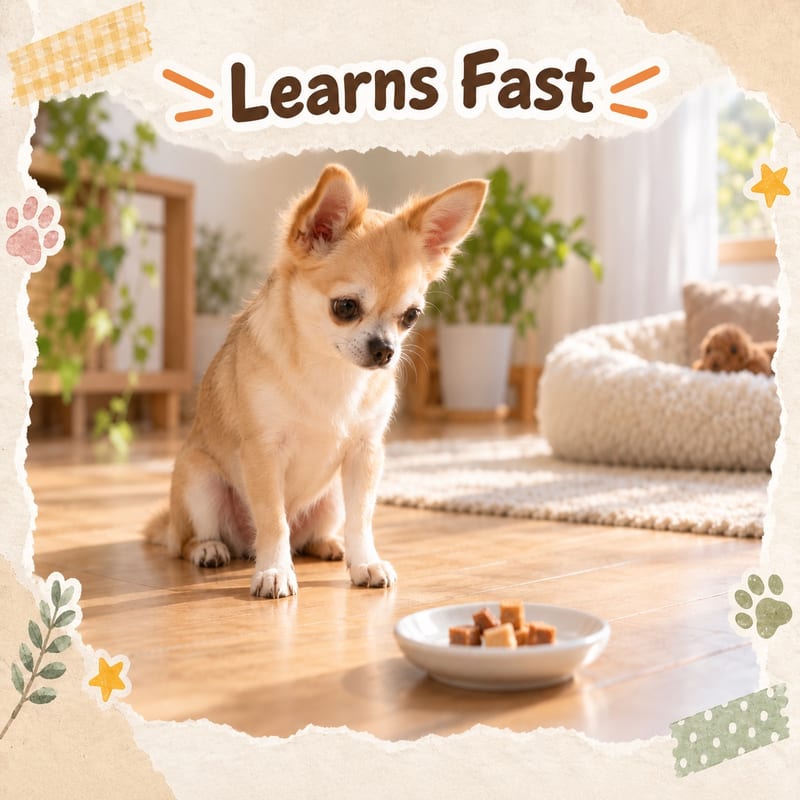
Talking about 'Chihuahua intelligence' needs two layers. The first is learning speed: under Stanley Coren's framework in The Intelligence of Dogs, which ranks breeds by working obedience, Chihuahuas are upper-middle—they usually learn a new command in under 20 repetitions, and their first-time obedience rate for familiar commands is about 50% (meaning: half the time they hear it but choose not to do it). The second layer is the key: self-awareness. Behavioural studies generally find that small dogs have low obedience and a low 'willingness to be managed by humans', and Chihuahuas are typical: it's not that they don't understand, it's that once they do, they evaluate. In practice: they learn sit, stand, and spin in two or three days, but the recall command has near-zero reliability when there are birds in the park. In one sentence: you're not keeping a soldier, you're keeping a roommate with their own schedule. Practical implication: set 'will choose to ignore you' as the expectation, and you'll start respecting their motivational structure, negotiating with rewards rather than crushing with power—training results and relationship quality will both be much better.
2. Personality traits summary: five key words
| Trait | Everyday behaviour | Response / how to bring out the best |
|---|---|---|
| Big-dog confidence | Fearless around large dogs, takes the high ground | Owner assesses risk, avoid out-of-control big dogs |
| Alert doorbell | Barks at any movement, high volume | 'Quiet' command + desensitisation to sounds |
| Single-track loyalty | Bonds to one owner, follows you around, wants to sleep in your bed | Practise being alone from a young age, prevent attachment becoming anxiety |
| Suspicious first, friendly later | Cool and defensive toward strangers | Lots of positive exposure during the socialisation window |
| Sensitive and proud | Shrinks at loud voices, holds a grudge if punished | Positive training, calm tone, short sessions |
3. Living with children: which families suit?
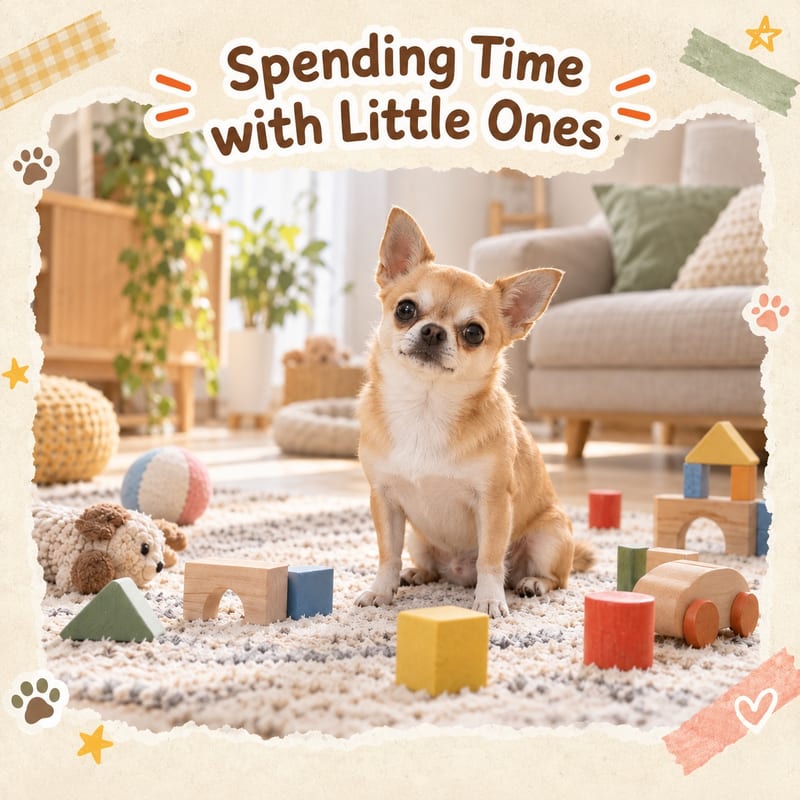
Both the AKC and the UK Kennel Club breed descriptions give the Chihuahua 'alert, loyal, devoted to owner' ratings, while warning that interactions with young children need supervision. The reason is practical: a Chihuahua may weigh only two or three kilograms, and a toddler accidentally sitting on them or a failed high pick-up poses a risk of injury; and a frightened small dog's weapons are teeth and volume. Suitable family profile: children already know 'the rules for being around dogs' (no picking up, no pulling, no disturbing while eating or sleeping), or the dog and child grow up together and know each other. A safe spot is mandatory: a mat or crate area where children are not allowed, so the dog can 'clock off'; Chihuahuas with a safe spot have noticeably fewer defensive incidents.
4. Where does the 'Napoleon complex' come from? Science is more complex than you think
The stereotype that 'small dogs are especially aggressive' is actually supported by behavioural literature: large-scale dog behaviour surveys published in Applied Animal Behaviour Science and elsewhere repeatedly record the highest rates of aggression and defensiveness in small breeds. But the cause isn't 'innate bad temper'; it's three overlapping cycles: 1. The pick-up cycle—every time another dog appears you pick them up, so fear never gets a chance to be disproven; 2. The permissiveness cycle—nipping trousers is seen as 'cute', and the behaviour solidifies before it's corrected; 3. The pain cycle—dental and joint problems are common, keeping tolerance low long-term. The way to reverse it is also threefold: positive meeting experiences at a distance, consistent boundaries from the whole family, and regular pain screening. Research also finds neutering and training investment negatively correlated with behaviour problems—small dogs don't need exemptions, it's just that usually no one has seriously asked them.
5. Male-female differences and interaction tips
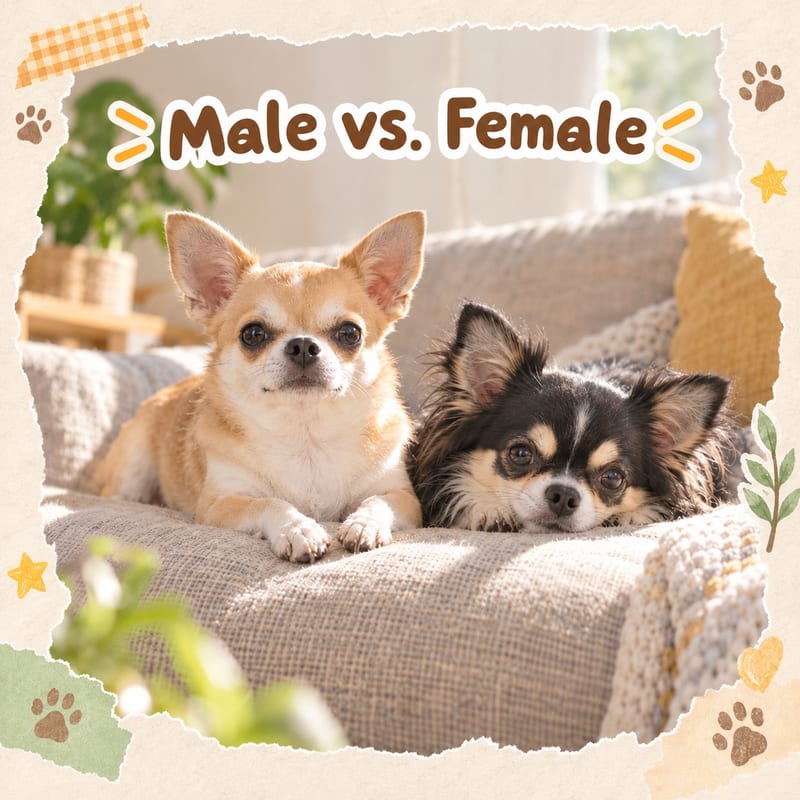
General observations (individual differences always outweigh sex differences): males are more outgoing, show more display behaviour, and their first reaction to unfamiliar things tends to be 'charge'; females are usually more focused on their owner, attach in a more single-track way, and are more sensitive to environmental changes. Medical aspects: for unneutered females, pyometra and false pregnancy; for unneutered males, prostate issues and risk of wandering—discuss neutering timing individually with your veterinarian. For interaction, Chihuahuas suit this pattern best: besides two walks a day, add five 10-minute brain sessions a week—snuffle mat breakfast hunt, new tricks, command roulette; these dogs get tired from boredom more than from physical exertion. Also, they have low tolerance for 'being treated like a handbag': ask the dog before touching, not the person, let them choose the timing, and trust builds that way.
6. Training mantra: use big-dog standards for small dogs
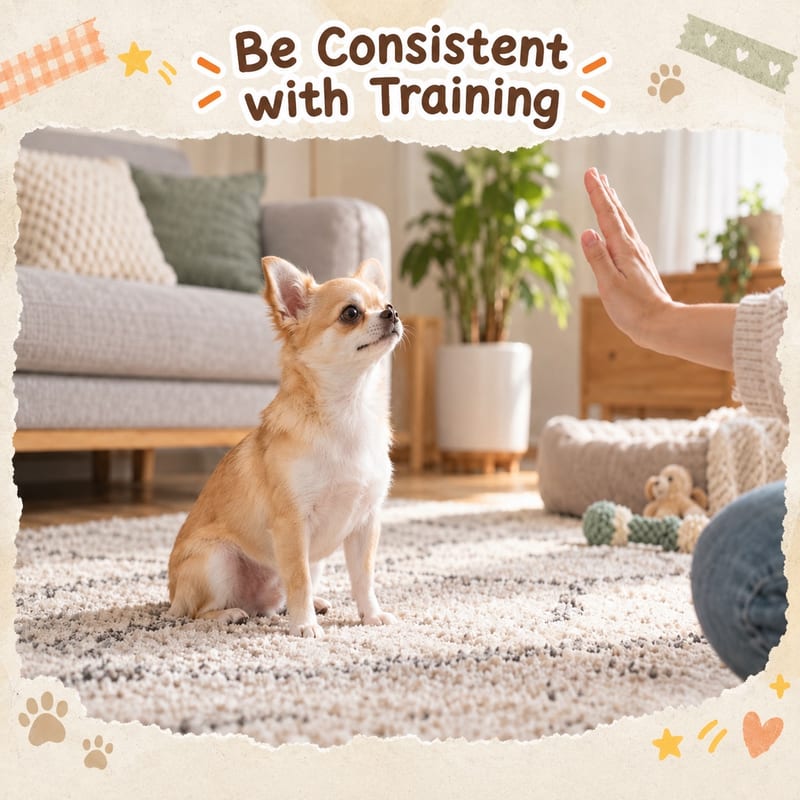
With Chihuahuas, method decides everything. Consistency: one set of rules for the whole house—allowing them on the sofa today and scolding them for it tomorrow, and clever as they are, they'll instantly learn to 'read your mood'. Short: five to eight minutes per session; their patience is limited, and long sessions frustrate both dog and human. High value: use small treats for small dogs; split one meal into three portions as training food so they don't get fat. Socialisation first: within the 3-12 week window, unfamiliar sounds, surfaces, people, and calm big dogs, each experience paired with something tasty. The cost of missing the window (fear of people, barking at every dog) will take double the time to make up later; adopting an adult dog doesn't mean it's hopeless, just that the pace is one notch slower. If you encounter resource guarding or fear-based biting, seek a certified trainer or a veterinary behaviourist; don't rely on internet folk remedies and force a confrontation. A positive note to end on: many Chihuahua owners say that this kind of loyalty—'being chosen one-way by a two-kilogram dog'—is an experience other breeds can't give. They aren't nice to everyone, and precisely because of that, their being nice to you carries so much weight. To sum up: the Chihuahua's personality challenge is attachment—it makes them and breaks them. They stake all their affection on one or two people; care for them well and they're the most devoted companion, let fear grow unchecked and they become the hardest neighbour to get along with; the variable in between is never the breed, it's management. If you condense this article into one actionable checklist: complete socialisation within three months, consistent boundaries throughout the house, ten minutes of brain work daily, ask the dog before touching—do these four things and the bright side of the Chihuahua personality will be firmly yours.
Key takeaways
- ✅ Chihuahua intelligence is upper-middle: quick to learn but they evaluate—'understanding' and 'willing' are two different things
- ✅ Five key words: confident, alert doorbell, single-track loyalty, suspicious first friendly later, sensitive and proud
- ✅ The 'Napoleon complex' is documented in research; causes are the three cycles of pick-up, permissiveness, and pain, all reversible
- ✅ Families with toddlers need a safe spot; teaching children the rules is as important as teaching the dog
- ✅ Train with big-dog standards: consistency, short sessions, high-value rewards, no exemptions for being small
- ✅ The 3-12 week socialisation window is the main subject in the first three months; adopting an adult dog just means a slower pace, not a hopeless case
- ✅ Ask the dog before petting: trust starts with respecting their choices
Related reading
- Chihuahua disadvantages and how to cope
- Chihuahua lifespan and health guide
- Chihuahua price and adoption guide
- PetChill pet supplies: snuffle mats, small training treats, and safe-spot beds—the three essentials for feeding a Chihuahua's brain
 Wellness Core full guide →