Quick answer: The recognised ideal weight for a Pomeranian is about 1.8–3.2 kg (AKC Toy Group standard); at 2 months about 0.5–0.9 kg, at 6 months about 1.2–2.2 kg, and near final size at 12 months. The standard is not a single number but a monthly weighing curve + body condition score (BCS) running in parallel.
Want to know all about Pomeranians? Start with the Pomeranian breed profile.
0. Conclusion first: three tools, one habit
Turn this article into one actionable sentence: buy a kitchen scale, print the growth chart from this article and stick it on the fridge, and build a habit of recording one entry per month — that completes 80% of your Pomeranian's lifelong weight management. The remaining 20% is: when the curve looks abnormal, do not judge by yourself; take the record chart to see the veterinarian. Details below.

1. Why 'standard weight' needs two things
Pomeranians are a small breed with a thick coat; these two features together make both 'eyeballing' and 'looking only at the number' prone to error:
- Thick coat misjudgement: a fluffy coat can visually add one to two kilograms, and can also hide the rib cage. Touching is always more reliable than looking.
- Bone structure differences: puppies in the same litter already differ in bone size; an individual with small parents at 1.9 kg is normal; applying a single number to all dogs is unscientific.
So the method in this article is: reference chart sets the general direction, curve sets the trend, body condition sets the standard. All three layers together give an accurate picture. Also note an easily overlooked time point: Pomeranians go through a noticeable 'fluffball period' and teething period at 4–8 months, transforming from a slim puppy to round overnight; many owners mistakenly think they are getting fat and reduce food, when in fact bones and muscles are still growing — at this stage, trust the scale and your hands, not the mirror.
2. Growth weight reference chart from 2 months to 8 years
The following are reference ranges based on breed data and general clinical observation; individual variation is large, and a steadily rising curve without sudden drops is a healthy sign:
| Age (months) | Weight reference (kg) | Stage focus |
|---|---|---|
| 2 months | 0.5–0.9 | Just arrived home; stabilise appetite and bowel movements first, weigh weekly |
| 3 months | 0.8–1.4 | Vaccination period; feed 4 meals daily |
| 4 months | 1.1–1.8 | Can use '×2 rough estimate' for adult weight |
| 6 months | 1.4–2.2 | Around neutering window; switch to measured feeding |
| 8 months | 1.6–2.6 | Teething complete, fluffball period; watch for swallowing foreign objects |
| 12 months | 1.8–3.0 | Near final size; first-year health check to establish baseline |
| 18 months | 1.8–3.2 | Muscle filling period; weight gain after this is mostly fat |
| 2–7 years | 1.8–3.2 (ideal band) | Weigh monthly; routine BCS self-check |
| Over 8 years | Stable or slight decrease | Sudden drop is a warning sign; check health before switching to senior formula |
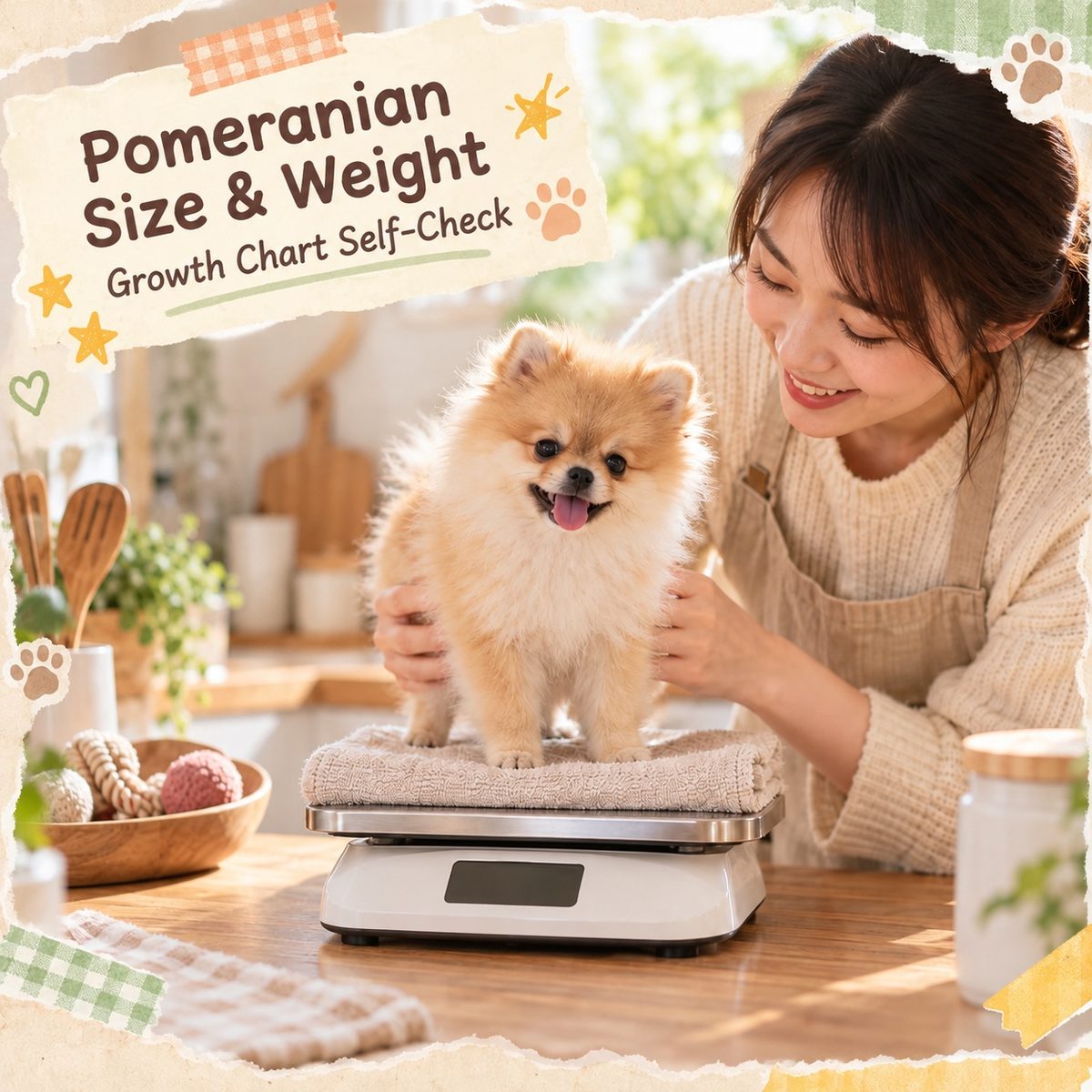
Measuring method: The simplest is the same scale — weigh yourself first, then hold the dog and weigh, subtract; or use a kitchen scale (weigh small puppies directly). Fix it in the morning before feeding, at the same time each time, and record the date, weight and a one-line body condition note each time — all three together make an effective curve.
Two details determine whether the data is useful: first, do not compare with 'yesterday's him'; the fluffball period and before/after bowel movements can differ by one or two hundred grams, so look at the curve, not a single point; second, ask about the source of outside records — if the previous owner did not provide vaccination records and weight records when adopting or purchasing, do a health check and faecal test in the first week to rebuild the baseline in your own hands.
3. Body condition score (BCS) three-step self-check
The internationally common body condition score mostly uses a 9-point scale, with the ideal range 4–5. At home, three steps are enough:
- Feel the ribs: gently part the fur; you should 'feel the ribs through a thin layer of fat' — needing to press firmly to feel them is overweight (7 or above), seeing bones without any pressure is underweight (3 or below).
- Look at the waist: from above, there should be a clear inward waist behind the ribs; Pomeranians have thick coats, so use your hands rather than pure visual inspection.
- Look from the side: the abdomen should tuck up behind the ribs; watch for a sagging, flat 'beer belly', but also distinguish it from breathing posture caused by tracheal collapse.

4. 'Teacup' and 'mini' myths: bone structure, nutrition and marketing
'Free puppy adoption' ads often use 'will grow very small' and 'teacup type' as bait. The facts are:
- Major kennel clubs (AKC, UK Kennel Club) have only one size range for Pomeranians; there is no 'teacup' classification;
- Adult dogs persistently below 1.8 kg are mostly small individuals, crossbreeds, or stunted, sickly dogs; the latter often have hypoglycaemia, bone and heart problems;
- Using 'feed less' to suppress weight is not miniaturisation, it is malnutrition, and the damage to a growing puppy is irreversible.
If budget is limited, the proper route is to adopt a neutered adult dog from a reputable organisation, rather than paying a premium for 'small individuals'.
5. Puppy feeding amounts: how much is right
| Stage | Meals | Feeding principle |
|---|---|---|
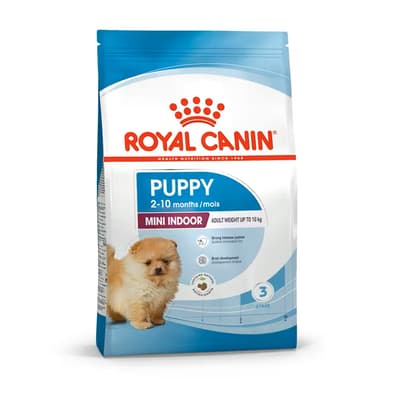
| 2–3 months | 4 meals daily | Start at the lower end of the puppy food packaging weight table |
| 4–6 months | 3 meals daily | Weigh weekly; if the curve is flat, increase by 10% |
| 6–12 months | 2–3 meals daily | After neutering, calorie needs decrease by about 10% |
| After 1 year | 2 meals daily | Transition to adult food gradually over 7–10 days |
Three disciplines: measure with a kitchen scale (measuring cups can have up to 20% error), deduct treats (if treats exceed 10% of daily calories, deduct from the main food), review monthly (use weight to back-calculate feeding amount rather than adding more because 'he eats eagerly').
Treat selection is directly linked to weight: for training, soft treats should be cut to the size of a soybean; a Pomeranian's 'reward budget' per meal is about 5–8 pieces; dried meat treats are calorie-dense, and two or three strips equal 10% of a meal. Conversely, large hard chews are too hard for a Pomeranian's small teeth, offer limited benefit but real calories, and are even less worthwhile. A treat that can be counted into the daily total is a good treat.
6. The real cost of overweight and underweight
For a small dog, 'two kilograms becoming three kilograms' sounds unremarkable, but it is a 50% weight increase. It is generally believed that obesity has three burdens for Pomeranians: knee load, worsened breathing in individuals with tracheal collapse, and anaesthesia and surgical risk. Being underweight is often a surface sign of dental pain, parasites or chronic disease — so 'never gains weight no matter what' and 'gains weight even eating little' both warrant a health check, rather than self-attributing to constitution.

7. Senior stage: the second half of curve management
Weight management in the senior years (over 8) is reversed: it is not about preventing fatness, but preventing muscle loss. It is recommended to maintain the walking routine, raise the food bowl to reduce neck strain (especially important for individuals with tracheal problems), and at each six-month check-up actively ask the veterinarian 'compared with last time, has muscle mass changed?' Most people do not ask this question, but it is the core indicator of quality of life for a senior Pomeranian. The endpoint of curve management is not a good-looking number, but a dog that can move, eats well and sleeps peacefully.

Key summary
- ✅ AKC ideal weight about 1.8–3.2 kg; near final size at 12 months, muscle filled out at 18 months
- ✅ Standard = monthly weighing curve + BCS 4–5/9, not a single number on one day
- ✅ Three-step self-check: feel ribs, sense waist, look at abdominal tuck
- ✅ 'Teacup' and 'mini' are not recognised classifications; suppressing weight by feeding less is malnutrition
- ✅ Kitchen scale measuring, treat deduction, monthly review are the three disciplines of weight control
- ✅ 2 kg to 3 kg is a 50% increase for a small dog: knees, trachea, anaesthesia risk all rise in chain
- ✅ Sudden thinness and sudden fatness are both signals: check health first, then change food
Related reading
- Pomeranian lifespan and health risks
- Pomeranian Hong Kong keeping guide
- Pomeranian personality and intelligence explained
- Small dog prescription food, kitchen scales and slow feed bowls: find them all at PetChill pet supplies.
The health content in this article is general information; for sudden weight changes, stunted growth or abnormal eating, please consult a registered veterinarian.