
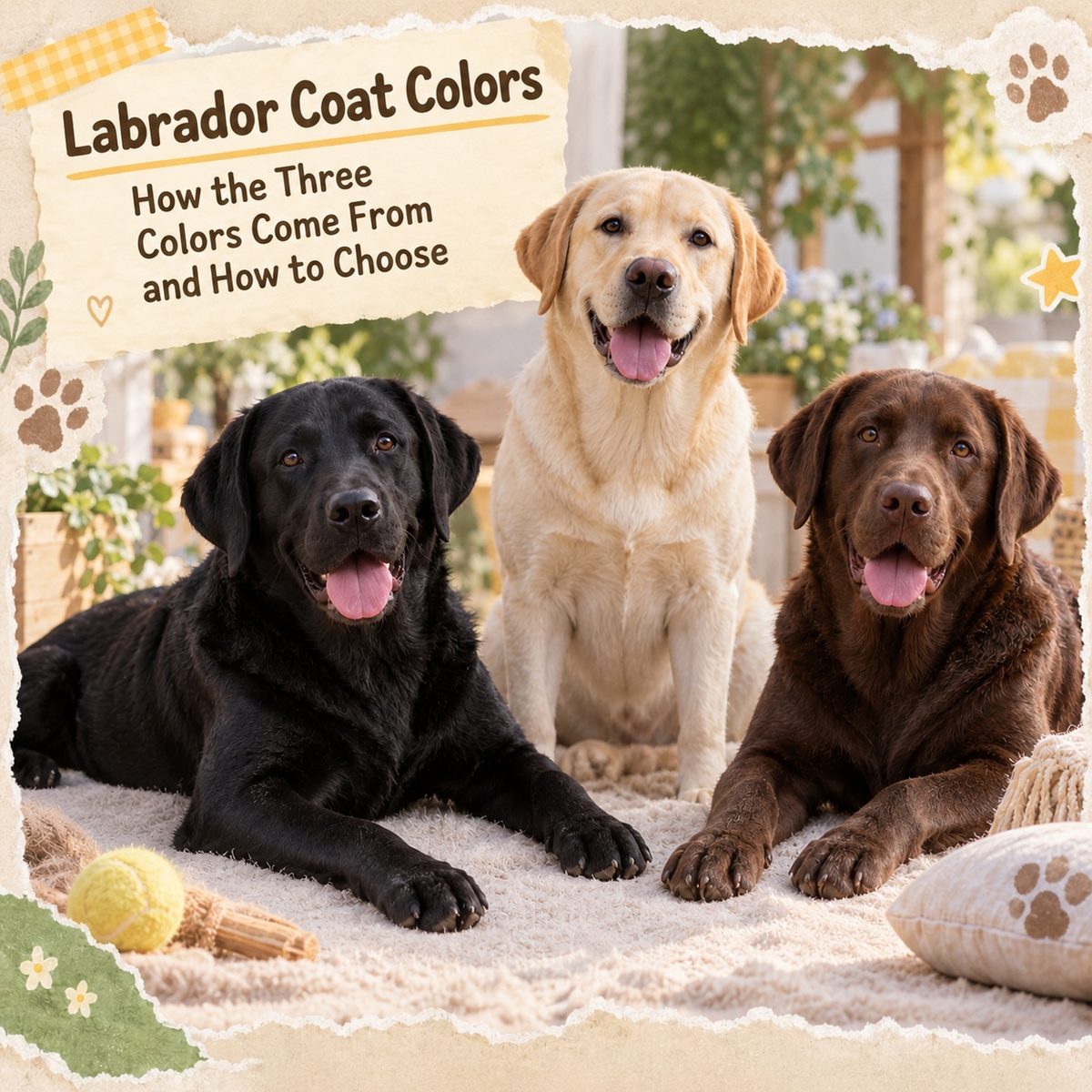
Quick answer: The only recognised Labrador colours are black, yellow and chocolate; yellow ranges from cream all the way to fox red. 'Rare colours' such as 'charcoal' and 'silver' are not standard, and the premiums and health risks are disproportionate. Coat colour does not affect personality or lifespan; choosing a colour is an aesthetic matter, but checking pedigree documents is the real health issue. The order of choosing a colour should be: first confirm the source is healthy, then among healthy individuals in the same litter choose the colour you like best. If your budget is limited, adopting an adult black or chocolate Labrador is often an option that combines value for money and a sense of destiny—this is the cheapest and most underrated position among the three colours.
Want to know all about Labradors? Start with the Labrador breed profile.
1. The three recognised colours: how genes determine coat colour
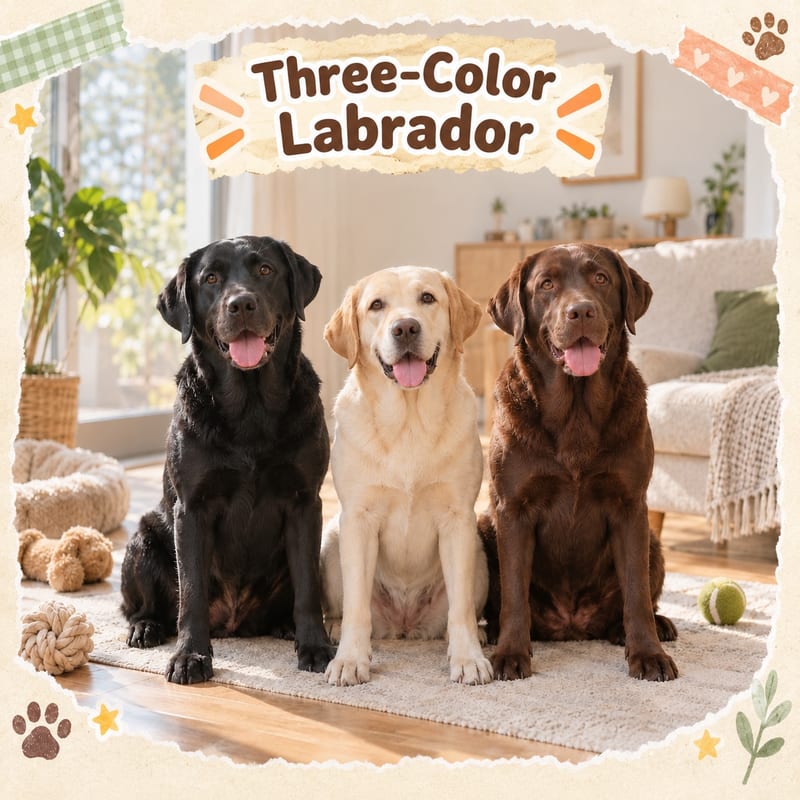
A Labrador's coat colour is determined by the combination of two gene loci: one determines whether pigment is 'black or brown' (the B locus), and the other determines whether pigment 'stays in the hair shaft' (the E locus). In simple terms: black is the baseline; recessive b changes it to brown, giving chocolate; as soon as the ee combination appears, regardless of whether the underlying colour is black or brown, the outward appearance is yellow. So two yellow dogs can produce black or chocolate puppies—completely normal, and not a sign of 'impurity'. Once you understand this basic genetic structure, you will realise that sellers who charge a premium for a 'specific colour' are essentially charging you for a gamble.
| Colour | Standard status | Characteristics | Commonness |
|---|---|---|---|
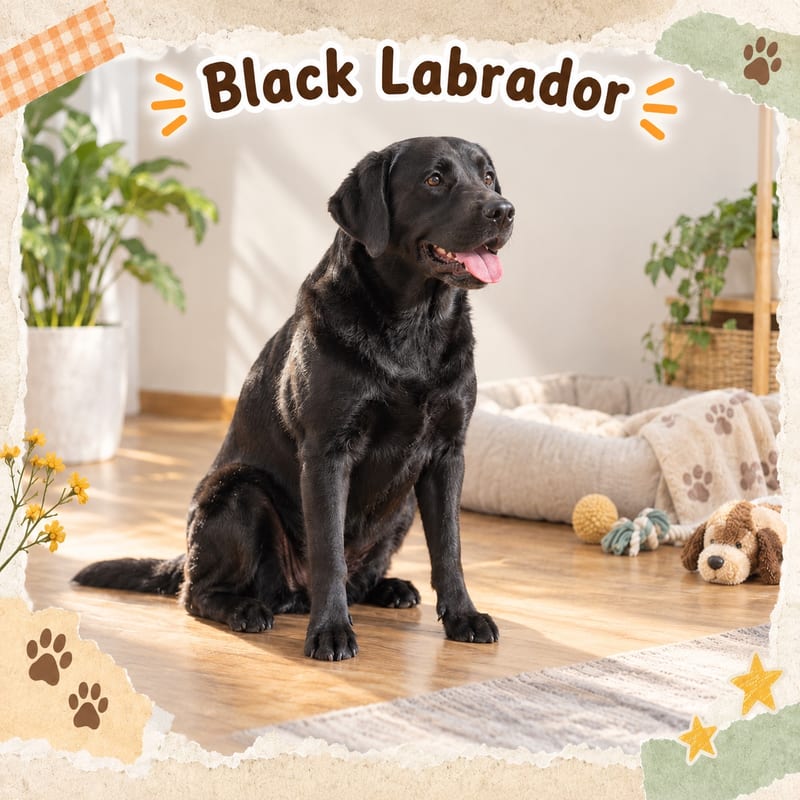
| Black | Recognised standard colour | Solid black with sheen; a small white patch on the chest is acceptable | High |
| Yellow | Recognised standard colour | Continuous spectrum from cream and fawn to fox red | Highest (Hong Kong) |
| Chocolate | Recognised standard colour | Liver-brown nose leather and eye rims are key identifiers | Medium-low (supply and demand fluctuate) |
| 'Charcoal' | Non-recognised term | Black adults fade to grey as they shed | Low; a natural phenomenon |
| Silver/blue | Dilution variant | Pedigree records disputed; some kennel clubs do not recognise | Low; beware of premiums |
The 'commonness' in the table is based on approximate proportions of international registrations and may vary by region: for example, the proportion of chocolate is higher in Northern Europe, and yellow is most common in North America; Hong Kong's supply and demand structure differs from overseas, so local conditions apply.
2. Yellow is more than just yellow: from cream to fox red
The standard defines yellow as a continuous spectrum 'from light cream to red', so yellow puppies in the same litter can vary in depth and may change colour as they grow: a fox red puppy may fade to fawn, and a cream may darken. There is no official ranking of 'which is best' within this spectrum—show judging is based on overall structure, coat texture and movement, not on the depth of yellow. If someone uses 'limited deep fox red' as a selling point to charge a high price, this is not a standard bonus; just refer to the normal price and don't chase the high.
3. Why 'black Labrador' is always asked about
For those searching 'black Labrador puppy' or 'black Labrador price', note: black is the most classic Labrador colour (early breeding of the breed was mostly black), and it is also the most durable and dirt-resistant colour. However, in the market, due to supply and demand, black may not be priced higher than yellow, and at times it can be cheaper. Claims like 'rare pure black' or 'limited charcoal' can basically be treated as marketing language. The only practical difference: dandruff and shed hair are particularly noticeable on black coats, and yellow-white hairs on black clothing are most conspicuous, so you need to be more diligent during shedding season; conversely, skin redness and wounds are most easily spotted immediately on black individuals—these are real everyday details.
4. The rare colour controversy: silver, blue and 'red' premiums
First, pedigree documents: the registration system for the three colours is identical; pedigree papers do not rank colours, so any claim that 'only this colour has papers' should not be believed. Silver is actually a chocolate colour with the dilution gene; its pedigree origin has long been disputed, major kennel clubs have different positions, and some registration systems do not recognise its show eligibility; studies also indicate that diluted coats have a higher incidence of problems such as fragile hair shafts and increased dandruff. If someone charges a sky-high price for a 'rare colour', ask three questions first: Where is the pedigree paper issued? Is there a health guarantee for the dilution gene? What are the return and exchange terms? Also note: silver and 'charcoal' coats are often softer and finer, so sun protection and skin care requirements are actually higher—'especially beautiful' may mean 'especially difficult to care for'.
5. Grooming differences by coat colour: actually very small, but there are some
- Yellow: hair tips oxidise and turn reddish with long-term sun exposure; wipe the body with a damp cloth after outings; tear stains and reddish discolouration around the mouth are more noticeable on light-coloured individuals.
- Black: dandruff is most visible; brush briefly every day during shedding season; dark-coated dogs absorb heat, so avoid midday ground heat radiation in summer.
- Chocolate: a sudden noticeable lightening of coat colour can sometimes reflect nutritional or endocrine problems; add this to your annual check-up question list.
- General: all three colours have a double short coat; no styling is needed, and do not shave—shaving destroys the insulating and sun-protective functions of the double coat and is the most common mistake; a slicker brush and thorough drying of the undercoat after bathing are all the work required. Two to three professional deep cleans a year are more than enough.

6. Choosing colour or choosing health: a one-sentence summary
Colour should never be the decisive factor: hip and elbow scores, eye records, parental temperament and breeder follow-up determine the quality of your life for the next twelve years. If two puppies in the same litter, one yellow and one black, have identical health information, the only correct criterion for choosing is: whichever one makes you happiest when you look at it. A word on adoption: black adult Labradors on adoption pages are often the least chosen—not because they are not beautiful, but because some adopters insist on puppies and yellow. If you are not fixated on colour, adopting a black adult may be the most practical and also the gentlest application of this article.
For the cost structure and key verification points for adopting an adult dog, see the separate section in Labrador price and adoption routes.

Key takeaways
- ✅ Only three recognised colours: black, yellow and chocolate; yellow is a continuous spectrum from cream to fox red.
- ✅ Two yellow dogs producing black puppies is normal: coat colour is determined by gene locus combinations, not a sign of 'impurity'.
- ✅ Black is not rare and not necessarily expensive; premiums for 'charcoal' and 'rare colours' are marketing tactics.
- ✅ Diluted colours have disputed pedigrees; check health guarantees for coat texture risks.
- ✅ Coat colour does not determine personality or lifespan; screening documents determines the quality of life together.
- ✅ Grooming essentials are the same for all three colours: do not shave, brush the undercoat, and dry thoroughly after bathing.
Related reading
- Labrador disadvantages and how to cope
- Labrador growth, weight and size explained
- Labrador personality and intelligence explained
- For slicker brushes, de-shedding rakes and bathing and drying tools suitable for all three colours, shop at PetChill pet supplies.



