Quick answer: In 2026 Hong Kong, a Yorkshire Terrier generally costs around $8,000–20,000 for pet-grade and around $20,000–38,000 for pedigree-grade; those claiming 'teacup' or 'extra small' and charging tens of thousands have risks disproportionate to the premium. The SPCA, NKAC and rescue groups occasionally have Yorkies for adoption, and monthly upkeep costs about $1,200–2,400; whether buying or adopting, verification comes first.
Want to know all about the Yorkshire Terrier? Start with the Yorkshire Terrier breed profile.
1. Yorkshire Terrier prices in Hong Kong: how much difference between pet-grade and pedigree-grade
The Yorkie is a refined small breed familiar to Hong Kong people, and prices have long been stable. Below are reference ranges for the general market in 2026; actual prices depend on supply and demand at the time, and the figures only reflect the general market and do not constitute a recommendation of any merchant:
| Grade | Reference price (HKD) | Common differences | Suitable for |
|---|---|---|---|
| Pet-grade | Around $8,000–20,000 | Has pedigree documents, may include neutering clause | Those who want a companion and do not plan to show |
| Pedigree-grade | Around $20,000–38,000 | Parents have registration or show records | Advanced owners who value traceable pedigree |
| 'Teacup' or 'extra small' claims | Often $30,000 or more | Not a recognised classification, standard is whatever the seller says | Recommended to avoid; medical risks disproportionate to premium |
One principle bears repeating: a high price does not equal health. The Yorkie's genetic predispositions (patellar luxation, hereditary eye diseases, portosystemic shunt) are not directly related to certificates, but depend on whether the breeder screens the parents. Asking clearly whether the parents have knee palpation, eye examination and liver index records is far more important than asking 'are there papers'.

2. The truth behind the high price of 'teacup Yorkies'
Those searching for 'teacup Yorkie' or 'yorkshire small' should first know: the Yorkie standard of major international kennel clubs (including the American AKC and the British Kennel Club) has only one size range—ideal weight about 2–3.2 kg, with no 'teacup' grade. Extra-small individuals on the market commonly come from three sources: purebred individuals that are naturally small, bloodlines mixed with other small breeds, or stunted, sickly dogs. Deliberately pursuing extreme smallness means trading the risks of hypoglycemia, fractures and heart problems for appearance, and medical expenses can easily exceed the premium paid. If you want a truly small size, breeds with official size classifications such as the Toy Poodle are more justified.
For Poodle size classifications and price differences between sizes, see Poodle price guide.

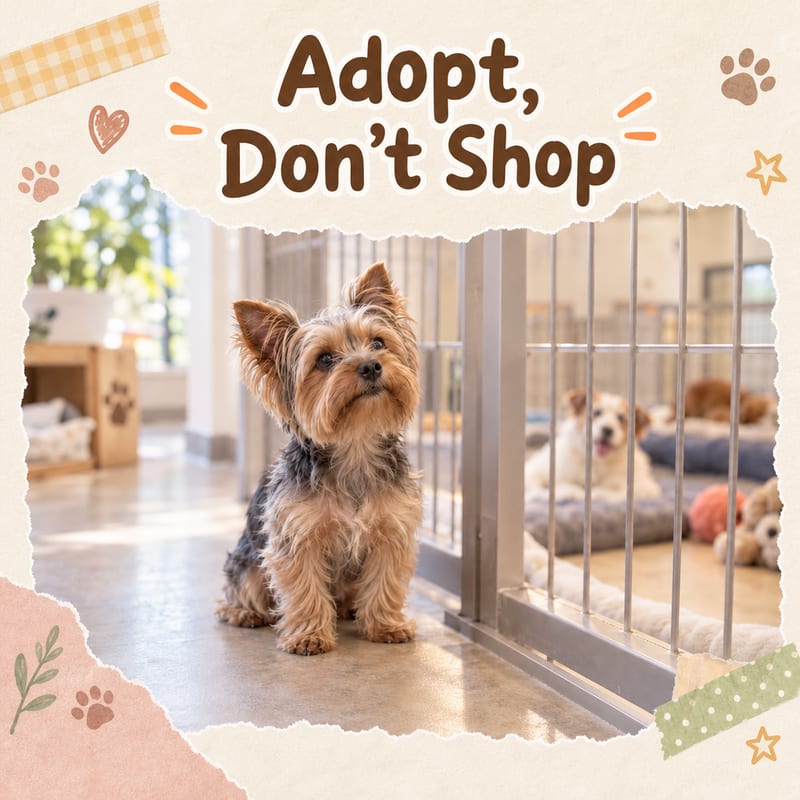
3. Three routes to adopting a Yorkie
For those searching 'Yorkie adoption' or 'Hong Kong dog adoption', to be honest: the chance exists but is not high, because most dogs taken in by organisations are mongrels and mixed breeds. Three main routes:
- SPCA (Society for the Prevention of Cruelty to Animals): The online dog list can be searched by breed keywords; abandoned or midway cases occasionally include Yorkies, and adults are significantly more likely than puppies.
- NKAC (New Territories Animal Care Centre): Mainly stray and abandoned dogs; the proportion of Yorkie mixes is higher than purebreds, and you can meet small terrier-type dogs in person.
- Private rescue groups and foster homes: Small-dog rescue cases (including Yorkies) mostly involve medical or abandonment follow-up; application thresholds and procedures vary by group, and social media platforms can be followed.
Legitimate adoptions mostly charge a nominal fee (usually already including vaccinations, microchip and neutering), so 'free puppy adoption' often means 'fees already bundled'; sources claiming completely free and take-home-on-the-spot are instead high-risk signals of unlicensed breeding farms. By the way: families adopting a Yorkie still face long-coat care and barking training; a cheaper source does not make the care any cheaper. Before applying, it is advisable to watch the introduction video and behaviour assessment of the dog you like, and talk to the team clearly about its barking, tolerance of brushing and social history; when the match is right, the adoption process usually takes two to four weeks.
4. Before meeting the seller: eight-point verification checklist
Whatever source you find online, it is advisable to bring this checklist and verify each item:
- Check licence: A licensed dog breeder can provide a licence number, which can be verified with the Agriculture, Fisheries and Conservation Department; unlicensed breeding is a grey industry not tolerated by Hong Kong law
- See the mother dog on site: Refuse arrangements where only the 'goods' are handed over without showing the mother dog
- Vaccination and deworming records: Check dates, drug labels and veterinarian signatures
- Parents' health information: Knee, eye and liver-related records
- Observe condition on the spot: Puppies that are listless, lethargic, breathing rapidly or have heavy eye discharge should be treated with caution
- Written contract: Health guarantee period, return clauses, neutering clauses in black and white
- Microchip registration: Who is responsible for the transfer procedure, stated clearly
- After-sales follow-up: Whether there is a veterinarian contact network and behavioural consultation support
5. Monthly expense estimate: can you afford to buy, can you afford to keep?
The key holding costs of a Yorkie are grooming and teeth—the long coat needs maintaining, and small dogs need regular dental care; these two are routine expenses that cannot be skimped:
| Item | Monthly estimate (HKD) | Description |
|---|---|---|
| Main food and treats | $400–800 | Small dogs eat little; weigh portions to prevent overweight |
| Professional grooming | $400–700 | Every 4–6 weeks; if keeping a long coat, brushing time replaces part of the expense |
| Daily care supplies | $100–250 | Brushing tools, eye cleaning, toothbrushing supplies apportioned |
| Preventive medical apportioned | $150–350 | Vaccinations, monthly deworming, annual health check |
| Medical reserve | $200–400 | Contingency fund for dental, knee and tracheal problems |
| Total reference | Around $1,200–2,400 | Excludes boarding, toys and one-off medical expenses |
It is recommended to set aside an emergency medical fund at least equal to six months' expenses before bringing the dog home. Once a Yorkie needs scaling, knee surgery or gastrointestinal foreign body treatment, a single expense may exceed several months of routine costs.

6. Buy or adopt: a practical way to decide
Ask yourself three questions: First, do you absolutely need a purebred Yorkie, or would a small mixed companion dog also be acceptable? Second, can you accept an adult dog with initially unknown personality and background? Third, does your budget have room for grooming and dental care? If all three tend towards 'yes', adoption is the cheap, quick and meaningful choice; if pedigree is a hard requirement, then allow more time to screen sources and carry out the verification checklist in section 4 to the end. Also note: keeping a dog in Hong Kong requires a licence, so remember to include the dog licence fee and vaccination expenses in the budget.
Key summary
- ✅ 2026 Hong Kong reference: pet-grade $8,000–20,000, pedigree-grade $20,000–38,000
- ✅ 'Teacup' is not a standard classification; a high premium equals high medical risk
- ✅ A high price does not equal health: the parents' knee, eye and liver records are the key
- ✅ Three adoption routes: SPCA, NKAC, private rescue; adults more likely than puppies
- ✅ Verify each of the eight checklist items; eliminate unlicensed sources immediately
- ✅ $1,200–2,400 per month, plus six months' expenses as an emergency medical fund
- ✅ Dog licence and vaccinations are annual expenses; include them in the budget
Related reading
- Yorkshire Terrier disadvantages and how to cope
- Yorkshire Terrier lifespan and health
- Yorkshire Terrier personality fully explained
- Puppy food, kitchen scales, brushing tools and microchip tags: all available at PetChill pet supplies.
The prices and expenses in this article are general reference ranges for 2026; actual prices depend on market supply and demand and do not constitute a recommendation of any merchant. Please comply with relevant Hong Kong legislation regarding adoption and breeding.
 Fuji One full guide →