
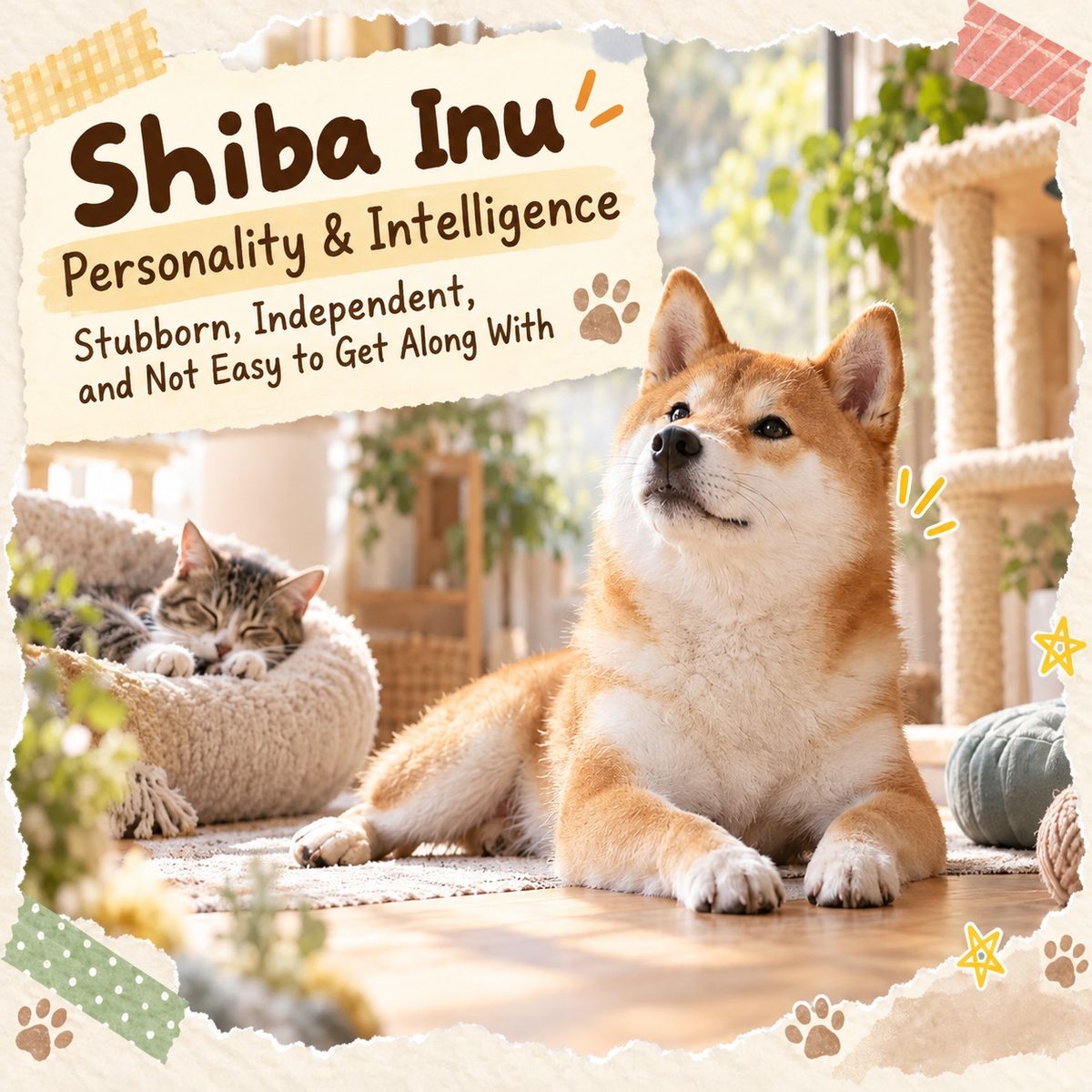
Quick answer: The key words for a Shiba Inu's personality are independent, stubborn, clean, smart, loyal but slow to warm up — it's called the 'cat-like dog'. Its 'intelligence ranking' isn't high because the ranking measures obedience rather than understanding; it's a dog that 'understands, but whether it obeys is up to me'.
Want to know the Shiba Inu inside out? Start with the Shiba Inu breed profile and the complete Shiba Inu guide.
What kind of dog is a Shiba Inu? Key points in 30 seconds
The Shiba Inu is the smallest native dog breed still existing in Japan and one of the 'six Japanese breeds'. Originally a hunting dog in mountainous areas, it chased rabbits and birds and even helped hunt wild boar. In 1936 it was designated a Natural Monument in Japan. It is most famous for its 'cat-like' personality: independent, clean, loyal to family but not endlessly eager to please. The table below shows the specifications Hong Kong owners most often look up:
| Item | Shiba Inu |
|---|---|
| Origin | Japan (central highland mountains) |
| Average lifespan | 12–15 years |
| Weight | Male 8–11 kg / Female 6.5–9 kg |
| Height at shoulder | Male 38–41 cm / Female 35–38 cm |
| Coat | Double short coat, extremely heavy shedding during shedding season |
| Personality | Independent, stubborn, clean, loyal but slow to warm up, strong hunting instinct |
| Hong Kong price | About HK$12,000–30,000 (depending on bloodline and coat colour) |
| Monthly basic expenses | About HK$900–1,700 |
Three fundamentals you must know:
- Don't expect 'come when called' — Shibas are highly autonomous; recall training takes long-term effort, and always ensure an enclosed area before letting them off leash.
- Shedding season is a big deal — twice a year of 'blizzard-style' shedding, each lasting about two to three weeks, requiring daily brushing.
- They like to choose their own people — being reserved with strangers isn't aggression; forcing them to be touched by strangers only increases stress.
Shiba Inu price and monthly expenses (2026 Hong Kong market)
| Item | Range | Notes |
|---|---|---|
| Registered breeder | HK$18,000–30,000 | Includes pedigree certificate, parents' eye and hip screening records |
| Licensed pet shop | HK$12,000–22,000 | Red Shibas most available; black and sesame Shibas more expensive |
| Adoption | HK$0–2,000 | Most already neutered and vaccinated, mainly adults |
| Vaccines (three puppy shots) | HK$900–1,500 | Annual booster thereafter |
| Neutering | HK$2,500–6,000 | Medium dog dosage; males cheaper |
| Monthly food | HK$400–800 | Medium dog food, weight control to protect joints |
| Monthly deworming (share) | HK$100–200 | Internal and external |
| Monthly grooming/brushing tools | HK$100–300 | Undercoat rake plus slicker brush during shedding season |
| Medical reserve (recommended) | HK$300–600 | Watch for skin allergies, knee joints and glaucoma |
| Monthly total | About HK$900–1,700 | Excludes training classes and emergency medical costs |
The most underestimated cost for Hong Kong owners is the time cost during shedding season: twice a year, each lasting two to three weeks, 10–15 minutes of daily brushing, otherwise fur will clog air-conditioning filters and bed sheets throughout the home.
Who is a Shiba Inu suitable for?
| Owner type | Suitability | Reason |
|---|---|---|
| People who enjoy a 'partner with opinions' | Very suitable | The Shiba's independence is an advantage for these owners |
| Experienced owners willing to attend training classes | Suitable | With positive training and clear boundaries, a Shiba can be very attached to home |
| Flat dwellers willing to walk daily | Suitable | Weight 6–11 kg, moderate space needs, barking less than expected |
| Beginners expecting 'come when called, completely obedient' | Not recommended | Shibas will first assess whether there's a benefit, which can be frustrating |
| People wanting a dog to play with children | Needs assessment | Shibas dislike being ridden or having their tails pulled; teach children to respect boundaries |
Reverse self-test (three questions):
- Can you accept 10–15 minutes of daily brushing during shedding season, for two to three weeks straight?
- Can you accept that before letting your dog off leash you must ensure an enclosed area, and cannot rely on recall alone?
- Can you accept that sometimes it will walk away rather than immediately respond to your enthusiasm?
If you can't answer 'yes' to two of the three, a Golden Retriever or Poodle may better match your rhythm of interaction.
Shiba Inu compared with other medium dog breeds
| Breed | Weight | Personality | Monthly basic expenses | Suitable for beginners |
|---|---|---|---|---|
| Shiba Inu | 6.5–11 kg | Independent, stubborn, clean | HK$900–1,700 | Yes, if you accept a dog with opinions |
| Akita | 25–45 kg | Calm, protective, wary of other dogs | HK$1,500–3,000 | Not recommended for beginners |
| Poodle (Standard) | 20–32 kg | Highly obedient, easy to train | HK$1,300–2,400 | Yes |
| Border Collie | 14–20 kg | Extremely active, needs a job | HK$1,200–2,200 | Not recommended for those with no time |
| Mongrel (medium mixed breed) | 15–25 kg | Stable, adaptable | HK$900–1,600 | Yes |
In one sentence: for quiet, clean and full of character, choose a Shiba; for high obedience and easy training, choose a Poodle or Mongrel; the trade-off is simply 'obedience' versus 'autonomy'.
Four most common Shiba Inu misconceptions
| Misconception | Reality |
|---|---|
| Shibas are most like cats, so they need little care | Being clean just means they dislike dirt; they still need daily walks, socialisation and brain games |
| Ranked 79th in intelligence, so not smart | The ranking measures obedience speed; Shibas have high understanding and will assess the reward before deciding whether to comply |
| They're small, so a collar is enough, no harness needed | Shibas may suddenly back out and resist the leash; collars can easily damage the trachea, so an H-style harness is recommended |
| Shibas will definitely bite | Biting mostly stems from fear, pain or insufficient socialisation; good socialisation from 3–16 weeks can greatly reduce it |
Shiba Inu health check schedule: what to test and when
The three things to watch most in Shibas are skin allergies (atopic dermatitis), knee joints (patellar luxation) and eye pressure (glaucoma). Health checks for medium dogs are cheaper than for large dogs, and regular checks are much cheaper than dealing with problems after they arise:
| Age | Recommended items | Approximate cost |
|---|---|---|
| 2–4 months | Three puppy vaccines + deworming | HK$900–1,500 |
| 6 months | Pre-neutering blood test + neutering | HK$2,800–5,500 |
| 1 year | Annual check-up + vaccine booster + knee palpation | HK$500–900 |
| 2–6 years | Annual check-up; from age 3 add skin and eye pressure checks | HK$700–1,400 |
| 7 years and above | Every six months: blood test, eye pressure, dental assessment | HK$1,200–2,000 per visit |
Three daily observations (free but require daily attention):
- Scratching frequency: scratching more than 3–4 times a day, redness on paw pads — early signs of skin allergies, especially noticeable in Hong Kong's humid season.
- Eyes: cloudy eyes, bumping into furniture, reluctance to walk in dim areas — check eye pressure the same day; glaucoma is an emergency.
- Walking: holding up a hind leg after jumping, sitting down after a few steps — possible patellar luxation, which can affect medium dogs too.
Hong Kong ophthalmology specialist consultation fees are about HK$800–1,500, glaucoma surgery can start from HK$15,000; an annual eye pressure check costs about HK$300–500, the cheapest insurance.
Three budget plans: thrifty, standard, secure
The same Shiba can be kept in three ways. The point isn't which is 'right', but to choose in advance so you don't discover a shortfall when problems arise.
| Item | Thrifty | Standard | Secure |
|---|---|---|---|
| Food | HK$400/month | HK$600/month | HK$800/month |
| Brushing tools/grooming | Self-brushing HK$80/month | HK$150/month | HK$300/month |
| Deworming (share) | HK$100/month | HK$150/month | HK$200/month |
| Medical reserve | HK$0 (rely on cash) | HK$300/month | HK$600/month |
| Extras | — | Annual check-up + training class (HK$2,500–6,000) | Six-monthly check-up + pet insurance |
| Monthly total | About HK$580 | About HK$1,200 | About HK$1,900 |
| Suitable for | Owners with time to groom themselves and cash on hand | Most working families | Those wanting to avoid sudden large expenses |
Insurance vs self-funded reserve: Hong Kong pet insurance annual premiums are generally HK$2,000–5,000 (depending on age and coverage), with excess and caps. Shibas are medium dogs; common expenses are concentrated on skin and eyes. If you don't have more than HK$20,000 in liquid cash, insurance is a tool to spread sudden risks; you don't need both.
Three practical ways to save (without affecting health):
- Buy shedding-season tools once (undercoat rake + slicker brush) for about HK$300–600, cheaper than going out for grooming each time.
- For itchy skin, try environmental management first (wash bed sheets, control indoor humidity) before considering changing food, which can save on trial food costs.
- Record weight monthly; Shibas are prone to stealing extra food, and uncontrolled weight puts extra strain on knee joints.
In one sentence: Shibas aren't expensive to keep, but the 'time cost during shedding season' and 'medical reserve' are the two most commonly underestimated long-term expenses.
1. The Shiba Inu personality core: a cat living in a Japanese dog's body
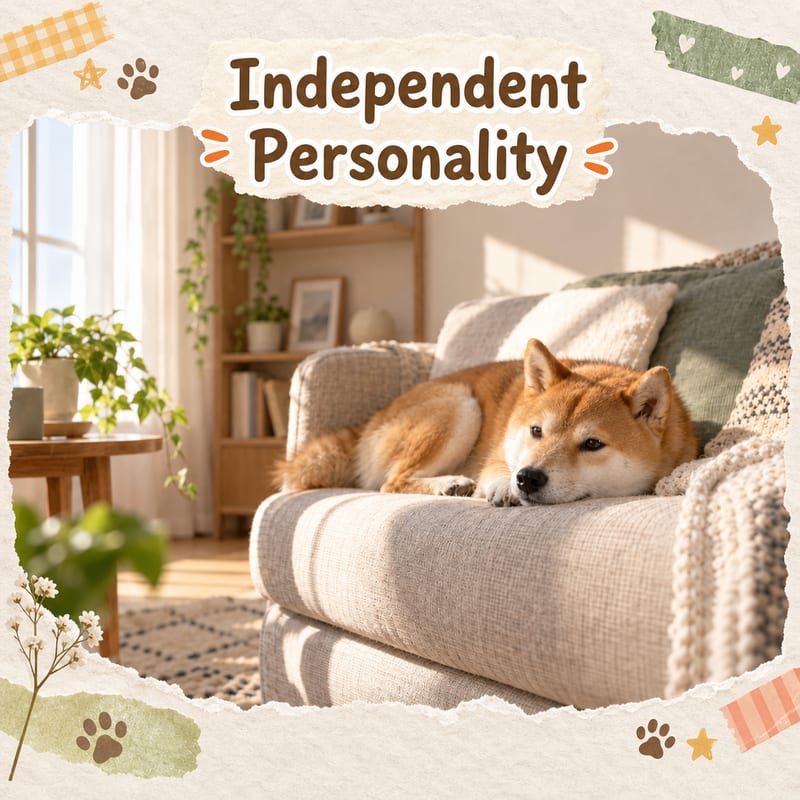
The Shiba was originally a hunting dog in the mountains of Japan, and since ancient times had to judge for itself when chasing rabbits and birds. This history is written directly into its personality:
- Independent and opinionated — won't unconditionally please humans; if it doesn't like something, it will stand its ground.
- Clean — avoids mud and dirt like a cat, grooms itself, and has much less body odour than most dogs.
- Loyal but slow to warm up — deeply attached to family, will quietly wait for you when you come home rather than jumping at the door; this sense of distance is precisely their gentleness. They keep their distance from strangers and mainly observe.
- Sharp senses — reacts strongly to sounds and unfamiliar smells; when excited, it emits the famous 'Shiba scream'.
- Hunting instinct remains — has an urge to chase small animals such as birds and hamsters; a leash outdoors is non-negotiable.
The breed descriptions of the Japanese Dog Preservation Society and the American Kennel Club (AKC) both list 'loyal, independent, alert' as the three pillars of the Shiba's personality — three words, one soul.
2. Shiba Inu intelligence: ranking not high, but the ranking is unfair
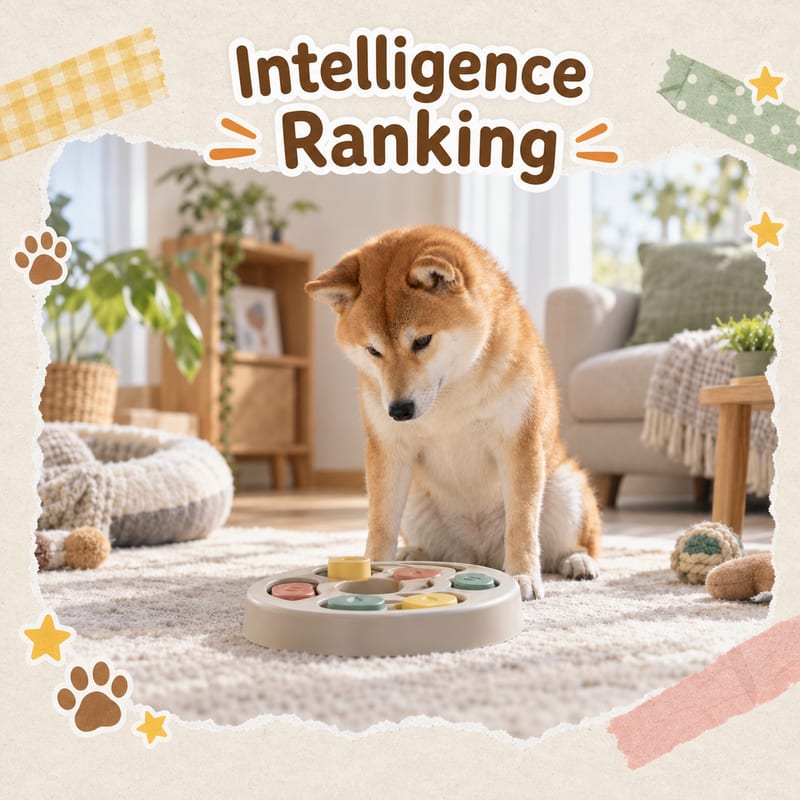
Many people search 'dog intelligence ranking 100' and see the Shiba at 79th and assume it's not smart — that's a misreading. Animal behaviourist Stanley Coren's classic ranking framework measures working obedience — i.e. 'how quickly does it obey when the owner calls once'. Shibas actually learn quickly, but they first ask themselves 'is there a benefit for me?' before deciding whether to comply.
Equally smart comparison: retrievers like Golden Retrievers do it ten times after one ask; Shibas ask once, study three times, then decide whether to do it once depending on the situation. A low ranking means difficult to control, not difficult to communicate with. This trait makes them perform quite well in agility training, scent games and other 'rewarding, logical' activities, but they are naturally disadvantaged in pure obedience competitions — not because they can't learn, but because they find it boring. Understanding this will make your relationship with your Shiba much smoother.
3. Male vs female differences, coat colour and personality: what's true, what's myth
| Claim | Accuracy | Comment |
|---|---|---|
| Male Shibas more outgoing, more friction with male dogs | Partly true | It's generally thought that unneutered males are more likely to be mutually antagonistic; neutering and socialisation can improve this |
| Female Shibas more independent, more petite | Common saying | Individual differences far outweigh sex differences |
| Black Shibas have a 'fiercer' personality | No basis | Kennel club standards do not link coat colour to personality; owner expectations cause observational bias |
| White Shibas quieter and more artistic | No basis | Same as above; search popularity for 'black Shiba personality' and 'white Shiba personality' comes from preconceived impressions |
| Shibas become more attached to home as they grow | Partly true | If socialised well as puppies, attachment to family increases noticeably in adulthood |
In one sentence: bloodline, socialisation and upbringing shape personality; coat colour only shapes price. By the way, the practical meaning behind 'Shiba Inu intelligence ranking': they have high problem-solving ability — they can open cabinets, undo buckles, and use their eyes to force you to hand over food. This 'applied intelligence' is a blessing in care, but an opponent in training. People who have kept Shibas generally agree: you're not training a dog, you're negotiating cooperation terms with a smart colleague. If you negotiate well, it's more reliable than anyone; if not, its schemes are more numerous than anyone's.
4. Shiba Inus with children and other pets
Shibas are usually gentle with their own children, but their tolerance has limits — they dislike being ridden, having their tails pulled or being hugged too tightly, so children should learn from an early age to 'ask the dog first, then touch the dog'. Their social style with other dogs is 'don't provoke me, I won't provoke you'; families with strong discipline actually get along well. With cats and small pets, because the hunting instinct remains, introduce gradually and feed separately; don't expect a Shiba to actively become best friends with a hamster. Multi-dog households generally find that females are slightly more accepting, but the most reliable approach is still early socialisation and the owner's management of boundaries.
5. Five interaction tips for living with a Shiba Inu
- Socialise from day one: three to sixteen weeks is the golden period; meet many people, hear many sounds, experience different surfaces.
- Positive reinforcement is the only shortcut: use treats, play and praise to exchange for obedience; forcing and scolding basically don't work on Shibas and will cost you trust.
- Short, frequent training sessions: five to ten minutes each, twice a day, better than half an hour at once — it will get bored and scream, and you'll end up exhausted.
- Think twice before letting off leash: Shiba recall rates are generally not high among breeds; an enclosed area is the safest way to burn energy.
- Respect its 'no': if it walks away, it means 'enough'; forcing it back only reduces the trust balance for the next interaction.
6. How to check if you and a Shiba Inu are a good match
The most practical method: before getting a Shiba, spend half a day with two or three adult Shibas through friends, volunteers or adoption centres, and observe their everyday version (not the highlight version in online videos). If you enjoy a relationship where 'the other has its own world', a Shiba will be the dog that feels most like a roommate and most like family; if you need immediate, responsive enthusiasm, a Golden Retriever or Poodle may be more suitable — there's no good or bad, only fit.
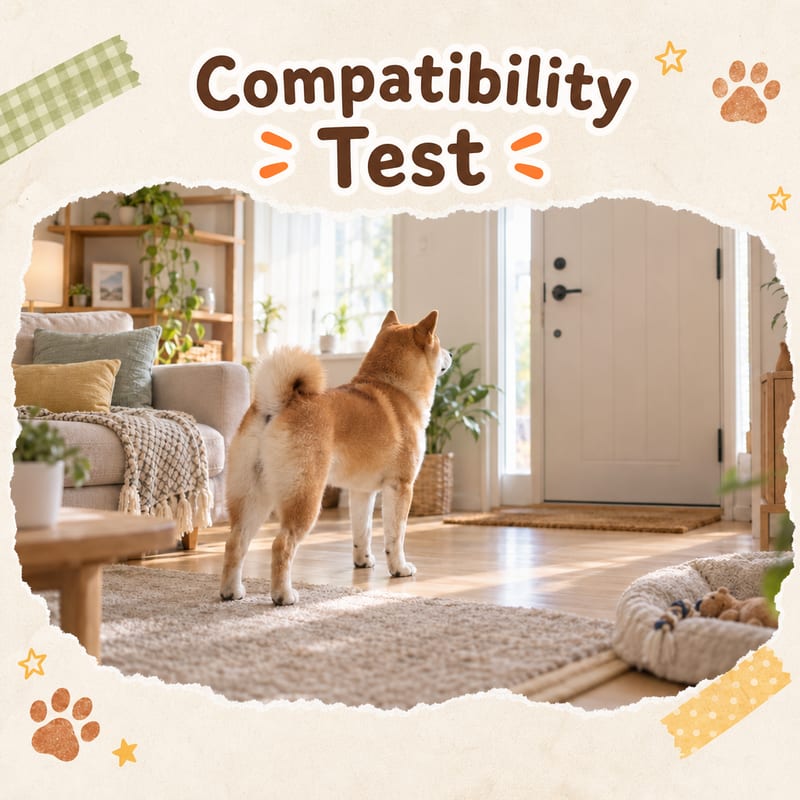
Key takeaways
- ✅ Shiba Inu equals cat-like dog: independent, stubborn, clean, loyal but slow to warm up, hunting instinct remains.
- ✅ The low intelligence ranking is a misunderstanding caused by an 'obedience ranking'; Shibas have high understanding and even higher autonomy.
- ✅ Coat colour does not determine personality; 'black Shibas are fierce, white Shibas are calm' is a preconceived myth.
- ✅ Male-female differences exist but are far smaller than individual differences; upbringing and socialisation are the main causes of personality.
- ✅ Positive reinforcement, short frequent sessions, and enclosed areas for exercise are the three golden rules for cooperating with a Shiba.
- ✅ Before getting one, spend half a day with an adult Shiba to confirm whether you can get used to a 'partner with opinions'.
Related reading
- Shiba Inu disadvantages and how to cope
- Shiba Inu lifespan and longevity guide
- Shiba Inu colours explained
- Clickers, puzzle feeders and high-quality treats for training your Shiba can all be bought at once from PetChill pet supplies, so positive training can start immediately.
The personality descriptions in this article are based on breed consensus; individual dogs vary greatly. For persistent behavioural problems, consult a registered veterinarian or accredited trainer.
Further reading
- Must-read for Hong Kong pet owners: the truth about talkativeness, clinginess and high intelligence →
- Must-read for Hong Kong cat owners: how smart is this dog-like clingy one →
- Hong Kong keeping guide: the intelligence and talkativeness of the fox of cats →
- Comparison of 12 cat breeds' personalities and prices →
- Common diseases, preventive care, veterinary information →
- Mongrel mixed breed illustrated guide →
- History of dog domestication →
- Cat ringworm →
- Cat vomit colour chart →
 Wellness Core full guide →
 K9 Natural full guide →
 Feline Natural full guide →



