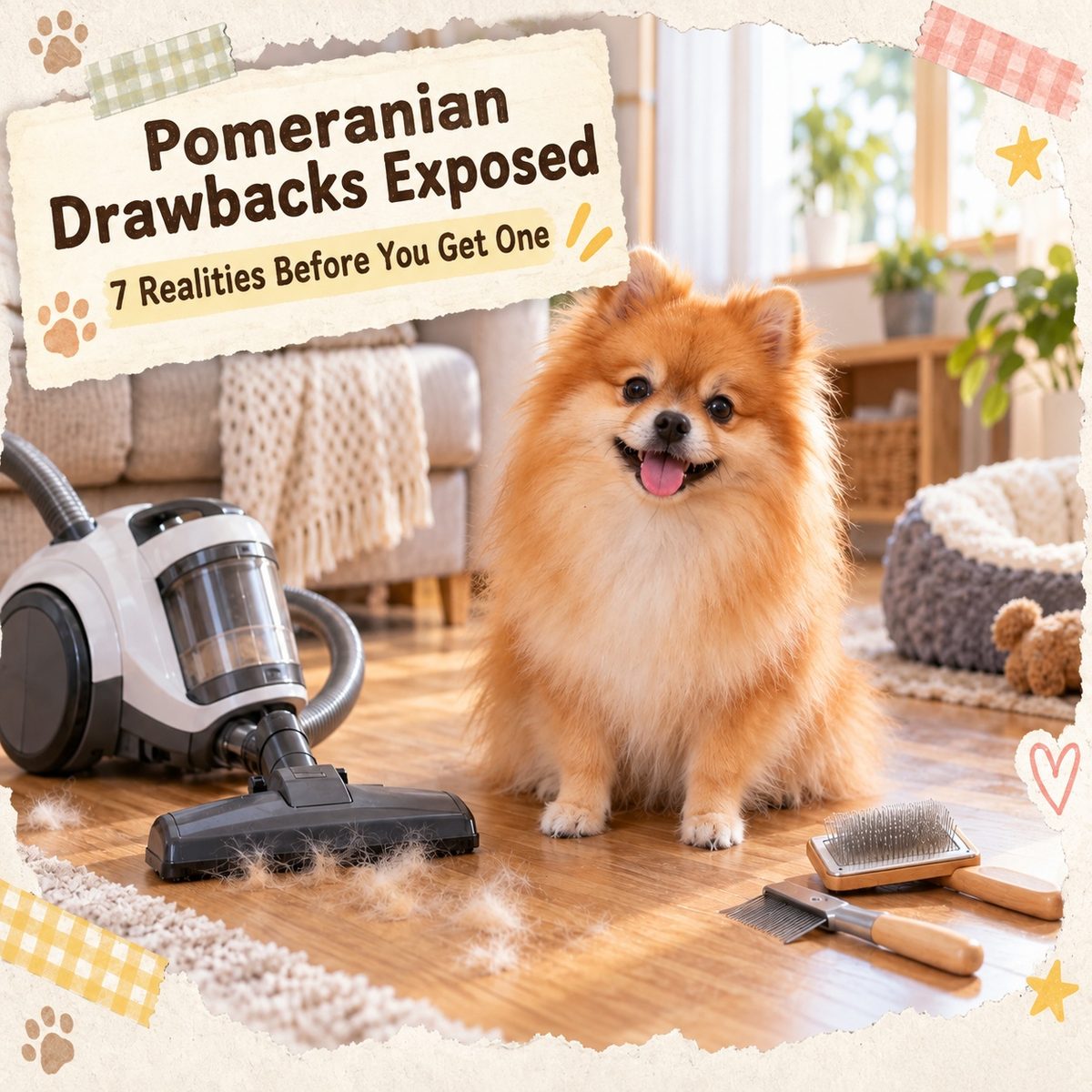
Quick answer: The main downsides of the Pomeranian centre on eight points: barking, shedding bursts, fragile bones, separation anxiety, stubborn temperament, heat sensitivity, dental and medical costs, and teacup-dog market chaos. Each has an actionable solution—this breed is not 'hard to keep', but 'must be kept with understanding'. Read this article before deciding.
Want a full picture of the Pomeranian? Start with the Pomeranian breed profile.
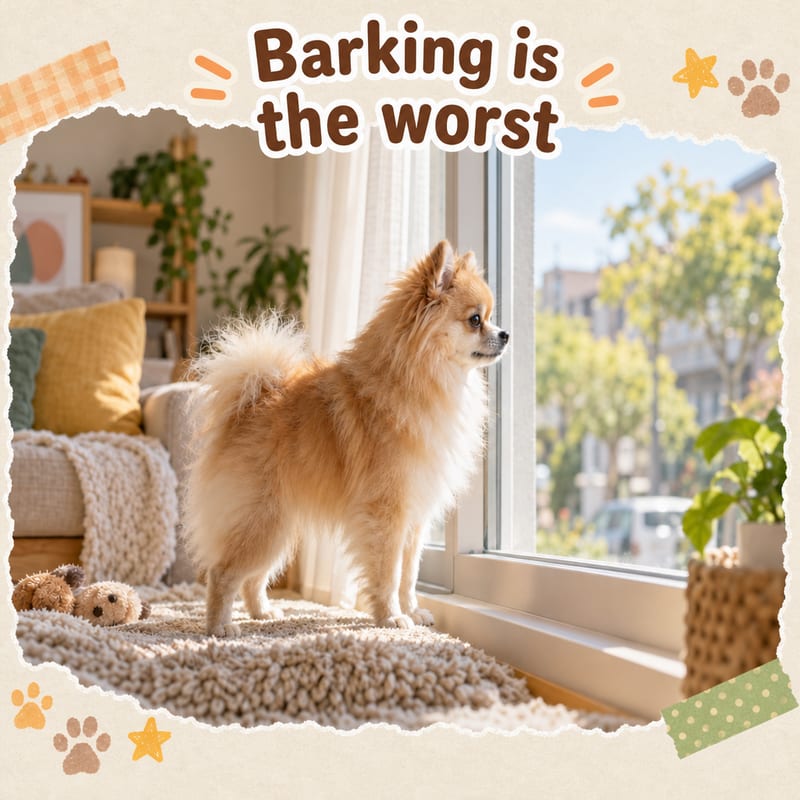
1. Barking: the number one complaint, and the most manageable
The Kennel Club describes the Pomeranian as an 'intelligent, active, curious' companion dog—the same high-alertness nervous system is exactly the source of barking: doorbells, corridor footsteps, stray cats outside the window, all are 'items to report'. In Hong Kong's small flats with average soundproofing, this downside is doubled.
Solutions: 1. From the first day home, teach a 'quiet' cue (bark twice → show toy/treat to redirect → praise immediately when quiet); 2. Reduce visual stimuli (frosted film on the lower half of windows); 3. Gradual alone-time training; 4. Reject the laissez-faire attitude of 'he's small, let him be'. Good training response is the Pomeranian's safety net—the question is whether you will start from day one.
2. Double coat: half cute, half fur and dust

The price of a fluffy ball: shedding all year, bursting in spring and autumn, undercoat so light it floats in the air. Brushing is not optional; it is the entry fee for this breed.
Solutions: Brush 3–4 times a week with a slicker and comb to check for mats; during shedding season, a short 5-minute brush daily; after bathing, use a blaster dryer to loosen the undercoat. Do not shave—shaving not only fails to cool them but can damage hair follicles and cause uneven regrowth ('post-shave syndrome' is a common complaint at vet clinics). Families sensitive to dust mites should spend a weekend with a friend's Pomeranian before deciding.
3. Fragile bones: patellar luxation and 'jumping down'
The Pomeranian is a small toy breed; the American Kennel Club (AKC) standard weight is about 1.8–3.2 kg, with fine bones. Patellar luxation is one of the most common orthopaedic problems in such breeds, clinically mostly caused by a combination of genetics and acquired trauma. Common accident scenarios: jumping down from a sofa, running down stairs daily, being dropped when picked up by a child.
Solutions: Set up pet ramps by sofas and beds; use stair gates or carry young dogs; lay non-slip mats along all walking routes (polished tiles are like an ice rink); keep weight within the standard range—excess weight multiplies the burden on knees. When choosing a source, check parental knee records; with good acquired management, many mild cases never need surgery.
4. Separation anxiety: they really dislike being home alone
The Pomeranian is a typical 'follow-you-everywhere' companion breed; following you around is cute, but when left alone for long periods, this attachment becomes fuel for barking, destruction and inappropriate urination. Families with long working hours are most vulnerable.
Solutions: Set up a 'safe den' in a crate or pen and build positive associations from day one; 20 minutes before leaving, do an energy drain (walk + sniff mat); keep departures and returns calm, not dramatic; leave safe chew items. Practise alone time gradually starting from five minutes. If self-harming or fasting-level anxiety appears, that is a level requiring veterinary intervention—do not just train harder.
5. Stubborn temperament: small body, 'big dog mindset'
Pomeranians are generally considered self-aware and opinionated: they dodge when they don't like something, go stiff on the grooming table. If owners let them get away with jumping up, food guarding, or barking at other dogs because 'he's just a small dog', adult problem behaviours become very stubborn, and aggression in small dogs is more easily overlooked, ultimately borne by neighbours and other dog owners.
Solutions: Start socialisation during the 8–16 week golden period; treat all 'it's fine because he's small' behaviours with the same rules as for large dogs: consistent cues, whole-family consistency, immediate correction. Puppy classes are one of the highest-return investments for this breed.
6. Heat sensitivity: heatstroke risk higher than you think
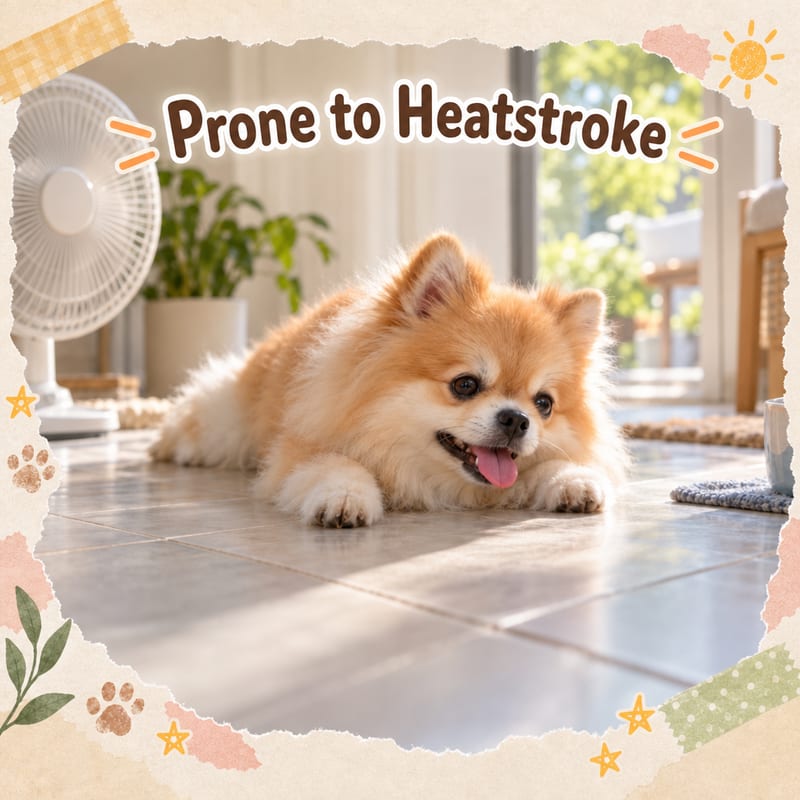
Thick coat + short airways + small body = poor heat dissipation. Hong Kong's midday asphalt in June is like an iron for a small dog walking with four paws on the ground.
Solutions: Walk at dawn or night; before walking, hold the back of your hand to the ground for five seconds; carry water; never leave the dog in a car under any circumstances (even ten minutes with windows open). Heatstroke signs—rapid panting, heavy drooling, staggering—are an emergency; cool immediately and take to a vet.
7. Dental and medical costs: a common small-dog issue
Small dogs' saliva composition and tooth alignment cause rapid tartar build-up; Pomeranians are 'extraction regulars' at vet clinics. Periodontal disease is not just bad breath: bacteria entering the bloodstream can affect the heart and kidneys, and full-anaesthetic dental surgery with extractions often runs to several thousand Hong Kong dollars.
Solutions: Establish toothbrushing from puppyhood (pet enzyme toothpaste, daily ideally); drop the wishful thinking of relying on 'dental chews' alone; annual oral check-ups; set aside a monthly medical reserve. Those who do the maths are the most reassured: prevention is the highest-return expense.
8. Market chaos: teacup dogs and premium traps
'Teacup Pomeranian' and 'mini Pomeranian' are not recognised classifications; behind them may be undersized individuals, crossbreeds, or stunted, sickly dogs; unlicensed sources carry genetic disease risks and no after-sales support—the most common 'buy first, regret later' point for this breed. This is not a downside of the Pomeranian itself but of the market environment—but you pay the money, so it must be counted.
Solutions: Check dog breeder licences, parental health records, vaccination and microchip documents; refuse cash purchases without receipts; or go directly through adoption channels such as the SPCA or rescue organisations (adoption screening is itself free due diligence).
Summary table of downsides
| Downside | Severity | Solutions | Cost direction |
|---|---|---|---|
| Barking | High (neighbour sensitivity) | Quiet cue + alone training + window covering | Mainly time; training class HK$1,500–4,000 |
| Shedding bursts | Medium-high | Brush 3–4 times a week, blaster dryer | One-off tools HK$200–600 |
| Patella/bones | Medium (genetic component) | Ramps, non-slip mats, weight control | Mild conservative treatment; surgery often HK$10,000+ |
| Separation anxiety | Medium | Safe den + gradual alone time + energy drain | Mainly time; behaviour consultation if severe |
| Stubborn temperament | Medium | Puppy class, whole-family consistent rules | Training class HK$1,500–4,000 |
| Heat sensitivity | Medium (seasonal) | Change walk times, zero car stays | Near zero cost |
| Dental | High (cumulative) | Daily brushing + annual check | Scaling/extraction HK$3,000–8,000 per visit |
| Market chaos | High (avoidable) | Check licence + parental records or adopt | What you save is life-saving money |

Frequently asked questions
Are Pomeranians easy to keep? Easy to start but require diligence: low space and food needs, but barking, shedding, bones and companionship are long-term tasks; suitable for people with time and budget.
Do Pomeranians bark a lot? Yes, the number one complaint; smart and trainable, a quiet cue and alone training from day one can keep it at a reasonable level.
How bad is shedding? All year round, bursting in spring and autumn; brush 3–4 times a week, do not shave.
How fragile are the bones? Patellar luxation is common; prevent jumping down, stairs, use non-slip mats and weight control; most mild cases do not need surgery.
Are Pomeranians heat-sensitive? Yes. Walk early morning or at night, test ground temperature, never leave in a car; rapid panting and drooling are heatstroke emergencies—seek immediate vet care.
Do they get separation anxiety? Not uncommon; safe den + gradual alone time + pre-departure energy drain can manage it; see a vet for self-harming anxiety.
Is medical care expensive? Dental, knee and skin are the three cumulative items; daily brushing and a monthly medical reserve are the highest-return prevention.
Key takeaways
- ✅ Eight downsides: barking, shedding, bones, separation anxiety, stubbornness, heat sensitivity, dental, market chaos
- ✅ All have corresponding solutions; none is 'unsolvable'; the most expensive remedy is time and discipline
- ✅ Barking and temperament rely on training from day one, not luck or size exemption
- ✅ Bones and dental are the two 'prevention cheaper than treatment' items: non-slip, weight control, brushing
- ✅ Heat sensitivity is a management issue, not a deal-breaker: changing walk times solves most of it
- ✅ The real pitfall is at the buying stage: check licence and parental records, or adopt
- ✅ Conclusion: Pomeranians are not hard to keep; the hard part is keeping them with understanding; do the homework, and this breed's loyalty and spirit repay double
Related reading
- Pomeranian personality and intelligence explained
- Pomeranian weight and growth curve
- Pomeranian price and adoption guide
- Slicker brushes, pet toothbrushes and non-slip mats: find them all at PetChill pet supplies.
The health content in this article is general information; consult a registered veterinarian for bone, skin or behavioural issues.
 Fuji One full guide →