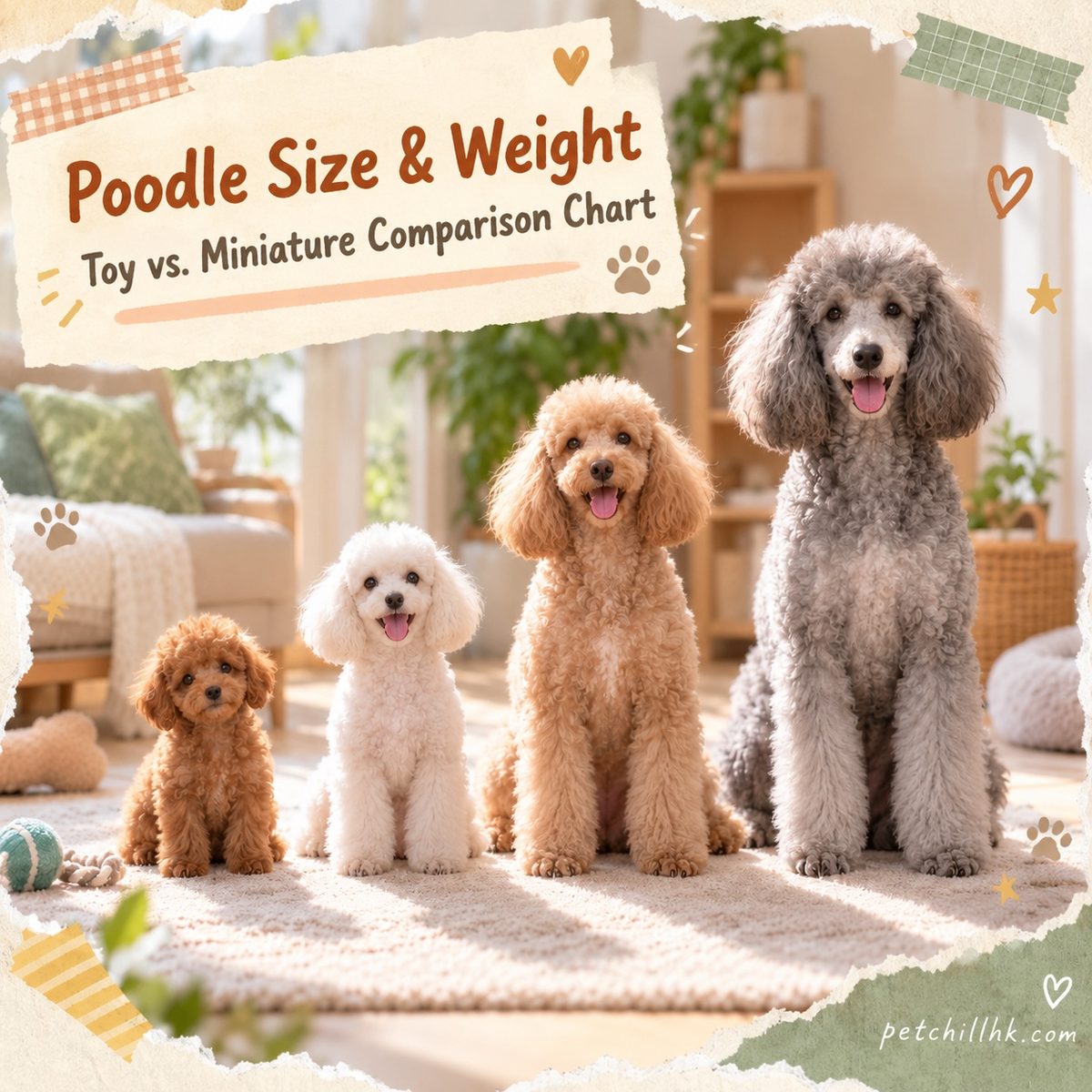
Quick answer: Poodles come in four sizes: Toy (≤25cm, about 2–4kg), Miniature (about 25–38cm, about 5–8kg), Standard (≥38cm, about 20–30kg) and Giant (a larger bloodline). Toys settle around one year old, Giants take eighteen months; thick coats hide fat, so weight management means 'hands-on feeling' plus monthly weighing.
Want to know poodles inside out? Start with the Poodle breed profile and the Complete Poodle Guide.
1. 'Poodle size': the four levels explained
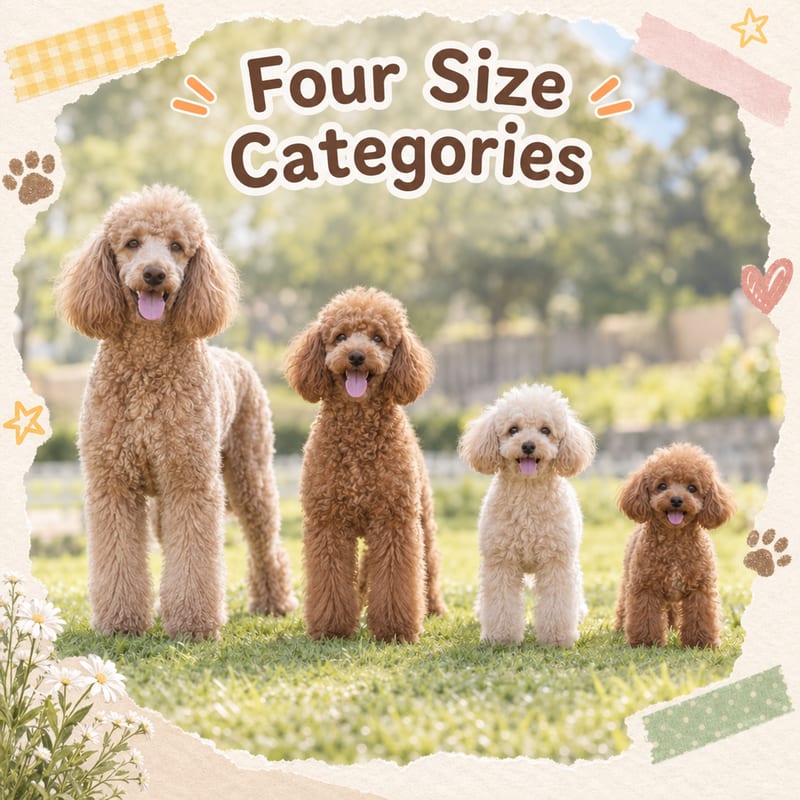
Poodles are one of the few breeds officially classified by size, with both the AKC and the UK Kennel Club dividing them by shoulder height (ground to the highest point of the shoulder blade, not head or neck height). Four-level comparison:
| Level | Shoulder height (adult) | Reference weight | Settling time | Common use in Hong Kong |
|---|---|---|---|---|
| Toy | ≤25 cm | about 2–4 kg | 8–12 months | Apartment companion, carried out in bags |
| Miniature | about 25–38 cm | about 5–8 kg | 10–14 months | Mainstream family dog |
| Standard | ≥38 cm | about 20–30 kg | 12–16 months | Sporting dog, water-retrieving heritage |
| Giant (large bloodline) | Clearly above the lower Standard range | Can reach 30 kg+ | 15–18 months | Needs more space |
Two things are most easily misunderstood: First, 'Giant' is not a separate breed—it is an oversized bloodline bred within Standards, defined differently by different registries, so when a seller says 'Giant' you need to ask for the parents' shoulder-height data; Second, there is no genetic guarantee between levels—even Toy to Toy can produce individuals close to the lower end of Miniature, so no matter how nicely a size promise is written, it is no substitute for measuring the parents. A word on why 'Giant Poodle puppy prices' are especially high: large bloodlines are scarce, the cost of the mother's pregnancy and rearing is high, and litters are small, so the price structure is inherently expensive; but this 'expensive' is a supply issue, not a health guarantee—the larger the dog, the heavier the burden on hips and growth plates, so you still need to ask for the parents' joint screening records; don't skip verification just because you 'bought a Giant'.
Size also determines a lifetime of 'matching dimensions': food bowls, crates, car spaces, seat belts, surgical anaesthetic doses and even parasite treatment doses are all calculated by weight—so asking about adult size before getting a dog is not just a space issue, it is an issue for every receipt from now on. Toy owners should also beware the opposite misconception: because the dog is so small, feeding is all by feel and going out means being carried, resulting in too little exercise and too many calories, so by age three it is so fat it pants when walking—'small' does not mean 'no management'.
2. Growth curve: when they grow, how fast, and where to rein it in
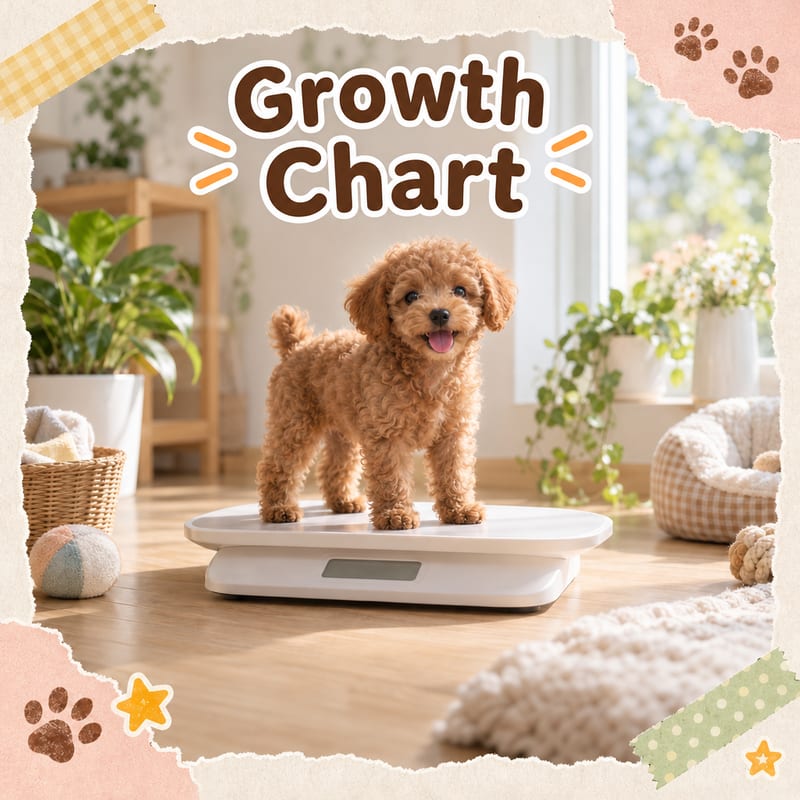
Toy and Miniature types sprint early: within two months of birth they can reach half their adult weight, about two-thirds by four months, after which growth slows and becomes 'filling out'; Standard and Giant types grow rapidly in the first six months, then enter a longer skeletal maturation phase. Three feeding milestones: First, the 3–6 month food-switch point—when to move from puppy food to adult formula: small breeds around nine to twelve months, large breeds delayed until skeletal maturity (follow your vet's individual advice); switching too early means insufficient nutrition, too late means excess calories; Second, start monthly weighing at six months—use a pet scale or weigh yourself holding the dog and subtract your own weight, and record it in a phone note; Third, coat settles around one year old—puppy fluff falls out and adult coat grows in, so the first 'adult trim' is best done after one year, when the groomer can measure your dog's true outline accurately.
3. How to measure at home: three-step method + BCS body condition score
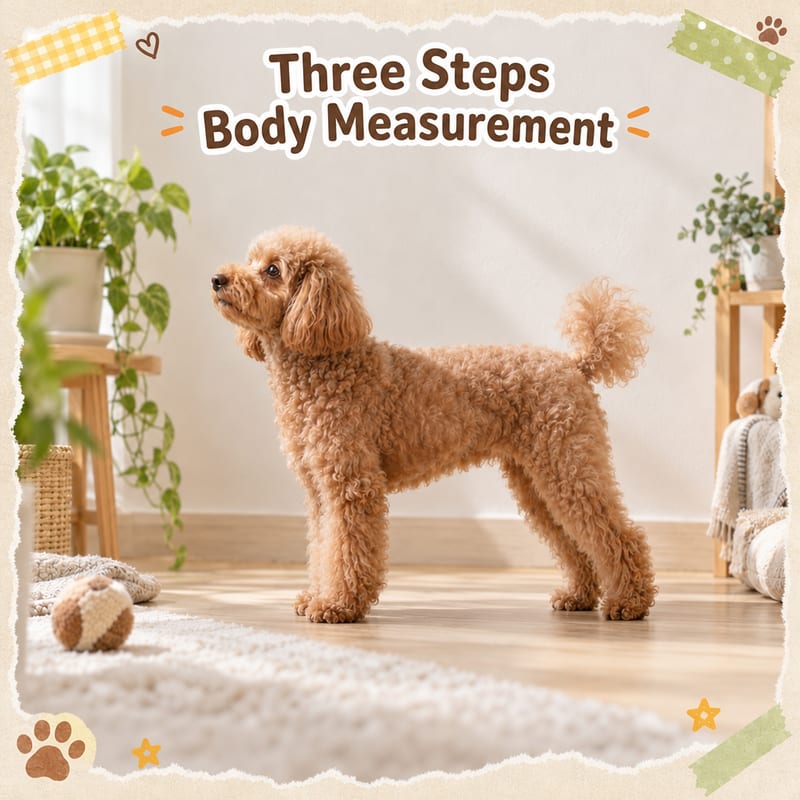
Don't rely on your eyes to measure a poodle; use the three-step standard routine: Shoulder height—dog standing squarely against a wall, place a book flat on top of the shoulder blades, measure from the book to the floor; Body length—from the front point of the breastbone to the base of the tail, normally slightly longer than shoulder height; Waistline—viewed from above, there should be a narrowing behind the last rib. Feeling is the truth for poodles: thick coats hide body fat, so do a 'rib check' every two weeks—press two fingers lightly on the last few ribs; easily felt = ideal; have to press down to feel = overweight (poodles have a high overweight rate because of feeding errors and treats); every rib visible at a glance = underweight. The internationally used 9-point BCS takes 4–5 as ideal; vets also use a 5-point scale, so at check-ups directly ask 'what BCS score is my dog?', turning subjective fatness into a trackable number; ask the same question at every visit, and over two or three years you will have a body condition curve that truly belongs to your dog. For Giant and Standard types, one more point: during rapid growth, do not over-supplement calcium and calories—the faster the growth, the higher the joint disease risk, a consensus in large-breed nutrition.
4. The Hong Kong reality of size mismatch: which level suits which household
Pick the wrong size and the next decade will be hard work. Toy: small-space friendly, easy for elderly owners to manage, but watch for patellar luxation risk and the 'carried everywhere becomes habit' problem; not recommended for families with toddlers (easy to injure); Miniature: Hong Kong's most balanced choice, sturdy enough to play with yet fine in a lift-served flat; Standard/Giant: appetite, grooming fees and space all double together, suited to families with a car, willing to exercise and with sufficient budget—'poodles are tiny' is a common misconception about the Standard level; a 30 kg white Standard Poodle jumping up is simply unmanageable for the elderly or children. This is exactly where adopting an adult poodle has the advantage: its size is already written on its face, no gambling on the curve. One final rehoming detail: if one of the parents of the puppy you like is at the edge of a level (e.g. 'Miniature but on the large side'), the adult size has a good chance of crossing levels—Hong Kong flats are limited, so it is better to predict larger and choose a smaller bloodline than to bet on 'it should shrink back'.
For actual price ranges and adoption fees by level, see Poodle prices: Giant Poodle puppy prices, four sizes and adoption.
5. Matching food portions to size: three common mistakes
First, using a measuring cup instead of a scale: different dog foods vary greatly in density, so only a kitchen scale accurate to the gram can control calories. Second, feeding by the packaging table: the calorie figures on packaging are averages plus a safety margin, and the vast majority of indoor poodles need less than the listed upper limit; start with the table, then adjust up or down by 10% based on monthly weighing. Third, free treats: one piece of jerky for a Toy can be 5% of its daily calories; 'small dogs don't eat much so can't get fat' is an illusion—they need far fewer extra calories than large dogs to become overweight. A practical formula: adult maintenance calories are roughly resting energy multiplied by an activity factor; the simplest approach is 'feed according to the packaging table for two weeks, then use monthly weight change as the only indicator, adjusting by 10% each time, with results in two weeks'; never use 'it seems so hungry' as a reason to add food—poodles are smart, and hunger performances are an inherited skill.
Key takeaways
- ✅ Poodles are divided into four sizes by shoulder height: Toy ≤25cm, Miniature 25–38cm, Standard ≥38cm, Giant larger still
- ✅ A size promise is no substitute for the parents' data—measure the parents' shoulder height and write it into the agreement before buying
- ✅ Toys settle at one year, Giants take a year and a half; growth speed determines the food-switch milestone
- ✅ Thick coats hide fat: rib checks plus monthly weighing are the poodle-specific body condition routine
- ✅ Large poodles should avoid rapid weight gain: excess calories and calcium both harm joints
- ✅ Small space choose Toy or Miniature, want an exercise partner choose Standard or Giant—size matching comes before appearance preference
- ✅ Crates, car spaces, medication doses and anaesthetic risk are all determined by actual adult weight, so ask about size before getting the dog
Related reading
- Poodle disadvantages and how to cope
- Poodle lifespan and health guide
- Poodle personality and intelligence explained
- PetChill pet supplies: pet scales, kitchen scales and slow-feed bowls to help you manage your poodle's weight curve beautifully
 Fuji One full guide →