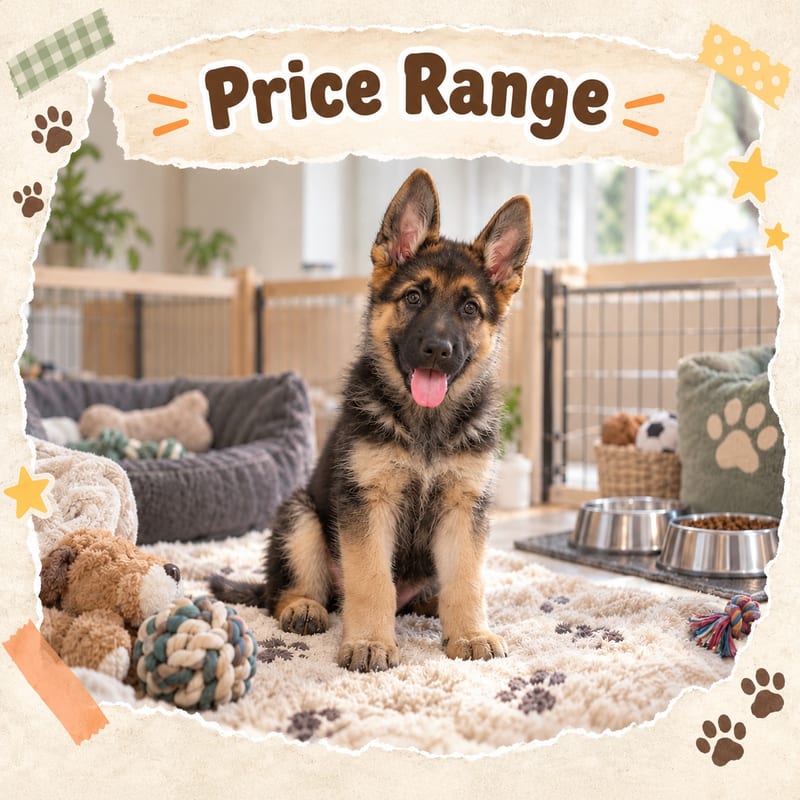
Quick answer: 2026 reference prices for German Shepherds in Hong Kong: pet-grade around $15,000–35,000, pedigree-grade around $35,000–70,000, show-grade/imported bloodlines can exceed $100,000; adoption depends on the organisation's fee, which usually bundles vaccinations, microchip, and neutering. Price reflects supply and demand, not health. What you really need to verify is licensing, in-person visits, parents' health records, and complete puppy documents—these four are where the money's value lies.
Want to know the German Shepherd inside out? Start with the German Shepherd breed profile.
1. German Shepherd prices in Hong Kong: what the three tiers mean
The following are reference ranges for the general market in 2026. They reflect rough market conditions only; actual prices depend on supply and demand at the time, and do not constitute a recommendation of any business:
| Tier | Reference price (HKD) | What you're actually buying | Suitable for |
|---|---|---|---|
| Pet-grade | $15,000–35,000 | Purebred but without show-grade pedigree documents, or with minor faults | Those who just want a German Shepherd as a companion |
| Pedigree-grade | $35,000–70,000 | With pedigree registration (SV/FCI recognised), parents traceable | Those who value pedigree and stability |
| Show-grade/imported | From $80,000 | Parents with show records, imported bloodlines, room to negotiate breeding rights | Those planning to show or breed |
| Adult adoption | Based on organisation's adoption fee | Personality already formed, usually neutered and vaccinated | Families who accept 'adult dogs deserve a home too' |
Note: higher price does not equal better health. German Shepherds are a breed with a high incidence of hereditary joint disease (hip dysplasia occurs at a noticeably higher rate than average; see the lifespan and health article). What's truly valuable is whether the breeder is willing to show you the parents' hip and elbow screening reports, not the champion titles on the pedigree. If a shop only gives a price and refuses verification, that price carries unknown risks regardless of how high or low it is.
2. German Shepherd adoption: three routes and one patience test
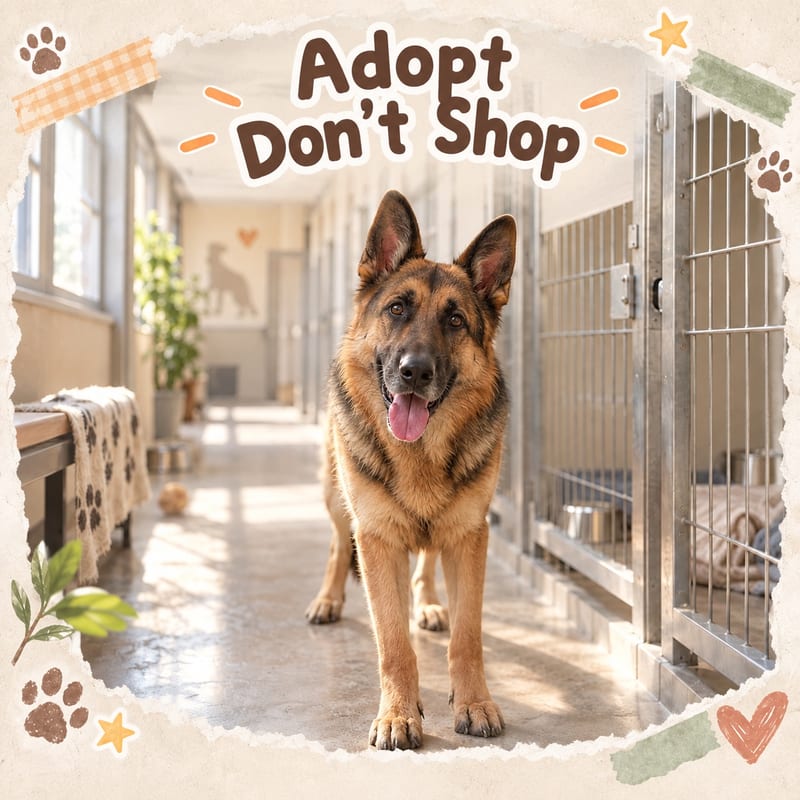
German Shepherds and shepherd mixes are common large breeds in Hong Kong. The most common reason for abandonment is 'can't control it when it grows up'—which tells you exactly why you need to look at a behavioural assessment before adopting. Three realistic routes:
- SPCA (Hong Kong Society for the Prevention of Cruelty to Animals): search their current adoption list using 'Shepherd' or 'German Shepherd' as keywords; shepherd mixes appear more often than purebreds.
- HKRS New Territories Animal Centre / International Rescue Committee (IRC): intake includes local large breeds and shepherd mixes, with occasional purebred retired cases.
- Shepherd/working dog volunteer rescue networks: specialise in rehoming retired guard dogs and washed-out working dogs; few dogs but deep follow-up.
Adoption fees usually include vaccinations, microchip, and neutering, making them cheaper than buying, and organisations conduct behavioural assessments. This article does not recommend any specific business or individual source—anyone who asks for a deposit without an in-person meeting, or refuses to show you the environment and parents, should be skipped. For those searching 'German Shepherd adoption' or 'German Shepherd adoption Hong Kong', please factor in waiting time: a desired shepherd adult may take one to three months, so this route suits families who can wait.
3. Eight-point verification checklist: do this before meeting the seller
- Confirm the place is a licensed animal trader issued by the Agriculture, Fisheries and Conservation Department; the licensed list can be verified with the AFCD.
- Insist on visiting the kennel in person: see the environment, the mother, and the littermates with your own eyes.
- Ask to see the parents' health records; for German Shepherds, specifically ask about hip and elbow screening (SV/OFA/FCI recognised ratings).
- Check the vaccination booklet and microchip registration; the microchip registration should be transferable to your name.
- Obtain a written health guarantee (common coverage for the window period of infectious diseases).
- Clarify the neutering policy and buy-back terms; treat all verbal promises as non-existent.
- Observe the puppy's behaviour: at least 8 weeks old, willing to walk on new surfaces, not panicking when touched.
- Only pay after the visit is complete, and keep receipts; if asked to 'transfer a deposit on the spot', walk away immediately.

4. Monthly expenses: can you afford to buy, but can you afford to keep?
The cost of owning a German Shepherd centres on food, medical care, and training. A large breed eats several times more than a small breed, and joint screening and weight management are long-term commitments:
| Item | Monthly estimate (HKD) | Notes |
|---|---|---|
| Main food and treats | $1,000–1,800 | Large breed formula; measure portions to avoid excess weight straining joints |
| Grooming and skin care | $150–300 | Share cost of double-coat de-shedding tools; skin health |
| Preventive care averaged | $250–450 | Vaccinations, monthly deworming, annual health check |
| Medical reserve | $500–900 | For joint, bloat, and skin issues |
| Training and socialisation | $0–800 | Self-training is free; hiring a trainer is a major expense |
| Total reference | About $2,500–4,500 | Excludes boarding, toys, and one-off medical expenses |
It is advisable to set aside an emergency medical fund equal to at least six months of expenses before bringing the dog home. If a German Shepherd needs hip/elbow surgery or emergency treatment for bloat, a single episode can exceed several months of routine costs—this is not scaremongering; these are high-incidence items documented in the breed literature.
5. Buy or adopt: a practical decision method
Narrow it down with three questions: Can you accept a one-to-three-month wait (yes → adoption is feasible)? Do you have the time and budget for systematic training (both → pet-grade is enough)? Can you handle the risks and benefits of an adult dog's established personality (yes → adopting an adult is actually the least stressful option, with a behavioural assessment ready-made)? The pedigree premium is only worth paying for families planning to show or breed; if you simply want a German Shepherd as a companion, 'a mid-priced dog with health documents' or 'adoption' offer the best value.
7. One line to see through it: which money is worth paying, which isn't
Keep this article as a 'payment priority order': first priority is health documents (parents' hip/elbow screening, vaccination and microchip, written guarantee)—this money buys certainty; second priority is training classes and a medical fund for the first three months after arrival—this money buys no regrets; third priority is the dog's tier and pedigree fame. The reverse order is a familiar case: spending $100,000 on a 'show-line descendant' without screening reports, then paying double for hip surgery and a behaviour consultant. Where the money goes determines what the German Shepherd's ten years will look like.

Key takeaways
- ✅ 2026 reference prices: pet-grade $15,000–35,000, pedigree-grade $35,000–70,000, show-grade over $100,000; higher price does not equal better health
- ✅ Four pillars of verification: AFCD licensing, in-person visit, parents' hip/elbow screening reports, complete puppy documents
- ✅ Three adoption routes: SPCA/HKRS/IRC plus shepherd volunteer networks; a one-to-three-month wait is normal
- ✅ Deposit before meeting is a red flag; only pay after the visit and keep receipts
- ✅ $2,500–4,500 per month; large-breed surgery can exceed $10,000 per episode, so save six months of expenses before getting the dog
- ✅ If not showing or breeding, a mid-priced dog with documents or adopting an adult is the best value
Related reading
- German Shepherd personality and intelligence
- German Shepherd lifespan and health
- German Shepherd Hong Kong keeping guide
- Large-breed food measuring cups, puppy pens, and receipt document folders: find them all at PetChill pet supplies.
Prices in this article are 2026 market references; actual prices depend on supply and demand at the time; this does not constitute a recommendation or guarantee of any specific business.
 Fuji One full guide →