
PetChill Pet Encyclopedia
Dog Breeds

How Long Do Schnauzers Live? Miniature Schnauzer Lifespan and Common Health Issues in Hong Kong

Schnauzers generally live 12–15 years, and the Miniature Schnauzer has the longest lifespan of the three size varieties, with some individuals exceeding 16 years. Key factors affecting Schnauzer lifespan include weight management, dietary fat control and regular health checks. This article covers lifespan ranges for the three sizes, a list of common Schnauzer health issues (pancreatitis, urinary stones, eye disease, skin and ear problems), care rhythms by age, and a lifespan-extension checklist, plus emergency red flags and a medical disclaimer.

Published: 2026-09-15·9 min read·Author: PetChill Editorial
How Long Do Schnauzers Live? Miniature Schnauzer Lifespan and Common Health Issues in Hong Kong — PetChill

Quick answer: Schnauzer lifespan is generally 12–15 years: Miniature and Standard 12–15 years (some over 16), Giant 10–12 years. The three main switches affecting lifespan: fat-controlled diet (pancreatitis), weight management (joints, heart, kidneys), and grooming plus dental rhythm (skin, gums). In senior years, blood tests every six months; sudden vomiting with arched back or blood in urine is an emergency—take to the vet immediately.

Want to know the Schnauzer inside out? Start with the Schnauzer breed profile.

1. Lifespan ranges: three sizes, three curves

"Schnauzer lifespan" is not one number but three:

Size Typical lifespan range Age entering senior years Main health concerns
Miniature About 12–15 years (can be longer) Around 10 Pancreatitis, stones, eye disease, teeth
Standard About 13–15 years 9–10 Hip joints, cardiomyopathy, eye disease
Giant About 10–12 years 7–8 Bone cancer tendency, gastric torsion, joints

Breed information from the Kennel Club and the American Kennel Club (AKC) both indicate that Schnauzers as a whole are a long-lived, robust breed, while the Giant's lifespan is shortened by its size—the same gene pool running at three size levels is a ready-made lesson in the canine rule that larger dogs live shorter lives. What this structure means in practice for Hong Kong families: owners of Miniature Schnauzers should plan to "accompany them for 16 years", factoring the dog into every life stage—moving house, marriage and children, changing jobs. Conversely, families with Giants should start senior care in the seventh or eighth year, not wait until the dog is "obviously old". The same applies to adoption: adopting a 10-year-old Miniature still offers a considerable number of high-quality years; adopting a Giant over eight, you should put a six-monthly check-up into the first month's schedule after bringing the dog home—the older the dog, the shorter the payback period for preventive medicine and the higher the density needed. And because Miniatures live long, many owners make a procrastination error: thinking "there's still time" and never booking the senior blood test—in a 16-year commitment, the most expensive part is often not the last two years but the half that could have been caught earlier.

schnauzer-lifespan-hk infographic 1

2. Common Schnauzer health issues: four high-frequency groups to know early

1. Endocrine and metabolic: In veterinary literature, the Miniature Schnauzer is one of the breeds predisposed to pancreatitis and primary hyperlipidaemia, typically triggered by obesity and table scraps—so "fat control" starts from the first meal, not after illness. 2. Urinary tract: Calcium oxalate stones are reported more often in Miniatures; blood in urine, frequent urination and painful urination require immediate veterinary attention; the long-term strategy is to increase water intake (higher proportion of wet food, more water points) to dilute urine. 3. Eyes: Cataracts and hereditary retinal atrophy (PRA) have bloodline tendencies; reputable breeders should have screening records for the parents; bumping into things at night or abnormal light responses should be screened early. 4. Skin and ears: Matted wire coat and moist droopy ears mean dogs with overly long grooming intervals get dermatitis and otitis in turn—chronic but non-fatal "quality-of-life killers". Medical content is for reference only; for diagnosis and medication always consult a registered veterinarian; check-up frequency and test panels should be individualised to your dog's size and family history.

Owner using ear cleaning solution to do a weekly ear check on a Schnauzer, carefully observing under the light, cosy home scene

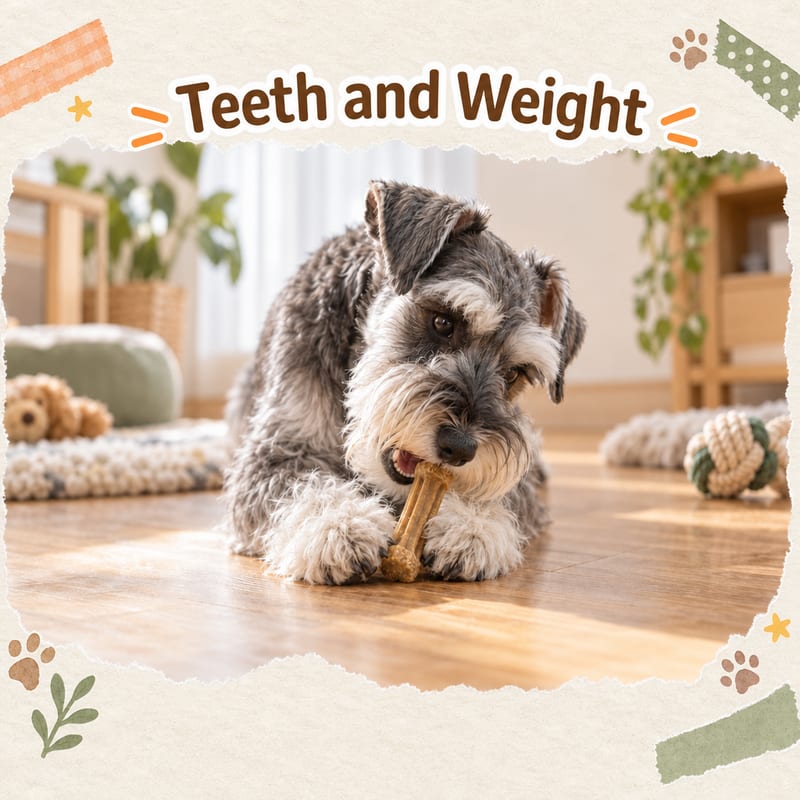
3. Teeth and weight: two chronic points that spoil the lifespan curve

Two things rarely written on Schnauzer lifespan charts but happening daily: Teeth—small breeds have small teeth and build tartar quickly; veterinary dental consensus links severe gum disease with chronic heart and kidney burden; starting weekly brushing at age one and timely dental scaling assessment is the most cost-effective health investment for a Miniature Schnauzer. Body—Schnauzers are the "good appetite, easily overweight" type; excess weight directly raises pancreatitis risk, stresses joints and burdens the heart and lungs. The criteria are simple: ribs easily felt, waist visible from above (body condition score BCS 4–5). These two are not "major diseases" but chronic items affecting quality of life for over a decade, worth putting on the schedule; the cost comparison makes it clearer: the annual cost of a toothbrush and a bottle of ear cleaner is far less than a single pancreatitis hospitalisation or one dental scaling procedure.

4. Care rhythm by age

0–1 year: Establish a weight curve and care routine (the three-piece set: brushing, ear checks, tooth brushing), complete vaccinations, discuss neutering timing with the vet; avoid rapid weight gain in puppyhood. 1–7 years: Annual check-up, monthly weighing; keep diet consistently low-fat, don't add leftovers just because "he looks thin"—a Schnauzer's thinness is often deceptive; the waistline is the standard. From 8–10 years (earlier for Giants, later for Miniatures): Switch to a six-month rhythm—blood tests (liver, kidney, pancreas, lipids, thyroid), blood pressure, brief eye exam; reduce dietary calories and increase easily digestible proportions. 10 years+: Senior management: non-slip flooring, ramps, low water and food bowls, night lights; shift observation from "is there disease" to "has quality of life dropped".

5. Lifespan-extension checklist: five levers and three don'ts

Five levers: 1) Fat-controlled diet plus ideal weight (the core of pancreatitis prevention, strongest evidence); 2) Daily sniffing walks plus a new command each week (mental stimulation linked to cognitive ageing; Schnauzers are smart, brain food is essential); 3) Dental care (brushing plus regular scaling assessment); 4) Grooming every six to eight weeks plus weekly ear checks (zero tolerance for skin and ear infections); 5) Check-up rhythm: annually for adults, every six months for seniors. Three don'ts: Don't believe in "anti-ageing supplements" (calorie restriction is the most solidly evidenced lifespan-extension method); don't use human medication on your own; don't skip senior blood tests just because "the dog seems fine right now"—endocrine diseases are asymptomatic early and only show up in bloodwork.
Adult Schnauzer cooperating with a vet clinic nurse for a check-up, the moment of auscultation, professional and reassuring scene

For breed background, prices and daily care priorities, see How much does a Schnauzer cost? Miniature Schnauzer price, lifespan and personality guide in Hong Kong.

6. Emergency red flags: these three are measured in hours

Schnauzer owners should memorise: Sudden vomiting + arched back + refusal to eat—suspected pancreatitis, a Miniature emergency measured in hours; Blood in urine, straining to urinate, unable to urinate—stone obstruction; complete urinary blockage in males is a fatal emergency; Rapid breathing, purple gums—cardiopulmonary emergency. Also, an older unspayed female with sudden increase in drinking + vulvar discharge + lethargy—pyometra, take to the vet immediately. Beyond emergencies, senior Schnauzers have three "not urgent but book an appointment" soft signals: appetite declining for a week, suddenly waking and moving about during sleep, water intake clearly breaking previous records—these three are often the first signs of endocrine or kidney disease; booking an appointment half a month earlier can often be the difference between "controlled with medication" and "hospitalisation and rescue".
schnauzer-lifespan-hk infographic 2

Key takeaways

  • ✅ Schnauzer lifespan is in the 12–15 year range; Miniature longest, Giant shortest; size determines the starting point of the curve
  • ✅ Four breed concerns: pancreatitis, urinary stones, eye disease, skin and ear infections
  • ✅ Fat-controlled diet plus ideal weight is the first switch for extending a Miniature's life
  • ✅ Senior check-up rhythm: Giant from 7–8, Miniature from 10, blood tests every six months
  • ✅ Vomiting with arched back, blood in urine or urinary blockage, rapid breathing are emergencies measured in hours—don't wait and see
  • ✅ Five levers for lifespan extension: fat control, mental stimulation, dental care, grooming, check-ups; supplements are not the main act
  • ✅ Keeping a Miniature Schnauzer = a 16-year life plan; every preventive step must be counted long-term

Frequently Asked Questions

📌 Key Takeaways

  • This article covers: 1. Lifespan ranges: three sizes, three curves, 2. Common Schnauzer health issues: four high-frequency groups to know early, 3. Teeth and weight: two chronic points that spoil the lifespan curve, 4. Care rhythm by age, 5. Lifespan-extension checklist: five levers and three don'ts, and more
  • Jump to any section via the table of contents for the key details
  • If in doubt, consult a registered veterinarian

📚 Dogs article index

This article is part of the Dogs topic cluster. Explore related articles:

⭐ Pillar guide: Dogs complete guidePug: Hong Kong Care Guide (Price, Health, Summer Care)→ ReadBeagle Drawbacks: What Are They and Are Beagles Easy to Keep in Hong Kong?→ ReadBeagle Care in Hong Kong: Laws, Home Setup and Heat Protection→ ReadHow Long Do Beagles Live? A Hong Kong Guide to a Longer, Healthier Life→ ReadBeagle Personality and Intelligence: What Hong Kong Owners Must Know→ ReadBeagle price and adoption in Hong Kong: legal channels, verification steps and cost estimates→ ReadBorder Collie Colour Guide: Coat Types and Care Differences→ ReadBorder Collie Disadvantages: 8 Truths and How to Cope→ ReadBorder Collie Hong Kong Care Guide 2026: Laws, Climate and Prices→ ReadBorder Collie Lifespan and Health: A Hong Kong Guide to a Longer Life→ ReadBorder Collie Intelligence and Personality: A Complete Guide for Hong Kong Owners→ ReadBorder Collie Prices in Hong Kong and Adoption Guide→ ReadDachshund Downsides: 8 Truths to Know Before You Adopt→ ReadDachshund Hong Kong Care Guide: Laws, Climate and Home Care→ ReadDachshund Lifespan: 12–16 Years and How to Help Them Age Well→ ReadDachshund Intelligence and Personality: How to Read Small-Dog Rankings→ ReadDachshund Prices in Hong Kong 2026: A Guide to Buying and Adoption Costs→ ReadGolden Retriever Coat Colours: The Full HK Guide — Beyond Gold→ ReadGolden Retriever Lifespan: How Many Years? Hong Kong Owner's Guide to Extending Life | Tumour and Joint Risks→ ReadGolden Retriever Hong Kong Care Guide: Public Housing, Weather and Hiking→ ReadGolden Retriever Drawbacks Fully Disclosed | 8 Honest Assessments Before Keeping One in Hong Kong→ ReadGolden Retriever Puppy Growth Curve and Weight Chart (Hong Kong)→ ReadGolden Retriever Personality and Intelligence: A Hong Kong Guide→ ReadGolden Retriever Price and Adoption Guide (Hong Kong) 2026→ ReadPomeranian Coat Colours: A Complete Guide for Hong Kong Owners — White, Black and Orange, and What They Cost→ ReadPomeranian Weight Chart | Hong Kong Pomeranian Growth Standards from Puppy to Senior→ ReadGerman Shepherd Size & Growth: Hong Kong Puppy Weight Chart + Growth Prediction Guide→ ReadPomeranian Personality and Intelligence | A Must-Read for Hong Kong Owners: How to Train a Smart but Stubborn Small Dog→ ReadGerman Shepherd Lifespan: Health Risks and Longevity Checklist for Hong Kong Owners→ ReadHow Long Do Pomeranians Live? A 15-Year Longevity Guide for Hong Kong Owners→ ReadBlack German Shepherd: Comparing Pure Black, Sable and White German Shepherd Coat Colours→ ReadPomeranian Downsides Fully Disclosed | 8 Honest Assessments and Solutions for Hong Kong Owners→ ReadGerman Shepherd Drawbacks List | 8 Major Challenges to Consider Before Getting One in Hong Kong→ ReadPomeranian Hong Kong Care Guide: Home, Climate and Legislation→ ReadGerman Shepherd Price and Adoption: Hong Kong Buying Guide and Verification Checklist→ ReadPomeranian Price and Adoption Guide (Hong Kong) 2026→ ReadGerman Shepherd Personality | A Must-Read for Hong Kong Owners: Loyalty, Alertness, Intelligence and Training→ ReadGerman Shepherd in Hong Kong: Full Keeping Guide — Law, Public Housing Limits and Summer Heat Management→ ReadHow Much Should a Bichon Frise Weigh? Hong Kong Puppy to Adult Growth Curve Chart→ ReadLabrador Colours Explained | A Must-Read for Hong Kong Pet Owners: Black, Yellow, Chocolate and the Truth About Rare Colours→ ReadShiba Inu Colours: Black Shiba, Red, Sesame and White — Differences and Prices→ ReadLabrador Lifespan: How Long Do They Live? A Hong Kong Owner's Guide to Longevity and Health Risks→ ReadShiba Inu Lifespan: How Long Do They Live in Hong Kong?→ ReadLabrador drawbacks: 8 things to know before getting one (2026 Hong Kong guide)→ ReadShiba Inu Regret List: 8 Downsides Hong Kong Owners Must Know and How to Cope→ ReadYorkshire Terrier Personality Explained | A Must-Read for Hong Kong Owners: A Smart, Affectionate Companion with a Mind of Its Own→ ReadLabrador Puppy Growth Curve and Weight Chart (Hong Kong)→ ReadShiba Inu in Hong Kong: A Complete Guide to Public Housing, Summer Heat and the Law→ ReadYorkshire Terrier Price and Adoption Guide: 2026 Hong Kong Market, Channels and Verification Checklist→ ReadLabrador Personality and Intelligence: A Must-Read for Hong Kong Owners — Obedience, Food Drive and Separation Anxiety→ ReadShiba Inu Weight Growth Curve: What's the Hong Kong Standard in kg? Complete Guide from Puppy to Adult→ ReadHow Long Do Yorkshire Terriers Live? | Hong Kong 11–15 Years, Key Factors and a Longevity Checklist→ ReadChihuahua Disadvantages: A Full List for Hong Kong Owners — 7 Hidden Issues in a Tiny Body→ ReadHow Long Do Chihuahuas Live? | Hong Kong Chihuahua Lifespan and Common Diseases Explained→ ReadChihuahua Personality and Intelligence: Small Dog, Big Dog Soul in Hong Kong→ ReadChihuahua Price in Hong Kong: Adoption Routes, Buying Checklist and Real Monthly Costs→ ReadCorgi Disadvantages Exposed | Must-Read Before Getting One in Hong Kong: 8 Realities + Zero-Cost House Rules→ ReadHong Kong Corgi Ownership Complete Guide: Public Housing, Moisture Control and Heat Protection in One Article→ ReadHow Long Do Corgis Live? | Average Lifespan in Hong Kong and a Longevity Checklist→ ReadCorgi Intelligence Ranking and Personality: A Hong Kong Guide→ ReadCorgi Price and Adoption in Hong Kong: A Practical Guide→ ReadLabrador Care Guide for Hong Kong: Public Housing, Deeds of Mutual Covenant, Heat and Humidity→ ReadAre Poodles Easy to Keep? 7 Downsides and How to Handle Them (Hong Kong Dog Owner's Guide)→ ReadHow Long Do Poodles Live? | Hong Kong Guide to Small Poodle Lifespan and Health Management→ ReadPoodle Intelligence Ranking and Personality | A Must-Read for Hong Kong Owners: The Strength of Second Place→ ReadPoodle Prices 2026: Giant Poodle Cost, Four Sizes and Adoption→ ReadHow Big Does a Poodle Get? A Full Breakdown of Hong Kong's Four Poodle Sizes and Weights→ ReadSchnauzer Disadvantages: 8 Truths to Know Before Getting One in Hong Kong→ ReadSchnauzer Intelligence and Personality | Hong Kong Sentinel Dog Smart and Opinionated Full Analysis→ ReadSchnauzer Prices in Hong Kong 2026: The Complete Guide to Buying and Adopting All Three Sizes→ ReadShiba Inu Personality | A Must-Read for Hong Kong Owners: The Independent, Stubborn, Highly Intelligent Cat-Like Dog→ ReadThe Downsides of Owning a Yorkshire Terrier | 6 Real Costs Hong Kong Owners Must Know→ ReadBichon Frise Downsides: 7 Real Costs Hong Kong Owners Must Know (With Monthly Budget)→ ReadBichon Frise Hong Kong Care Guide: Public Housing Rules, Damp and Heat Management, and Source Verification→ ReadBichon Frise Lifespan: 12–15 Years and How to Help Them Live Longer→ ReadBichon Frise Personality and Intelligence Explained | Hong Kong Owner's Training Guide: Smartness and Obedience at a Glance→ ReadBichon Frise Price and Adoption Guide | Hong Kong Buying Tips 2026→ ReadAre French Bulldogs Easy to Keep? 8 Downsides and Fixes Every Hong Kong Owner Should Read→ ReadFrench Bulldog Hong Kong Care Guide: Legislation, Heat Protection and Home→ ReadHow Long Do French Bulldogs Live? A Hong Kong Guide to Flat-Faced Dog Health and Longevity→ ReadFrench Bulldog Personality Explained | A Must-Read for Hong Kong Owners: Intelligence and Getting Along→ ReadFrench Bulldog Hong Kong Price and Adoption Guide (2026)→ ReadFrench Bulldog Size and Weight Standards | A Complete Guide to Puppy Growth Curves in Hong Kong→ ReadLabrador Price and Adoption Guide (Hong Kong) 2026→ ReadShiba Inu Hong Kong Price & Adoption Guide: 2026 Buy or Adopt→ ReadBest Dog Wet Food in Hong Kong | How to Choose Complete Wet Food & Brand Comparison→ ReadBest Dry Dog Food in Hong Kong | Ingredient Picks & Brand Comparison→ ReadCorgi Breed Guide | Spine Care, Weight & Small-Flat Living in Hong Kong→ ReadWhich Dog Food Is Best? Hong Kong's 5-Step Picking Guide, Label Decoding & Switching Tips→ ReadFreeze-Dried Dog Food Guide | Hong Kong Freeze-Dried Dog Food Nutrition, Pros & Cons, Feeding Methods→ ReadFrench Bulldog Breed Guide | Temperament, BOAS Health & Hong Kong Care Guide→ ReadGolden Retriever Guide | Temperament, Hip Joints & Hong Kong Care→ ReadGrain-Free Dog Food Guide: Pros, Cons and Shopping Tips for Hong Kong Dog Owners→ ReadHong Kong Mixed-Breed Dog Guide: Local Dogs, Advantages & Adoption Tips→ ReadPoodle Breed Guide | Complete Hong Kong Guide to Standard, Miniature & Toy Poodles→ ReadShiba Inu Hong Kong Care Guide: Temperament, Shedding, Training and Hereditary Conditions→ ReadDog Food Recommendations Hong Kong 2026 | Puppy Food Picks + Brand Ranking Comparison→ Read

Products mentioned in this article

4 items · prices checked 2026-10-21

  • Nutriplan Dog Wet Food 7+ Senior Chicken and Ginseng AAFCO 80g (64512)Special offer

    Nutriplan Dog Wet Food 7+ Senior Chicken and Ginseng AAFCO 80g (64512)

    HK$4.8HK$6

    About HK$60 per kg

    Details

    Price checked 2026-10-21; the store page shows the live price, stock and offers.

  • Bella & Molly's Dutch Berry Royal Selected Dog Food AAFCO Grain-Free Single Protein Salmon Formula 50g (Limited Time Experience)

    Bella & Molly's Dutch Berry Royal Selected Dog Food AAFCO Grain-Free Single Protein Salmon Formula 50g (Limited Time Experience)

    HK$10

    About HK$200 per kg

    Details

    Price checked 2026-10-21; the store page shows the live price, stock and offers.

  •  Special offer

    HK$175HK$235

    About HK$77.16 per kg

    Details

    Price checked 2026-10-21; the store page shows the live price, stock and offers.

  • Royal Canin Dry Dog Food - Medium Light Weight Care Adult Dog 12kg (3053300)

    Royal Canin Dry Dog Food - Medium Light Weight Care Adult Dog 12kg (3053300)

    HK$625.1

    About HK$52.09 per kg

    Details

    Price checked 2026-10-21; the store page shows the live price, stock and offers.

The products above are store items related to this article. Prices are reference prices as of the check date (about HK$814.9 in total); the store page always shows the live price, stock and offers. This article is not medical advice.

You may also like