
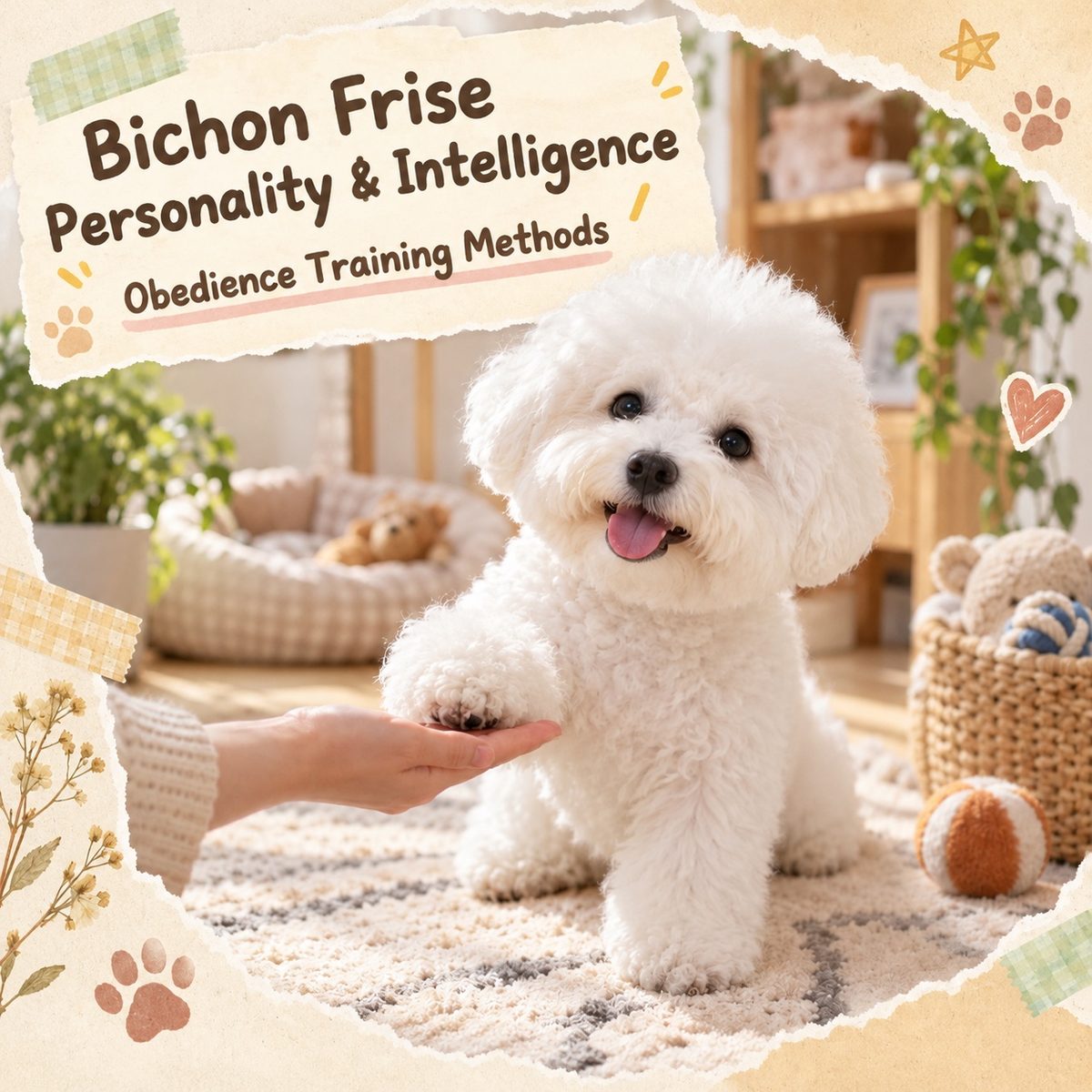
Quick answer: The Bichon Frise is a smart, affectionate, mood-reading companion dog: in popular intelligence rankings based mainly on obedience speed, it sits roughly between 20 and 50, but it has strong learning motivation and responds well to positive training. They are generally friendly to children and other pets, and their greatest trait is not 'how smart' they are, but 'always wanting to be with you'.
Want to know the Bichon Frise inside out? Start with the Bichon Frise breed profile.
1. Bichon personality base: a cheerful socialite
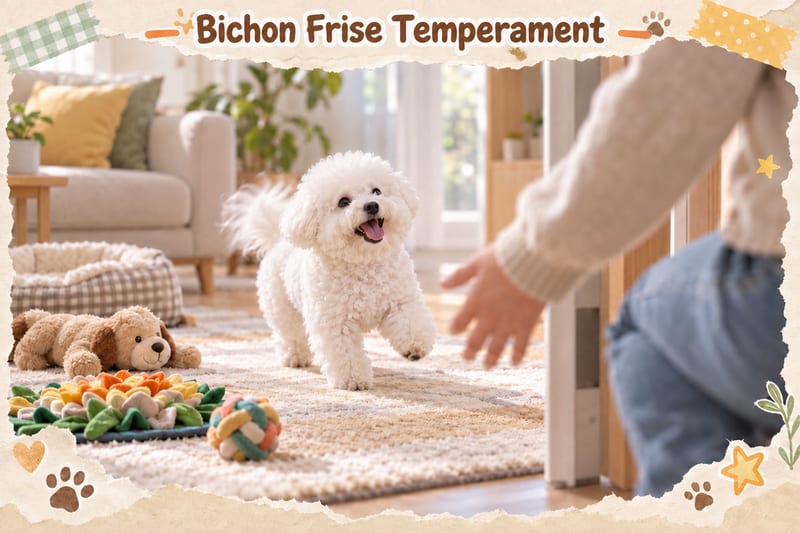
The Bichon Frise is called the 'cotton candy', and three personality traits stand out:
- Cheerful and affectionate: The AKC breed standard describes the Bichon as 'cheerful, with a good memory, curious', and the Kennel Club description also emphasises companionship and friendliness. They are not 'loyal to one person' dogs, but dogs who 'love the whole household and all visitors'.
- Alert but not aggressive: They will announce the doorbell and corridor noises, but have low aggression and are not guard dog material.
- Emotional radar: They are extremely sensitive to their owner's tone and expression—this trait makes them learn quickly, and also makes scolding particularly damaging.
2. Bichon Frise intelligence: how to read the rankings correctly
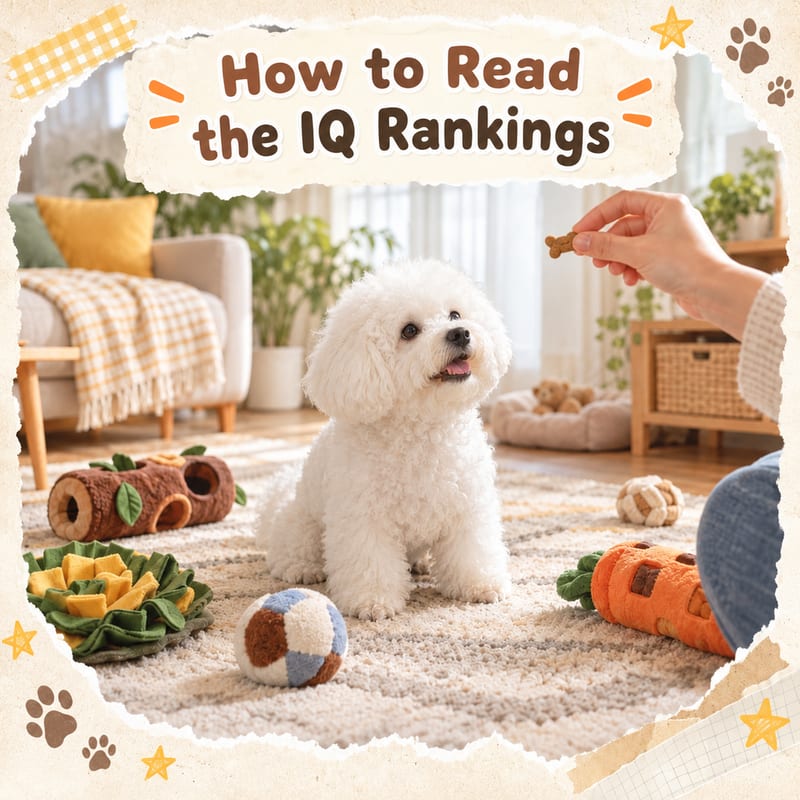
For those searching 'Bichon Frise intelligence' or 'dog intelligence ranking 100', first understand what the rankings measure. The classic ranking compiled by animal psychologist Stanley Coren measures working obedience: how many repetitions of a new command before the dog obeys, and the success rate of obedience. On this scale:
- The top is occupied by working dogs like the Border Collie, Poodle, and German Shepherd—dogs that 'execute a command as soon as they hear it'
- The Bichon is usually classified in the 'above-average learner' range—quick to understand, but will assess whether it's worth doing
For companion dogs, 'reading your mood and using strategies' is actually another kind of intelligence: researchers in canine cognition generally believe that the ability to live with humans (reading gestures, making eye contact to ask for help) is itself a highly specialised intelligence, and the Bichon is an excellent student in this area.
3. Trait × behaviour × response: one table tells all
| Trait | Daily behaviour | Owner's response |
|---|---|---|
| Extremely affectionate | Follows you from kitchen to toilet; prone to anxiety when alone | Gradual alone training, treat-dispensing toys |
| High learning motivation | Learns sit, paw, roll over in short sessions | Positive reinforcement, treat rewards |
| Reads your mood | Shrinks if you look stern; remembers a scolding for three days | Reward-based only, steady tone |
| Loves to perform | Often 'spontaneously' jumps on the sofa for attention | Turn performance into command games, set boundaries |
| Alert barking | Barks twice when the doorbell rings | Sound desensitisation + 'quiet—reward' |
| Moderate-to-high energy | Still alert after a 30–45 minute walk | Add sniffing and brain games to tire them out |
4. Three kinds of 'smart' in the Bichon: breaking down the intelligence myth
'Intelligence rankings' can make people think smartness is a single linear thing, but canine behaviour science generally breaks it down into several abilities, and the Bichon's performance varies greatly across them:
| Intelligence type | Bichon performance | Explanation |
|---|---|---|
| Obedience learning | Above average | Learns a command after a few repetitions, but will assess whether it's worth doing |
| Reading people | Top level | Extremely sensitive to gaze, tone, and gestures; knows how to 'trim sails to the wind' |
| Problem-solving | Above average | Can open gates, use strategies to get attention; takes time to figure things out |
| Independent work | Average | Unlike herding dogs, won't take initiative to complete tasks; companion dogs wait for commands |
| Emotional contagion | Top level | Can comfort a downcast family member—something rankings can't measure |
So questions like 'at what age is a Bichon's intelligence sufficient' are better phrased as: the Bichon's emotional and people-reading abilities are already prominent from puppyhood, while obedience stabilises only when mentally mature (around 1–2 years old)—not being able to do something as a puppy doesn't mean they're dumb, it means they're not old enough yet.
They grow physically too; to see weight changes from puppy to adult, check the Bichon weight growth curve table.
5. Getting along with children and other pets
The Bichon is a recognised family-friendly breed: small enough not to knock over a toddler, low-shedding coat that is friendly to touch, and above-average patience. Two prerequisites must be maintained:
First, children must learn 'dog etiquette': no pulling ears or tails, no disturbing while eating or sleeping, and let the dog sniff the back of the hand before approaching. Interactions between young children and puppies of any breed require adult supervision. Second, introduce other pets gradually: Bichons usually get along with dogs and cats they are already used to; they have a chasing instinct for small running animals (rabbits, hamsters), so first meetings should be on a leash and behind a barrier, short and frequent, with rewards.
6. Male-female differences: a safe statement
General observations (not absolute): females mature earlier and are slightly more focused, making puppy training a bit smoother; males are more outgoing and active, and some unneutered males have urine-marking habits, which often improve after neutering. But the behavioural consensus is: socialisation quality, training consistency, and neutering decisions shape personality far more than sex. Rather than choosing male or female, choose a dog whose individual temperament suits your family's rhythm—when visiting, observe which one approaches you voluntarily and which recovers better from noise; that's more meaningful than asking 'male or female?'.
7. Training guide: the right way to start with a Bichon
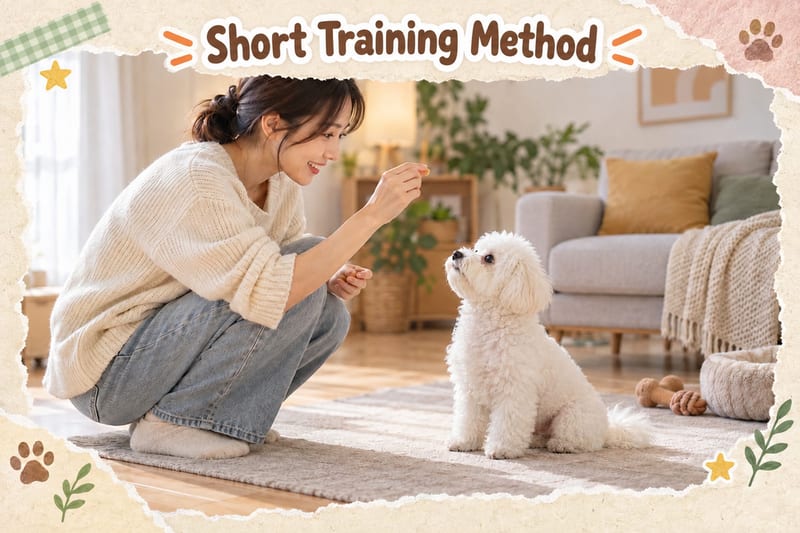
- Short and frequent: 5–10 minutes each time, 2–3 sessions a day; stop when they get distracted—they get bored, not 'lazy'
- Reward before correction: highly food-motivated; set aside part of their dry food as rewards—simplest
- Toilet training four anchors: after waking, after meals, after play, before sleep—always go to the spot; reward immediately when done right
- Alone training from day one: prevent separation anxiety; see the disadvantages article for details
- Socialisation golden period (around 3–14 weeks): outings as advised by your veterinarian according to vaccination progress; expose to different surfaces, sounds, and friendly people and dogs
A word on 'Border Collie intelligence': the Border Collie is top-level in learning speed and task understanding, but precisely because it is so good at finding things to do, when under-exercised it will invent 'jobs' (chasing cars, herding children, destroying things). If you cannot give a Border Collie more than an hour of exercise and brain games every day, the Bichon—a breed that is 'smart but whose main job is companionship'—is the safer bet for an urban family.
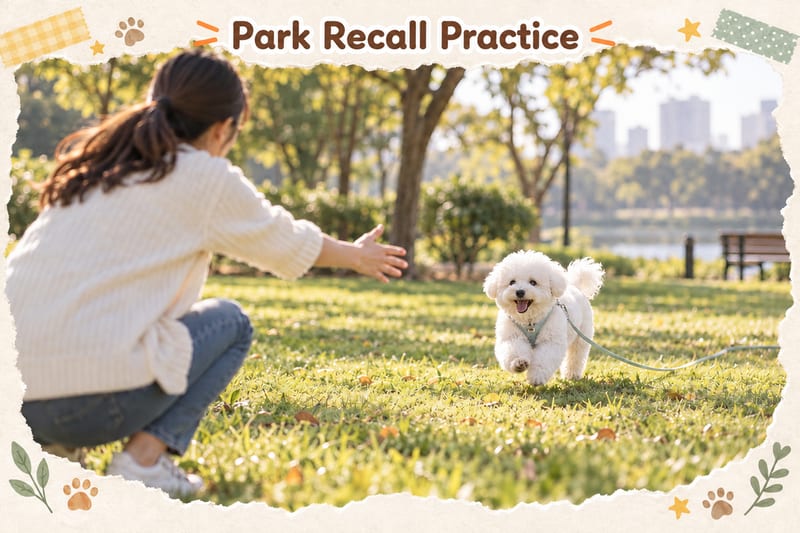
Key takeaways
- ✅ The Bichon is a 'smart but knows how to bargain' companion dog, with people-reading ability as its strength
- ✅ Intelligence rankings only measure obedience speed; the Bichon ranks around 20–50, so don't worry about it, and don't overpraise it either
- ✅ Positive reinforcement + 5–10 minute short sessions is the golden training combination; scolding is ineffective and harmful
- ✅ Generally friendly to young children and other pets, but etiquette must be taught and introductions gradual
- ✅ Male-female differences are smaller than individual differences; choose by temperament, not by sex
- ✅ For urban families with limited time and space, the Bichon is far more practical than the Border Collie
Related reading
- Bichon Frise disadvantages: real analysis and solutions
- Bichon Frise lifespan and life-extension checklist
- Bichon Frise Hong Kong price and adoption guide
- PetChill pet supplies: treat-dispensing toys, sniffing mats, and training treats section
 Wellness Core full guide →



