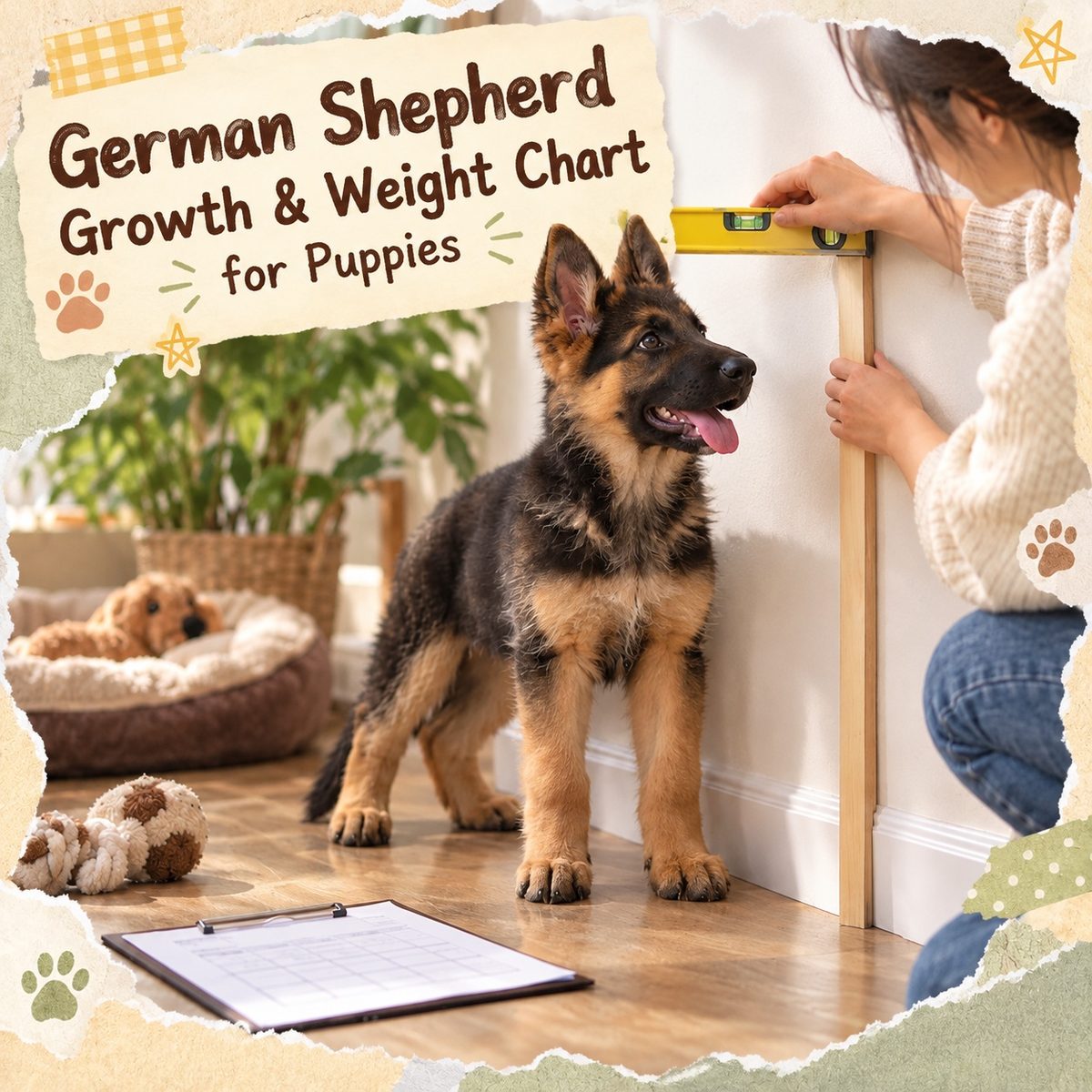
Quick answer: The German Shepherd is a medium-to-large breed: males 62–66 cm shoulder height, 30–40 kg; females 54–56 cm, 22–32 kg (FCI/AKC standard). The growth curve reaches skeletal completion at 18 months and fills out only at 24–36 months, so monthly weigh-ins to track the trend matter more than any single number. The biggest mistake with large-breed puppies is pushing them to grow too fast—growth rate is directly linked to abnormal joint development, and lean growth is the right approach.
Want to know the German Shepherd inside out? Start with the German Shepherd breed profile.
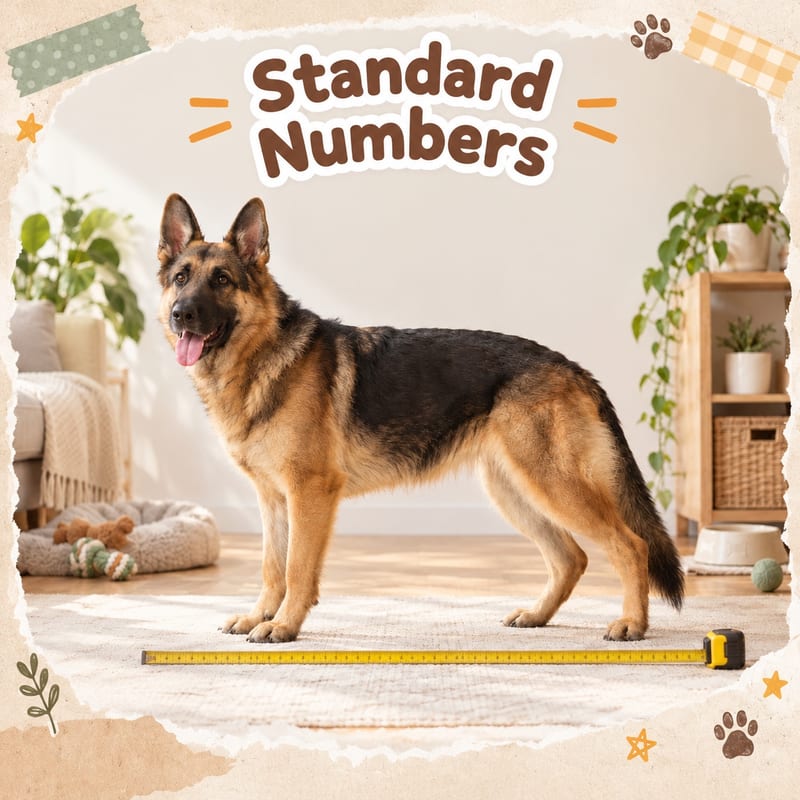
1. Standard Size: FCI and AKC Figures Compared
| Item | Male | Female | Notes |
|---|---|---|---|
| Shoulder height (FCI) | 62–66 cm | 54–56 cm | Measure from withers to ground |
| Weight (AKC/FCI) | 30–40 kg | 22–32 kg | Over 45 kg usually overweight |
| Body length ratio | Shoulder height difference about 10–17% | Same | Slightly rectangular, not square |
| Skeletal completion | About 18 months | About 16 months | Avoid jumping before growth plates close |
| Muscle fill-out | 24–36 months | 24–30 months | Chest circumference completes last |
A note for those searching 'Shetland Sheepdog puppy' or 'Old English Sheepdog puppy': the Shetland is a small herding breed (shoulder height about 33–41 cm), three size classes smaller than the GSD; the Old English is similar in size but has completely different coat care logic. Before choosing a breed, factor 'final size' into your housing, lift, and travel costs.
2. 0–24 Month Growth Reference Chart: Trend Over Single Point
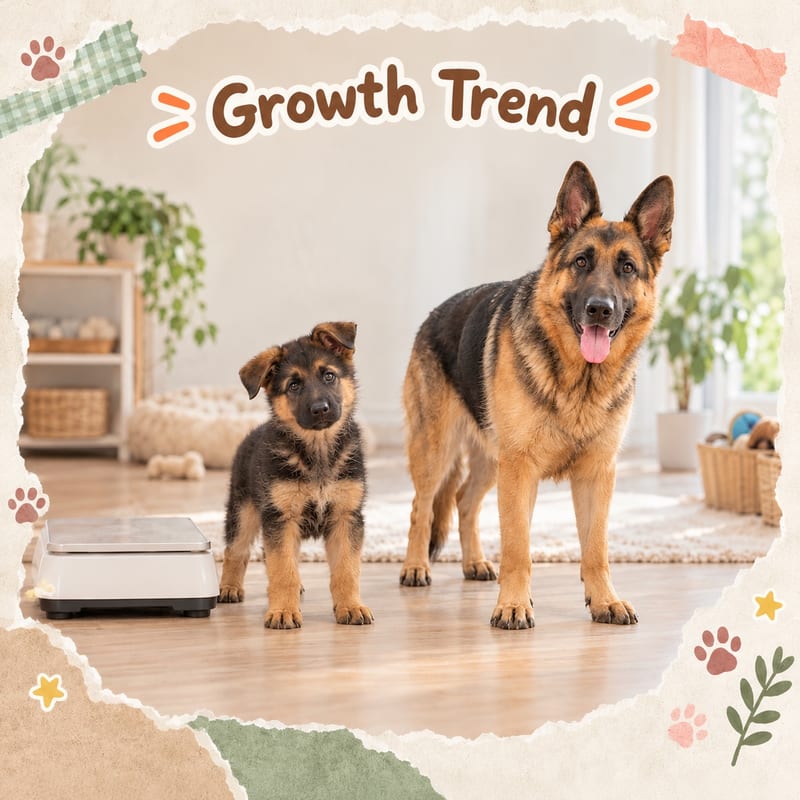
Below is a reference range based on a medium-sized bloodline (male/female combined; individual variation within 10% is normal):
| Age (months) | Weight reference (kg) | Shoulder height reference (cm) | This week's homework |
|---|---|---|---|
| 2 months | 6–9 | 25–30 | First vaccination, socialization window |
| 4 months | 11–17 | 33–40 | Teething bite management |
| 6 months | 17–25 | 42–50 | Discuss neutering with veterinarian, solidify commands |
| 9 months | 23–32 | 50–58 | Avoid jumping, switch to low-impact exercise |
| 12 months | 26–36 | 55–62 | Baseline blood test, weight curve slows |
| 18 months | 28–39 | 60–65 | Skeleton nearly complete, add muscle-building games |
| 24 months | 29–40 | On target | Switch to adult formula, stable annual check |
Interpretation principle: if consistently below the curve for months, see a veterinarian; if consistently above, reduce portions. The most common mistake in GSD puppyhood is not underfeeding but overfeeding—the link between rapid weight gain and hip/elbow dysplasia has been repeatedly confirmed in large-breed studies.
3. Two Home Measuring Methods: No Scale Needed
Human-scale subtraction: weigh yourself holding the dog, then weigh yourself alone, subtract to get weight. Do it monthly on the same day under the same conditions (morning before food); error within 1 kg is fine for tracking trends.
Body Condition Score (BCS 1–9): Ribs—easily felt but not seen = 4–5 (ideal); need to press to feel = overweight; visible through coat = underweight. Waistline—obvious waist indentation from above; abdominal tuck from the side. Do it every two weeks, alternating with weigh-ins.
4. Three Major Growth Myths
- 'More food is love': pushing growth = pushing joint disease. Large-breed puppy formula (controlled calorie density, balanced calcium-phosphorus ratio) plus measured portions by chart, not free feeding.
- 'Jumping early means good vitality': repeated stair jumping, upright greeting, sharp turns on hard ground are all high-risk before growth plates close (about 12–18 months). Switch to slow walks on grass, swimming, and sniffing.
- 'Bigger is more impressive': a GSD above the standard weight range is not strong—its joints and heart are under strain; a lean physique within standard is what a working dog should look like.
5. Feeding Amount Reference: Feed by Weight Curve, Not Appetite
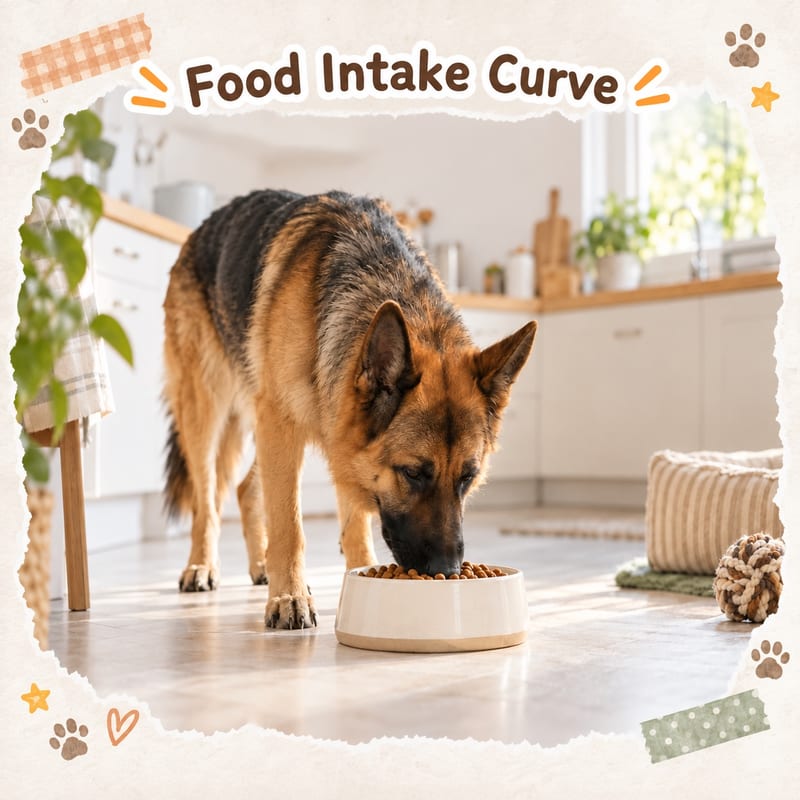
Using a quality large-breed puppy food as an example, daily calorie needs are roughly: 2 months about 700–900 kcal, 6 months about 1,100–1,400 kcal, 12 months about 1,200–1,600 kcal, adult maintenance about 1,400–1,900 kcal (varies with activity). Packaging tables are only a starting point; adjust after monthly weigh-ins. Appetite is not an indicator—the growth curve is. For seniors (7+), reduce by 10% and switch to senior formula to prevent hidden overweight with muscle loss.
6. Bonus: Herding Breed Size Overview to Avoid Choosing the Wrong Class
Many searching 'German Shepherd puppy', 'Shetland Sheepdog puppy', or 'Old English Sheepdog puppy' don't realize how many size classes apart these breeds are—size directly determines housing, lifts, travel, and monthly food costs. Compare before choosing:
| Breed | Adult shoulder height | Adult weight | Urban keeping difficulty |
|---|---|---|---|
| German Shepherd | Male 62–66 / Female 54–56 cm | 22–40 kg | High: deed covenants, lifts, transport all need planning |
| Border Collie | Male 48–56 / Female 46–53 cm | 14–20 kg | Medium: lower risk of size limits, energy same as GSD |
| Shetland Sheepdog | 33–41 cm | 6–8 kg | Low: small breed, most restrictions don't apply |
| Old English Sheepdog | Male 63–68 / Female 61–66 cm | 30–45 kg | High: similar weight but double the coat care |
Three practical conclusions: first, with similar budget and energy, the real dividing line between GSD and Border Collie is size—deed restrictions, difficulty lifting, and surgery prices all scale with kilograms; second, if you want the GSD look but live in a small flat, the Sheltie is the officially recognized 'mini version'; third, the Old English's care cost is in grooming, not joints—two different kinds of 'big' need different plans. Choosing the wrong class usually leads to regret a year later when you realize 'it grew this big'. So before asking 'when will this one stop growing', ask yourself: does my home have space for its final size—a bed by the sofa, a crate in the car boot, and the time cost of every outing. If size prediction is inaccurate, all growth management is built on sand.
7. Three Charts Are All the Homework
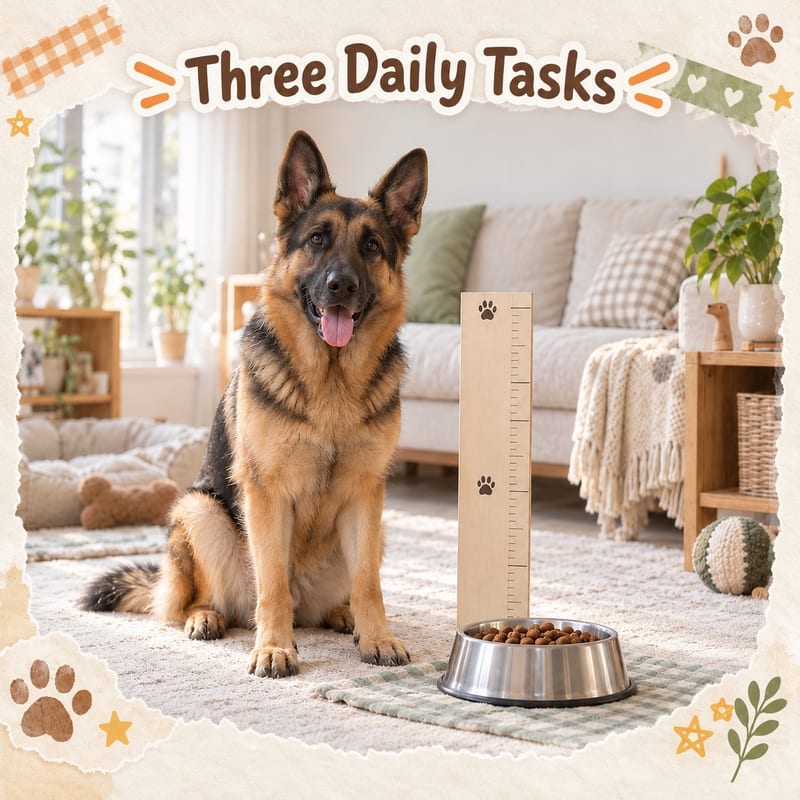
Keep this article: the first chart is the growth reference, weigh monthly against the curve; the second is the body condition score card, feel ribs every two weeks against 4–5; the third is the food amount record, write down last week's feeding before adjusting. Update all three in rotation and you're monitoring joints, weight, and metabolism simultaneously. Keeping a large breed is about discipline, not luck—after age two, the quality of these three charts will be written directly in its joint reports and insurance policy. One more note many prospective owners ask: if a seller says 'it will definitely be over forty' or 'definitely under twenty kilograms' without parental size data, treat it as sales talk—reliable growth prediction comes only from actual curves of parents and littermates, not slogans.
Related Reading
- German Shepherd Lifespan and Health
- German Shepherd Disadvantages and Solutions
- German Shepherd Coat Colours Explained
- Large-breed puppy food measuring cups, growth record charts, and pet scales: find them all at PetChill Pet Supplies.
Data in this article are breed standards and general growth references; individual variation should be assessed by a veterinarian.
 Fuji One full guide →