PetChill Pet Encyclopedia
Dog Breeds

Black German Shepherd: Comparing Pure Black, Sable and White German Shepherd Coat Colours

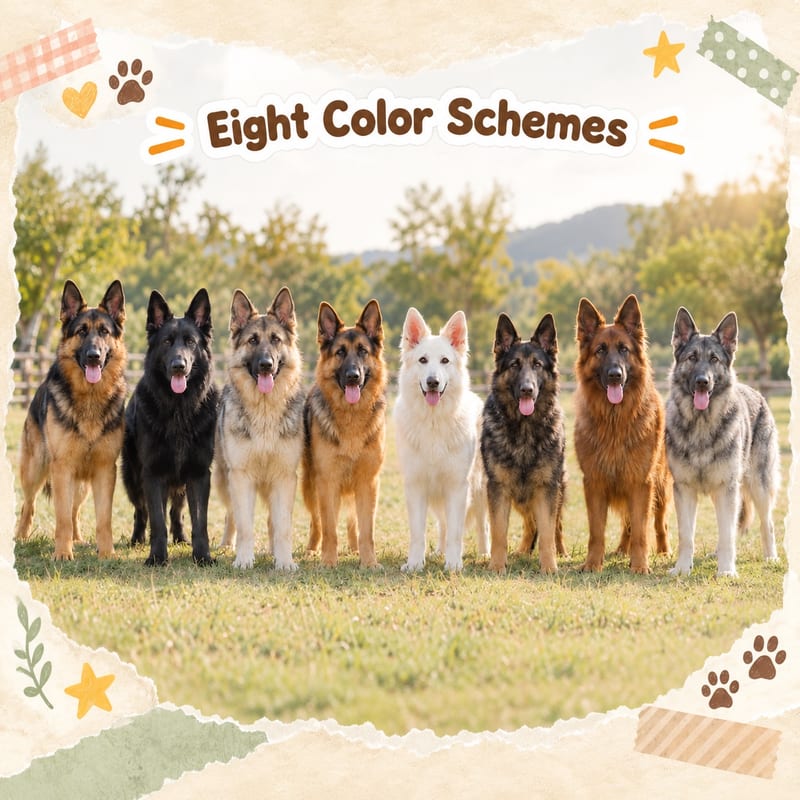
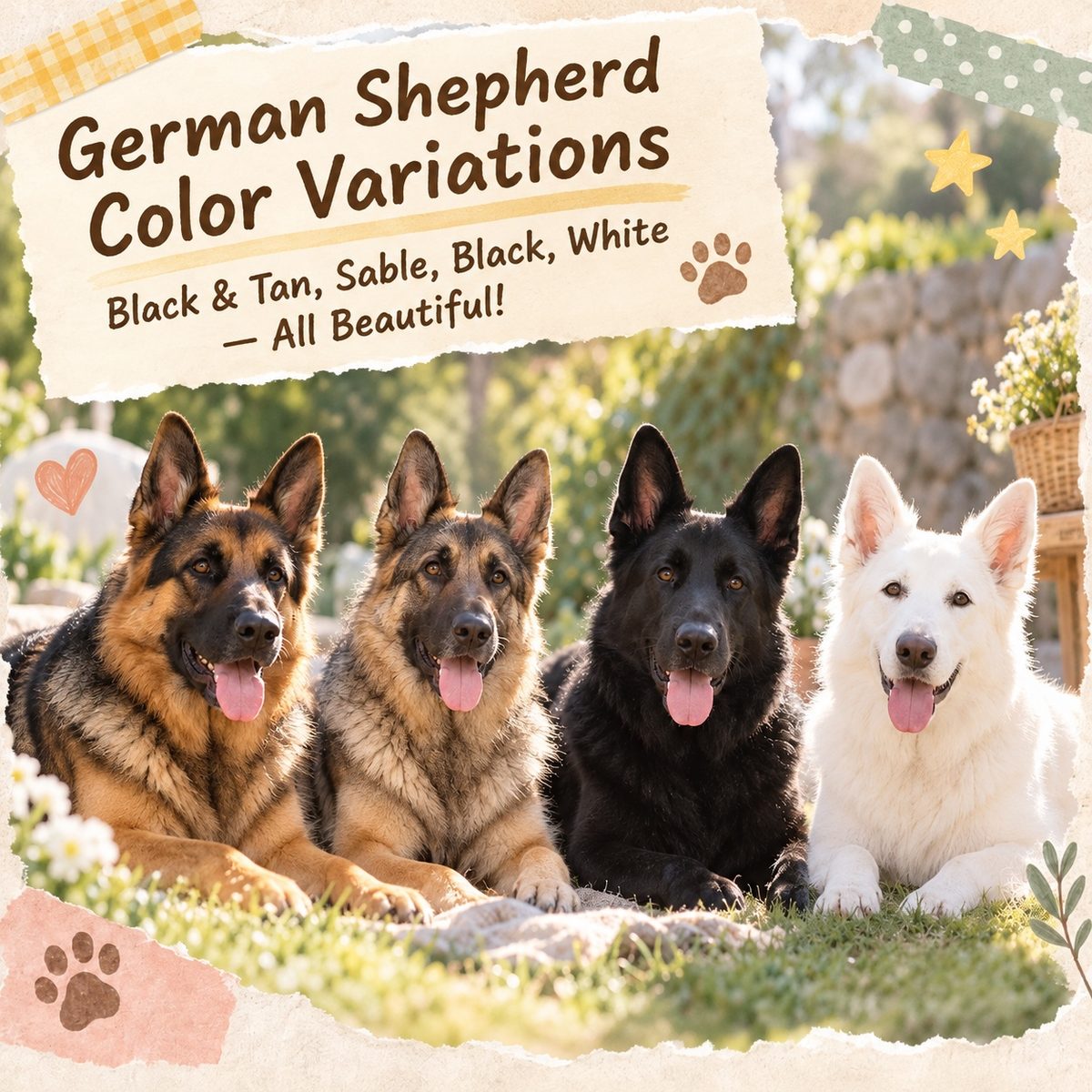
The German Shepherd comes in more than one colour: the classic black-and-tan saddle, sable wolf-grey, pure black, pure white and long-haired variants, each with different genetic mechanisms, commonness and grooming needs. This article uses a colour comparison table to break down the features and rarity of eight German Shepherd coat colours, clarifies common misconceptions such as 'is a white German Shepherd a mix?' and 'are black ones more aggressive?', and explains the real relationship between coat colour, health and price—premiums are mostly supply and demand, not quality.

Published: 2026-09-26·9 min read·Author: PetChill Editorial
Black German Shepherd: Comparing Pure Black, Sable and White German Shepherd Coat Colours — PetChill

Quick answer: The black German Shepherd (pure black) is one of the recognised colours of the German Shepherd, along with black-and-tan saddle (classic, most common), sable wolf-grey (mainstream in working lines), black-silver, pale yellow/yellow, plus pure white, which is not FCI-recognised but has a separate bloodline in the US, and the long-haired variant produced by a recessive gene. Coat colour does not affect temperament or health; colour premiums are supply-and-demand premiums, not health premiums—money should be spent on screening reports, not on coat colour.

Want to know the German Shepherd inside out? Start with the German Shepherd breed profile.

1. Comparison table of eight colour families: features, genetics and commonness

Colour family Appearance Genetic mechanism Commonness Show recognition
Black-and-tan saddle Black 'saddle' over the back, tan on belly, legs and neck Typical dual-layer coverage pattern Highest (classic) Fully recognised by FCI/AKC
Sable wolf-grey Each hair has light and dark bands, wolf-like Agouti gene (A locus) Mainstream in working lines, rising Fully recognised, making a comeback in shows recently
Pure black All black, no tan markings Black coverage plus tan gene not expressed Medium-low Recognised
Black-silver Black with silver-grey markings (not tan) Grey dilution gene variant Less common Recognised
Pale yellow/yellow Tan diluted to pale yellow/cream Tan pigment dilution Medium-low Recognised
Pure white All white (not albino) Recessive white pathway Low (FCI regions) / separate bloodline (US) Excluded by FCI, separate category for white lines in AKC
Liver/blue (rare) Tan turned liver-brown or grey-blue Rare multi-gene dilution Rare Discouraged by most standards
Long-haired variant Any of the above colours plus long guard hair Recessive long-hair gene Low but breedable and encountered FCI recognised as a variant

german-shepherd-colors-hk knowledge card 1

2. Sable vs 'golden': which is the trend?

Many people searching for 'Border Collie colours' or 'golden Shepherd' recently are actually looking for the German Shepherd sable—this is the original colour of the Shepherd: early German Shepherds were mainly wolf-grey, and the black-and-tan saddle was the result of later breeding selection. Working lines (protection, search and rescue, herding trials) have recently returned to sable on a large scale, because some breeders believe the banding structure is linked to early bloodlines (there is no strong evidence for this, but the trend is real). On the market, sable supply and demand are often tight, and prices 10–20% higher than classic black-and-tan are common; as for the term 'golden German Shepherd', it mostly refers to light sable or pale yellow lines, with no independent genetic status—paying a premium for this name is the least wise.
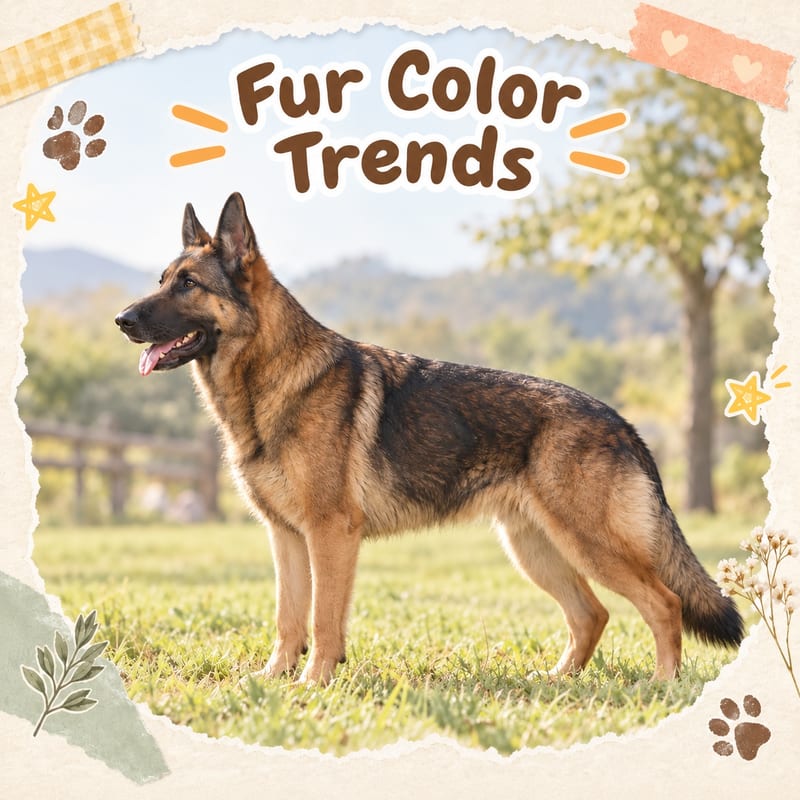
Sable wolf-grey German Shepherd walking on misty morning grass, the colour bands on the hair tips distinct in backlight

3. White German Shepherd: not favoured by FCI, but not a mix and not prone to illness

White is caused by a separate inheritance pathway; if both parents carry it, it can appear, and it has nothing to do with 'albinism' (nose leather and eye colour are normal). The FCI standard excludes white from shows, which creates the myth: 'white = not pure'. The fact is that the US has German Shepherd bloodlines dominated by white (and the Swiss White Shepherd is a separate category), with no difference in temperament or health. What to watch for clinically is never white itself, but the inbreeding coefficient behind any rare colour—when buying rare colour lines, checking the pedigree coefficient is far more important than checking colour.

4. Grooming differences: colour is minor, coat length is major

  • Dark short coat (black-and-tan/pure black): easiest to manage, double coat blows in spring and autumn, 10 minutes of pin brushing daily.
  • Long-haired variant: does not blow its coat but has lifelong matting risk, part and brush every two days; focus on behind the ears, armpits and trousers.
  • Light colours (sable/pale yellow): no grooming difference by colour, but white muzzle hair shows saliva oxidation marks easily; wipe the mouth after eating.
  • General rule for hot regions: no matter the colour, do not shave bald—the undercoat is an insulating layer; only remove loose undercoat (see the care article on summer management).

5. Predicting puppy coat colour: don't conclude at 6 weeks

Most German Shepherd puppies are born dark, sometimes even looking pure black; the black-and-tan saddle only emerges gradually around 6–16 weeks, and sable bands take several months to see clearly. To know what colour your pup will be when grown, looking at the parents' combination is more accurate than the current coat: two black-and-tan parents producing a sable means both carry the agouti gene, and the chance of sable in the next litter still exists. A common buyer misconception is 'pretty colour now means it stays'; in fact the adult colour only materialises after three months, and a colour guarantee in the contract is meaningless—a health guarantee is what matters.
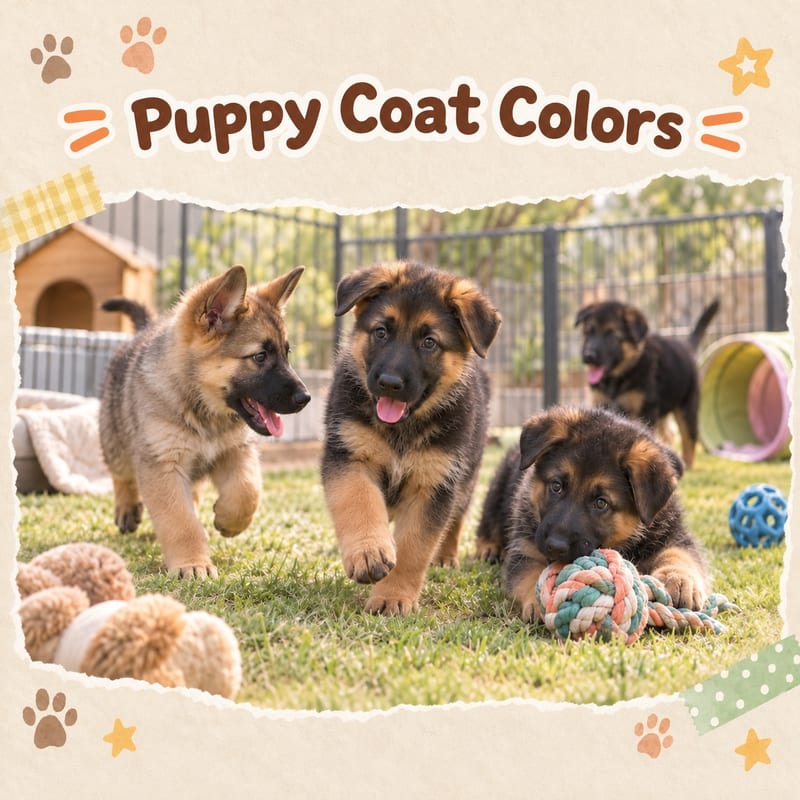
Three German Shepherd puppies of different ages in a row: dark newborn, transition stage, and finished black-and-tan, with age labels beside them

6. Before you get one, ask yourself: should colour be on your checklist?

Put 'how to judge in five minutes whether a German Shepherd is worth meeting' into order, and colour should come last:

  1. Documents first: parents' hip and elbow screening grades, vaccination and microchip records, written health guarantee—if any is missing, no matter how pretty the colour, don't bother.
  2. Environment second: visit the kennel, see the dam's condition and the litter's reactions; if they won't let you see the parents, end the conversation.
  3. Behaviour third: drop an unfamiliar object on the floor and see if the puppy approaches, is scared, and whether it comes back after being scared; this five-minute test predicts temperament far better than coat colour predicts anything.
  4. Only then talk about eye appeal: among individuals that pass the above three, choose the one you like the look of most—black-and-tan or sable, short or long hair, only at this stage is it a matter of taste.

Reversing the order has a common outcome: paying an extra twenty thousand for a 'golden rare colour', skipping screening reports, and a year later paying fifty thousand more for hip surgery. The genetic disease bill for this breed is never counted by coat colour, only by breeding quality.

7. Before choosing a colour, choose the right person

In summary: the German Shepherd's colour list is short, but the market talk is long. Terms like 'rare' and 'limited colour line' essentially dress up supply and demand as value. What you really need to screen is not colour, but a breeder willing to provide documents, a growing environment with adequate socialisation, and after-sales attitude willing to accompany you to two follow-up visits. Colour changes with age and with sunlight bias, but the presence or absence of these three things in the contract determines your bills and mood for the next ten years. Once you understand this, choosing a colour really is just choosing what appeals to your eye—that ease is the beginning a German Shepherd should have. Also note: show-ring colour preferences rotate; this season black-and-tan is popular, next season sable may be in; but the breed standard's requirements for temperament, structure and health have never changed with fashion. Breed to the standard, don't buy to the trend—this is the most practical summary of the colour chapter.

german-shepherd-colors-hk knowledge card 2

Key points

  • ✅ The German Shepherd has at least five recognised colour families plus long-haired variant; black-and-tan saddle is most common, sable is the original colour and mainstream in working lines
  • ✅ White German Shepherd is a recessive white gene, not a mix, not prone to illness, only not allowed in FCI shows
  • ✅ Coat colour has no systematic link to temperament or health; 'black aggressive, white weak, golden expensive' are all misconceptions
  • ✅ Colour premium = supply-and-demand premium; budget first for parents' hip and elbow screening and vaccination documents
  • ✅ Grooming differences are mainly in long hair: part and brush every two days; short hair concentrated on removing undercoat in spring and autumn
  • ✅ Puppy coat colour before 6 weeks has no predictive power; look at the parents' genetic combination for accuracy

This article is general information; for concerns about rare colour pedigrees, check the inbreeding coefficient and parents' health reports, or consult a breeding advisor.

This content is compiled from breed consensus and clinical care guidelines; individual dogs vary greatly; for health problems please consult a registered veterinarian first.


Frequently Asked Questions

📌 Key Takeaways

  • This article covers: 1. Comparison table of eight colour families: features, genetics and commonness, 2. Sable vs 'golden': which is the trend?, 3. White German Shepherd: not favoured by FCI, but not a mix and not prone to illness, 4. Grooming differences: colour is minor, coat length is major, 5. Predicting puppy coat colour: don't conclude at 6 weeks, and more
  • Jump to any section via the table of contents for the key details
  • If in doubt, consult a registered veterinarian

📚 Dogs article index

This article is part of the Dogs topic cluster. Explore related articles:

⭐ Pillar guide: Dogs complete guidePug: Hong Kong Care Guide (Price, Health, Summer Care)→ ReadBeagle Drawbacks: What Are They and Are Beagles Easy to Keep in Hong Kong?→ ReadBeagle Care in Hong Kong: Laws, Home Setup and Heat Protection→ ReadHow Long Do Beagles Live? A Hong Kong Guide to a Longer, Healthier Life→ ReadBeagle Personality and Intelligence: What Hong Kong Owners Must Know→ ReadBeagle price and adoption in Hong Kong: legal channels, verification steps and cost estimates→ ReadBorder Collie Colour Guide: Coat Types and Care Differences→ ReadBorder Collie Disadvantages: 8 Truths and How to Cope→ ReadBorder Collie Hong Kong Care Guide 2026: Laws, Climate and Prices→ ReadBorder Collie Lifespan and Health: A Hong Kong Guide to a Longer Life→ ReadBorder Collie Intelligence and Personality: A Complete Guide for Hong Kong Owners→ ReadBorder Collie Prices in Hong Kong and Adoption Guide→ ReadDachshund Downsides: 8 Truths to Know Before You Adopt→ ReadDachshund Hong Kong Care Guide: Laws, Climate and Home Care→ ReadDachshund Lifespan: 12–16 Years and How to Help Them Age Well→ ReadDachshund Intelligence and Personality: How to Read Small-Dog Rankings→ ReadDachshund Prices in Hong Kong 2026: A Guide to Buying and Adoption Costs→ ReadGolden Retriever Coat Colours: The Full HK Guide — Beyond Gold→ ReadGolden Retriever Lifespan: How Many Years? Hong Kong Owner's Guide to Extending Life | Tumour and Joint Risks→ ReadGolden Retriever Hong Kong Care Guide: Public Housing, Weather and Hiking→ ReadGolden Retriever Drawbacks Fully Disclosed | 8 Honest Assessments Before Keeping One in Hong Kong→ ReadGolden Retriever Puppy Growth Curve and Weight Chart (Hong Kong)→ ReadGolden Retriever Personality and Intelligence: A Hong Kong Guide→ ReadGolden Retriever Price and Adoption Guide (Hong Kong) 2026→ ReadPomeranian Coat Colours: A Complete Guide for Hong Kong Owners — White, Black and Orange, and What They Cost→ ReadPomeranian Weight Chart | Hong Kong Pomeranian Growth Standards from Puppy to Senior→ ReadGerman Shepherd Size & Growth: Hong Kong Puppy Weight Chart + Growth Prediction Guide→ ReadPomeranian Personality and Intelligence | A Must-Read for Hong Kong Owners: How to Train a Smart but Stubborn Small Dog→ ReadGerman Shepherd Lifespan: Health Risks and Longevity Checklist for Hong Kong Owners→ ReadHow Long Do Pomeranians Live? A 15-Year Longevity Guide for Hong Kong Owners→ ReadPomeranian Downsides Fully Disclosed | 8 Honest Assessments and Solutions for Hong Kong Owners→ ReadGerman Shepherd Drawbacks List | 8 Major Challenges to Consider Before Getting One in Hong Kong→ ReadPomeranian Hong Kong Care Guide: Home, Climate and Legislation→ ReadGerman Shepherd Price and Adoption: Hong Kong Buying Guide and Verification Checklist→ ReadPomeranian Price and Adoption Guide (Hong Kong) 2026→ ReadGerman Shepherd Personality | A Must-Read for Hong Kong Owners: Loyalty, Alertness, Intelligence and Training→ ReadGerman Shepherd in Hong Kong: Full Keeping Guide — Law, Public Housing Limits and Summer Heat Management→ ReadHow Much Should a Bichon Frise Weigh? Hong Kong Puppy to Adult Growth Curve Chart→ ReadLabrador Colours Explained | A Must-Read for Hong Kong Pet Owners: Black, Yellow, Chocolate and the Truth About Rare Colours→ ReadShiba Inu Colours: Black Shiba, Red, Sesame and White — Differences and Prices→ ReadLabrador Lifespan: How Long Do They Live? A Hong Kong Owner's Guide to Longevity and Health Risks→ ReadShiba Inu Lifespan: How Long Do They Live in Hong Kong?→ ReadLabrador drawbacks: 8 things to know before getting one (2026 Hong Kong guide)→ ReadShiba Inu Regret List: 8 Downsides Hong Kong Owners Must Know and How to Cope→ ReadYorkshire Terrier Personality Explained | A Must-Read for Hong Kong Owners: A Smart, Affectionate Companion with a Mind of Its Own→ ReadLabrador Puppy Growth Curve and Weight Chart (Hong Kong)→ ReadShiba Inu in Hong Kong: A Complete Guide to Public Housing, Summer Heat and the Law→ ReadYorkshire Terrier Price and Adoption Guide: 2026 Hong Kong Market, Channels and Verification Checklist→ ReadLabrador Personality and Intelligence: A Must-Read for Hong Kong Owners — Obedience, Food Drive and Separation Anxiety→ ReadShiba Inu Weight Growth Curve: What's the Hong Kong Standard in kg? Complete Guide from Puppy to Adult→ ReadHow Long Do Yorkshire Terriers Live? | Hong Kong 11–15 Years, Key Factors and a Longevity Checklist→ ReadChihuahua Disadvantages: A Full List for Hong Kong Owners — 7 Hidden Issues in a Tiny Body→ ReadHow Long Do Chihuahuas Live? | Hong Kong Chihuahua Lifespan and Common Diseases Explained→ ReadChihuahua Personality and Intelligence: Small Dog, Big Dog Soul in Hong Kong→ ReadChihuahua Price in Hong Kong: Adoption Routes, Buying Checklist and Real Monthly Costs→ ReadCorgi Disadvantages Exposed | Must-Read Before Getting One in Hong Kong: 8 Realities + Zero-Cost House Rules→ ReadHong Kong Corgi Ownership Complete Guide: Public Housing, Moisture Control and Heat Protection in One Article→ ReadHow Long Do Corgis Live? | Average Lifespan in Hong Kong and a Longevity Checklist→ ReadCorgi Intelligence Ranking and Personality: A Hong Kong Guide→ ReadCorgi Price and Adoption in Hong Kong: A Practical Guide→ ReadLabrador Care Guide for Hong Kong: Public Housing, Deeds of Mutual Covenant, Heat and Humidity→ ReadAre Poodles Easy to Keep? 7 Downsides and How to Handle Them (Hong Kong Dog Owner's Guide)→ ReadHow Long Do Poodles Live? | Hong Kong Guide to Small Poodle Lifespan and Health Management→ ReadPoodle Intelligence Ranking and Personality | A Must-Read for Hong Kong Owners: The Strength of Second Place→ ReadPoodle Prices 2026: Giant Poodle Cost, Four Sizes and Adoption→ ReadHow Big Does a Poodle Get? A Full Breakdown of Hong Kong's Four Poodle Sizes and Weights→ ReadSchnauzer Disadvantages: 8 Truths to Know Before Getting One in Hong Kong→ ReadHow Long Do Schnauzers Live? Miniature Schnauzer Lifespan and Common Health Issues in Hong Kong→ ReadSchnauzer Intelligence and Personality | Hong Kong Sentinel Dog Smart and Opinionated Full Analysis→ ReadSchnauzer Prices in Hong Kong 2026: The Complete Guide to Buying and Adopting All Three Sizes→ ReadShiba Inu Personality | A Must-Read for Hong Kong Owners: The Independent, Stubborn, Highly Intelligent Cat-Like Dog→ ReadThe Downsides of Owning a Yorkshire Terrier | 6 Real Costs Hong Kong Owners Must Know→ ReadBichon Frise Downsides: 7 Real Costs Hong Kong Owners Must Know (With Monthly Budget)→ ReadBichon Frise Hong Kong Care Guide: Public Housing Rules, Damp and Heat Management, and Source Verification→ ReadBichon Frise Lifespan: 12–15 Years and How to Help Them Live Longer→ ReadBichon Frise Personality and Intelligence Explained | Hong Kong Owner's Training Guide: Smartness and Obedience at a Glance→ ReadBichon Frise Price and Adoption Guide | Hong Kong Buying Tips 2026→ ReadAre French Bulldogs Easy to Keep? 8 Downsides and Fixes Every Hong Kong Owner Should Read→ ReadFrench Bulldog Hong Kong Care Guide: Legislation, Heat Protection and Home→ ReadHow Long Do French Bulldogs Live? A Hong Kong Guide to Flat-Faced Dog Health and Longevity→ ReadFrench Bulldog Personality Explained | A Must-Read for Hong Kong Owners: Intelligence and Getting Along→ ReadFrench Bulldog Hong Kong Price and Adoption Guide (2026)→ ReadFrench Bulldog Size and Weight Standards | A Complete Guide to Puppy Growth Curves in Hong Kong→ ReadLabrador Price and Adoption Guide (Hong Kong) 2026→ ReadShiba Inu Hong Kong Price & Adoption Guide: 2026 Buy or Adopt→ ReadBest Dog Wet Food in Hong Kong | How to Choose Complete Wet Food & Brand Comparison→ ReadBest Dry Dog Food in Hong Kong | Ingredient Picks & Brand Comparison→ ReadCorgi Breed Guide | Spine Care, Weight & Small-Flat Living in Hong Kong→ ReadWhich Dog Food Is Best? Hong Kong's 5-Step Picking Guide, Label Decoding & Switching Tips→ ReadFreeze-Dried Dog Food Guide | Hong Kong Freeze-Dried Dog Food Nutrition, Pros & Cons, Feeding Methods→ ReadFrench Bulldog Breed Guide | Temperament, BOAS Health & Hong Kong Care Guide→ ReadGolden Retriever Guide | Temperament, Hip Joints & Hong Kong Care→ ReadGrain-Free Dog Food Guide: Pros, Cons and Shopping Tips for Hong Kong Dog Owners→ ReadHong Kong Mixed-Breed Dog Guide: Local Dogs, Advantages & Adoption Tips→ ReadPoodle Breed Guide | Complete Hong Kong Guide to Standard, Miniature & Toy Poodles→ ReadShiba Inu Hong Kong Care Guide: Temperament, Shedding, Training and Hereditary Conditions→ ReadDog Food Recommendations Hong Kong 2026 | Puppy Food Picks + Brand Ranking Comparison→ Read

Products mentioned in this article

4 items · prices checked 2026-10-21

  • Nutriplan Soft Dog Food Immunity and Skin Care Support 1.2kg (64337)

    Nutriplan Soft Dog Food Immunity and Skin Care Support 1.2kg (64337)

    HK$98

    About HK$81.67 per kg

    Details

    Price checked 2026-10-21; the store page shows the live price, stock and offers.

  • Bella & Molly's Dutch Berry Royal Selected Dog Food AAFCO Grain-Free Single Protein Salmon Formula 50g (Limited Time Experience)

    Bella & Molly's Dutch Berry Royal Selected Dog Food AAFCO Grain-Free Single Protein Salmon Formula 50g (Limited Time Experience)

    HK$10

    About HK$200 per kg

    Details

    Price checked 2026-10-21; the store page shows the live price, stock and offers.

  •  Special offer

    HK$175HK$235

    About HK$77.16 per kg

    Details

    Price checked 2026-10-21; the store page shows the live price, stock and offers.

  • Royal Canin Dry Dog Food - Medium Light Weight Care Adult Dog 12kg (3053300)

    Royal Canin Dry Dog Food - Medium Light Weight Care Adult Dog 12kg (3053300)

    HK$625.1

    About HK$52.09 per kg

    Details

    Price checked 2026-10-21; the store page shows the live price, stock and offers.

The products above are store items related to this article. Prices are reference prices as of the check date (about HK$908.1 in total); the store page always shows the live price, stock and offers. This article is not medical advice.

You may also like