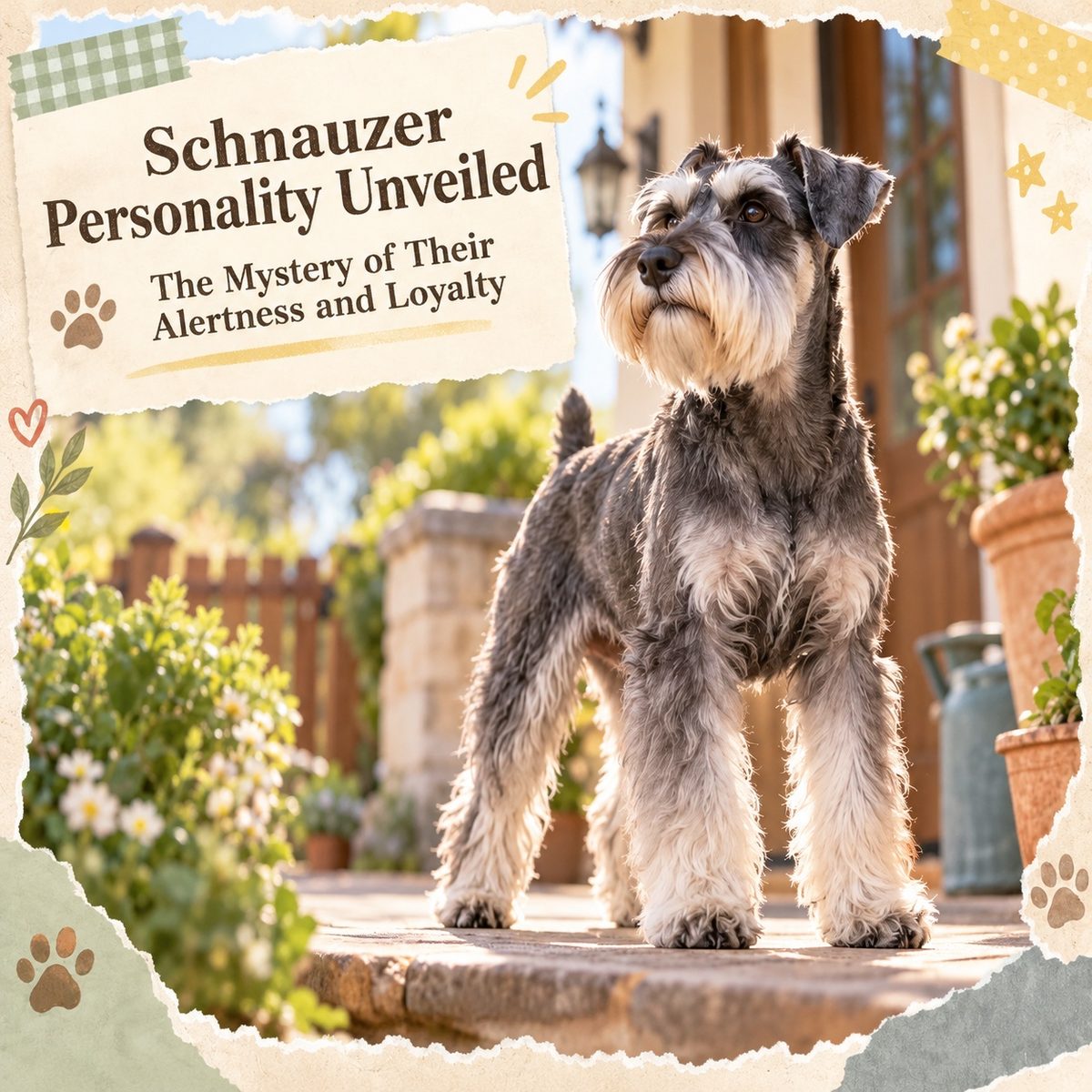
Quick answer: Schnauzer intelligence is high: under Stanley Coren's framework ranked by working obedience, they are in the excellent tier, learn fast, remember well, and can solve problems; but their terrier heritage gives them a mind of their own—smart behavior means 'asking back what's in it for me'. Personality is loyal and alert, low-shedding, suitable for families, at the cost of managing barking and prey drive. Training mantra: short, varied, rewarding.
Want to know all about Schnauzers? First see the Schnauzer breed profile.
1. Schnauzer Intelligence: The Truth Behind the Numbers
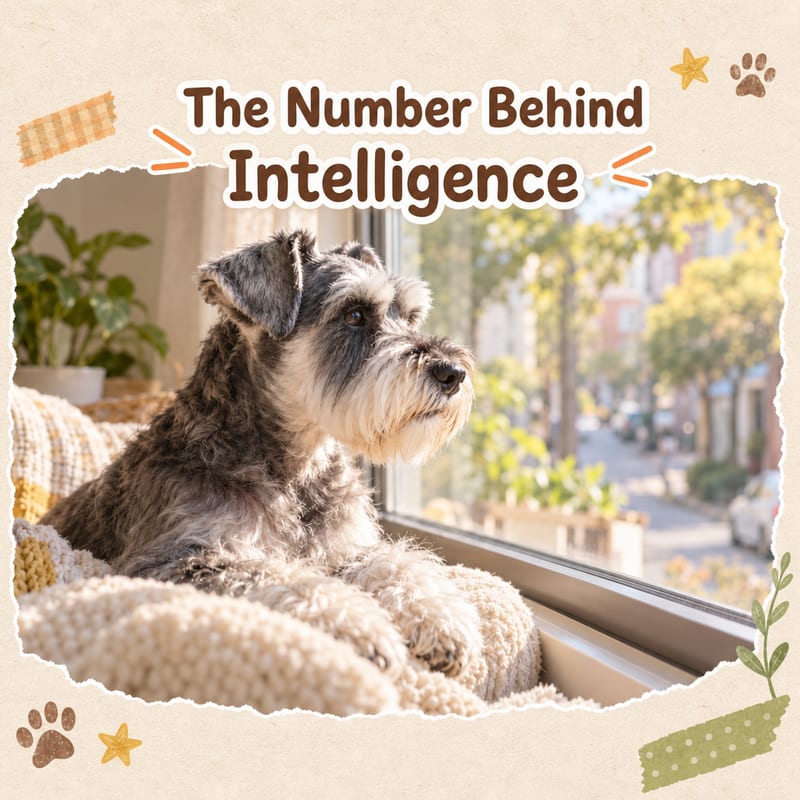
The most common question about 'Schnauzer intelligence' is 'what's the ranking', but you need to look at what the ranking measures. Animal behaviorist Stanley Coren ranked breeds in 'The Evidence of Dog Intelligence' based on 'how many times to learn a new command, first-command obedience rate'; this framework measures working obedience—Miniature Schnauzers are in the top tier in most compiled versions (generally listed within the top twenty, with slight variations between versions, belonging to the type that learns quickly and remembers well). But what Schnauzers truly excel at are two other things: problem-solving ability (the legacy of farm rat-catchers: figuring out mechanisms, finding exits, remembering food locations) and situational observation (sentinel instinct: extremely high ability to read family routines and strangers' intentions). In one sentence: you are not keeping a machine that executes commands, but a collaborator who assesses the situation. Literature on canine cognition also generally points out that learning speed and obedience are two different things: the former is understanding, the latter is willingness—Schnauzers have both, only willingness needs negotiation. The bright side of this trait is easy training and protecting the home; the dark side is they remember who is soft-hearted and when they can bargain.
2. Personality Traits Summary: Five Keywords
| Trait | Daily manifestation | Response / enhancement suggestions |
|---|---|---|
| Alert sentinel | Reports any strange noise at the door, observes strangers first then approaches | 'Quiet' command + standardized welcome ritual |
| Smart and eager to learn | Learns new commands in a few tries, can open cabinets to find food | New trick every week + sniffing games to feed the brain |
| Terrier independence | Hears but chooses not to do, bargains with you | Short sessions, high rewards, randomize commands |
| Loyal attachment | Follows you around, loves family activities, prone to separation anxiety | Gradual alone-time practice, fixed routine |
| Residual prey drive | Chases birds, cars, running children | Keep on leash until recall is solid, exercise in enclosed areas |
3. Living with Children: Conditions for a Sentinel Family Dog
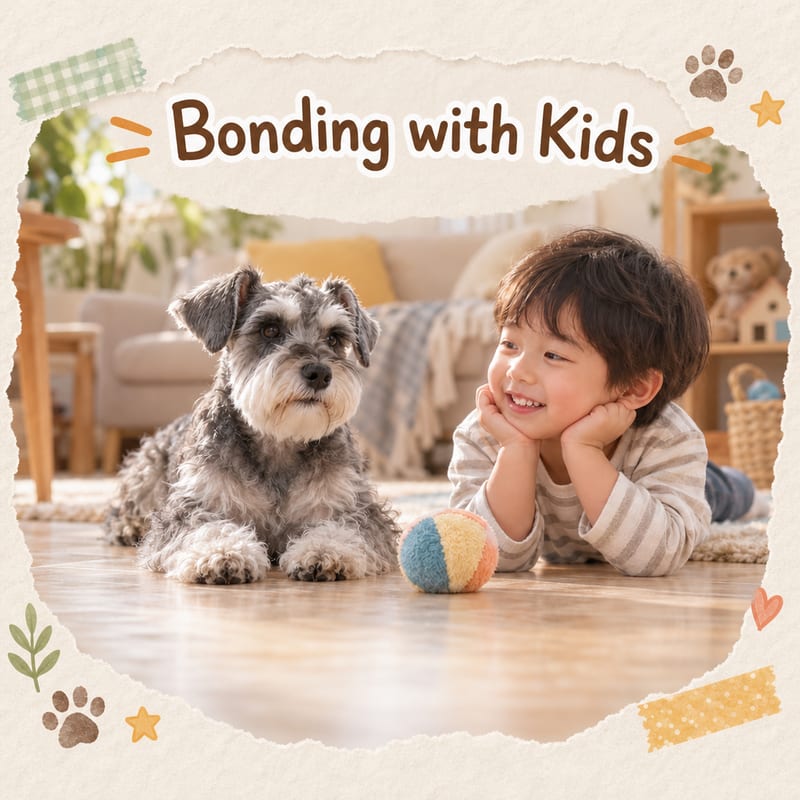
Schnauzers are generally described in breed profiles (AKC, UK Kennel Club breed descriptions) as 'loyal to family, protective, generally good with children'. In practice, focus on three points: 1. Mutual desensitization from an early age—let the puppy get used to children's noise and movements, and teach children not to pull ears or tails or disturb the dog during meals or sleep; 2. Control the 'chase switch'—children screaming and running triggers prey drive and alarm barking, so control the leash when meeting in parks; 3. Set boundaries for protectiveness—they will decide on their own to 'guard this family', so owners must clearly declare who is a guest: when a guest enters, you welcome them personally and the dog gets a reward, making it clear that 'owner approves = safe', avoiding the dog taking enforcement into its own paws. Done well, the Schnauzer is a considerate partner who remembers each family member's routine and patrols outside the children's bedroom door.
4. Living with Other Pets: Early Socialization Determines Success
With dogs: multi-dog households are usually harmonious; same-sex friction between unneutered males is the main risk, and neutering, avoiding direct eye contact, and resource guarding management can greatly reduce it. With cats: the key is timing of introduction and prey drive level—Schnauzers raised with cats or desensitized to felines as puppies can mostly accept cats as roommates; introducing an adult requires gradual procedures like feeding through a barrier and parallel leash walks, no rushing. With small animals: hamsters, birds, rabbits and other prey-sized targets are best physically separated; don't test the rat-catcher genes. To be honest: no breed guarantees 'friendly to all animals'; individual experience and owner management always determine the outcome more than breed labels.
5. Male vs Female Differences and Interaction Suggestions
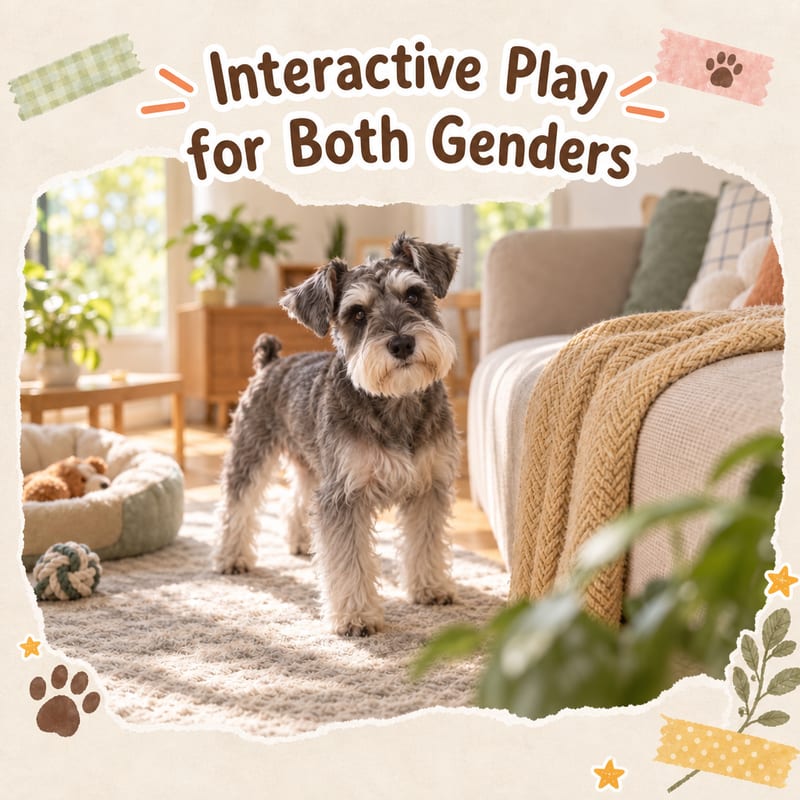
General observations (individual differences always outweigh sex differences): males are usually more outgoing, socially confident, more challenging to unfamiliar male dogs when unneutered, and become 'deaf' when they smell a female in heat; females are generally more mature and stable earlier, sensitive to owner's emotions, and focused on the family circle. Medical aspects: unneutered females have risks of pyometra and mammary tumors, and heat bleeding needs management; unneutered males have higher risks of prostate issues and roaming/loss, and neutering timing should be discussed individually with a veterinarian. In interaction, the Schnauzer suits this mode best: besides two walks a day, add ten minutes of 'brain class'—sniffing mat for breakfast, new commands and tricks, toys hidden in rotation. This smart dog's fatigue comes more from boredom than physical exertion; a mentally tired Schnauzer is a quiet Schnauzer. This principle also applies to adopted adult dogs: no matter what age you start, feeding the brain is never too late.
6. Training Mantra: Turn Smart into Cooperation
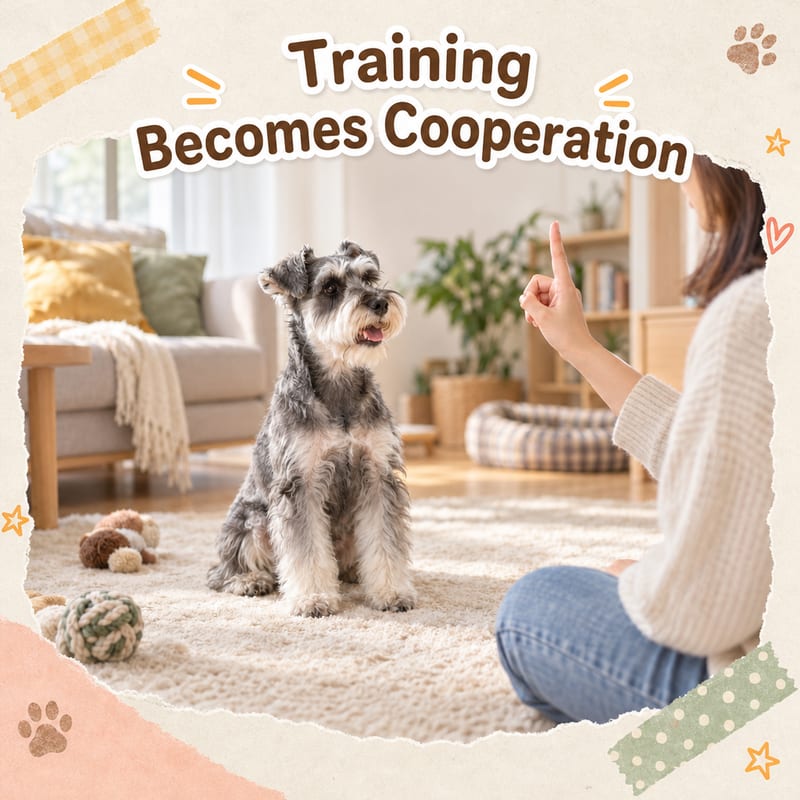
Talking with high-intelligence terriers, method decides everything. Short: five to eight minutes per session, stop when they start to glaze over; long sessions are punishment for them and frustration for you. Varied: randomize command order, rotate locations, increase difficulty in small steps—after learning 'sit' they will start testing 'stand', 'stay', and 'are you serious or joking'. Rewarding: reward value must match their intelligence; a dog that finds kibble lying around at home won't be impressed; save the most important treats for training, giving them a 'paid for work' contract. Also treat 'socialization' as the main subject for the first three months (approximately three to twelve weeks of age window): strangers, sounds, surfaces, other dogs, pair each experience with good food. The cost of missing the window (fear of people, aggression to dogs) will take double time to fix later. If you encounter advanced behavior problems (resource guarding, fear aggression), seek a certified trainer or veterinary behaviorist; don't rely on internet remedies and confrontation.
Want to know the prices, lifespan, and care requirements of the three sizes? See How much is a Schnauzer? Mini Schnauzer Hong Kong price, lifespan, personality full guide.
Key Summary
- ✅ Schnauzer intelligence is in the excellent tier, but it measures working obedience; problem-solving and alert observation are their superpowers
- ✅ Five keywords: alert, smart, independent, loyal, prey drive—manage each with the comparison table
- ✅ Training mantra short, varied, rewarding: eight minutes per session, randomize, high-value rewards
- ✅ The three to twelve week socialization window is the main subject for the first three months; missing it costs double
- ✅ Can live with cats but introduce gradually; hamsters, birds and other prey targets best separated
- ✅ Male-female differences exist but individual differences are greater; choose personality match over sex
- ✅ A mentally tired Schnauzer is a quiet Schnauzer: ten minutes of brain feeding daily
Related Reading
- Schnauzer Disadvantages and Solutions
- Schnauzer Lifespan and Health Management
- Schnauzer Price and Adoption Guide
- PetChill Pet Supplies: sniffing mats, training treat pouches and long lines, the three essentials for feeding a Schnauzer's brain
 Wellness Core full guide →