
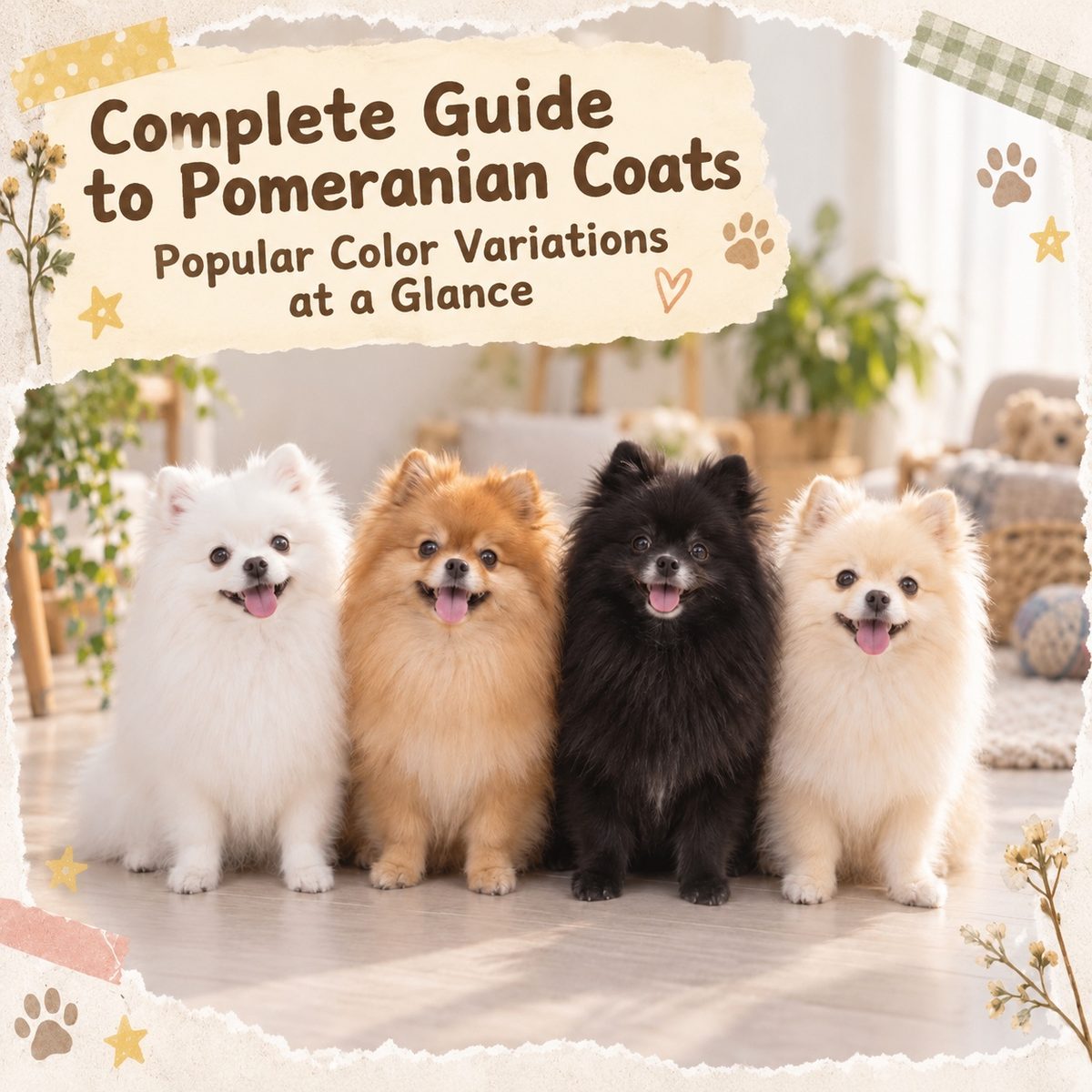
Quick answer: Pomeranians are recognised in more than 20 colours, which for practical purposes fall into five groups: orange, cream/white, black, parti (black-and-white) and sable. In the Hong Kong market white carries the clearest premium, but no colour is healthier than another; the real differences are in care — white yellows easily, light colours show tear stains, and dark coats change most dramatically during shedding.
Want to know the breed inside out? Start with the Pomeranian breed profile.
What is a Pomeranian? The 30-second version
The Pomeranian is a small spitz breed from Pomerania in Germany, descended from much larger sled and herding dogs and bred down over centuries to today's toy size. In Hong Kong it is nicknamed the 'squirrel dog' because its fluffy double coat and tail carried high over its back make it look like a little squirrel. Here are the specs Hong Kong owners look up most:
| Item | Pomeranian |
|---|---|
| Origin | Pomerania, Germany (modern breeding mainly in the UK and US) |
| Average lifespan | 12–16 years |
| Weight | 1.8–3.5 kg (2–3 kg most common) |
| Height at shoulder | About 18–22 cm (toy size) |
| Coat | Double coat: straight, fluffy outer coat and dense undercoat; moderate to heavy shedding |
| Temperament | Active, alert, affectionate; tends to bark at strangers |
| Hong Kong price | About HK$8,000–25,000 (depending on colour, pedigree and size) |
| Monthly basic cost | About HK$800–1,600 |
Three basics you must know:
- Small does not mean low exercise — the Pomeranian is an active breed; 30–45 minutes of split walks a day is the minimum, or you get barking and hand-nipping.
- Barking is built in — it was bred as a watchdog and is highly alert, so start 'quiet' training from day one in a flat.
- The knees are the weak point — patella luxation is common in small breeds; avoid jumping on and off sofas and beds, and avoid standing on the hind legs for long periods.
Pomeranian prices and monthly costs (2026 Hong Kong)
The purchase price is only the entry fee; the real cost is the monthly outgoings. The ranges below are what we actually see in Hong Kong in 2026. They are for reference only — ask about every item before you commit.
| Item | Range | Notes |
|---|---|---|
| Registered breeder | HK$15,000–25,000 | Pedigree certificate, parents' patella and heart screening records |
| Licensed pet shop | HK$8,000–15,000 | Price varies with colour, size and vaccination record |
| Adoption | HK$0–2,000 | Most already neutered and vaccinated |
| Vaccinations (three puppy shots) | HK$900–1,500 | Annual booster afterwards |
| Neutering | HK$2,500–6,000 | Cheaper for males; more for females and larger dogs |
| Monthly food | HK$300–600 | Small-breed dry food plus a little complete wet food |
| Monthly grooming (share) | HK$350–700 | Trim every 6–8 weeks, spread monthly |
| Monthly deworming (share) | HK$80–150 | Internal and external |
| Medical reserve (recommended) | HK$200–500 | Knees, teeth and trachea problems are common |
| Monthly total | About HK$800–1,600 | Excludes major medical costs |
The two items Hong Kong owners most often underestimate are grooming and the medical reserve. Pomeranians have an enormous coat; if you wash them yourself you must dry them completely or the skin traps moisture and develops eczema. A single dermatology course with medication already costs HK$800–2,000, so putting aside HK$200–500 a month is the practical approach.
Who is a Pomeranian suitable for?
| Owner type | Suitability | Reason |
|---|---|---|
| Small flat, spends a lot of time at home | Very suitable | Small and space-efficient, but needs company |
| Retired or semi-retired | Suitable | Time for split walks and daily brushing |
| Family with children (6+) | Depends on teaching | The dog is small and easily hurt; teach children to hold it gently |
| Single, working 9 to 9 | Needs assessment | Barking and anxiety when alone; neighbour complaints are a real risk |
| Someone who does not want to groom at all | Not recommended | The double coat mats easily; grooming is a fixed cost |
Reverse self-check (three questions):
- Can you accept 10 minutes of brushing a day and grooming every 6–8 weeks?
- Can you accept that it will bark at strangers and the doorbell, and spend three months on quiet training?
- Can you set aside HK$200–500 a month for a medical reserve?
If you cannot answer 'yes' to two of the three, look at other breeds first, or consider adopting an adult Pomeranian.
Pomeranian vs other small breeds
| Breed | Weight | Barking | Monthly basic cost | Beginner-friendly |
|---|---|---|---|---|
| Pomeranian | 1.8–3.5 kg | High | HK$800–1,600 | With patience, yes |
| Chihuahua | 1.5–3 kg | Medium-high | HK$700–1,400 | Depends on the individual |
| Poodle (toy) | 2–4 kg | Low | HK$900–1,800 | Yes (grooming is expensive) |
| Maltese | 2–3.5 kg | Low | HK$800–1,500 | Yes |
| Dachshund | 3–5 kg | Medium | HK$800–1,500 | Yes (mind the spine) |
In one sentence: for coat and looks, choose a Pomeranian; for quiet and easy care, choose a Poodle or Maltese; to avoid grooming costs, a short-haired small breed is far more practical.
Four common Pomeranian myths
| Myth | Reality |
|---|---|
| Pomeranians are naturally aggressive and bite | Biting usually comes from fear and poor socialisation; small dogs are often held too tightly. Socialisation from 3–16 weeks makes a big difference |
| Small dogs don't need walks | This is an active breed; less than 30–45 minutes of walking a day leads to barking, hand-nipping and destructive behaviour |
| A rare colour means better health | Colour has nothing to do with health; instead check for patella luxation, heart and tracheal collapse, which are common in small breeds |
| Washing at home saves money, no grooming needed | If the double coat is not washed through and dried properly, moisture traps and causes skin disease; save on grooming and you pay double at the vet |
Pomeranian health check schedule: what to test and when
The three things to watch in a Pomeranian are the knees (patella), teeth and trachea. Small-dog checks are not expensive, and doing them regularly is far cheaper than fixing problems after they appear:
| Age | Recommended | Approximate cost |
|---|---|---|
| 2–4 months | Three puppy vaccinations + deworming | HK$900–1,500 |
| 6 months | Pre-neutering blood test + neutering | HK$2,800–5,000 |
| 1 year | Annual check-up + booster + patella palpation | HK$500–900 |
| 2–6 years | Annual check-up; dental assessment from age 3 | HK$700–1,500 |
| 7+ years | Every six months: blood test, heart auscultation, dental check | HK$1,200–2,000 per visit |
Three things to watch daily (free but essential):
- Gait: holding a hind leg up after jumping, or sitting down after a few steps, can signal patella luxation — small breeds are highest risk.
- Breathing: a 'goose honk' sound or cough at rest should be checked to rule out tracheal collapse.
- Breath: bad breath usually means tartar and periodontal disease, especially common in small breeds.
Dental scaling with anaesthesia in Hong Kong costs about HK$1,800–4,000. Rather than waiting until tartar is so thick that teeth must be extracted, have an assessment every year from age 3; tracheal collapse and patella problems are easier to manage the earlier they are found.
Three budget plans: thrifty, standard and secure
The same Pomeranian can be kept three ways. The point is not which is 'right' but to choose in advance, so you don't discover a shortfall when something goes wrong.
| Item | Thrifty | Standard | Secure |
|---|---|---|---|
| Food | HK$300/month (mainly dry) | HK$450/month (dry and wet) | HK$600/month (mainly complete wet food) |
| Grooming | Wash at home, HK$0 | HK$350/month (out every 8 weeks) | HK$700/month (out every 6 weeks) |
| Deworming (share) | HK$80/month | HK$120/month | HK$150/month |
| Medical reserve | HK$0 (pay as you go) | HK$250/month | HK$500/month |
| Extras | — | Annual check-up | Six-monthly check-up + pet insurance |
| Monthly total | About HK$380 | About HK$1,170 | About HK$1,950 |
| Suitable for | Owners with time to groom and cash on hand | Most working families | Those who want to avoid sudden large bills |
Insurance vs your own reserve: Hong Kong pet insurance typically costs HK$1,800–4,500 a year (depending on age and cover), with an excess and a cap. If you already have HK$20,000 or more in liquid cash, saving it yourself is usually more flexible; if not, insurance spreads sudden risk. You don't need both.
Three practical ways to save (without affecting health):
- Compare vaccination and deworming prices at nearby veterinary clinics; the same injection can differ by HK$200–400.
- Buy nail clippers, a slicker brush and ear cleaner yourself — under HK$300 once — cheaper than paying the groomer each time.
- Weigh your dog once a month and record it; weight change is the cheapest early warning.
In one sentence: with the thrifty plan the key is keeping cash, not keeping nothing; with the secure plan the key is not delaying major treatment to save small amounts.
1. How many colours does a Pomeranian come in? Start with the recognised framework
The American Kennel Club breed standard recognises more than 20 Pomeranian coat colours, which in practice can be grouped into five main colour families in Hong Kong. One concept to note: 'recognised colour' does not equal 'ideal colour' — in the AKC standard, orange with white splashes, parti (black-and-white) and similar can be registered and shown but are not ideal show colours; this affects showing only, not whether the dog is healthy and lovable. A more practical way to divide them is into three rarity tiers: orange, red and cream-white are the well-supplied tier with the most transparent prices; black and parti are the middle tier; and genuinely rare combinations such as 'pure white with two blue eyes', 'solid red with no white' or 'sable with a mask' are the premium tier — but the premium reflects breeding difficulty and supply and demand, not temperament or health. When a seller bundles a rare colour with 'quality', you can already discount it by 30% in your head.
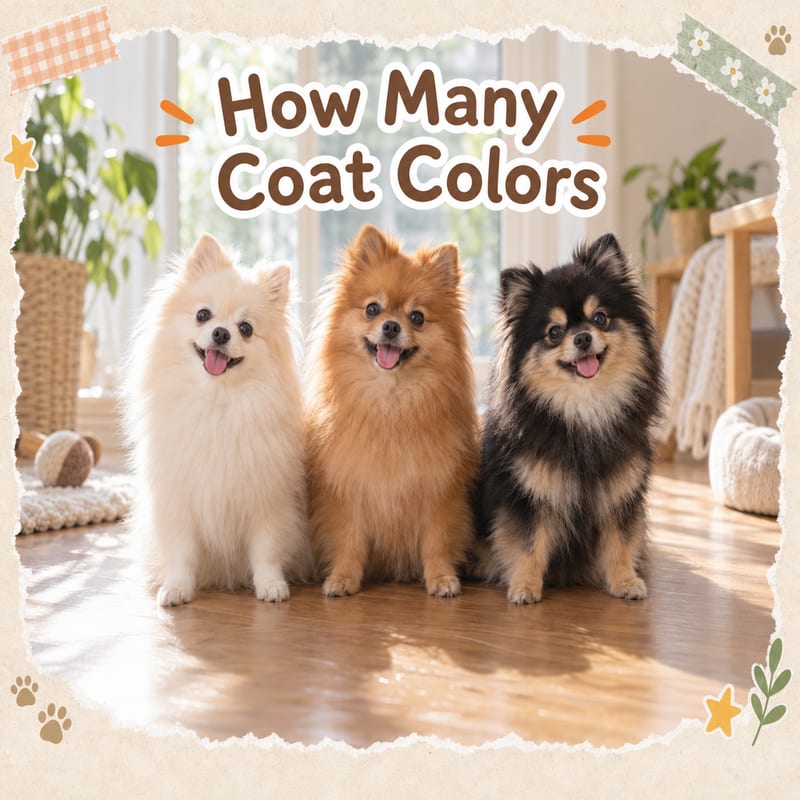
2. The five colour families compared
| Colour family | Features | Commonness (Hong Kong) | Ease of care |
|---|---|---|---|
| Orange/red | The classic 'little squirrel' look, from light apricot to deep red | Highest | Medium: colour difference obvious when shedding |
| Cream/white | Cotton-candy look, from creamy yellow to pure white | High (strongest demand) | High: shows dirt, yellowing and tear stains easily |
| Black | Solid black or black with tan; the 'coolest' look | Medium-low | Low: hides dirt best, but sun-fades to brown |
| Parti/colour | Symmetrical or random white patches | Medium-low | Medium: watch the skin along the colour boundary |
| Sable | Dark-tipped hair over a light base; a wild look | Medium-low | Medium: changes most from puppy to adult |
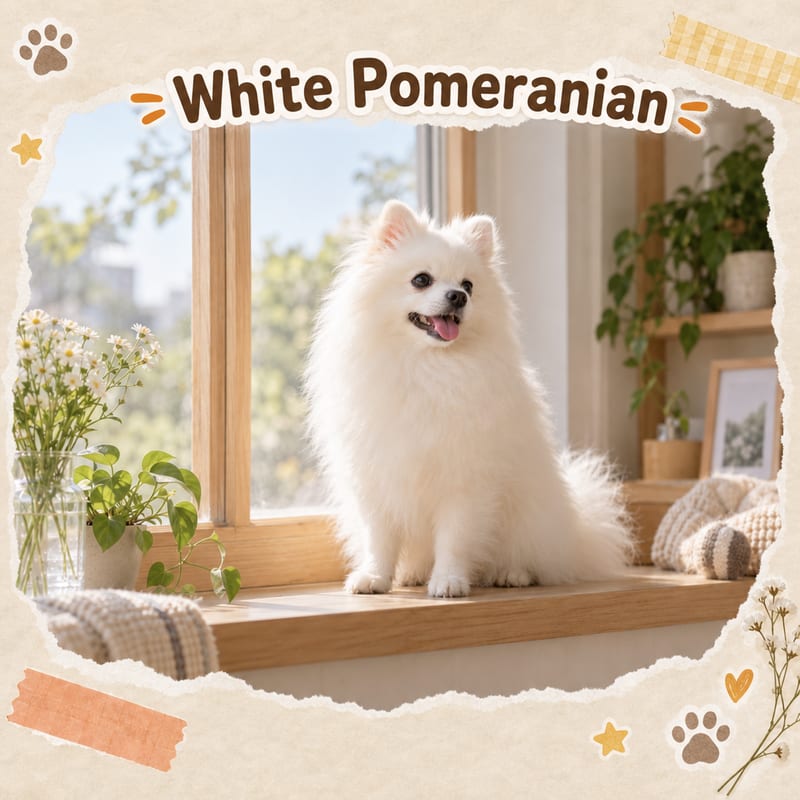
3. The white Pomeranian: why it is expensive and hard to keep
'White Pomeranian' is the most-searched colour term among Hong Kong buyers, for a simple reason: a white Pomeranian photographs best and fits the 'fur ball' image. On price, white usually carries a small premium over orange, mainly supply and demand; but the real cost of white is in keeping, not buying:
- Yellowing: tears and saliva contain iron, which oxidises and turns the coat yellow once it contacts the hair — around the eyes, mouth and paws first. The answer is to reduce contact (water bottle, frequent wiping) and use a white-coat shampoo, rinsing thoroughly — leftover shampoo is itself a cause of yellowing.
- Visible dirt: one walk on grass, one meal at the bowl edge, and the white coat records it all. This is exactly where the 'psychological cost' of light colours lies.
- Tear stains magnified: all colours get tear stains, but they show most on white dogs. Persistent tear stains should first rule out entropion, eyelash irritation and nasolacrimal duct problems — don't just blame 'heaty food'.
4. Shedding and 'fading': every colour changes, only the degree differs
Pomeranian puppies go through a puppy-coat moult at 3–7 months, known as the puppy uglies. Sable and dark individuals may lighten by two shades at this time, making buyers think they have been mis-sold; cream, conversely, may darken. The final coat colour is generally thought to be roughly settled by 12–18 months. So two practical tips: first, before buying a puppy, look at photos of the parents and grandparents — more reliable than the puppy coat; second, treat with suspicion any seller who charges a rare-colour premium on the grounds that 'it will turn a beautiful colour when it grows up' — colour is decided by genetics at the breeding end, not at your feeding bowl.
5. Before buying a colour, how to read the pedigree documents
If you are choosing a colour on the basis that the dog is purebred, the pedigree is the only colour 'invoice': the colour field on the registration certificate is what the breeder declared, so when you see fancy names like 'pearl white' or 'lavender', check them against the AKC standard colour names to know what they actually are. The second place to look is the three-generation pedigree: coat colour is the result of gene combinations, and comparing the colours of parents and grandparents gives a rough idea of what a pair will produce — two sables can produce parti, two oranges almost never produce pure white. The third place is the health testing column: a proper breeder provides heart (PDA), knee (patella luxation) and eye screening records together with the pedigree. Colour cannot buy health, but health records can help you rule out a puppy mill that breeds only for 'rare colours'. Discuss price only when all three documents are present; if any is missing, the transaction already carries risks beyond the premium.
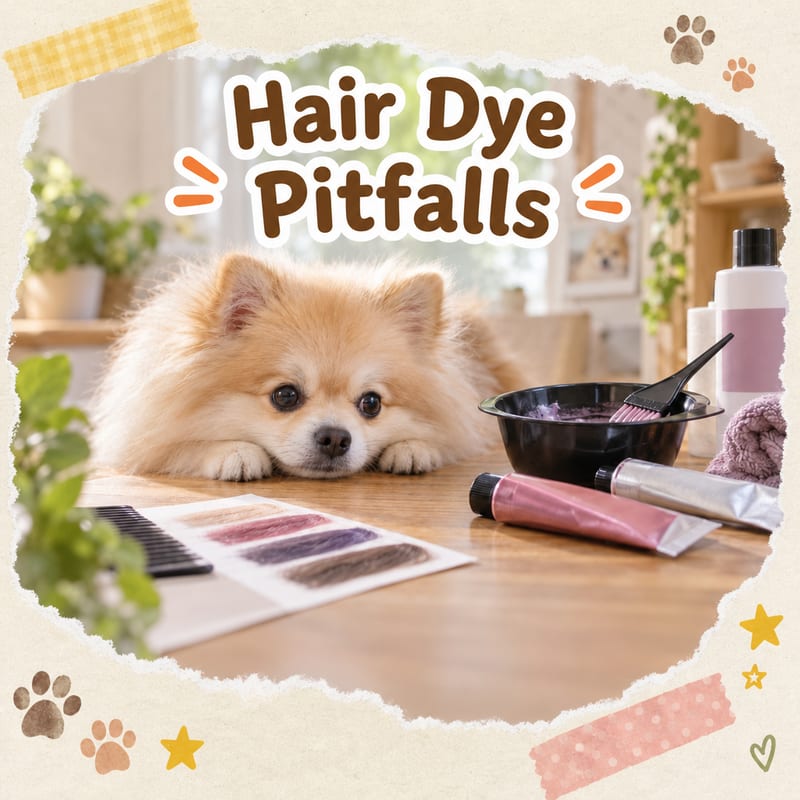
6. Sun fading, dyeing and the 'rainbow' trap
A dark Pomeranian's coat tips turn brown under long exposure to strong sun (sun fading), a reversible photo-oxidation; light coats turn yellow, a different mechanism but also related to ultraviolet light — so the 'avoid midday outings' advice in the heat-safety article also protects the coat. As for marketing gimmicks like the 'rainbow Pomeranian', dye can irritate a dog's skin and is especially unsuitable for puppies and older dogs with liver or kidney burdens; enjoy colour through genetics, not dye.
7. Before choosing a colour, ask yourself three questions
- How much 'visible dirt' can I accept? The price of white and cream is two extra spot-wipes a week and one extra spot-clean a month; if you can't accept that, go orange or black — they photograph just as well.
- Am I choosing a colour or a 'colour name'? Terms like 'red Pomeranian' and 'black beauty' have no standard colour reference; seeing the dog and its parents' coats in person is the basis.
- How much premium am I paying? Colour preference is subjective value; if any colour exceeds the reference range in this article by more than 20%, ask one more question: 'Am I paying for health or for a name?' For a verification checklist, see the price and adoption article.
By the way: the depth of colour can vary enormously between dogs of the same colour — orange ranges from honey to flame red within the standard; rather than chasing an extreme colour, chase a dog with even coat, healthy skin and clean eyes — these three are what affect how comfortable you feel looking at it every day.

Frequently asked questions
Is a white Pomeranian the most expensive? There is a small supply premium, but no health difference; if 'rare pure white' is priced much higher, check it against the normal colour range.
What if a white dog turns yellow? It is oxidation from tears and saliva: reduce contact, wipe often, and rinse thoroughly with a dedicated shampoo; professional grooming can restore most of an already-yellowed coat.
When is the coat colour settled? The fading period is 3–7 months and the colour is roughly settled by 12–18 months; looking at photos of the parents and grandparents before buying is most reliable.
Is a parti dog a crossbreed? Not necessarily; parti is registrable but not an ideal colour, though some mixed dogs are sold as purebred — check a three-generation pedigree or adopt instead.
Does care differ by colour? Yes: white fears yellowing, light colours show tear stains, dark coats sun-fade to brown; the basic care frequency is the same for all colours.
Can I keep a rainbow Pomeranian? Dye carries a risk of skin irritation and is not recommended; get colour from genetics, not dye.
Is darker orange better? There is no official ranking of depth; very dark, red-toned dogs fade in the sun. Choose the shade you prefer, and let health affect the price.
Q: How many coat colours do Pomeranians have, and which is most common in Hong Kong? A: Recognised colours include orange, red, cream-white, pure white, black, parti and sable. In Hong Kong, orange and cream-white are the most common; pure white and parti are rarer and usually cost more.
Q: Is coat colour linked to personality? A: No direct link. Personality is shaped by genetics, socialisation and training; coat colour is only appearance. When choosing a Pomeranian, look at the parents' temperament, the puppy's socialisation experience and health records — far more practical than colour.
Q: Does Hong Kong's humid weather affect a Pomeranian's coat colour and care? A: Yes. High humidity makes white and cream Pomeranians prone to tear stains and yellowing, so wipe the eyes daily, keep the face dry, and always dry the undercoat thoroughly after a bath to avoid skin problems.
Key points
- ✅ More than 20 recognised colours, grouped into five main families in Hong Kong; recognised colour ≠ ideal show colour
- ✅ Check documents before colour: match the registered colour name to the AKC standard, use the three-generation pedigree to predict colour, and discuss price only when health screening records are complete
- ✅ White carries a supply premium but no health advantage; it is expensive to keep, not to buy
- ✅ Three white-coat tasks: prevent yellowing, prevent visible dirt, and check eye causes first for tear stains
- ✅ The 3–7 month fading period is normal; the colour is roughly settled by 12–18 months — photos of the parents are the safest guide
- ✅ Sun fading is reversible, dye harms the skin: skip the 'rainbow Pomeranian'
- ✅ Even coat, healthy skin and clean eyes are worth paying for more than an extreme colour name
- ✅ If any colour exceeds the reference range by 20%, ask: did I buy health or a name?
Related reading
- Pomeranian price and adoption guide
- Pomeranian disadvantages and how to cope
- Pomeranian Hong Kong care guide
- White-coat shampoo, water bottles and tear-stain wipes: find them all at PetChill pet supplies.
The health information in this article is general in nature; for persistent tear stains, unusual hair loss or skin discolouration, consult a registered veterinarian.
 Fuji One full guide →





