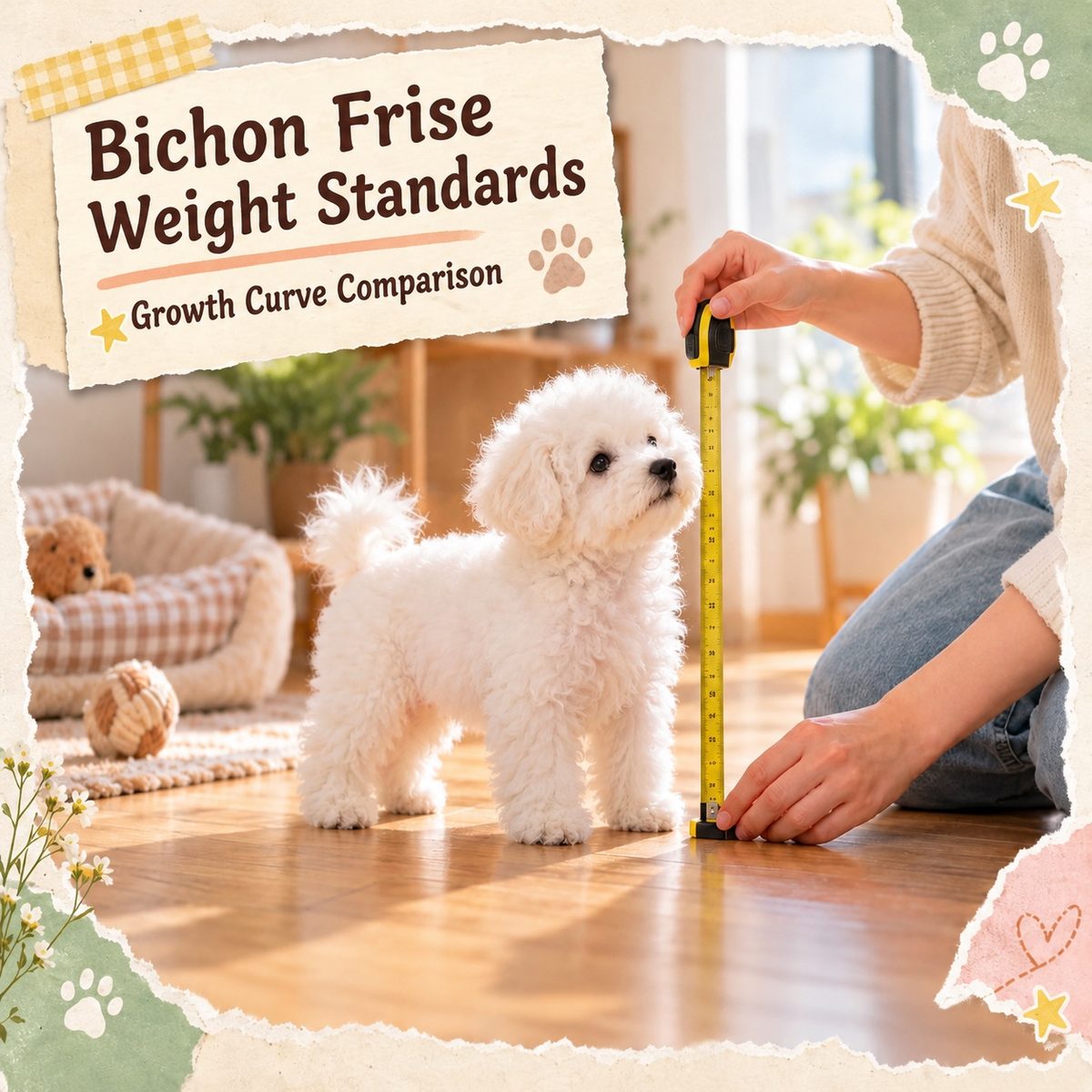
Quick answer: The standard adult Bichon Frise stands about 23–28 cm at the shoulder and weighs about 3–5 kg, with bones fully formed at around 10–12 months. Don't judge fat or thin by kilograms alone—use a body condition check (BCS) to feel the ribs and look at the waistline. For puppy feeding, follow the 'one meal less per month of age' principle, transitioning from 4 meals to 2 meals a day. This article includes a growth curve chart and home measurement methods.
Want to know all about the Bichon Frise? Start with the Bichon Frise breed profile.
1. How big will a Bichon Frise get? Standard size explained
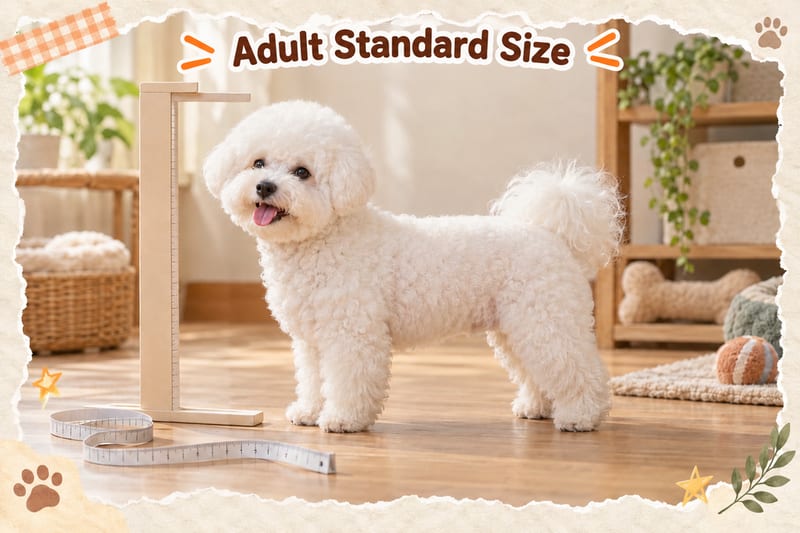
The UK Kennel Club and the American AKC breed standards for adult Bichons are broadly consistent: shoulder height about 23–28 cm (measured from the top of the shoulder blades to the ground), ideal weight range about 3–5 kg, with little difference between males and females. The overall aim is 'small but sturdy', not 'the smaller the better'. Key points:
- Chest depth is about half the body length, and the body is nearly square—this proportion is the spirit of the breed standard.
- Over 8 kg is usually already overweight and requires immediate dietary control.
- 'Teacup' and 'mini' are not official classifications (see section 5).
2. Growth curve: monthly weight reference table
The following are general reference ranges; individual variation can be ±15%. Trends matter more than single numbers—steady monthly gain with a gradually flattening slope is a healthy trajectory:
| Age (months) | Weight reference (kg) | Growth focus | Feeding advice |
|---|---|---|---|
| Birth–2 months | 0.3–1.0 | Rely on mother's milk or formula | Small frequent meals, keep warm |
| 3 months | 1.0–1.8 | Rapid bone growth | 3–4 meals of puppy food daily |
| 6 months | 2.0–3.2 | Teething complete, height gain begins to slow | 3 meals daily |
| 9 months | 2.8–4.0 | Body proportions taking shape | 2–3 meals daily |
| 12 months | 3.0–4.5 | Bones nearing full development | 2 meals daily, consider switching to adult food |
| 15 months+ | 3.0–5.0 | Muscle and coat filling phase | Fixed 2 meals daily |
3. How to measure: shoulder height, weight, and body condition in three steps
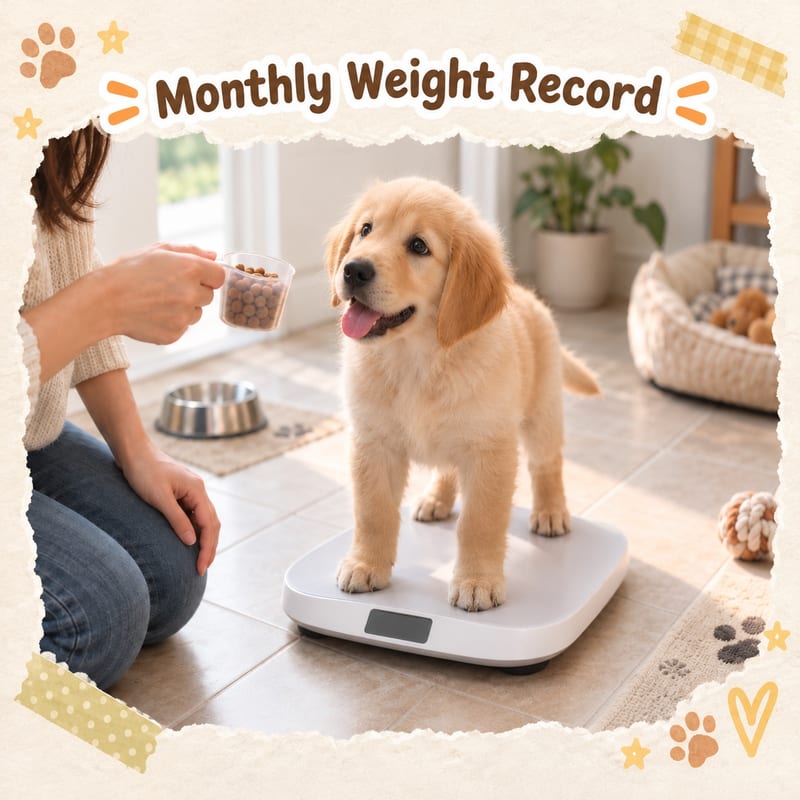
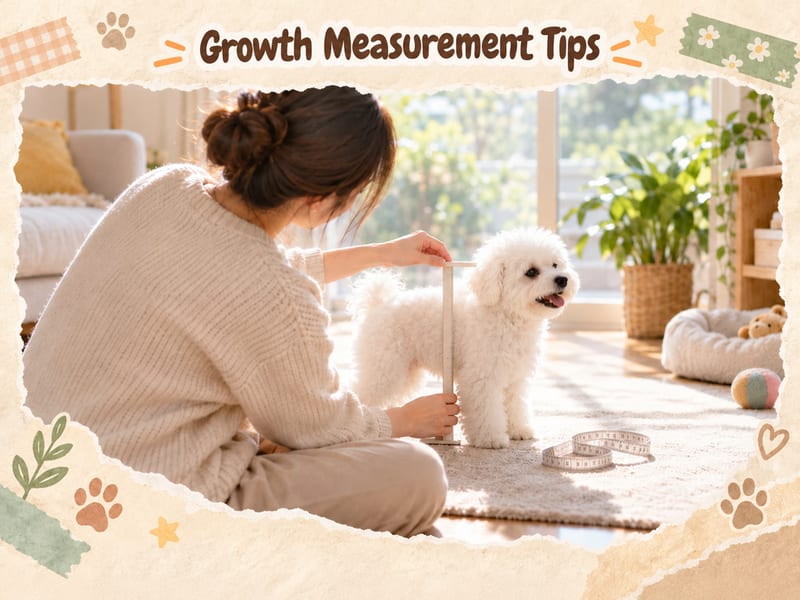
Weight: The most accurate is a vet or pet scale; at home, you can 'weigh yourself holding the dog, then weigh yourself alone, and subtract the two'. Shoulder height: Have the dog stand straight against a wall with front legs together, and measure the vertical distance from the top of the shoulder blades to the floor—not the top of the head. Body Condition Score (BCS 5-point scale), a globally used veterinary method for judging fat/thin:
| Score | Ribs | Waistline | Assessment |
|---|---|---|---|
| 1 | Individual ribs visible at a glance | Extremely tucked | Too thin, needs veterinary check |
| 2 | Visible on light touch | Obvious | Slightly thin |
| 3 | Easily felt with light pressure, covered by a thin fat layer | Clear | Ideal |
| 4 | Requires firm pressure to feel | Blurred | Slightly overweight, reduce food and increase exercise |
| 5 | Cannot be felt | Absent, abdomen sagging | Obese, see a vet for a plan |
Score every two weeks, weigh at the same time each month, and take side photos from a fixed angle with your phone—this is far more meaningful than a single number.
4. Puppy feeding: rhythm from 4 meals to 2 meals
- Choosing food: Choose a small-breed formula labelled 'Puppy', with protein and calcium-phosphorus ratios that support bone development; do not add excessive calcium powder on your own.
- Number of meals: 3–4 meals daily at 2–3 months, transitioning to 2 meals after 6 months; feed at fixed times and amounts, avoid free-feeding (leaving a bowl out is the easiest way to raise a fat Bichon).
- Portion: Start with the packaging recommendation and adjust every two months according to the weight curve; treats should not exceed 10% of daily calories.
- Food transition: Mix gradually over 7–10 days; slow down if stools become soft. Bichons generally have sensitive stomachs, and sudden food changes are the number one cause of diarrhoea.
- Avoid: The real high risks are grapes and raisins, onions, xylitol (commonly found in chewing gum and sugar-free foods), and cooked bones—never feed these. Keep chocolate out of reach, and don't let them pick up crumbs.
- Water: Keep fresh water available; puppies on dry food especially need monitoring of water intake—record any sudden increase and consult your vet.
5. The truth about 'mini Bichon' size
Those searching for 'mini Bichon price' should understand: the standard Bichon is already very small, and the 'mini' or 'teacup' categories do not exist in kennel club standards. Claims in the market usually come from three sources: undersized purebred individuals (health risks may not necessarily be higher, but the premium has no objective standard), crossbreeds with other small breeds such as Chihuahuas (size unpredictable, coat quality may not be low-shedding), or stunted growth due to nutrition or health problems (highest risk). Rather than chasing extreme smallness, aim for a healthy physique within the standard range.

6. Home measurement SOP: get the data done in ten minutes
New owners often ask 'am I measuring accurately?'—method matters more than tools. Make the following routine fixed: same day each month, same time (ideally before breakfast on an empty stomach), same scale, same photo angle—these four 'sames' are needed to find the true trend:
- Weigh on an empty stomach on a pet scale (or use the hold-and-subtract method), record the number.
- Take a 90-degree side photo while standing, and self-score against the BCS chart.
- Measure from the top of the shoulder blades vertically to the floor, record the shoulder height.
- Open a record app or spreadsheet, enter the above four items, and note down any treats given.
After three months you will have a growth curve for your own dog; when discussing feeding amounts with your vet, showing it directly is far more efficient than saying 'I think he looks fatter'. Weight numbers from each vaccination visit should also go on the same chart, so the vet can see at a glance if the growth rate is abnormal.
Exercise matching principle: For an adult Bichon weighing 3–5 kg, a total of 30–45 minutes of walking per day plus 10–15 minutes of indoor play is sufficient; excessive running and jumping (especially before 1 year old) is not helpful for developing joints. The rule for growing dogs is 'free play more than structured training'.
7. Common deviations and corrective directions
| Observation | Possible cause | Corrective direction |
|---|---|---|
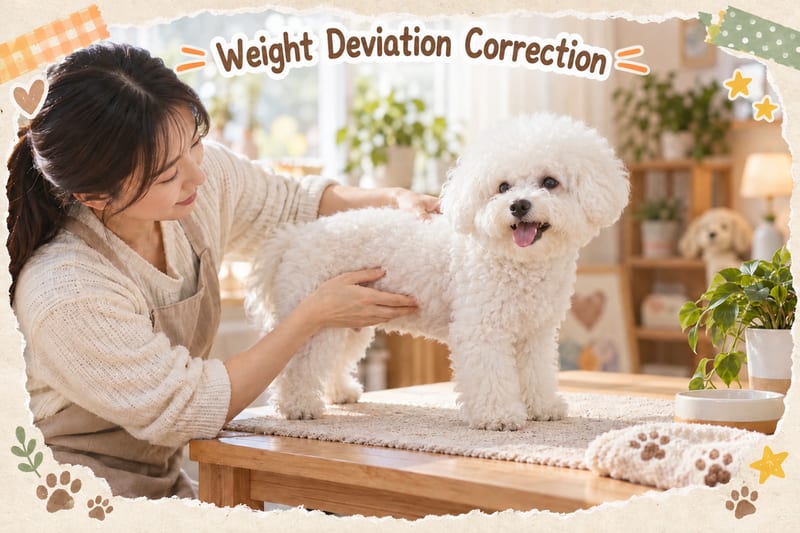
| Rapid weight gain at 6 months | Overfeeding, too many treats | Reduce calories by 10–15% gradually, cut treats to zero for two weeks and observe |
| Still very small at 8 months, low energy | Malnutrition, parasites, congenital issues | See a vet promptly; do not 'add meals' on your own |
| Ribs suddenly prominent | Warning sign of illness (dental pain, gastrointestinal, endocrine) | Record appetite and water intake, consult vet |
| Prone to weight gain after neutering | Metabolic rate decreases | Reassess calories after neutering, possibly reduce by 10–20% |
For medical concerns, always rely on a registered veterinarian's diagnosis; this chart is only to help you communicate more clearly with your vet.
Key summary
- ✅ Adult standard: shoulder height about 23–28 cm, weight about 3–5 kg; over 8 kg is usually overweight.
- ✅ Look at the growth curve trend: steady monthly gain with a gradually flattening slope; bones set at around 10–12 months.
- ✅ Use BCS for fat/thin, not just kilograms; score every two weeks.
- ✅ Feeding rhythm 'one meal less per month of age', fixed times and amounts, treats no more than 10% of calories.
- ✅ Reassess calories after neutering; decreased metabolism is the easiest way to raise a fat Bichon.
- ✅ 'Mini' and 'teacup' are not official classifications; a healthy physique within the standard range is better than extreme-smallness slogans.
- ✅ Measure and record at the same time each month; a growth curve for your own dog is the most practical tool.
Related reading
- Bichon Frise lifespan and longevity checklist
- Bichon Frise disadvantages: honest analysis and solutions
- Bichon Frise personality and intelligence explained
- PetChill pet supplies: puppy pens, timed feeders, and body condition management products