
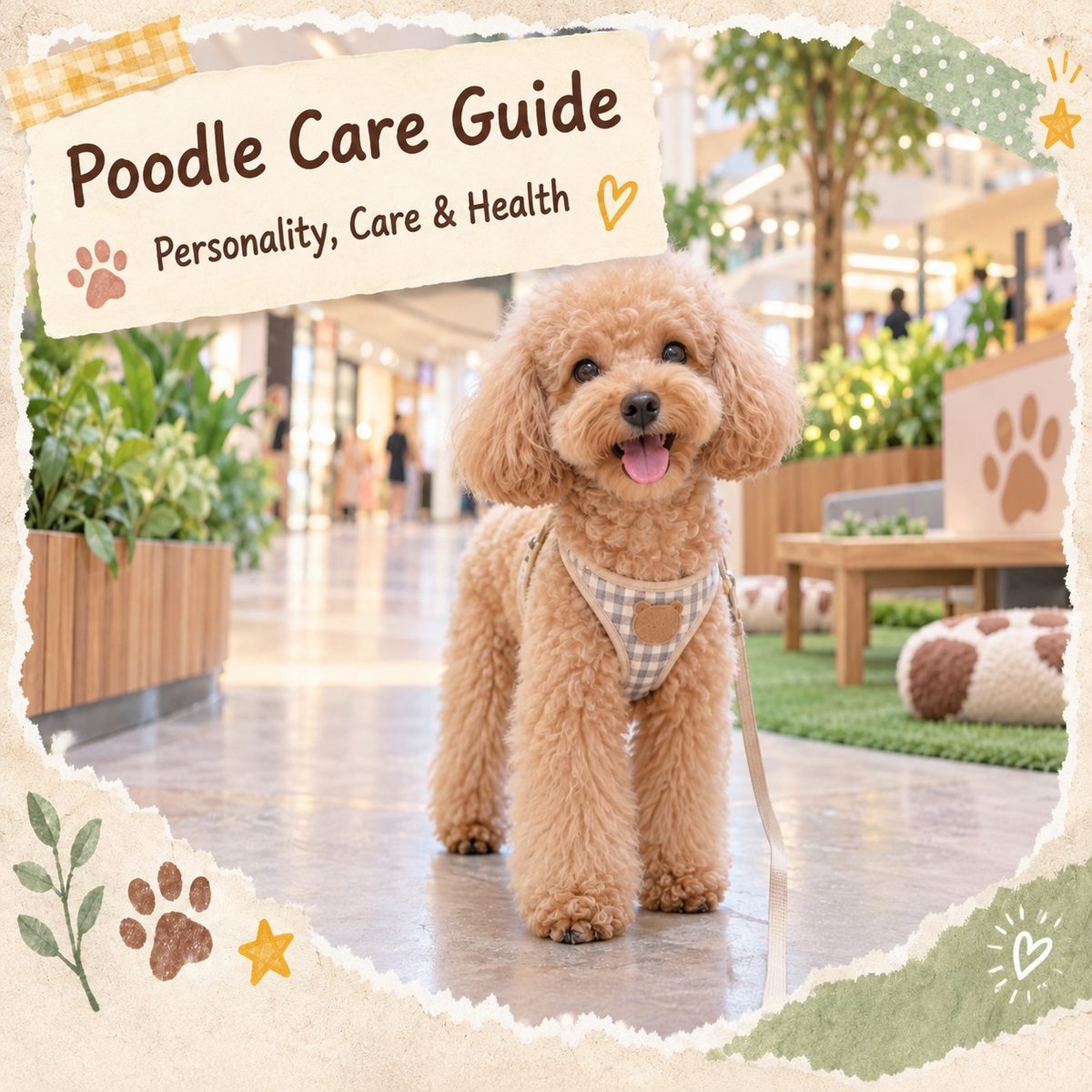
Quick answer: Poodles are a beginner-friendly breed that is smart, easy to train and low-shedding, but they require grooming every 4-6 weeks, daily brushing, and attention to three major health risks: patellar luxation, eye disease and ear infections.
Poodles are a popular breed in Hong Kong — smart, low-shedding, and available in different sizes. Here's the bottom line: Poodles are a beginner-friendly breed that is smart, easy to train and low-shedding, but the trade-off is regular grooming and attention to patellar luxation, eye disease and ear problems. This article covers the three sizes, temperament, care and health considerations for Poodles.
What kind of breed is a Poodle?
Poodles originated in Europe (with disputed German/French ancestry, but developed in France). Their ancestors were water retrievers — hence they are naturally water-loving, smart and highly obedient. Later they became a noble pet in France and evolved into three sizes.
Physical characteristics:
- Single-layer curly coat, low-shedding, hair grows continuously like human hair
- Three sizes: Standard (large), Miniature (medium), Toy (small)
- Many colours: white, apricot, red, black, grey, parti-colour
| Size | Approx. shoulder height | Suitable for |
|---|---|---|
| Standard Poodle | 38cm and above | Those with space, who love hiking and swimming |
| Miniature Poodle | 28-38cm | A compromise for apartment families |
| Toy Poodle | Under 28cm | Small flats, easy to carry |
Poodle Temperament
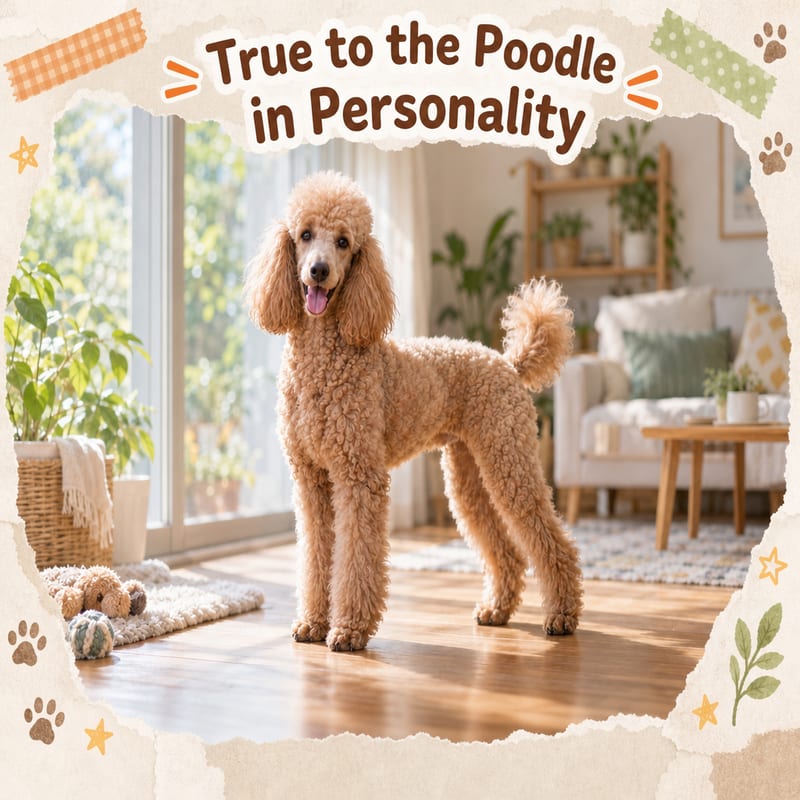
- Smart — ranked near the top in intelligence, very easy to train, learns faster than you can teach
- Lively and loyal — good-natured, devoted to their owner
- Easy to train — obedient, a frequent winner in agility and obedience competitions, suitable for beginners
- Loves human interaction — very clingy, enjoys company, dislikes being left alone for long periods
- Alert — will bark to announce visitors; train from a young age "who to announce and how many barks"
Tip: Poodles are an ultra-smart breed — easy to train, obedient, and beginner-friendly. They are also low-shedding, friendly to allergy sufferers. If you want a dog that is smart, obedient and low-shedding, the Poodle is an excellent choice. But smart dogs can also get bored and destroy things — they need mental games, not just physical exercise.
Coat Care: The Poodle's Number One Task
A Poodle's curly coat does not shed but mats easily; grooming is a long-term commitment:
- Brush daily or every other day — use a slicker brush to brush layer by layer down to the skin, focusing on the golden matting spots behind the ears, under the armpits and between the legs
- Groom every 4-6 weeks — regular trimming at a groomer; without trimming, the coat will form felt-like mats that drag and damage the skin
- Dry thoroughly after bathing — curly coats trap moisture and bacteria; not drying completely is a source of skin disease
- Trim around the eyes — long hair covering the eyes irritates and causes tearing; white Poodles easily show tear stains
- Check and pluck ear hair — Poodles have long hair in the ear canal that traps dirt; plucking ear hair/cleaning ears is a standard grooming procedure
Hidden cost of owning a Poodle: grooming fees are a fixed monthly expense; remember to include them in your budget before buying a dog.
Health Watch: Patella, Eyes and Ears
1. Patellar luxation (most common in small Poodles)
- The kneecap in the hind leg easily slips out of place, shown by sudden "kicking" while walking, or hopping for a few steps after jumping down before recovering
- Prevention: do not let Toy Poodles jump down from sofas or beds, avoid standing on hind legs to perform, control weight
- Mild cases can be observed; frequent or walking-affecting cases need veterinary assessment
2. Eye diseases
- Poodles have a genetic predisposition to cataracts, retinal problems, etc.
- Watch for: cloudy eyes, bumping into door frames, hesitation on stairs — check immediately if noticed
3. Ear infections
- Drop ears plus long hair in the ear canal = poor ventilation, easily damp and stuffy
- Check weekly and clean ears as directed by a groomer; if head shaking, odour or redness of ear skin occurs, see a vet
4. Weight and skin
- Small Poodles easily become overweight — obesity directly worsens patellar problems; include treats in portion calculations
- Some individuals have tear stains or skin sensitivities; choose gentle bathing products
Poodle Grooming Terms Made Easy
First time taking your Poodle to the groomer and hearing "Teddy clip" or "Sheep clip" but not sure which to choose? Three common styles:
- Teddy clip: rounded face, short body, easiest to maintain, the top choice for Hongkongers
- Sheep clip: long head and tail, short body, strong styling but requires frequent upkeep
- Continental clip: classic show style, with pom-poms on the legs, not necessarily practical for daily life
Beginner advice: Start with a short Teddy clip — brushing time and matting risk are halved; if you want to try fancy styles, look at the groomer's previous work first. Also, note down your requirements and use photos to communicate; don't just say "cut a little shorter" — your definition of "a little" and the groomer's can differ by two centimetres.
Toy, Miniature, Standard: Which Suits You Best?
The three sizes share the same temperament; the choice mainly depends on lifestyle:
- Toy Poodle: easiest to carry (suitable for some pet-friendly areas in malls and restaurants), small appetite, lower expenses, but most prone to patellar problems and "small dog syndrome" (because they are so pampered that rules are not set)
- Miniature Poodle: a compromise, sturdy enough for outdoor exercise, suitable for apartments
- Standard Poodle: the most robust with fewer minor ailments, high exercise needs, large appetite, suitable for families with time for hiking and swimming
Regardless of size, setting rules from a young age is the core of Poodle training — smart dogs are the best at "testing boundaries".
For price ranges, adoption routes and monthly expenses for each size, see Poodle Price: Giant Poodle Prices, Four Sizes and Adoption.
Who is a Poodle suitable for?
- ✅ Beginners (smart and easy to train)
- ✅ Allergy sufferers (low-shedding)
- ✅ Apartment living (Miniature/Toy sizes)
- ✅ Willing to groom regularly (time + budget)
- ✅ Has time to play mental games with them
- ⚠️ A lifestyle with long hours away and the dog left alone — Poodles are very clingy
Exercise and Mental Games: Smart Dogs Need to "Use Their Brains"
Poodles are small, but that doesn't mean they should eat, sleep and repeat all day — their ancestors were water retrievers, with high physical and mental energy:
- Exercise: Toy 20-30 minutes daily, Miniature 30-45 minutes, Standard 60 minutes or more of walking and running; many Poodles love swimming
- Mental stimulation: puzzle feeders, snuffle mats, training new commands (one per week), find-the-object games like "hide the ball and search the whole house" — 15 minutes of mental games can consume as much energy as a walk
- Advanced: agility training and obedience classes are Poodle strengths, building bond and burning energy at the same time
- Alone-time training: Poodles are clingy; start training short periods of solitude from a young age to reduce destructive behaviour from separation anxiety when older
Tear Stains and Common Minor Problems
One of the most troublesome grooming issues for white and apricot Poodles is tear stains:
- First rule out medical causes: ingrown eyelashes, irritation from hair around the eyes, nasolacrimal duct problems need a vet's examination, not just "internal heat"
- Daily wipe from the inner corner outwards with a cotton pad dampened with saline, keep the eye area dry
- Trim long hair covering the eyes to reduce continuous irritation and tearing
- Use running water or change drinking water daily; use ceramic/stainless steel bowls to avoid bacterial film
- Tear-stained red hair will not fade on its own; only new hair growth will gradually replace it. Don't trust "instant white" products
Other minor problems: kneecap (mentioned above, avoid jumping from heights), tracheal collapse (Toy Poodles with a cough in old age should see a vet), foreign bodies in ears (Poodles like to carry things in their mouths; watch for sudden head shaking and ear scratching).
When to See a Vet?
- Frequent hind-leg "kicking" or hopping, unwilling to go down stairs — patellar assessment
- Cloudy eyes, excessive tearing, bumping into things
- Ear odour, redness, persistent head shaking and ear scratching
- Skin rash, persistent scratching, hair loss
- Small breeds not eating for more than a day or persistent vomiting — risk of low blood sugar, seek medical attention early
This article is for reference only; consult a registered veterinarian for any concerns.

What You Can Do Starting Today
-
Decide on size: based on living space and daily time, choose the right one among Standard/Miniature/Toy.
-
Learn the correct brushing technique (brush layer by layer down to the skin), equip yourself with a slicker brush and a mat splitter.
-
Set up a grooming calendar for your dog: once every 4-6 weeks, mark it on your calendar.
-
Remove "jump-down" risks at home: add a ramp to the sofa, don't let them leap from heights.
-
To help your Poodle choose the right food and grooming products, refer to PetChill's dog food guide and product reviews.
Further Reading
PetChill Pet Knowledge Team — Hong Kong's most authoritative pet knowledge platform
 Fuji One full guide →





