
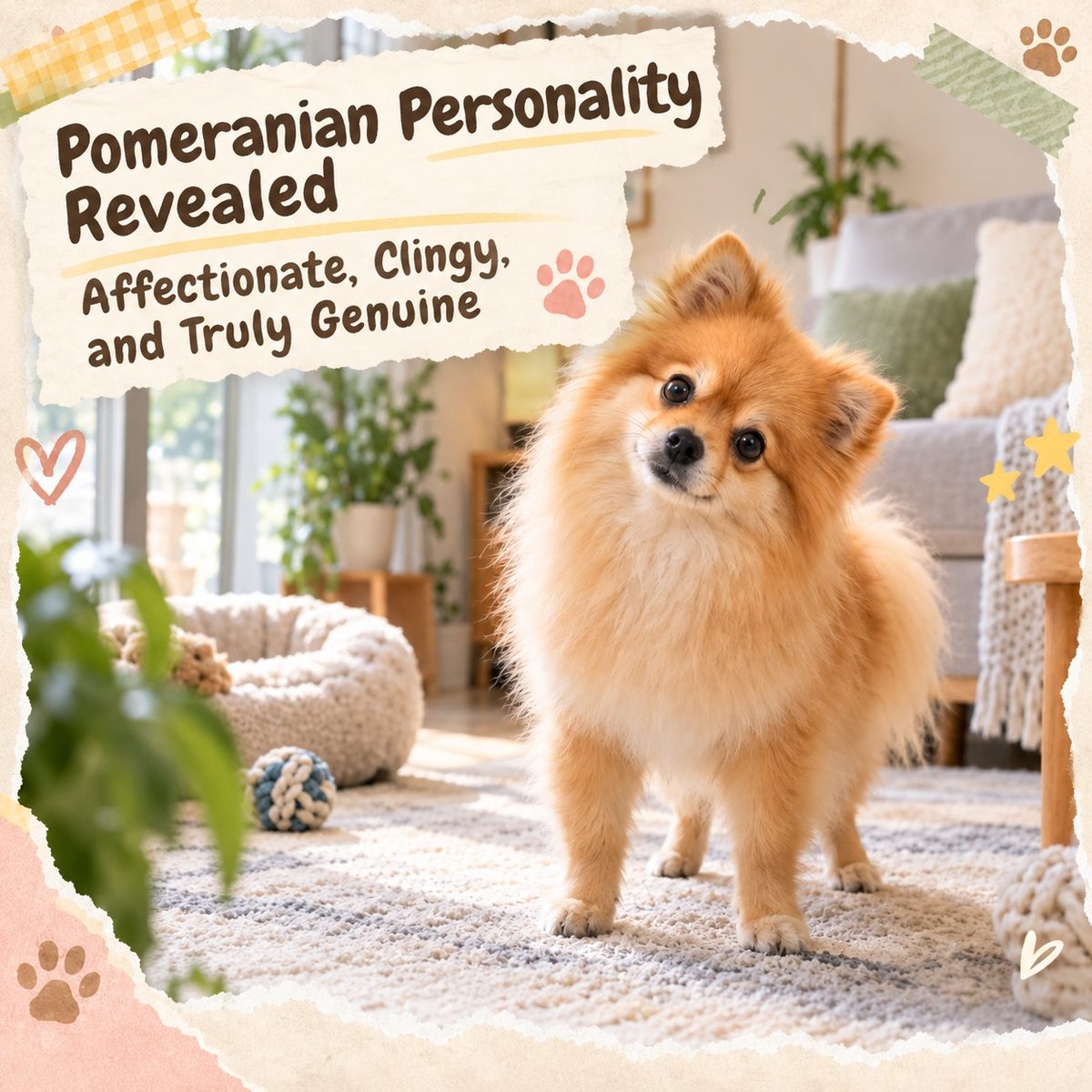
Quick answer: The Pomeranian ranks around 23rd in Coren's canine working and obedience intelligence ranking, placing them in the 'learns fast but doesn't necessarily obey' smart-and-independent category. Five key personality words: alert, clingy, expressive, opinionated, persistent. They suit families willing to set rules from day one; families with toddlers and those with no time for training should assess carefully.
Want to know the Pomeranian inside out? Start with the Pomeranian breed profile.
1. Five key personality traits: taking the furball apart
The Kennel Club's breed description for the Pomeranian is 'lively, alert', but behind those four words lie five independent axes:
| Trait | Everyday behaviour | Common owner misconception | Suggested response |
|---|---|---|---|
| High alertness | Doorbell, corridor footsteps, birds outside the window—all reported | 'They're targeting me'—actually they're targeting the whole street | Cover windows to reduce stimulation + 'quiet' command |
| Clingy to owner | Follows you everywhere, must sleep by your feet on the sofa | 'Too clingy'—actually an early sign of separation anxiety | Practise alone time from day one, gradually |
| Expressive | Barks, paws, uses body language to make requests | 'They're so easy to feed'—actually the demanding behaviour is being reinforced | Give when calm, ignore when demanding |
| Opinionated | Knows the command but decides whether to comply | 'They don't understand'—they understand perfectly, they just haven't agreed to terms | Match reward value; don't repeat commands |
| Persistent | Won't give up until successful (opening cupboards, jumping on tables) | 'So focused'—smart plus persistent = no gates | Environmental management first, put food away |
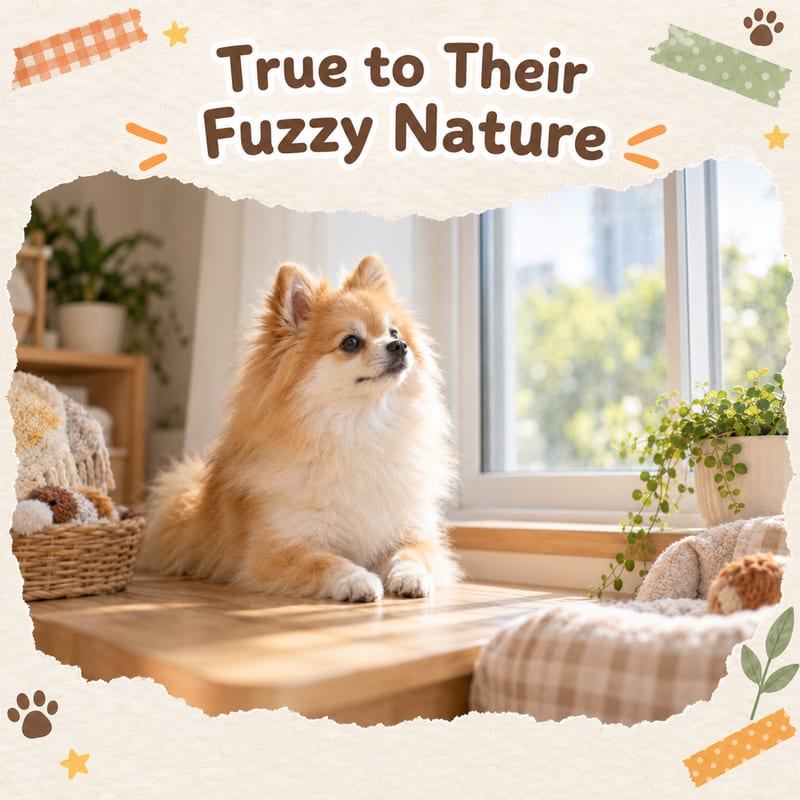
2. Intelligence: learning fast and being willing are two different things
Psychologist Stanley Coren's canine intelligence research (based on surveys of over a hundred dog obedience judges in the US and Canada) ranks the Pomeranian around 23rd in working and obedience intelligence—meaning: they learn a new command after an average of 5–25 repetitions, and obey known commands more than about half the time. Compared with the 'average dog' standard (25–40 repetitions, obedience below 50%), the Pomeranian is clearly a fast learner.
But note the three layers of intelligence: instinctive intelligence (genetic tasks; for the Pomeranian, the alert instinct of a companion dog), adaptive intelligence (solving new problems; the Pomeranian is no slouch—they can open doors and move stools), and obedience intelligence (whether they listen to you—this is what the ranking measures, and it depends most on the training relationship). Many owners complain 'they're so smart but completely ignore me', which is exactly confusing the third layer with the first two—there's nothing wrong with the Pomeranian; they just have their own views on 'why should I listen to you'.
3. Getting along with children and other pets: rules before affection
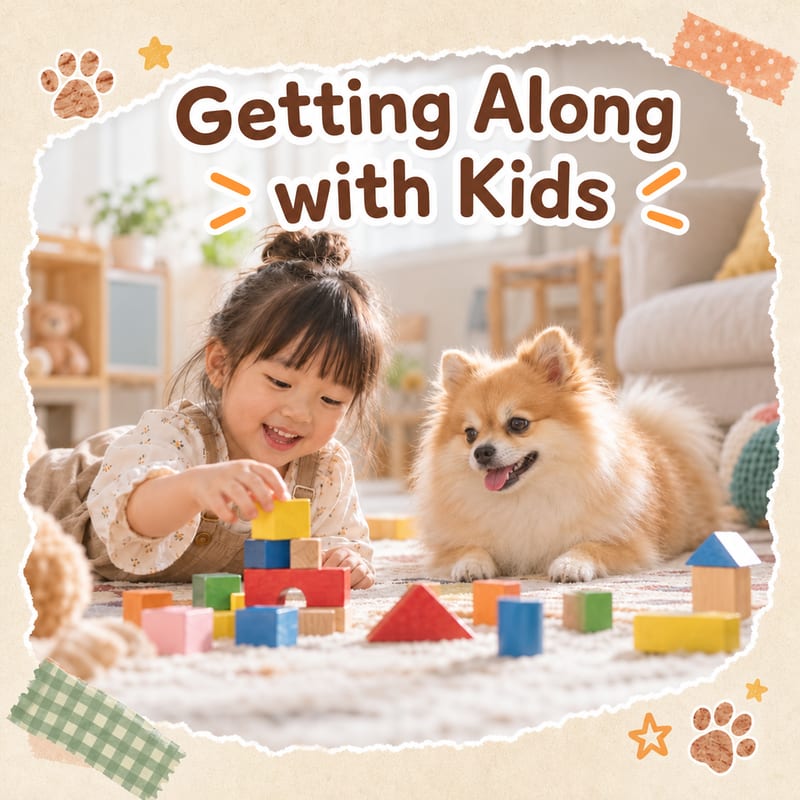
How a Pomeranian gets along with children depends on two variables: the child's age and whether an adult is enforcing interaction rules. The general breed observation is: Pomeranians dislike being sat on, pulled, or suddenly picked up—and these three are exactly a toddler's default behaviours. For a dog weighing only two or three kilograms, being accidentally crushed is not just 'a fright'.
Practical approach: Children aged 6 or above who understand 'ask before petting', paired with an adult-supervised interaction framework, usually get along well; for families with pre-school children, it is advisable to make the dog's rest area off-limits to children (using a pen or gate) and gradually relax once both sides are stable. With other pets: cats and large dogs can usually coexist, but prevent the Pomeranian from 'acting like a big dog' and provoking with barking; with rabbits, guinea pigs and similar small furries, maintain physical separation initially.
4. Male vs female differences and common misconceptions
| Aspect | General observation (male) | General observation (female) | Note: what is unproven |
|---|---|---|---|
| Attachment | More outgoing, actively seeks company | More reserved, selectively clingy | Individual studies do not support fixed conclusions |
| Emotions | Direct, easy to read | Careful, observes before acting | Within-breed variation far exceeds sex |
| Training | Longer food-motivated period, easy to drive with food | Matures earlier, forms habits faster | Both depend on timing of start |
| Territorial marking | Unneutered males may leg-lift | Higher care cost during heat | Effects of neutering vary by individual |
In one sentence: sex differences exist, but the order is always 'individual > bloodline > sex'. When actually choosing a dog, it's like choosing a childcare environment—it's about chemistry: observing in person which one approaches you voluntarily and which recovers faster from strange noises is far more meaningful than asking 'male or female?'.
5. Interaction advice: putting intelligence to good use
A smart dog with no entertainment will invent its own. 10–15 minutes of mental activity daily is the best value-for-money way to reduce barking and destruction:
- Scent games: scatter food in a snuffle mat or folded old towel; 15 minutes of sniffing out each piece is as tiring as a half-hour walk (scent work is generally thought to have a positive effect on canine emotional stability).
- Trick training: Pomeranians learn tricks quickly; spinning, ringing a bell, covering a newspaper are both talents and revision of the 'command-reward' chain.
- Alone-time practice: give a safe chew before leaving, start timing from five minutes and gradually extend. This isn't heartless; it helps build the security of 'owner will definitely come back'.
- Consistent rules: the whole family should agree on commands, boundaries, and allowed behaviours; smart dogs are best at exploiting loopholes—one person gives in, and the whole family's discipline collapses.
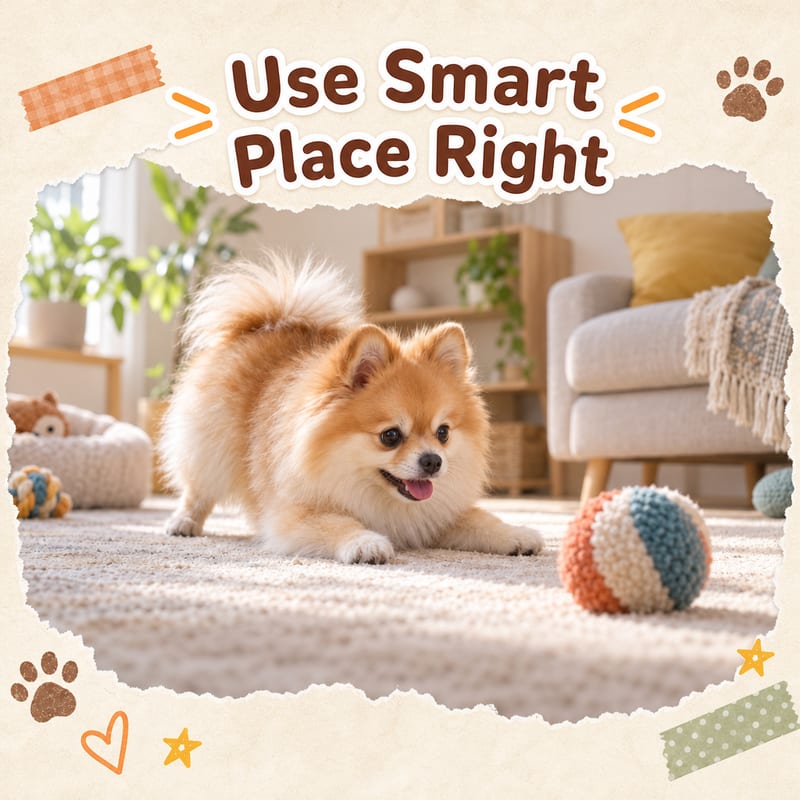
6. A typical Pomeranian's day (time allocation reference)
- 07:00 Short walk 15 minutes (a loop downstairs + free sniffing time)
- 08:00–17:30 Alone time: safe bed, covered windows, chew toys; ideally sleeping all day
- 18:00 Main walk 20–30 minutes + 10 minutes mental games
- 19:30 Brushing teeth 1 minute (longevity project, see lifespan article)
- 21:00 Calm interaction: lying by your feet watching TV; avoid triggering excitement right before bed
In this rhythm, barking usually occurs during alone-time stimulation (doorway noises) and the evening excitement period. Handle these two segments well, and 70% of the advice in this personality article is already implemented.
Related Reading
- Pomeranian disadvantages and how to cope
- Pomeranian price and adoption guide
- Pomeranian Hong Kong keeping guide
- Snuffle mats, puzzle toys and training treats: find them all at PetChill pet supplies.
The behavioural content in this article is general information; for aggression, self-harm or severe separation anxiety, please consult a registered veterinarian or an accredited behaviour consultant.
 Wellness Core full guide →



