
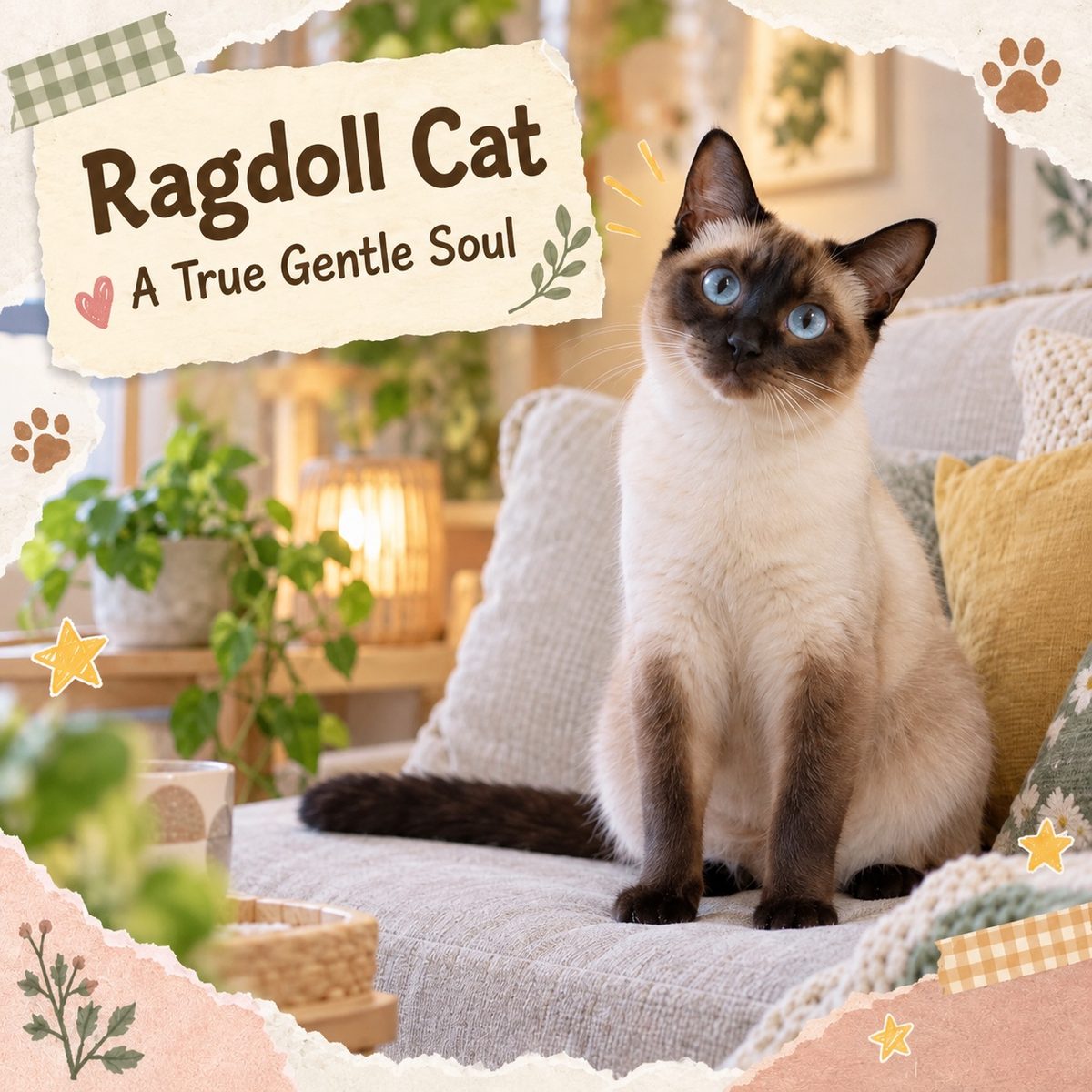
Quick answer: The core of the Siamese cat personality is five words: extremely outgoing, talkative, intelligent, picks a favourite human, possessive. The CFA breed standard explicitly states they are 'extremely outgoing' with people; this is one of the few breeds that will wait at the door, follow you from room to room, and 'chat' with their voice. The upside is off-the-charts interaction and high training success; the price is a strong sense of loneliness and finding trouble when bored. Whether it suits you depends on whether you can give 40 minutes of dedicated companionship every day.
Want to know the Siamese cat inside out? Start with the Siamese cat breed profile and the Siamese cat complete guide.
The above covers personality. Below we fill in the most practical specifications, prices, expenses, suitable owners, and common misconceptions before you choose a Siamese—personality is only half the decision; the other half is cost and time.
What is a Siamese cat? Key points in 30 seconds
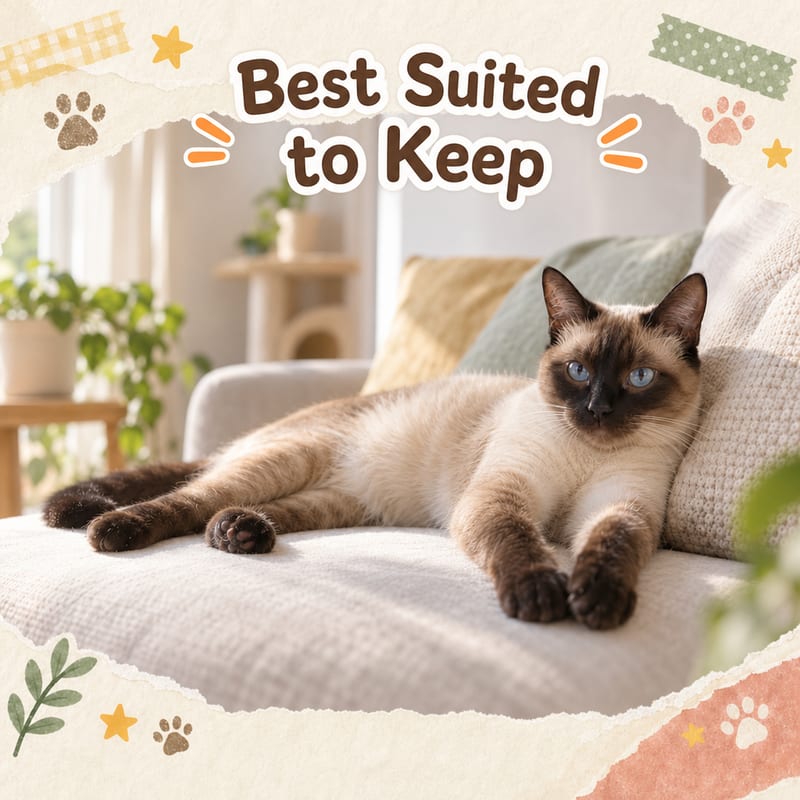
The Siamese cat originates from Thailand (formerly Siam) and is a pointed short-haired cat, famous for its blue almond eyes, darker colour on the face, ears, legs, and tail, and for being 'talkative'. It is the ancestor of modern Oriental-type short-haired cats, has extremely high social needs, and is not suited to being left alone for long periods.
To learn about the differences between the various point colours and pattern variants, see the Siamese cat colour guide.
| Item | Siamese cat |
|---|---|
| Origin | Thailand (formerly Siam) |
| Average lifespan | 12–15 years |
| Weight | Male 4–5.5 kg / Female 3–4 kg |
| Coat | Short, single coat, close-lying, moderate shedding in shedding season |
| Personality | Extremely outgoing, talkative, clingy, easy to train |
| Tolerance of being alone | Low (prone to separation anxiety) |
| Daily companionship needs | Recommended 40 minutes or more of dedicated interaction |
| Hong Kong price | About HK$8,000–20,000 |
| Monthly basic expenses | About HK$800–1,500 |
Three things you must know:
- 'Chatterbox' is not a disease — meowing is their way of communicating; those who want a quiet cat should choose another breed.
- Clinginess is a double-edged sword — the good side is closeness and easy training; the bad side is a high risk of stress behaviours when left alone.
- Short hair does not mean zero grooming — short single coats still shed in shedding season and need brushing, but it takes half the time of long-haired breeds.
Siamese cat prices and monthly expenses (2026 Hong Kong market)
Personality is free; costs are not. The table below separates the 'entry fee' from 'monthly recurring expenses' so you can calculate clearly before deciding.
| Item | Range (HK$) | Notes |
|---|---|---|
| Registered cattery | 12,000–20,000 | With pedigree certificate and parental health screening records |
| Licensed pet shop | 8,000–15,000 | Price affected by depth of point colour and vaccination records |
| Adoption | 0–2,000 | Most already neutered and vaccinated |
| Vaccines (first year, three doses) | 900–1,500 | Annual booster thereafter |
| Neutering | 1,500–3,500 | Cheaper for males, more expensive for females |
| Monthly food | 350–700 | Dry food mixed with complete wet food |
| Monthly cat litter | 120–250 | Clumping clay litter / tofu litter |
| Monthly deworming (shared) | 80–150 | Internal and external |
| Pet hotel boarding | 200–400 per night | Clingy cats are not suited to being left alone |
| Medical reserve (recommended) | 200–500 per month | More prone to urinary and gastrointestinal issues |
| Monthly total | About HK$800–1,500 | Excluding major medical costs |
The biggest hidden cost of a clingy cat is time and pet-sitting services. When on a business trip or holiday, Siamese cats are not suited to being left alone; boarding costs about HK$200–400 per night, so two trips a year is an additional expense.
What kind of families are Siamese cats suitable for? Five scenarios for self-assessment
| Owner scenario | Suitability | Reason |
|---|---|---|
| Work from home / semi-retired | Very suitable | Plenty of companionship time; meowing and clinginess become advantages |
| Two-person shift-working family | Suitable | Someone is home for long hours; stress of being alone is manageable |
| Single, working nine-to-nine | Not recommended | Left alone >8 hours a day on average; high risk of separation anxiety |
| Families with children | Depends on age | Tolerant but not tolerant of being held; must teach children |
| Renting a unit with poor soundproofing | Needs assessment | Meows carry; neighbour complaints are a real risk |
Reverse self-assessment (three questions):
- How many hours a day is someone at home?
- Can you accept being woken up several times in the middle of the night for several months?
- Do you have a monthly medical reserve of HK$200–500?
If you cannot answer 'yes' to two of the three, it's time to consider another breed, or adopt two cats at once so they can keep each other company.
Siamese cat vs other breeds: interactive vs independent
| Breed | Vocalisation | Clinginess | Monthly basic expenses (HK$) | Suitable for beginners |
|---|---|---|---|---|
| Siamese | High | Extremely high | 800–1,500 | If you have time |
| British Shorthair | Low | Medium | 600–1,200 | Yes |
| American Shorthair | Low | Medium | 600–1,200 | Yes |
| Russian Blue | Low | Medium-high | 700–1,300 | Yes |
| Ragdoll | Low | High | 900–1,600 | Yes (long hair) |
In one sentence: for quiet, choose British Shorthair/Russian Blue; for interaction, choose Siamese. Neither is better or worse; only whether it fits your lifestyle.
Four most common Siamese cat misconceptions
| Misconception | Reality |
|---|---|
| Siamese cats are aggressive/bite | Generally friendly; biting usually stems from over-excited play, insufficient socialisation, or pain signals |
| Being talkative means illness | Meowing is the breed's way of communicating; only long wails accompanied by changes in appetite or sleep require a vet visit |
| Short hair doesn't need brushing | Short single coats still shed heavily in shedding season; brushing twice a week is still necessary |
| The darker the point colour, the purer | Point colour depth is related to body temperature and age, not directly to purity |
Siamese cat time cost table: how much to invest daily and weekly
| Item | Frequency | Time per session |
|---|---|---|
| Interactive play | 2–3 times daily | 10–15 minutes each |
| Command/puzzle training | Once daily | 10 minutes |
| Brushing | Twice weekly | 5–10 minutes |
| Conversational companionship | Daily | Anytime (the key is having someone home) |
| Scoop the litter | 1–2 times daily | 5 minutes |
| Weight + health observation | Weekly | 5 minutes |
| Total | About 40–60 minutes per day | Includes play and care |
Without these 40 minutes, the Siamese cat will 'get it back' through meowing and destructive behaviour—this is not a personality flaw, but unmet needs.
Siamese cat: adopt or buy? Hong Kong process and costs
Adoption routes: SPCA, Agriculture, Fisheries and Conservation Department partner organisations, and volunteer groups of various catteries. The process is generally: application form → home visit → trial period → formal adoption, taking 1–4 weeks; most are already neutered and vaccinated, with an entry fee of about HK$0–2,000, the lowest long-term cost.
Purchase routes: Registered catteries (HK$12,000–20,000, with parental screening records and traceable pedigree) first, licensed pet shops (HK$8,000–15,000) second. Note three things: ① ask to see parental health screening documents; ② observe the cat's energy, eye/nose discharge, and skin condition on site; ③ before signing, ask clearly about the number of vaccine doses and deworming records.
The first thing to do either way: find a vet familiar with feline medicine in advance, register a medical record, and don't wait until something goes wrong for the first meeting.
Seven questions to ask yourself before choosing a Siamese cat
- Do you have at least 40 minutes a day for dedicated companionship?
- Is someone home for most of the day?
- Can you accept being occasionally woken up in the middle of the night?
- Do you have a monthly medical reserve of HK$200–500?
- Do you have reliable pet-sitting arrangements for business trips or holidays?
- Are neighbours/building rules sensitive to noise?
- Do you want 'interaction' or just 'a cat in the house'?
If you answer 'no' to three or more, consider breeds with greater independence such as British Shorthair or Russian Blue, or adopt two cats at once so they can keep each other company.
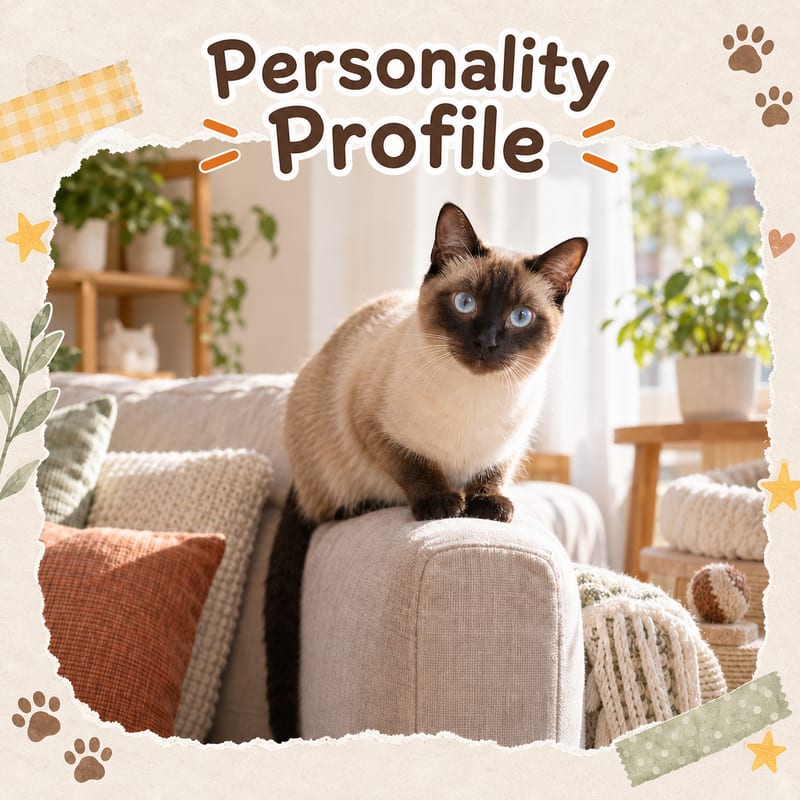
1. Personality profile: five key words
| Trait | Common behaviour | How to respond/guide |
|---|---|---|
| Extremely outgoing | Greets people actively, sits on the desk during meetings | Accept their participation in daily life |
| Talkative | High-frequency meowing, 'question and answer' | Don't accidentally reward random meowing; set regular chat times |
| Smart and eager to learn | Fast clicker training, opens cabinets and unlocks | Puzzle toys + command training to burn mental energy |
| Picks a favourite human | Clings to one family member more than others | Family members take turns feeding and playing |
| Possessive | Follows you around, photobombs, jealous of other pets | Exclusive high spot + fixed companionship rituals |
The CFA's official description of the Siamese temperament is a combination of three key phrases: 'extremely outgoing, affectionate with people, and particularly vocal'—in the cat world, this standard description seems almost tailor-made for the 'chatterbox cat'. Dog behaviourists' description of this breed as a 'dog-like cat' is industry consensus: following you around, fetching balls, responding to commands—behaviours usually attributed to dogs—are commonly achievable in Siamese cats.
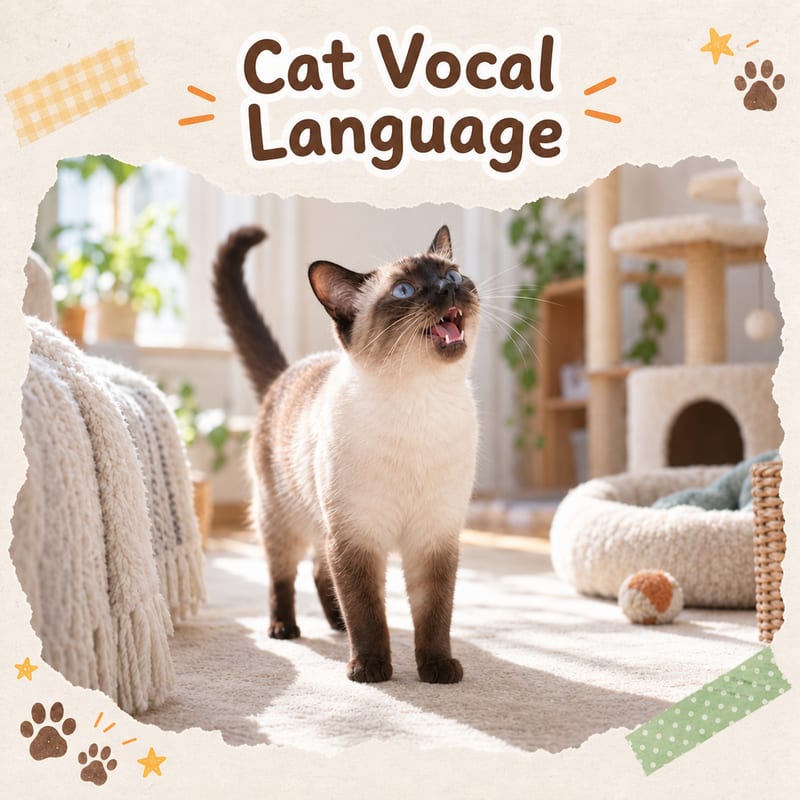
2. The science of 'chatterbox': meowing is their first language
Cats generally communicate by scent and body language, reserving meowing mainly for humans; Siamese cats have maxed out this ability—research observations show that Siamese-related cats have richer frequency and pitch variations in their meows than other breeds, and they 'choose their audience': the same cat can 'talk' several times more to its owner than to a stranger. In practice, you'll find they wait for your response: you answer once, and they can continue with three more sentences. There is only one management principle: do not reward meowing with attention when they meow for no reason (don't feed on demand, don't pick up on demand), but instead switch to scheduled feeding + proactive interaction when quiet; but also don't punish 'chatting' with ignoring, as that is their nature. The 5 a.m. concert is mostly solved by a play session before bed plus a midnight snack.
3. Two sides of intelligence: quick to learn, quicker to find food
There is no authoritative intelligence ranking for cats (the 'cat intelligence rankings' on the market are mostly popular summaries), but the common observation of training communities and veterinary behaviour clinics is: Siamese cats are among the fastest learners in the cat world. Positive signs: many Siamese learn fetch, spin, and open doors within weeks with clicker training; negative signs are equally impressive: food cabinets, bedroom door locks, drawers, even closed window handles—smart cats treat them all as puzzles. The practical approach is to treat intelligence as a resource rather than a nuisance: food-dispensing balls, multi-level puzzle toys, and 10–15 minutes of daily command training burn mental energy, and mental fatigue is the real switch that makes a Siamese cat quiet at night. A bored Siamese cat destroys the house; a sufficiently stimulated Siamese cat will sleep for ten hours.
4. Living with children and other pets
Siamese cats are highly tolerant of people and eager to interact, and are generally considered suitable for families with children—provided the children understand 'a cat is not a stuffed toy': no chasing, no tail-pulling, no disturbing while sleeping. They are also highly accepting of feline companions; in multi-cat households, the Siamese is usually the one to initiate cuddling; with dogs, it depends on the breed, and the Siamese's 'fearlessness' often turns the tables. The shadow side to watch is possessiveness: some individuals are jealous of their owner's attention, and a new partner, new baby, or new cat entering the home can trigger stress reactions (inappropriate urination, refusing food). The approach is gradual introduction + preserving your exclusive rituals with them, not suddenly withdrawing all previous attention.
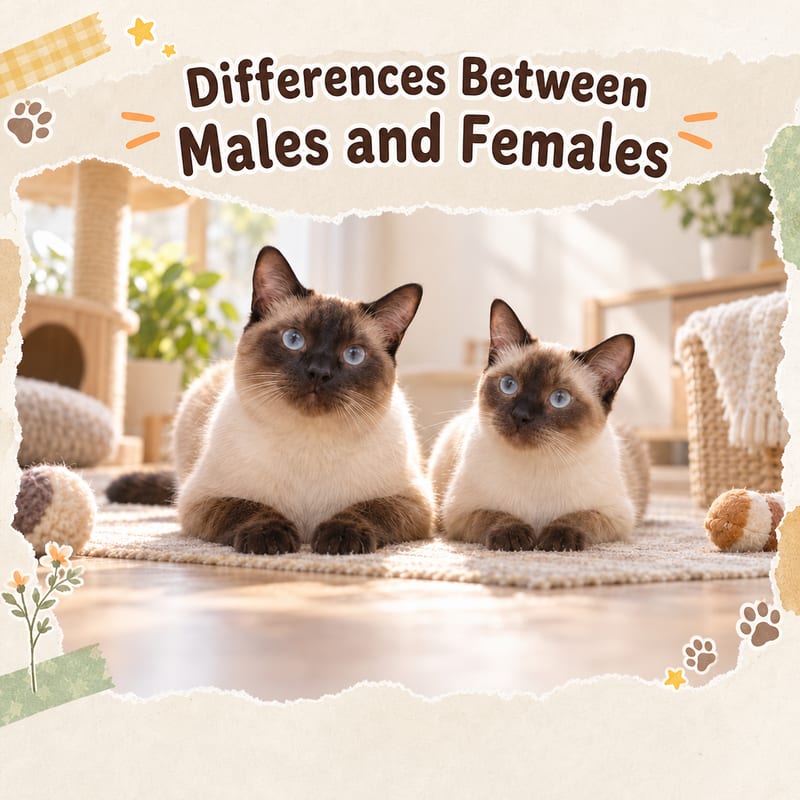
5. Male vs female differences and the personality curve over a lifetime
It is generally believed (note: such differences exist but individual differences are greater): males are slightly larger, more outgoing and playful, and more direct in expressing attachment to people; females mature earlier, are focused, have a strong urge to care for companions, and some females will 'manage' other cats in the home. On the timeline: kittens from three to eight months are energy monsters and testing masters; from eight months to two years the personality sets but they are still active; after two years most become noticeably calmer, but the two underlying traits of 'talkative' and 'picks a favourite human' remain for life. The advantage of adopting an adult Siamese is exactly this: the personality is already written on their face; you don't have to gamble on how a kitten will turn out.
6. Four interaction tips: put intelligence to good use
Tip one, start command training with 'sit': Siamese cats are strongly food-motivated, and with a clicker sound, most individuals learn to sit and look at you within a week or two; once they know 'sit', move on to 'high five' and 'spin'—the progress is much faster than other breeds, and this is the most visible evidence of their intelligence. Tip two, fetch: some Siamese cats instinctively know the 'throw—retrieve—drop at your feet' cycle, a behaviour rare in the cat world; if you encounter it, enjoy it. Tip three, conversation ritual: set a fixed 'serious chat' time each day—you say something, wait for their response; it satisfies their urge to communicate and builds routine. Tip four, carrier desensitisation: clingy cats are actually more prone to stress from separation and vet visits; from an early age, train them to use the carrier as a bedroom with treats, and vet visit day will be much calmer.
7. What kind of people are most suitable for a Siamese cat
Translating the above personality into screening criteria: suitable—families with someone working from home or with fixed companionship arrangements, people who want 'interaction' rather than just 'a cat in the house', people willing to play training and puzzle games, people who accept a cat saying good morning to them at dawn. Think twice—singletons working nine-to-nine with no companion cat arrangement, residents in poorly soundproofed flats sensitive to noise, people who want a completely independent cat. This breed's personality is a whole package: what you want and what you have to give are the same thing. To compare the costs of other clingy cat types, see Siamese cat disadvantages and how to cope to compare the different pain points of Ragdolls and Sphynx cats.
Key takeaways
- ✅ Five words for the Siamese cat personality: outgoing, talkative, smart, picks a favourite human, possessive—the CFA standard explicitly says 'extremely outgoing'
- ✅ Meowing is a communication tool: don't accidentally reward random meowing, but don't punish the 'chatting' instinct
- ✅ Use intelligence wisely: puzzle toys + command training; mental fatigue is the switch to quiet
- ✅ Highly accepting of children and companions, but new members entering the home need gradual introduction to prevent jealousy stress
- ✅ Male-female differences are smaller than individual differences; adopting an adult cat skips the personality lottery
- ✅ 40 minutes of dedicated companionship daily is the entry ticket for this breed's personality
Related reading
- Siamese cat disadvantages and how to cope
- Siamese cat Hong Kong keeping guide: climate, legislation and companionship needs
- Siamese cat lifespan and health full analysis
- Siamese cat complete guide
- Food-dispensing balls, wand toys and puzzle toys: PetChill pet supplies help them burn mental energy.
The behavioural content in this article is general information only; for persistent anxiety, aggression, or abnormal vocalisation, please consult a registered veterinarian or cat behaviour professional.
Further reading
- Hong Kong cat keeping must-read: how smart is this dog-like clingy one? →
- Hong Kong keeping guide: the intelligence and talkativeness of the fox among cats →
- Hong Kong owners must-read: the smart, affectionate and opinionated companion dog →
- Comparison of 12 cat breeds' personality and price →
- Common diseases, preventive care, veterinary information →



