
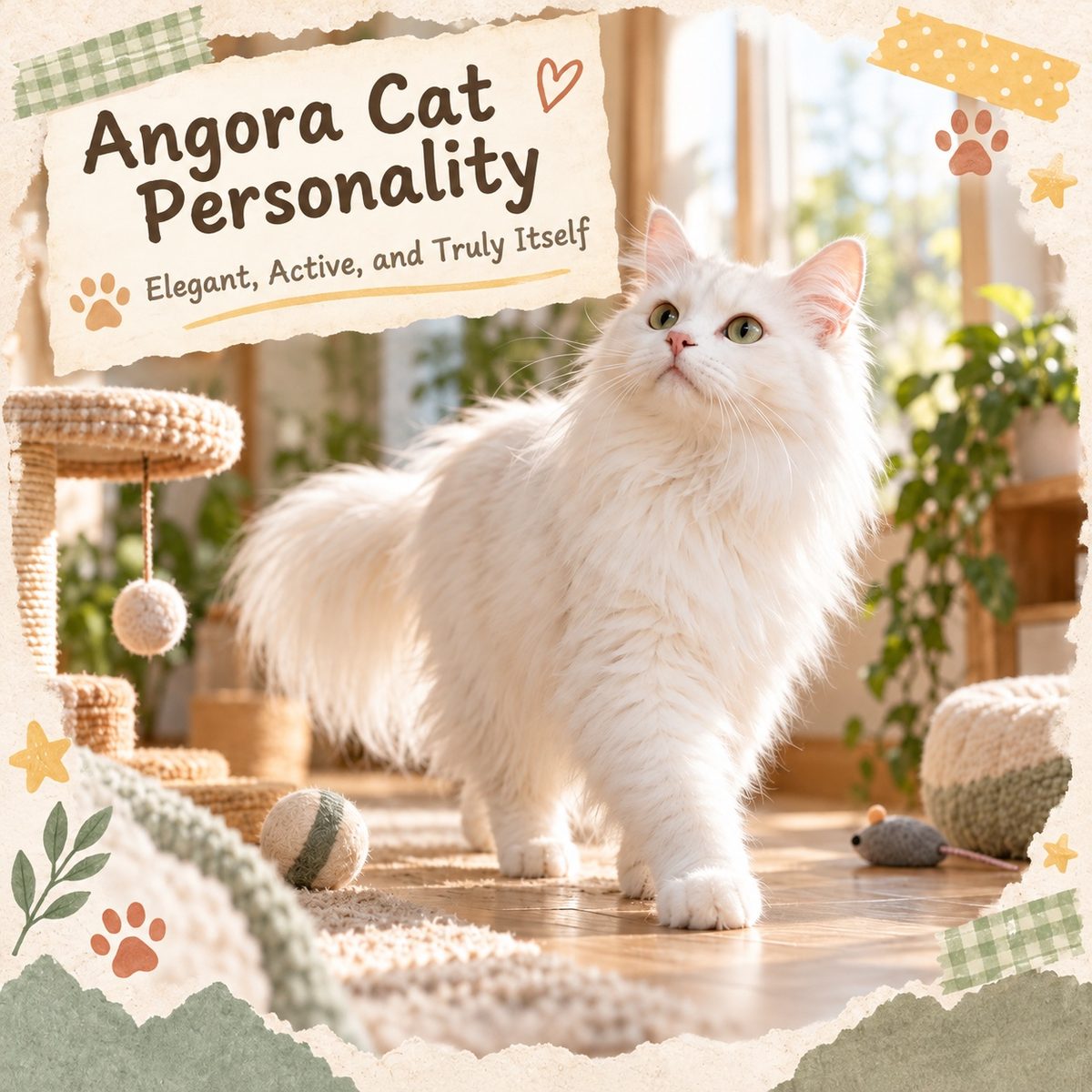
Quick answer: The four pillars of the Turkish Angora personality are intelligence, high energy, strong sociability and participatory loyalty. TICA/CFA standards describe them as lively, curious and devoted to their family; owners joke that you 'buy a cat and get a dog'—they fetch balls, love to chat and follow you everywhere. Suited to families who want an interactive companion and have daily time to play; think twice if you want a quiet ornamental cat.
Want a full introduction to the Turkish Angora? Start with the Turkish Angora breed profile.
1. Five core traits: ethereal looks, chatty soul
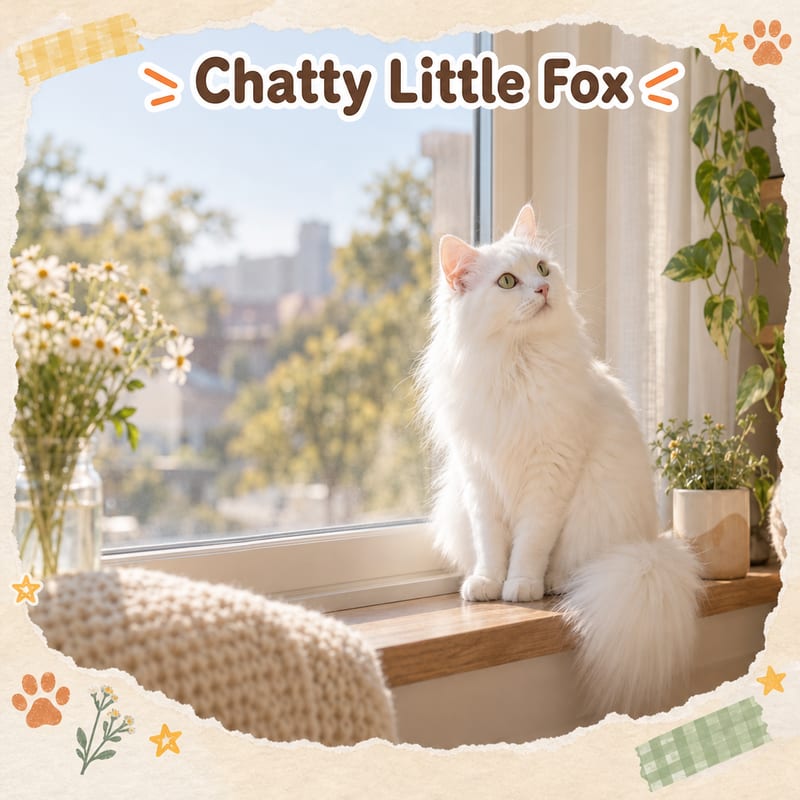
TICA and CFA breed standards are highly consistent in describing the Angora personality: lively, curious, alert and loyal to their family. Combined with their looks—wedge-shaped head, large ears, fox-like tail, heterochromia—they are what netizens call the 'fox of cats': they look ethereal, but living with them reveals a fully charged interactive device.
- Participatory loyalty: when you cook they sit opposite you at the table; when you work they sit next to the keyboard—they want to be present for everything.
- High energy: vertical space is essential; running, jumping and climbing are all in their repertoire—'quiet' is not in their vocabulary.
- Talkative: soft, varied tones, always answering back; this breed's 'meow' has different inflections.
- Smart and curious: doors, drawers and paper bags all need investigating; they learn so fast that training becomes fun.
- Reserved with strangers: warm with family, but observe guests first before approving them—slow to warm up is normal.
2. Trait × behaviour × response table
| Trait | Daily behaviour | Suggested response |
|---|---|---|
| High energy | Midnight parkour, patrolling the whole house | Two play sessions daily to burn energy + cat tree |
| Talkative | You say one thing, they answer several | Treat conversation as interaction, establish a response ritual |
| Smart | Can open doors, learn commands | Positive training + puzzle feeders for mental stimulation |
| Participatory clinginess | Blocking the screen, standing by your side | Daily dedicated companionship time, avoid long periods alone |
| Slow to warm to guests | Observe first, approach later | Don't force socialisation, provide high escape routes |
| Hunting instinct | Pouncing on flies, picking up small items | Store string-like objects and small items to prevent ingestion |
3. Intelligence: a natural for training
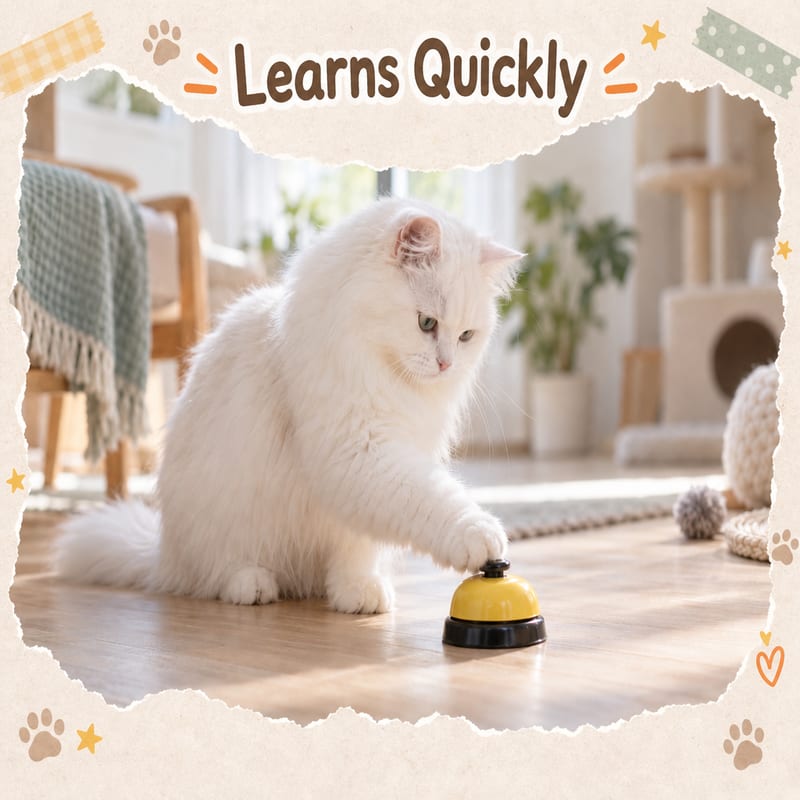
The Angora features heavily in cat training discussions. Common observations: they can sit, high-five, recognise their name and walk up stairs on a leash; some individuals even learn fetch—you throw, they retrieve, ten times without tiring.
The logic is intelligence + food motivation + social motivation—a golden recipe for positive training: 5–10 minutes per session, end on a good note, reward with treats; results come faster than with many breeds. But the flip side: if their brain has no outlet they'll find their own entertainment—opening cupboards, rummaging through paper bags, walking into the frame during your video call.
4. Getting along with children, other cats and dogs
Children: High energy plus play drive means they can form a perfect duo with children who know how to play quietly; they are quick to dodge and dislike being held tightly, so teaching children the 'three rules of petting' is essential. Families with toddlers should keep high escape routes for the cat.
Other cats: In multi-cat households the Angora often becomes the 'conversation leader'; they can get along with gentle resident cats, but resources (food bowls, water bowls, litter trays) should be separated to prevent them from monopolising with their high energy.
Dogs: With calm or politely playful dogs, many Angoras will take the lead and teach the dog to play fetch; chasing-type dogs cause stress, so assess before pairing.
5. Male vs female differences and interaction tips
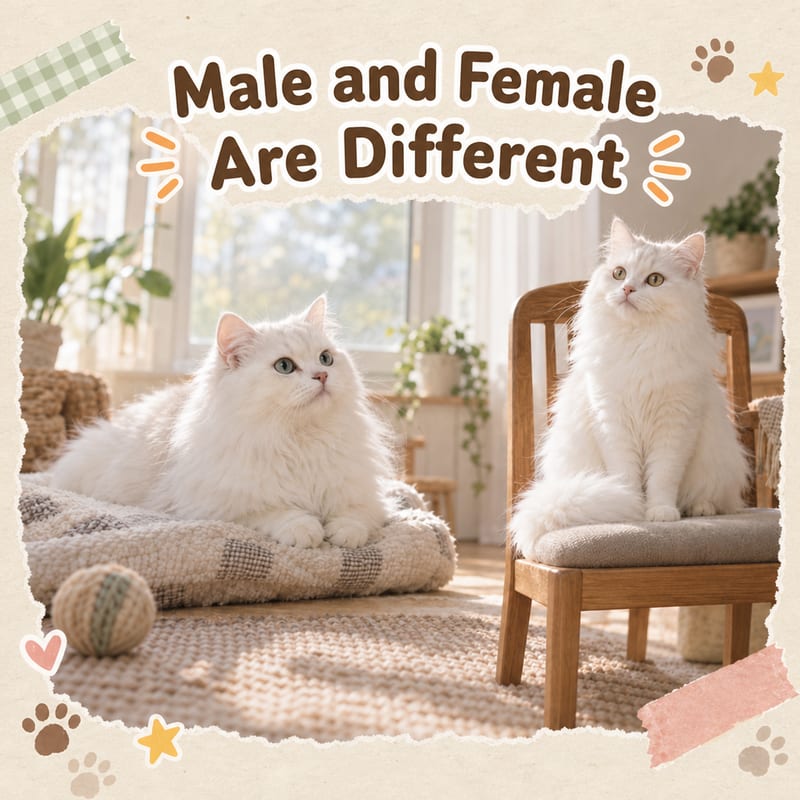
General observations: males are more outgoing, bold, affectionate and show-offy; females are more independent and opinionated, observing new environments before acting. But even in the same litter personalities can differ greatly—individual differences far outweigh sex differences; when choosing a cat, observe whether it approaches you and allows petting rather than asking about sex.
Three interaction tips: 1) Two play sessions daily, morning and evening, to channel energy positively; 2) Use command training and puzzle feeders to exercise their brain—smart cats must not be bored; 3) When they answer you, respond—for this breed, conversation is the currency of trust.
6. Sample daily schedule: energy with a proper outlet
Keeping an Angora is about 'advance payment': if you don't spend their energy, they'll find somewhere to spend it themselves. Reference rhythm:
- Before leaving in the morning: 10 minutes of fetch, play until they're half tired so they sleep peacefully during the day.
- When alone during the day: puzzle balls with dry food, a window perch for bird-watching, timed lights and sounds to reduce boredom and 'home demolition projects'.
- Around dinner: 15 minutes of command training or wand toy hunting games to satisfy the hunting instinct.
- Before bed: a small portion of wet food as 'prey settlement', then sleep facing your sofa—a perfect end to the day for this breed.
Families following this rhythm generally report: no midnight parkour, no destruction disasters, and a cat that sits at the door to greet you home on time every day.
7. Environmental bottom line behind the personality
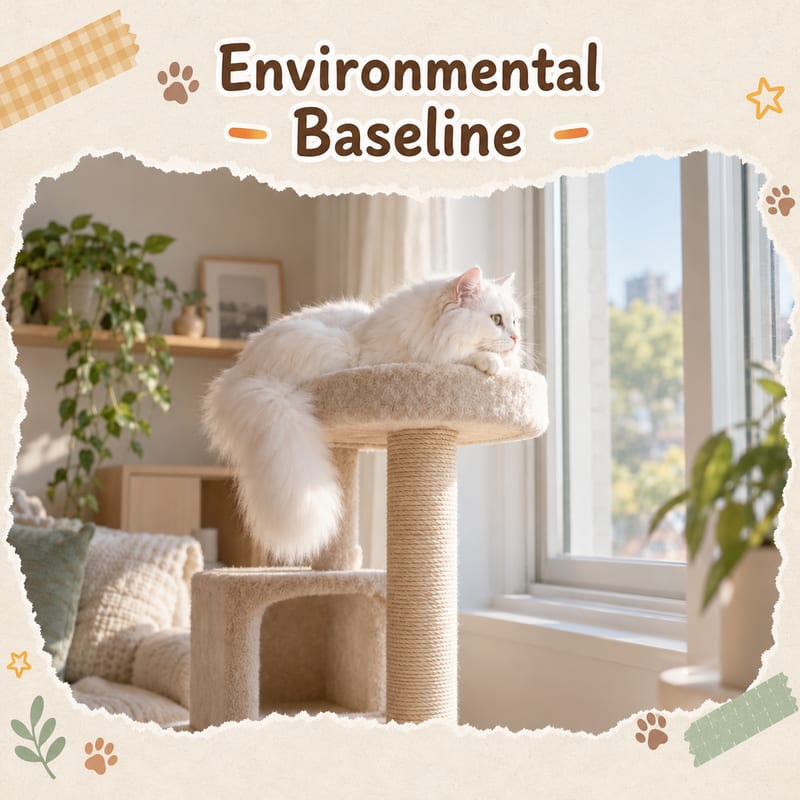
Beyond play and companionship, here are two easily overlooked compatibility red lines. First, Angoras have low tolerance for 'no response': you can chat nonsense with them, but you cannot ignore them long-term—ignored Angoras will demand attention by pawing at doors, pushing things off and sitting on your desk. Second, they are light, muscular and strong jumpers: cabinet tops and fridge tops automatically become patrol areas, so fragile items and string-like objects (rubber bands, hair ties, string) at home must be stored in drawers—string ingestion is a common feline emergency, and curious breeds are more likely to fall victim.
Environmental safety plus consistent responsiveness will bring out all the breed's personality strengths; lacking either, they will remind you in another way you won't like.
Key takeaways
- ✅ Four pillars of the Angora personality: smart, high energy, talkative, participatory loyalty
- ✅ 'Buy a cat, get a dog' is no rumour: they fetch balls, learn commands, love leash walks
- ✅ Golden recipe for positive training: intelligence + food motivation + social motivation
- ✅ Two play sessions daily are essential, not a bonus
- ✅ Generally good with children, cats and dogs; separate resources + provide escape routes
- ✅ Males outgoing, females independent is a tendency; individual differences outweigh sex
- ✅ When they answer you, respond—conversation is the currency of this breed
Related reading
- Turkish Angora price and adoption guide
- Disadvantages of keeping a Turkish Angora and how to cope
- Turkish Angora lifespan and health
- For wand toys, puzzle feeders and cat trees, visit PetChill pet supplies.
This article's personality descriptions combine cat association breed standards and general owner observations; individual differences are large. If behavioural problems persist out of control, consult a practising veterinarian or feline behaviour specialist.



