
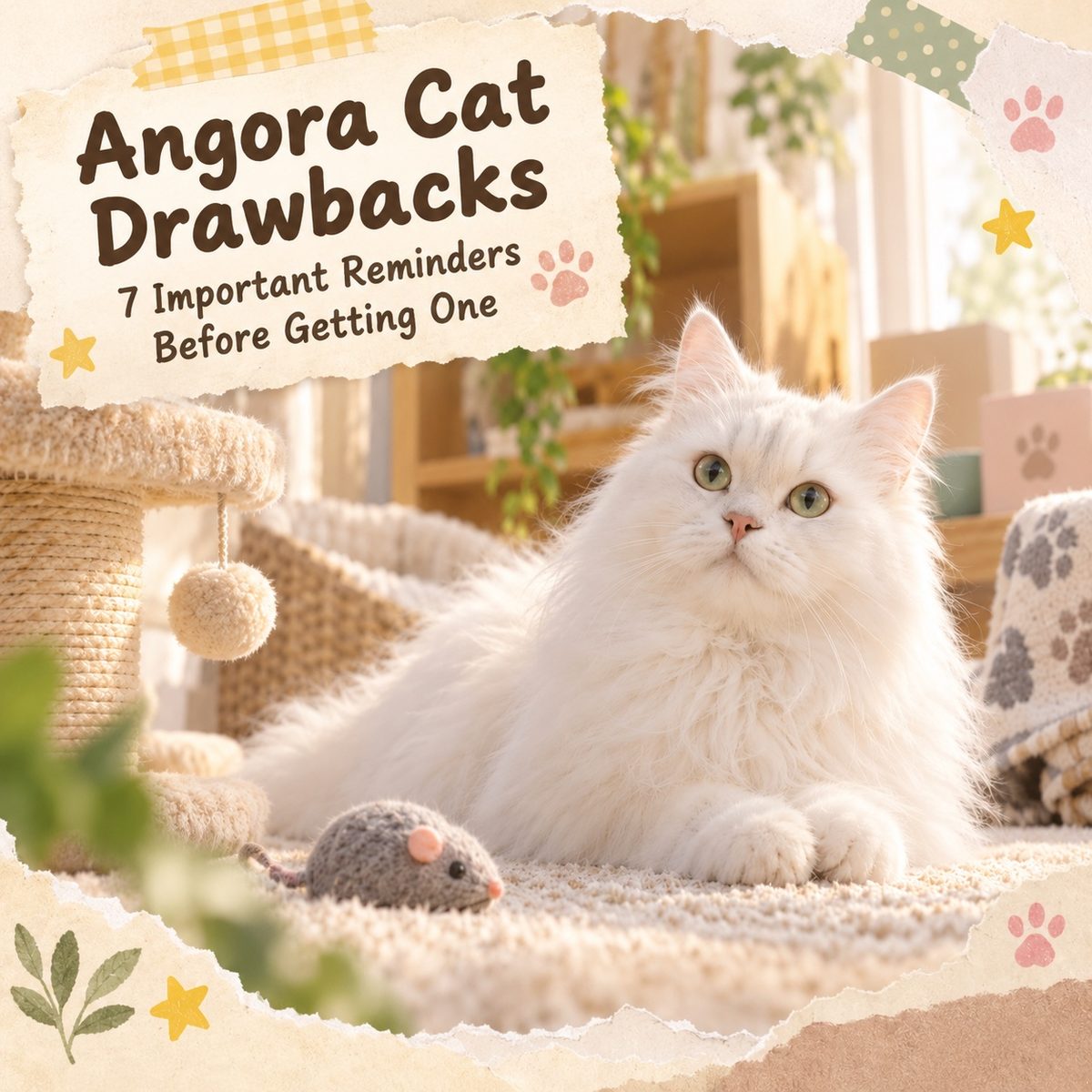
Quick answer: The downsides of the Turkish Angora centre on four gates: deafness screening (white coat + blue eyes requires a BAER test), long-hair obligation (groom 2-3 times a week), high companionship needs (dog-like energy, loves to chat), and scarce supply (overseas reservation in Hong Kong, prices start at 20,000). Physical robustness is its foundation, but you need to budget heart and money.
Want a full picture of the Turkish Angora? Start with the Turkish Angora breed profile.
What is an Angora? Key points in 30 seconds
The Turkish Angora is an ancient long-haired breed originating from Ankara, Turkey, known for its single-layer silky coat, elegant build, and dog-like interactivity. It is not a quiet, ethereal ornament: energetic, chatty, and wanting to be involved. The table below covers the specs Hong Kong owners most often look up; the seven downsides are broken down later.
| Item | Turkish Angora |
|---|---|
| Origin | Turkey (Ankara) |
| Average lifespan | 12–18 years |
| Weight | Male 3.5–5 kg / Female 2.5–4 kg |
| Coat | Single-layer silky long hair, lower matting risk than Persian |
| Colours | White most classic, plus 20+ recognised colours |
| Vocalisation | Medium (soft, varied, loves to chat) |
| Energy | High (will fetch, can walk on a cat harness) |
| Special risk | Higher congenital deafness in white with blue eyes |
| Price in Hong Kong | About HK$20,000–40,000 (overseas reservation) |
| Monthly basic expenses | About HK$900–1,600 |
Three things you must know:
- Ethereal looks are a filter, energy is reality — behind the pretty white cat photos on social media is the need for two play sessions a day.
- Long hair is an obligation, not a style — grooming 2-3 times a week is the minimum; skip two weeks and mats form.
- No local stock in Hong Kong — purebreds require overseas reservation, waiting six months or more is normal.
Angora price and monthly expenses (2026 Hong Kong market)
The cost structure is extreme: entry fee is top-tier, but monthly costs are only slightly higher than a normal cat. The key decision is the entry cost:
| Item | Range | Notes |
|---|---|---|
| Overseas cattery including import | HK$20,000–40,000 | Mainly Japan/Europe, wait 6–24 months |
| Local 'purebred in stock' | High risk | Under HK$10,000 mostly mis-sold or scam |
| Adoption (white long-haired domestic cat) | HK$0–2,000 | Similar looks, robust genes |
| BAER hearing test | HK$1,500–3,000 | Must-do for white-blue, one-off |
| Vaccines (first year three shots) | HK$900–1,500 | Then annual booster |
| Neutering | HK$1,500–3,500 | Male cheaper, female more expensive |
| Monthly food | HK$350–700 | Dry food + complete wet food mix |
| Monthly cat litter | HK$120–250 | Low-dust type (airway sensitivity) |
| Monthly grooming and hairball supplies | HK$50–150 | Slicker and comb are one-off; this is consumables like hairball gel |
| Medical reserve (recommended) | HK$200–500 | Joint checks are contingent expenses |
| Monthly total | About HK$900–1,600 | Excludes major medical |
The most commonly miscalculated cost for Hong Kong prospective owners is time: waiting 6–24 months means paying a deposit, doing paperwork, and waiting for quarantine before you even get the cat. For those in a hurry, this breed is already the first deterrent.
Who is the Angora suitable for?
| Owner type | Suitability | Reason |
|---|---|---|
| Wants a highly interactive 'dog-like cat' | Very suitable | Fetch, harness walks, chatting all possible |
| Works from home / someone home long hours | Suitable | Companionship needs can be met |
| Single, working 9 to 9 | Not recommended | Alone + no energy outlet = midnight zoomies |
| Wants a 'quiet ornamental long-haired cat' | Not recommended | It will paw at doors and push things to demand conversation |
| Limited budget or patience | Not recommended | Entry from 20,000 or wait two years, need at least one |
Reverse self-test (three questions):
- Do you have 30 minutes a day to really play with the cat (not just it sleeping nearby)?
- Can you accept hair permanently on clothes, sofa, and in the washing machine?
- If a white-blue combination tests with unilateral deafness, will you still keep it?
If you can't answer 'yes' to two of the three, start by adopting a white long-haired domestic cat to experience it.
Angora vs other long-haired breeds
| Breed | Grooming needs | Energy | Supply in Hong Kong | Monthly basic expenses |
|---|---|---|---|---|
| Turkish Angora | Medium (single coat) | High | Extremely scarce | HK$900–1,600 |
| Persian | Very high (double coat, mats easily) | Low | Stable | HK$900–1,700 |
| Ragdoll | Medium-high | Low-medium | Stable | HK$900–1,600 |
| Norwegian Forest Cat | Medium-high (double coat) | Medium | Scarce | HK$900–1,600 |
| Siberian | Medium-high (triple coat) | Medium-high | Scarce | HK$900–1,700 |
In one sentence: want ethereal looks but not daily grooming, the Angora's single coat is the least effort among long-haired breeds; want calm and cuddly, Ragdoll is better; want majestic and large, Norwegian Forest. The Angora's unique selling point is interactive depth—it gives you the experience of 'a dog in a cat's body'.
Four common Angora misconceptions
| Misconception | Reality |
|---|---|
| Only white is Angora | White is most classic, but 20+ recognised colours including black, blue, tabby |
| Long hair means hair everywhere | Single coat without undercoat, shedding easier to control than double-coated British Shorthair |
| White coat blue eyes = definitely deaf | Risk is higher, not certain; a BAER test gives a definite answer |
| Ethereal looks = quiet personality | Energy like a dog, one of the most active long-haired cats |
Three budget plans: thrifty, standard, secure
The same Angora can be kept on three monthly budgets. The key is to decide in advance, not to skimp on grooming supplies and cause problems:
| Item | Thrifty | Standard | Secure |
|---|---|---|---|
| Food | HK$350/month (mainly dry) | HK$500/month (dry and wet mix) | HK$700/month (mainly complete wet food) |
| Cat litter | HK$120/month | HK$180/month | HK$250/month |
| Grooming and hairball | HK$50/month | HK$100/month | HK$150/month |
| Deworming (share) | HK$80/month | HK$100/month | HK$150/month |
| Medical reserve | HK$0 (rely on cash) | HK$200/month | HK$500/month |
| Monthly total | About HK$600 | About HK$1,080 | About HK$1,750 |
| Suitable for | Tight budget, has cash reserve | Most families | Wants to avoid sudden large expenses |
One line you can't skimp on: low-dust cat litter. Some Angoras are prone to airway sensitivity; saving a few tens of dollars on cheap high-dust clay litter can turn into thousands for respiratory checks—this is an expense that should not be cut in any plan.
Angora health check schedule: when to test what
The Angora's main concerns are hearing (white-blue combinations), joints (patella), and airways. Regular checks are much cheaper than dealing with problems later:
| Age | Recommended items | Approximate cost |
|---|---|---|
| Before getting the cat | BAER hearing test (white-blue/odd-eyed combinations) | HK$1,500–3,000 |
| 2–4 months | First-year vaccines (three shots) + deworming | HK$900–1,500 |
| 6 months | Pre-neutering blood test + neutering | HK$2,000–4,000 |
| 1 year | Annual check-up + vaccine booster | HK$500–900 |
| 2–6 years | Annual check-up; observe gait (patella) | HK$600–1,200 |
| 7+ years | Every six months: blood, urine, thyroid | HK$1,200–2,000 per visit |
Three daily observations (free but daily): any intermittent 'bunny hop' in walking (early sign of patellar luxation), any noise in breathing (airway sensitivity), coat gloss (sudden dullness check nutrition and parasites first). Weigh monthly; long hair can hide thinness, weight is the truth.
Adopt or buy? The actual process in Hong Kong
Adoption route: White long-haired domestic cats are not rare on adoption platforms, looks very similar, process is form → home visit → trial, takes 1–4 weeks; most already neutered and vaccinated, entry fee HK$0–2,000. For those wanting the 'Angora feel' without insisting on pedigree, this is the best value.
Purchase route: No local stock in Hong Kong, must reserve via Japanese or European catteries. Six checks: association registration, written contract, live video, medical records, quarantine arrangements, stop at any red flag. Any seller who can't answer one of these, no matter how attractive the price, don't touch—a 20,000+ transaction, scam cost is also 20,000+.
Downside 1: The deafness gamble in white-blue combinations
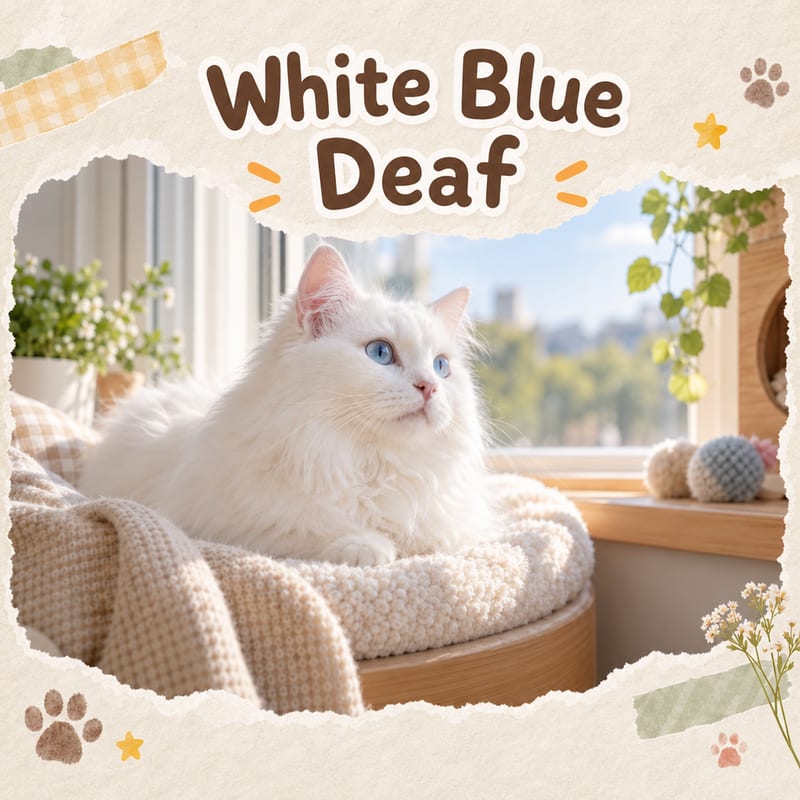
This is the most unavoidable downside. The genetic link between the white spotting gene and inner ear development is well documented: congenital deafness rates are significantly higher in white-coated blue-eyed individuals, and the blue-eye side ear in odd-eyed cats is also at higher risk. Not every cat will be affected, but not testing is gambling.
Solution: Before getting a white-blue combination, do a BAER hearing test (takes tens of minutes, can determine unilateral or bilateral); if confirmed deaf, adjust care—strictly indoor, use light and hand signals, vibrating doorbell. Cost direction: test fee one-off; deaf cat care no extra, but free roaming option disappears.
Downside 2: Energy so high it's 'buy a cat, get a dog'
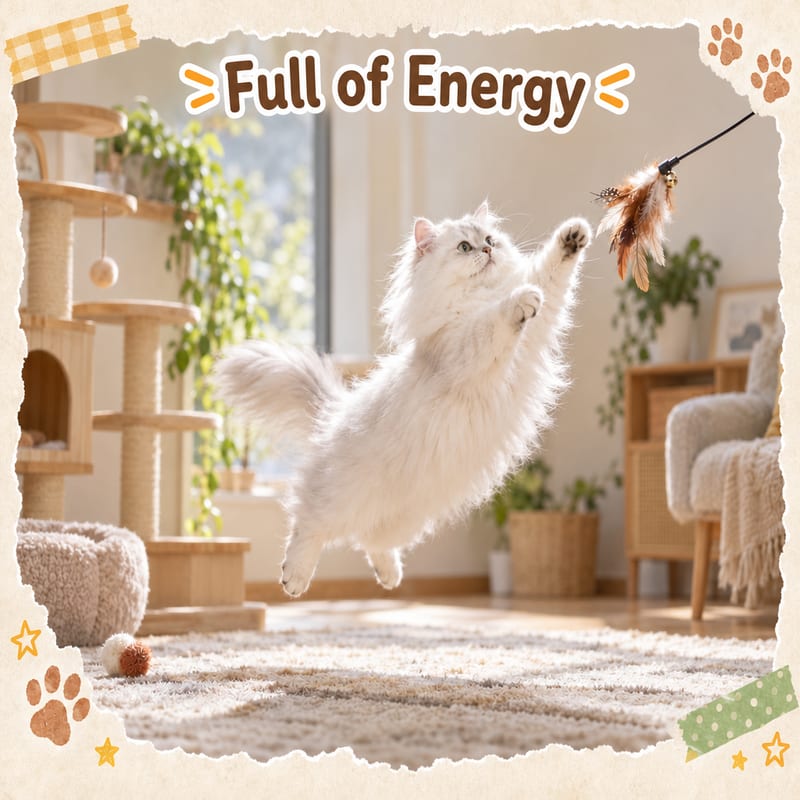
TICA breed standard describes the Angora as lively, curious, and fond of patrolling the home—the common saying among owners is 'behaves more like a dog than a cat': will fetch balls, can walk on a harness, will sit and supervise you at the computer. If energy has no outlet, it will find its own: midnight zoomies, knocking things off tables.
Solution: At least two 10–15 minute play sessions daily (morning and evening), command training and fetch to tire the brain, vertical space (cat tree) to run. Cost direction: toys HK$100–300 one-off, time cost half an hour daily.
Downside 3: The long-hair obligation is inescapable
It's true that the silky single coat has lower matting risk than Persian, but 'lower' doesn't mean 'zero': behind ears, armpits, and tail are the three matting hotspots; two weeks without grooming and mats form. In shedding season the volume is a visual disaster.
Solution: Slicker brush plus comb 2-3 times a week, focus on matting hotspots; hairball treats and regular skin checks. Cost direction: grooming tools HK$150–350 one-off; if you don't want to groom, this breed is not for you.
Downside 4: Conversational companionship, not an ornament
You come home, sit on the sofa, say 'I'm so tired today', and the Angora can softly reply three sentences. Their demand for interaction is above average among cats, they don't like being ignored for long—ignore them and they will paw at doors, push things, and sit opposite you at the dining table to make their point.
Solution: Schedule grooming and play into the daily routine; in multi-cat households watch for competition for conversation. Cost direction: half an hour daily companionship, paid together with downside 2.
Downside 5: Buying in Hong Kong is crazily expensive
No local stock market: must reserve via Japanese or European catteries, actual price including import about HK$20,000–40,000, wait six months to two years; cheap 'in stock' is mostly mis-sold or scam. This is not the breed's fault, it's market structure, but you pay.
Solution: Limited budget, adopt a white long-haired domestic cat (similar looks, robust genes); insist on purebred, use the six-check list to screen catteries (association registration, written contract, live video, medical records, quarantine arrangements, stop at any red flag). Cost direction: see price guide.
Downside 6: Sensitive spots in joints and airways
Literature reports patellar luxation in Angoras, common in small cats, mostly benign but affects gait; some individuals have airway sensitivity, with dusty litter and fragrances as main triggers.
Solution: Observe gait (intermittent 'bunny hop' warrants a check), control weight; low-dust litter, no air fresheners at home, no smoking. Cost direction: imaging when needed HK$1,500–3,000; daily prevention zero cost.
Downside 7: The contradiction of slow trust and high social demands
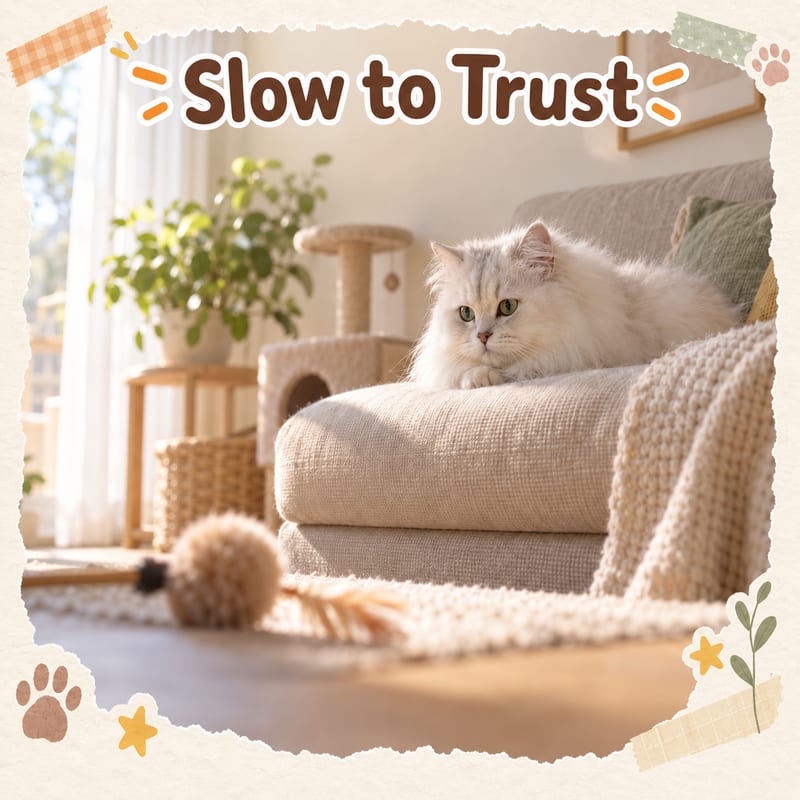
The Angora is warm to family but can be very reserved with strangers and new environments—want to play with it? You have to queue to build trust. Beginners often mismatch: thinking they've got a 'cuddly ethereal cat', only to find the first three months you can't even touch its tail.
Solution: In the first month restrict territory, establish routine for security; wait for it to approach. Cost direction: patience, and a family notice 'guests please don't tease the cat'.
| Downside | Core solution | Cost direction |
|---|---|---|
| Deafness gamble | BAER test + adjust care for deaf cats | One-off test fee |
| Dog-like energy | Two play sessions daily + vertical space | Half an hour daily |
| Long-hair obligation | Groom 2-3 times a week | HK$150–350 grooming tools |
| Conversational companionship | Fixed interaction schedule | Time |
| Scarce supply, expensive | Domestic cat alternative or strict cattery checks | Entry from 20,000 |
| Joint and airway sensitivity | Weight management + low-dust environment | Check fees when needed |
| Slow trust contradiction | Let it approach, don't force | Patience |
Fair points: the other side of these downsides
- Needing a deafness test means you can buy a definite answer for a small sum, not guess for a lifetime.
- High energy is training fuel: a cat that fetches and walks on a harness offers interactive depth no ornamental cat can give.
- The long-hair obligation brings a regular weekly grooming bonding session—many owners end up enjoying that half hour most.
- Expensive also filters out impulse buyers: those who can wait six months to two years are less likely to abandon.
This list of downsides is really a declaration of 'what you're willing to give': time, patience, money—if at least two of the three are ample, the Angora will give you a great show; if two are a struggle, you should honestly not start.
Key summary
- ✅ Four big gates: deafness screening, long-hair obligation, half an hour daily companionship, entry from 20,000
- ✅ White-blue combinations do BAER test first; deaf cats must be strictly indoor + visual signals
- ✅ Dog-like energy = play is a necessity, not a bonus
- ✅ Grooming 2-3 times a week is inescapable, matting hotspots are behind ears, armpits, tail
- ✅ Patella gait observation + low-dust fragrance-free environment for daily prevention
- ✅ If budget or patience is insufficient, adopting a white long-haired domestic cat is a practical solution
- ✅ This downside list is essentially a human-cat match list
Related reading
- Turkish Angora personality full analysis
- Turkish Angora lifespan and health
- Turkish Angora price and adoption full guide
- Slicker brushes, combs, hairball products and low-dust cat litter: PetChill pet supplies has them all.
Behaviour and health descriptions in this article combine cat association breed standards and general ownership observations; individual variation is large. For sudden changes in appetite, weight, or behaviour, consult a practising veterinarian first to rule out medical causes.
 Fuji One full guide →


 Wellness Core full guide →



