
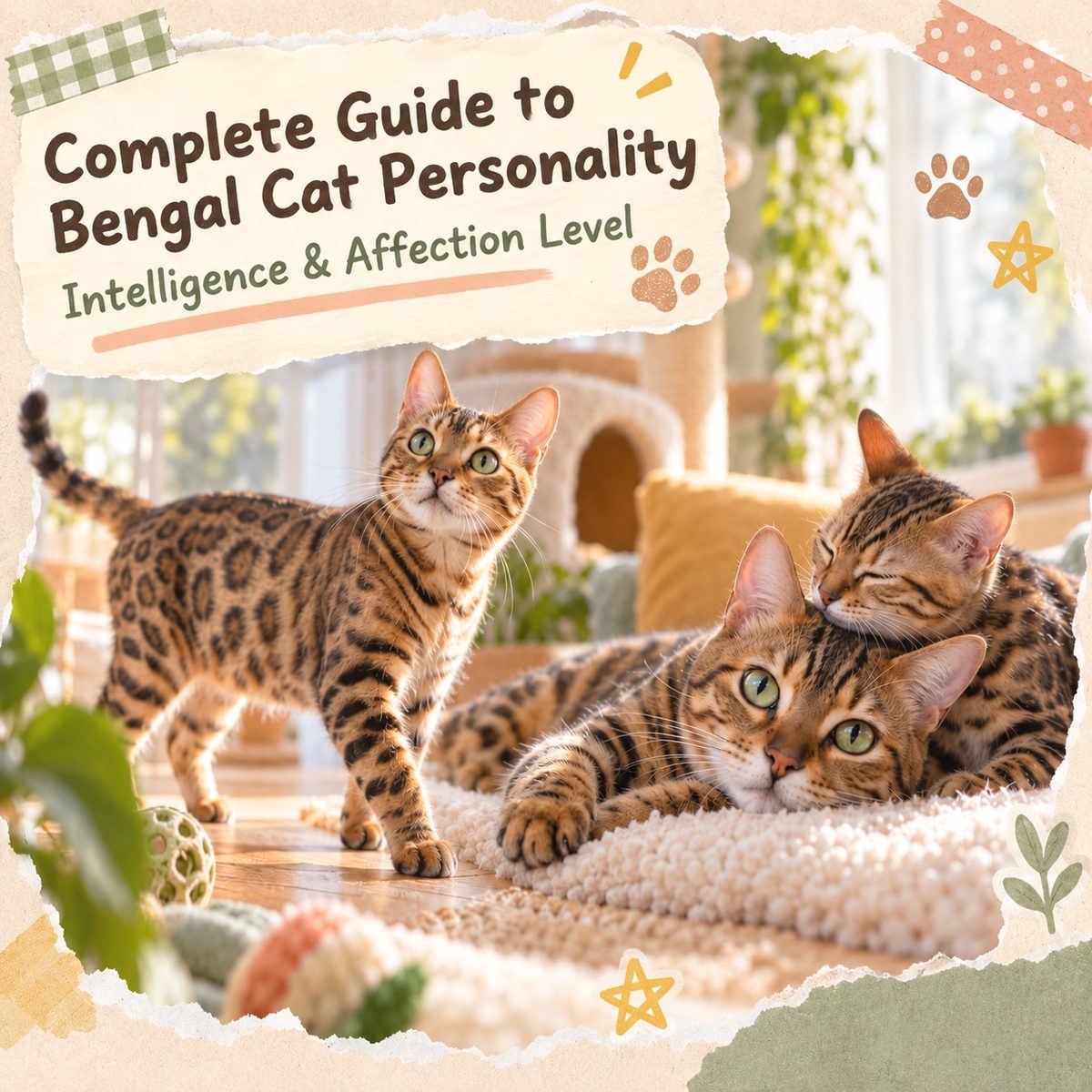
Quick answer: The key words for the Bengal cat's personality are curious, confident, high-energy and strongly interactive — widely recognised in the cat world as a top-tier learner that can open doors, play dead and follow you around. They are generally tolerant of children and other pets, provided socialisation is done well. The most commonly overlooked aspect is: being this smart means they cannot stand boredom, so companionship and stimulation are the entry ticket for this breed.
Want to get to know the Bengal cat fully? First see the Bengal cat breed profile and the complete Bengal cat guide.
1. What the breed standard says: a confident and alert little hunter
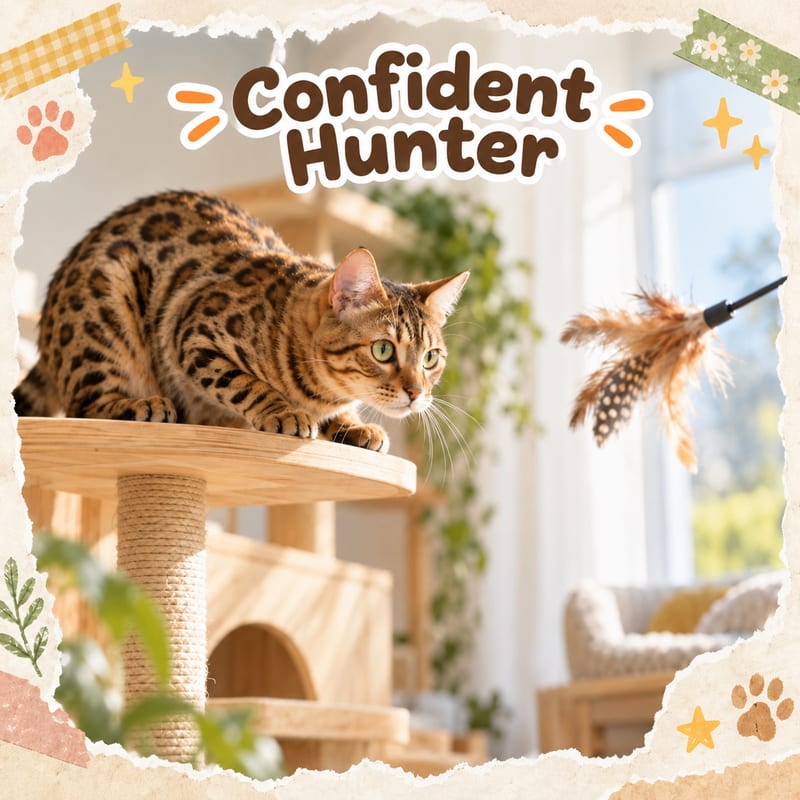
TICA's breed description of the Bengal emphasises confidence, alertness and curiosity — this comes from their breeding history: retaining the spotted appearance of the Asian leopard cat while requiring a domesticated cat personality. The actual experience of living with them can be translated into three sentences: towards the environment — everything must be inspected; towards the owner — everything must be joined in; towards play — everything is prey. They are not decorative cats that lie on the sofa — if you want a 'quiet beautiful background', this breed will disappoint you; if you want a partner who will discuss tonight's dinner with you, that's the right match — a partner who follows you into the kitchen, watches you cook and casually assesses whether there is a new route to the top of the cupboard.
2. Intelligence in action: what they learn will surprise you
The Bengal's 'high intelligence' is not mysticism; it can be broken down into four types of observable behaviour: problem-solving — turning door handles, pulling open drawers, turning on taps; social learning — understanding their name, grasping your daily routine (knowing that opening a bag = treats, packing luggage = must follow and inspect); command training — 'sit', 'high five', fetching objects, with feline cognition research pointing out that a cat's learning speed is highly correlated with 'motivation', and the Bengal happens to have both: it learns fast and is willing to work for rewards; tool use — some individuals can use door handles and press buttons to turn on the TV. A reminder: intelligence is a double-edged sword — when you are bored they will design their own entertainment, and that entertainment usually uses your belongings as props. It should also be noted that feline cognition research points out that 'obedience' and 'intelligence' are two different things: the Bengal understands what you say, but whether it chooses to listen is its freedom. When training, package commands as games (completing the task first earns the prey reward); the success rate is much higher than sitting formally, and it is the only teaching method this breed will accept.
3. Trait × behaviour × response: comparison table
| Personality trait | Daily behaviour | Owner's response |
|---|---|---|
| Off-the-charts curiosity | First to climb into new bags, boxes and furniture | Store dangerous items safely; provide cardboard boxes and exploration toys for legal outlet |
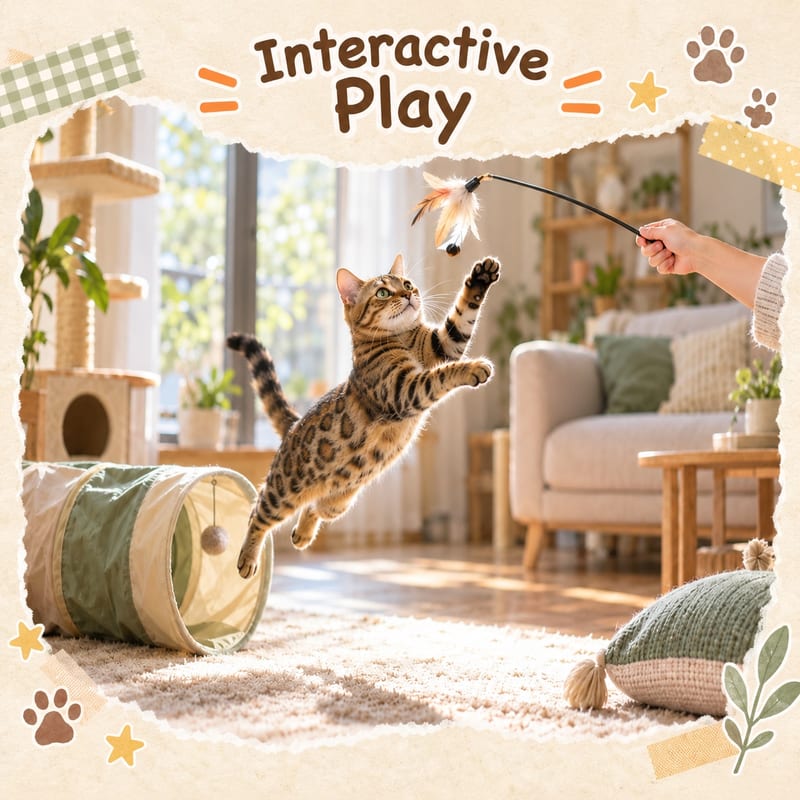
| High energy | Chasing, pouncing, sprinting around the whole house | 2–3 structured play sessions daily; 'play the prey' with a wand toy |
| Strong social needs | Following your feet, listening in on conversations, sleeping on laps | Include them in family activities; do not isolate them in a room for long periods |
| High intelligence and learning | Can open doors, press buttons, learn good habits and bad ones | Positive reinforcement training; redirect 'naughty skills' into command games |
| Curiosity about water | Playing with water bowls, turning on taps, sleeping on wet towels | Flowing water fountain + bathroom door management; some individuals can be trained to tolerate baths |
| Sensitive and score-keeping | After being frightened, will avoid the same place and the same person for a long time | Never use punishment; rebuild trust through distance + food |
4. Living with children, cats and dogs: which combinations are most stable
The Bengal's adaptability in 'multi-cat households' and 'households with dogs' is generally good, for a very practical reason: their play style uses the same grammar as dogs' play invitations (pounce, chase, kick away and pounce again), and many dog owners report cats and dogs playing together. The bottom line for living with children is teaching children three things: do not pull tails or legs, do not disturb the cat while it sleeps, and do not reach out during feeding. Families with young children are advised to choose individuals with a good socialisation record and clear origins, and always leave the cat an elevated escape route. Conversely, quiet, introverted resident cats and dogs may not be able to stand the Bengal-style hunting harassment — do a gradual same-room separation observation before introduction; it is easier than fixing things afterwards.
5. Male-female differences and cat selection advice
General observations (not absolute): male cats are larger, more outgoing and affectionate, and play more wildly; female cats usually mature earlier, are strong-willed and are more picky about 'jostling-style socialising'. International cat industry professionals generally remind us: sex is only a tendency, and individual differences far outweigh sex differences. When choosing a cat, it is advisable to meet them in person: call them, test their reaction with toys, observe whether they follow people — fifteen minutes is more accurate than any personality test form. Details like females going to bed earlier and settling in faster, or males playing with no off-switch, can be understood with one on-site observation without relying on folk statistics; what really determines the quality of the relationship is always whether you can give that half hour every day. Another reminder: when adopting an adult Bengal, ask the previous owner clearly whether it knows how to open doors and whether it has a habit of opening windows — these 'already unlocked skills' will not be forgotten, only passed on to the new environment.
6. Interaction advice: how to feed a smart cat's brain
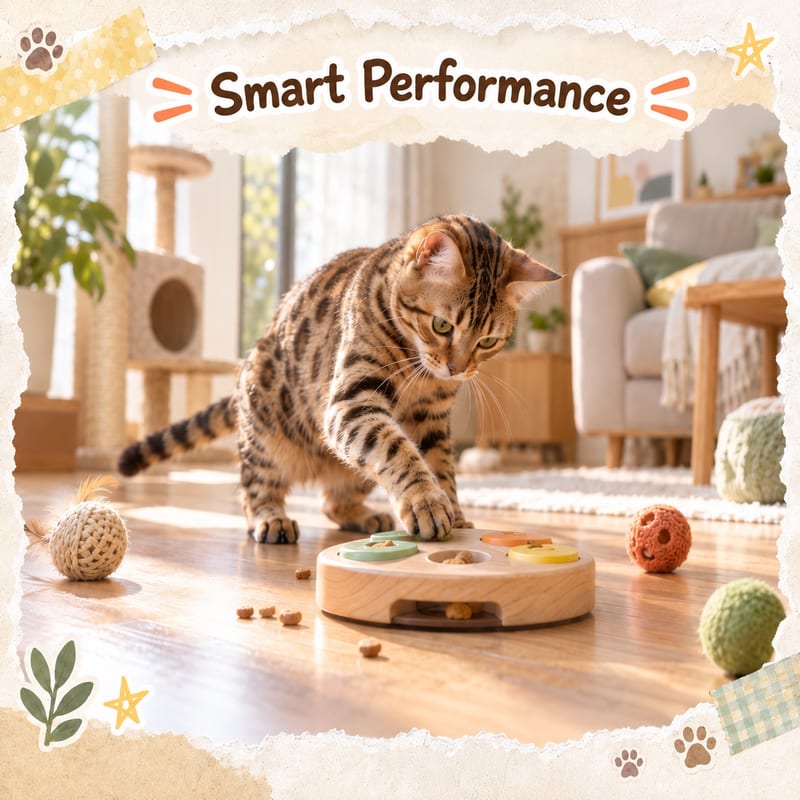
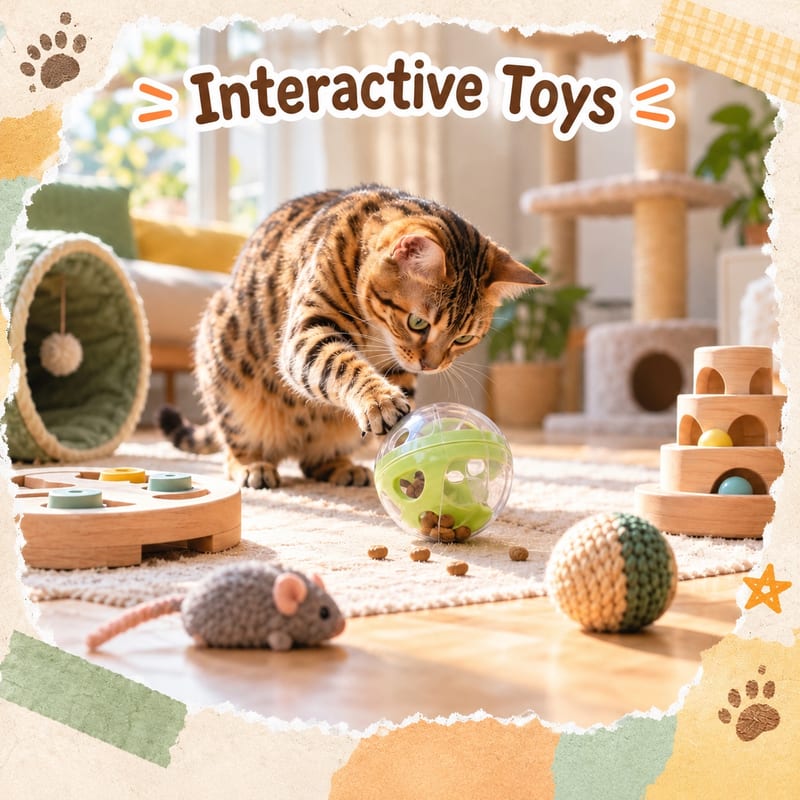
A smart cat's needs are met on two levels: body through chase games and climbing; brain through puzzle feeders, snuffle mats, command training and 'new routes'. Rotating toy styles weekly and increasing difficulty by one level each month (for example, opening a drawer to get treats) is the secret to keeping a Bengal cat from getting bored. They are also one of the very few cats that can be trained to 'walk on a leash', but this is only recommended in quiet environments and after reliable recall training, and with a chest harness rather than a collar. Finally, the socialisation window: eight to sixteen weeks is the golden period for a Bengal cat to get to know the world; the human voices, sounds (vacuum cleaner, doorbell), touches (paw wiping, ear and mouth checks) and friendly strangers encountered during this time will directly write into the adult boldness scale. How far a reputable breeder goes before handing over the cat, and whether a rescue organisation has done early handling, are worth asking clearly when choosing a cat — early handling, stranger voices and daily sound exposure records are the real 'personality starting line'.
Key summary
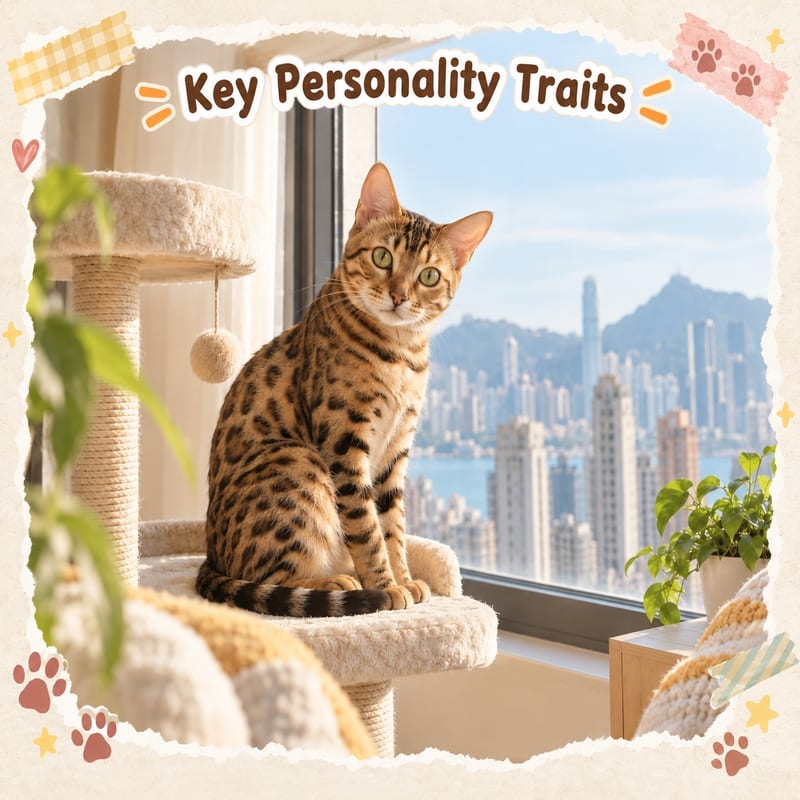
- ✅ The four pillars of the Bengal cat's personality: curious, confident, high-energy, strong social needs
- ✅ Top-tier intelligence: can open doors and learn commands, and will also design its own 'shows' to consume you
- ✅ Generally good with children, cats and dogs, provided socialisation + leaving the cat an escape route
- ✅ Males outgoing, females independent, but individual differences far outweigh sex differences
- ✅ Feed both body and brain: play, puzzle feeders, command training, weekly toy rotation
- ✅ Use only positive reinforcement; this breed 'holds grudges and avoids', so punishment is a lose-lose
Related reading
- Bengal cat disadvantages and how to cope
- Bengal cat lifespan and health explained
- Complete guide to keeping a Bengal cat in Hong Kong
- Complete Bengal cat guide
- Puzzle feeders, training treats and chest harnesses: find them all at PetChill pet supplies.
The personality descriptions in this article combine cat breed standards and general keeping observations; individual differences are large. If behavioural problems persist and get out of control, please consult a practising veterinarian or feline behaviour specialist.



