
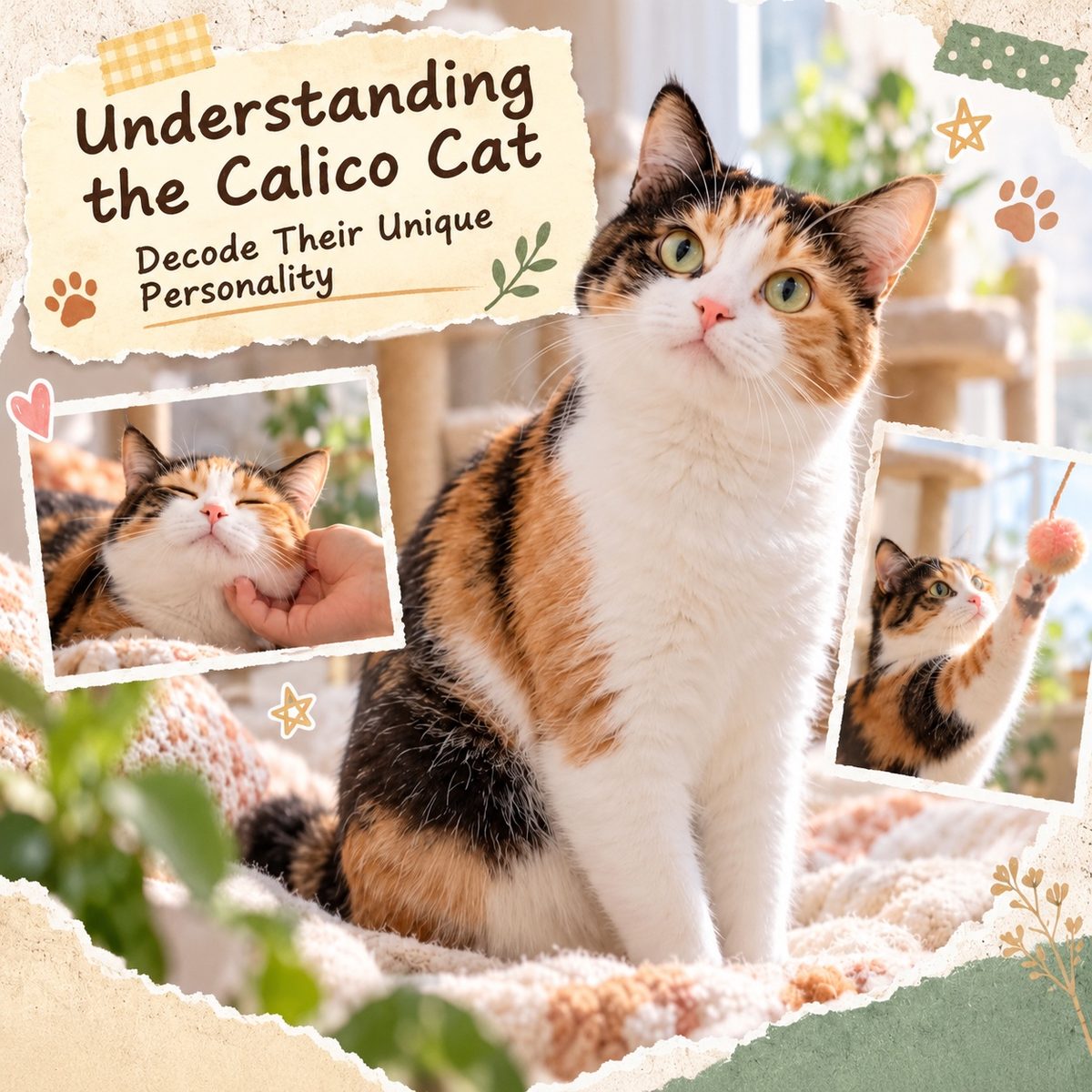
Quick answer: The idea that 'calicos have big tempers' has some research behind it but is exaggerated: a 2016 UC Davis questionnaire study found multi-coloured cats had slightly higher reported aggression but the effect was small. A more accurate description is: calico cats are especially opinionated, have strong boundaries, and are selectively clingy. As for intelligence, there is no coat-colour champion—every cat has its own strengths.
Want to know calicos inside out? Start with the calico breed profile.
1. Where 'Tortitude' comes from: what the research says, what the myth misses
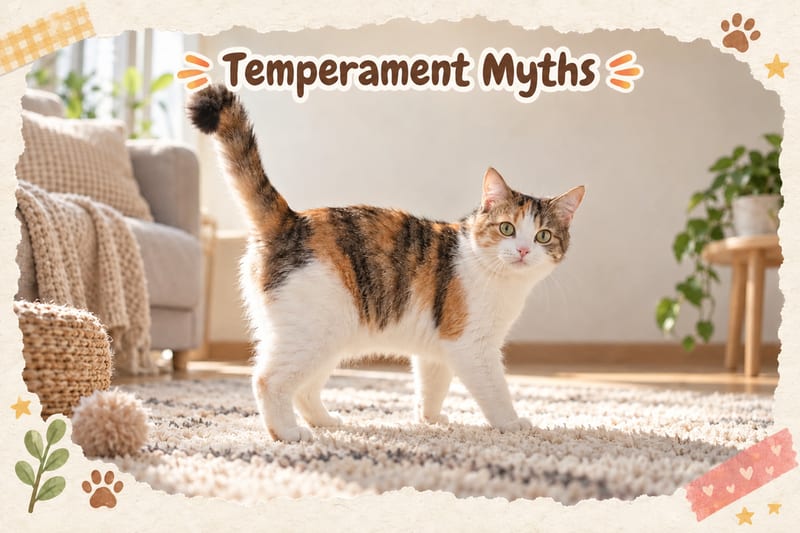
In English-speaking cat circles there's a term called tortitude (tortie + attitude), referring to the folk belief that tortoiseshell and calico cats have 'especially big tempers'. A 2016 questionnaire study by Stelow et al. at the UC Davis School of Veterinary Medicine, analysing over a thousand cases of cat aggression (published in the Journal of Applied Animal Welfare Science), found that tortoiseshell, calico and black-and-white 'multi-coloured' cats were reported by owners to show slightly higher rates of aggression towards people (biting, scratching, temper tantrums), but the researchers also stressed that the effect was small and the data came from self-reported online samples, not enough to label any coat colour as 'fierce'. Also note that owner bias (hearing that calicos are feisty makes you notice their tantrums more) is hard to rule out. So the safe conclusion is—calicos aren't fierce, but they are opinionated; they have clear boundaries and don't like being forced.
2. Five common calico traits: trait × behaviour × response
| Trait | Everyday behaviour | Owner response |
|---|---|---|
| Opinionated | Decides when to play, when to sleep, who can pet them | Respect signals, don't force holding; let them be the 'boss' of the relationship |
| Strong boundaries | After three pets, tail swishes, ears flatten, gentle bite to say stop | Learn to read early signals, stop while it's going well, and they'll come back to you |
| Selectively clingy | Sleeps on your lap but chooses when; follows you into the kitchen | Fixed feeding and play routines to build a 'you are reliable' impression |
| Curious but cautious | Observes new things before trying | Give time with new toys and furniture, don't force an immediate reaction |
| Remembers food, not punishment | One bad experience (vet, bath) leaves a lasting impression | Keep the carrier open as a bed, use positive desensitisation to reduce negative associations |
3. 'Tabby intelligence' and 'tabby temperament': the truth about coat colour and behaviour
Many people search for 'tabby cat intelligence', 'tabby personality' and 'calico personality', but the answer is less dramatic: there is currently no controlled study supporting a strong link between a specific coat colour and a specific personality. Cat behaviour mainly comes from three layers: temperament inherited from parents, socialisation experiences between eight and sixteen weeks, and interaction patterns with the owner. The reason tabbies give an impression of 'cleverness' is largely because tabby cats look alert and move sharply, and because they make up the majority of domestic shorthairs—a large sample size means more rare 'genius' clips naturally appear. Conversely: calicos with strong boundaries are misread as 'bad-tempered' when they simply don't like being forced—this perspective is friendlier for both human and cat: read 'big temper' as 'has boundaries', and you'll stop fighting with them, and they won't have to put up with you. One last word for prospective adopters: a calico's 'temper' is often just defensiveness during the settling-in period; once they confirm you as a teammate, the same cat can go from hiding under the table to sleeping on your pillow. Personality is not a static label; it's a process variable in a relationship.
If you're ready to take one on, the calico adoption costs and verification checklist has adoption routes, cost structure and things to check before you start.

4. Clinginess ranking: when a calico will come to you
Drawing on breed behaviour literature and shelter workers' experience, calico affectionate behaviour has a clear 'autonomy': they choose the time (usually early morning and evening when the owner is relaxed), they choose the place (sitting next to you, not on you), they choose the activity (play until satisfied, hold for two minutes and that's enough). To improve the relationship, the three most effective things are: timed feeding (they see you as the food-bowl manager—that's a compliment), two fixed play sessions a day, and 'don't chase when they walk away'. Most boundary-type cats build affection slowly like this. A note on the Hong Kong misunderstanding of 'relaxed': calicos aren't unloving, they love with reserve. Shelters observe a common pattern—boundary-type cats hide under the table for the first few days in a foster home, start 'following at a one-metre distance' after two weeks, and only after a month show advanced trust signals like sleeping on your lap and slow blinking. Align your expectations with this curve, and you won't misread them as aloof, nor dismiss the whole relationship because of first-week shyness.
5. Male vs female and individual differences
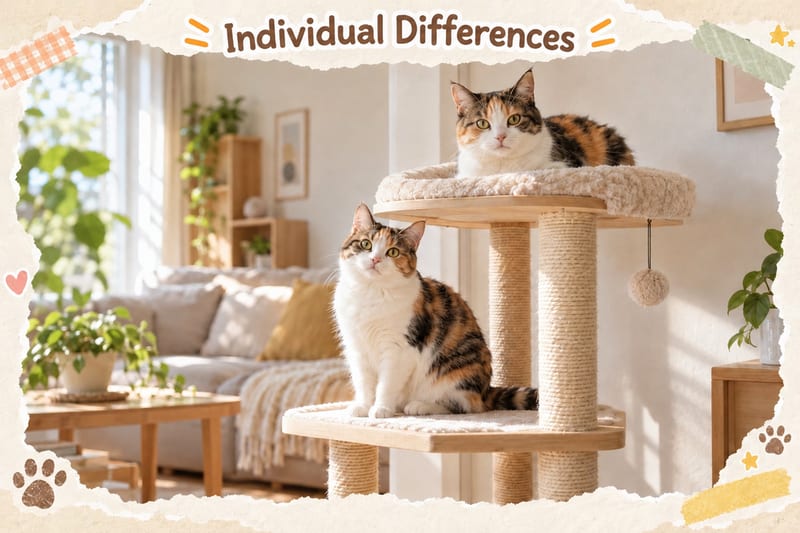
Calicos are almost all female (due to the genetic mechanism), so the popular 'calico temperament' sample is naturally skewed towards females. In general cat behaviour observations, females are described as more independent and cautious with strangers; males as more outgoing and quick to warm to strangers. But remember two things: first, male calicos (one in several thousand) due to their XXY makeup are often described in veterinary behaviour records as exceptionally gentle; second, regardless of sex, the influence of early socialisation and experience far outweighs any group average—fifteen minutes of in-person contact before adoption beats a hundred questions on a personality test. If you already have resident cats, the calico's 'won't fight but will remember' personality usually won't start trouble, but they may also quietly give way until stress boils over; when introducing, use the standard procedure of separate rooms, scent swapping and 'N+1' resource allocation, and don't expect them to become friends just because the coat is pretty.
6. Interaction tips: how to live with an opinionated cat
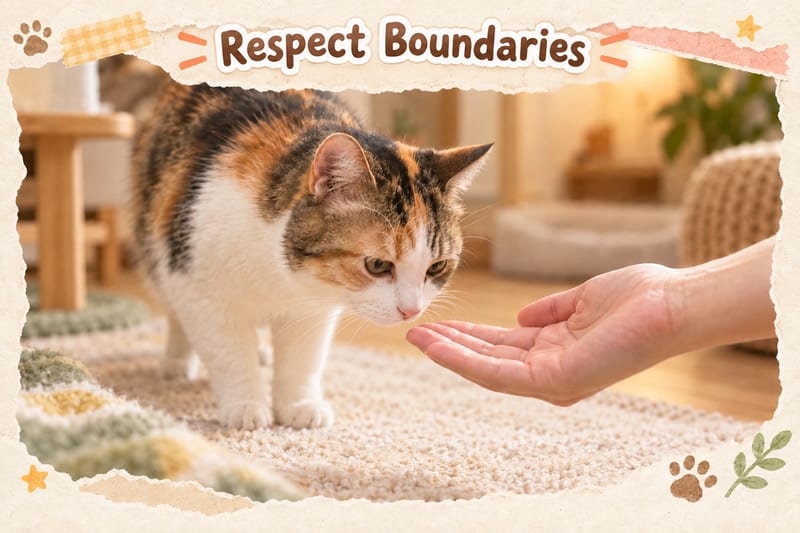
- Build a predictable routine: fixed times for feeding, play and pre-bed grooming—boundary-type cats thrive on 'reliability'—one accurate action beats a thousand words. 2. Build trust through play: a wand toy is the social shortcut for calicos—'prey caught fairly' satisfies their sense of autonomy. 3. Don't teach with 'punishment': these cats remember negative associations for a long time; always use positive reinforcement and environmental adjustment for behaviour issues. 4. Multi-cat households: calicos are usually neither the most aggressive nor the weakest; ensuring sufficient resources (feeding stations, litter trays, high spots) prevents most friction.
Key takeaways
- ✅ 'Tortitude' has some research behind it but is exaggerated: the UC Davis 2016 study found a small effect; coat colour does not make a cat 'fierce'
- ✅ Core calico traits = opinionated + strong boundaries + selectively clingy
- ✅ Coat colour does not determine intelligence or personality; parental temperament, socialisation and interaction experience are the three main sources
- ✅ Living with a boundary-type cat: fixed routines, trust through play, never punish
- ✅ Rare male calicos are usually exceptionally gentle; in-person contact before adoption is most accurate
- ✅ If a cat has a temper, first rule out pain; if behaviour problems persist, consider a veterinarian or behaviour expert
Related reading
- Calico coat colours explained
- Calico disadvantages and how to cope
- Calico lifespan and health explained
- Calico breed profile
- Wand toys, pheromone calming products and puzzle feeders: find them all at PetChill pet supplies.
The behavioural content in this article is based on public research and general husbandry observations as a general reference; please note the effect sizes and sample limitations; for persistent aggression or anxiety behaviour, consult a practising veterinarian.
 Fuji One full guide →


 Wellness Core full guide →



