
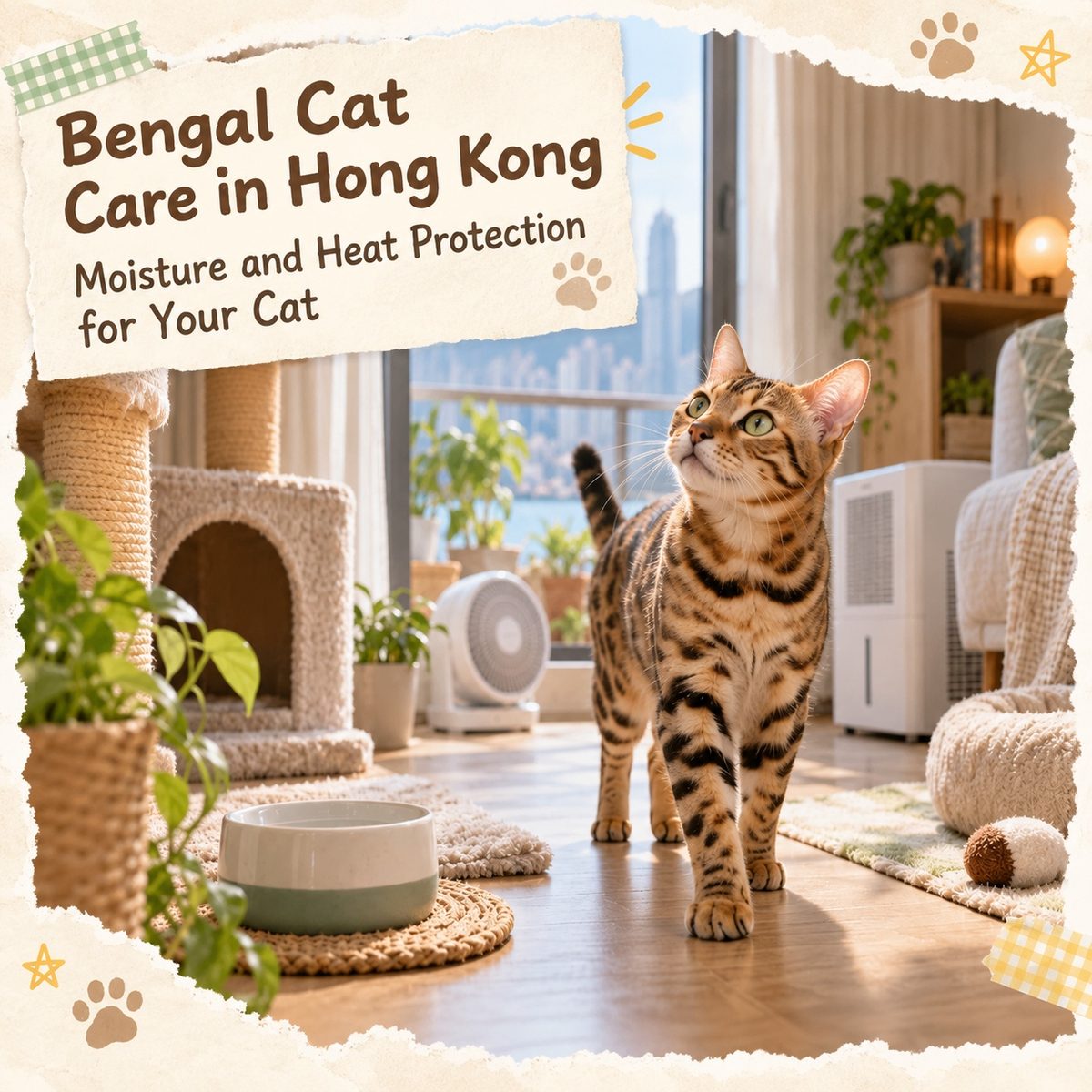
Quick answer: The Bengal cat is a legal domestic breed to keep in Hong Kong, with no licence required, but you must distinguish it from the protected wild Asian leopard cat (shi-hu) — the latter may not be possessed or sold. The real challenges of keeping a Bengal in Hong Kong are threefold: small flats need vertical space, the hot and humid weather demands heat and humidity control, and they are escape artists that need escape prevention. Here is the breakdown item by item.
Want to know the Bengal cat inside out? Start with the Bengal cat breed profile and the complete Bengal cat guide.
1. The law first: Bengal cats are not 'wild cats', but shi-hu really are off-limits
Many Hong Kong people search for 'Hong Kong leopard cat' or 'Hong Kong wild leopard cat', but they are actually looking for two different things. The first is the wild Asian leopard cat (Prionailurus bengalensis, commonly called shi-hu in Cantonese), a native wild mammal of Hong Kong protected under wildlife protection regulations administered by the Agriculture, Fisheries and Conservation Department; capturing, possessing or selling it is illegal, and if you happen to spot one while hiking in a country park, you may only observe from a distance. The second is the Bengal cat: a breed developed last century by crossing domestic cats with Asian leopard cats and then backcrossing to domestic cats over many generations; TICA granted it championship status as early as 1991, and behaviourally it is no different from an ordinary domestic cat. A Bengal cat with traceable pedigree and sufficient generation (generally SBT, i.e. after four generations of crossbreeding) is completely legal to keep in Hong Kong and requires no special licence. What you should be wary of is sources marketed as 'wild blood' or 'F1 leopard cat' — these may be false claims and may also involve wildlife protection legal risks; buyers should ask to verify pedigree registration documents.
2. Public housing, private flats and deeds of mutual covenant: three layers of rules to check before moving in
Hong Kong's living environment directly determines the quality of cat keeping. For public housing, Housing Authority policy focuses on prohibiting dogs; cats are generally not banned, but are still subject to nuisance clauses — odours, noise or faeces affecting neighbours can lead to follow-up action. For private property, check the deed of mutual covenant (DMC): some buildings explicitly prohibit keeping any animals, so prospective buyers or tenants should verify with the management office or landlord and not trust the saying 'everyone keeps them'. In the rental market, more and more landlords accept cats, but usually require restoration to original condition and an extra deposit; it is safest to put everything in writing before signing.
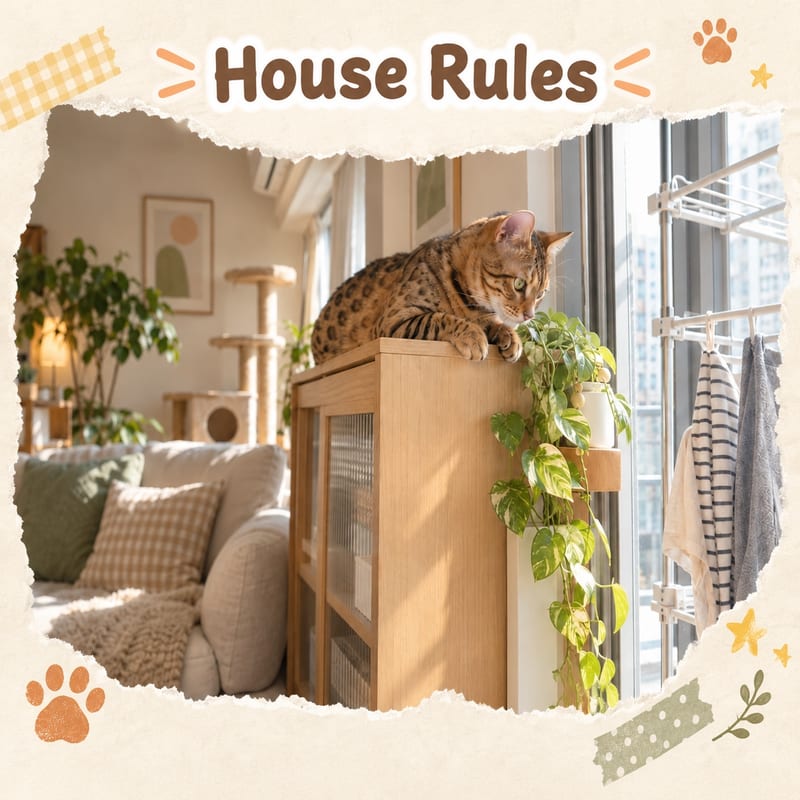
3. Space planning for small flats: demand floor area in the vertical direction
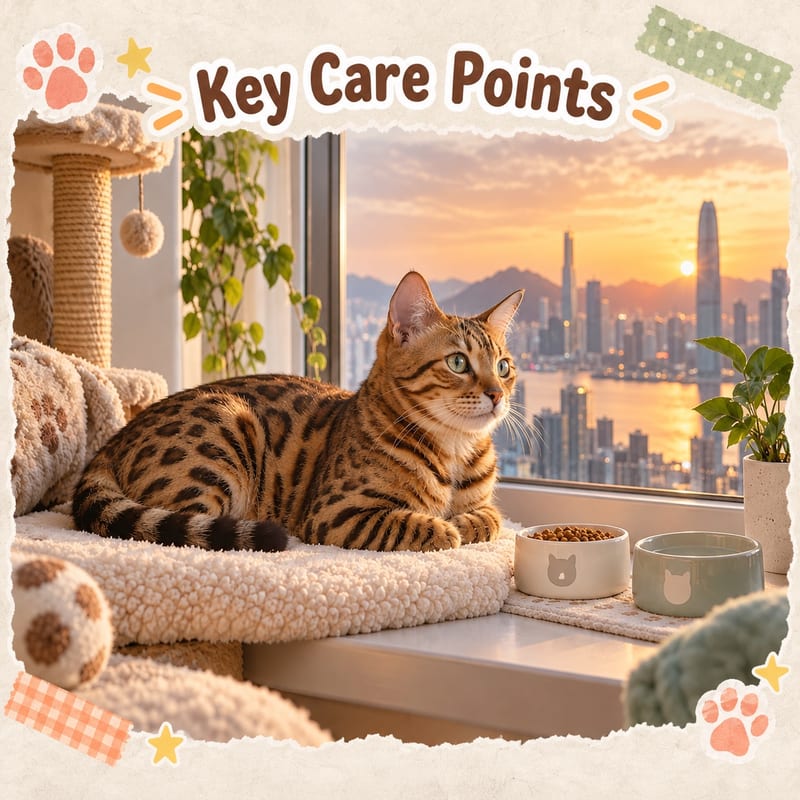
A Bengal cat's physical ability is close to that of a small athlete; an empty living room of just over a hundred square feet in a typical Hong Kong flat is a limitation for them, but not a death sentence — the key is to turn floor activity into three-dimensional routes:
| Item | Suggested approach | Budget direction |
|---|---|---|
| Cat wall / climbing frame track | Install multi-level shelves along the wall, connecting the window sill and a high sleeping spot | Medium (modular pieces a few hundred dollars per level) |
| Window sill perch | Reinforce the window sill, add a non-slip mat; the street view is the most enduring entertainment | Low |
| Litter box location | Quiet, separate from food and water, well ventilated, avoid damp corners | Low |
| Daily interactive play | Wand toy, food puzzle ball, target training; 2–3 times daily | High time cost, low money cost |
| Scratching post placement | Place a scratcher at the start of every route to protect the sofa | Low |
The principle is simple: the larger the visible 'hunting ground', the less bored the cat. The street view outside the window and the moving shadows of a fan are all entertainment for a highly intelligent cat.
4. Hot and humid climate management: heat, damp and skin problems
From April to October, Hong Kong's humidity often exceeds 80%; although the Bengal's short coat tolerates heat, there are still three things to watch. Heat prevention: avoid leaving the cat on a sealed window sill in direct sunlight for long periods; keep the home ventilated or air-conditioned when out; in air-conditioned rooms watch for reduced water intake and consider a flowing water fountain to encourage drinking. Damp prevention: store cat food sealed, remove wet food within half an hour, scoop the litter daily and change the whole tray regularly; humidity affects clumping efficiency. Skin and ears: in hot, humid conditions, if you notice persistent scratching, hair loss, ear odour or redness, see a veterinarian early and do not self-medicate. In the damp cold of winter, many cats actually enjoy a warm lamp; just provide a warm high perch.
5. Escape prevention: beyond the DMC, the biggest legal risk is actually 'letting the cat escape'
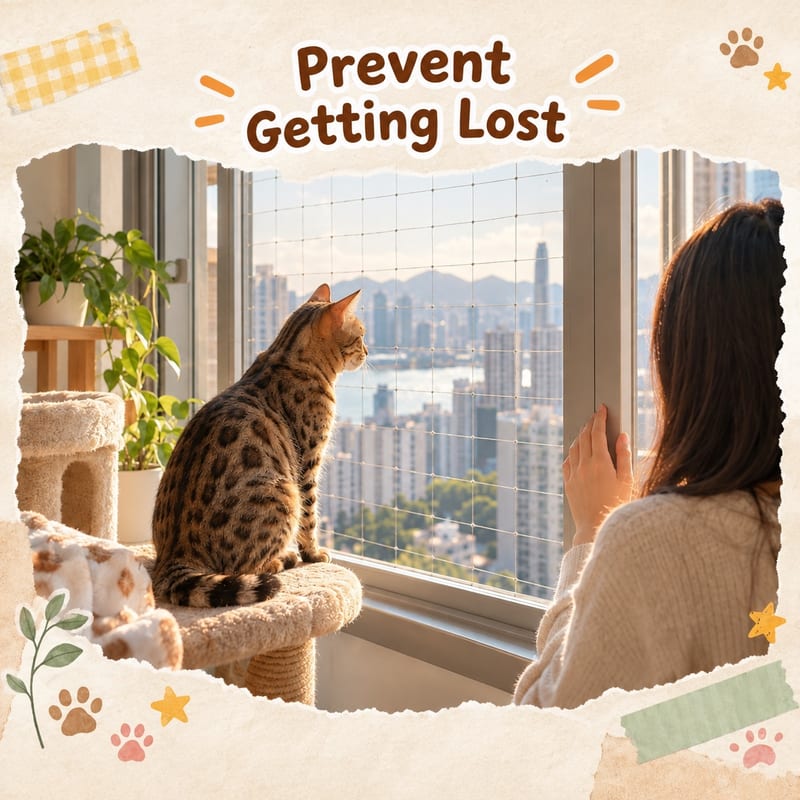
Bengal cats are famous in the cat world for their curiosity and door-opening skills; escape is the most common accident for Hong Kong owners. Choose reinforced cat-proof screens, and set window limiters to open only a palm's width; develop the habit of 'check before opening the door', and add a buffer door stop; when going out, use a carrier rather than carrying the cat — public places such as banks and clinics have very low tolerance for unleashed cats. Reporting a lost cat, recovering it and liability for compensation fall within the owner's scope; cat owners should microchip their cats and register the owner's contact details — this step is widely recommended in international feline care guidelines as the most effective means of recovery after a cat goes missing.
6. Daily routine and travel: helping the spotted cat adapt to the Hong Kong pace
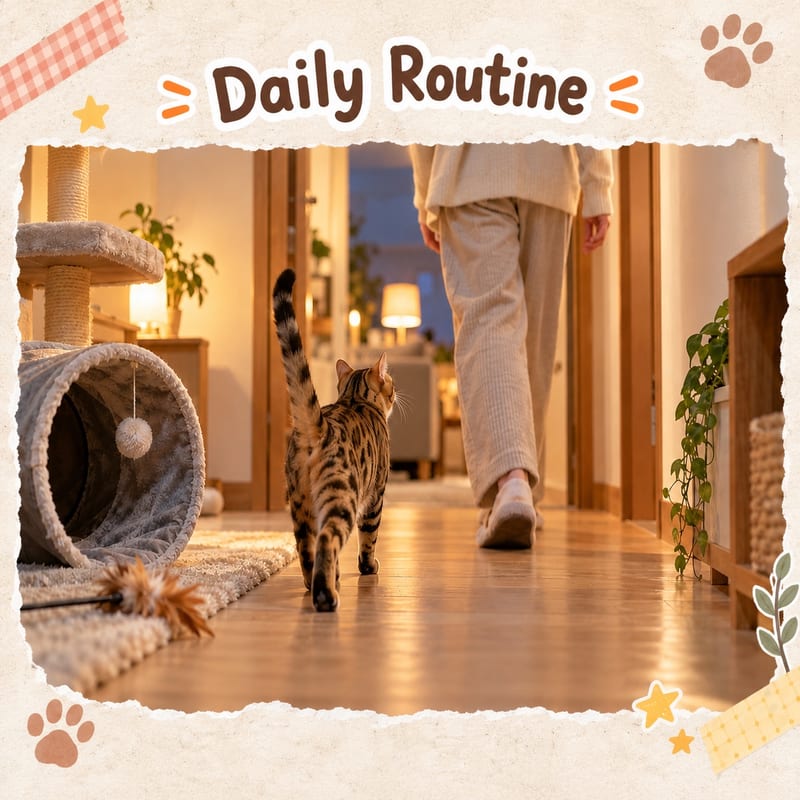
When taking a Bengal cat out to the veterinarian or on taxis and the MTR (under passenger regulations cats must be in a carrier), it is best to start practising entering the carrier from kittenhood, using a mat to block light and reduce stress. Hong Kong life is fast-paced; working households can write 'half an hour of play right after work' into the schedule, which is more effective than making up for it at the weekend — these cats depend on routine more than you expect; once morning feeding and evening play times are fixed, early-morning alarm-style meowing will naturally decrease. Also watch out for typhoon season: during black rainstorms and No. 8 typhoon signals, changes in air pressure and noise can make sensitive cats anxious; prepare dry food, water and a quiet corner to hide in advance, and do not force them out to comfort them on typhoon days — giving space is more comfortable for them. When travelling far away on holiday, a high-energy cat is not suited to being left alone for long periods; book boarding or a home feeder early, and make sure the carer knows how to play with a wand toy. Moving house, renovation and other environmental changes easily stress cats; setting up a 'safe room' in advance can reduce stress.
Key takeaways
- ✅ The Bengal cat is a legal domestic breed; the wild Asian leopard cat (shi-hu) is the protected animal that may not be possessed or sold
- ✅ Public housing generally does not ban cats but is subject to nuisance clauses; check the DMC before moving into a private flat
- ✅ The small-flat solution is vertical routes: cat walls, climbing frames, window perches, plus 2–3 interactive play sessions daily
- ✅ Hong Kong is hot and humid: prevent heat and damp, check skin and ears frequently, and see a veterinarian early if anything is abnormal
- ✅ Bengal cats are escape artists: reinforced screens + door stops + microchip registration; escape prevention is the top priority
- ✅ Refuse 'wild blood F1' of unknown origin; checking pedigree registration documents is the most practical step
Related reading
- Bengal cat prices and adoption guide
- Bengal cat disadvantages and how to cope
- Bengal cat personality and intelligence explained
- Complete Bengal cat guide
- Cat-proof window screen accessories, cat walls, climbing frames and interactive toys: find them all at PetChill pet supplies.
The legal and policy content in this article is general reference based on public information; individual cases are subject to the Agriculture, Fisheries and Conservation Department, the Housing Authority and the relevant DMC clauses; for medical questions please consult a practising veterinarian.



